
This is not a ranking: these are 15 cases in Spain whose wood floor has a published source. Each one says what the floor is, when it dates from or what was done with it. They come in four groups: royal residences, Gaudí and Modernisme, stately homes and palaces, and institutional seats and casinos. For most of them, no source gives the wood species. The other palaces in Madrid are in Historic parquet in the palaces of Madrid, and those outside Spain in The best parquet floors in the world.
Contents
Royal residences
Four royal residences. Alfonso XII laid parquet in several rooms, and in the State Dining Room it replaced the marble; Charles IV laid porcelain in the Casa del Labrador. Santander replaced three floors in 2020, and in Pedralbes a border was replicated.
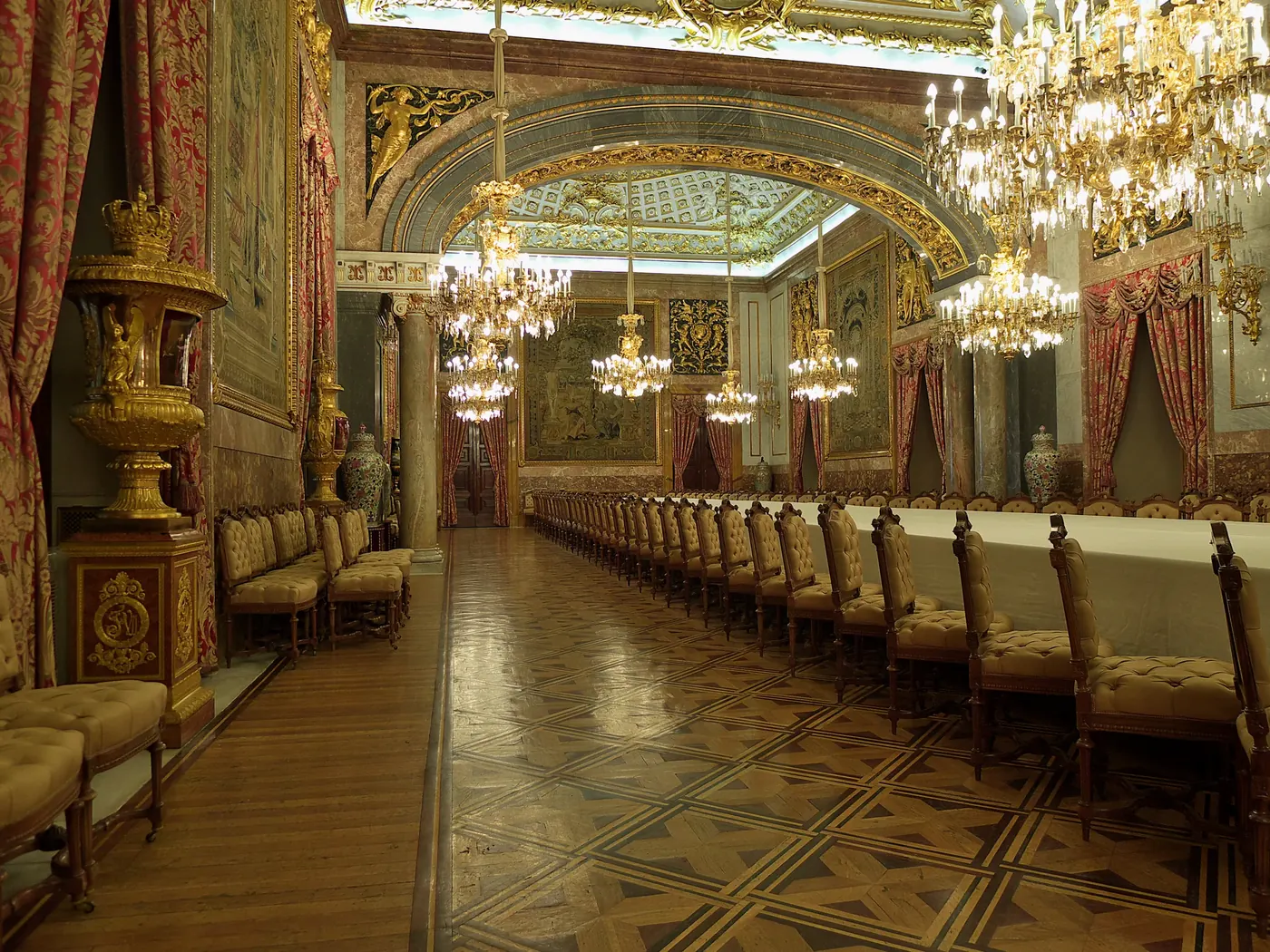
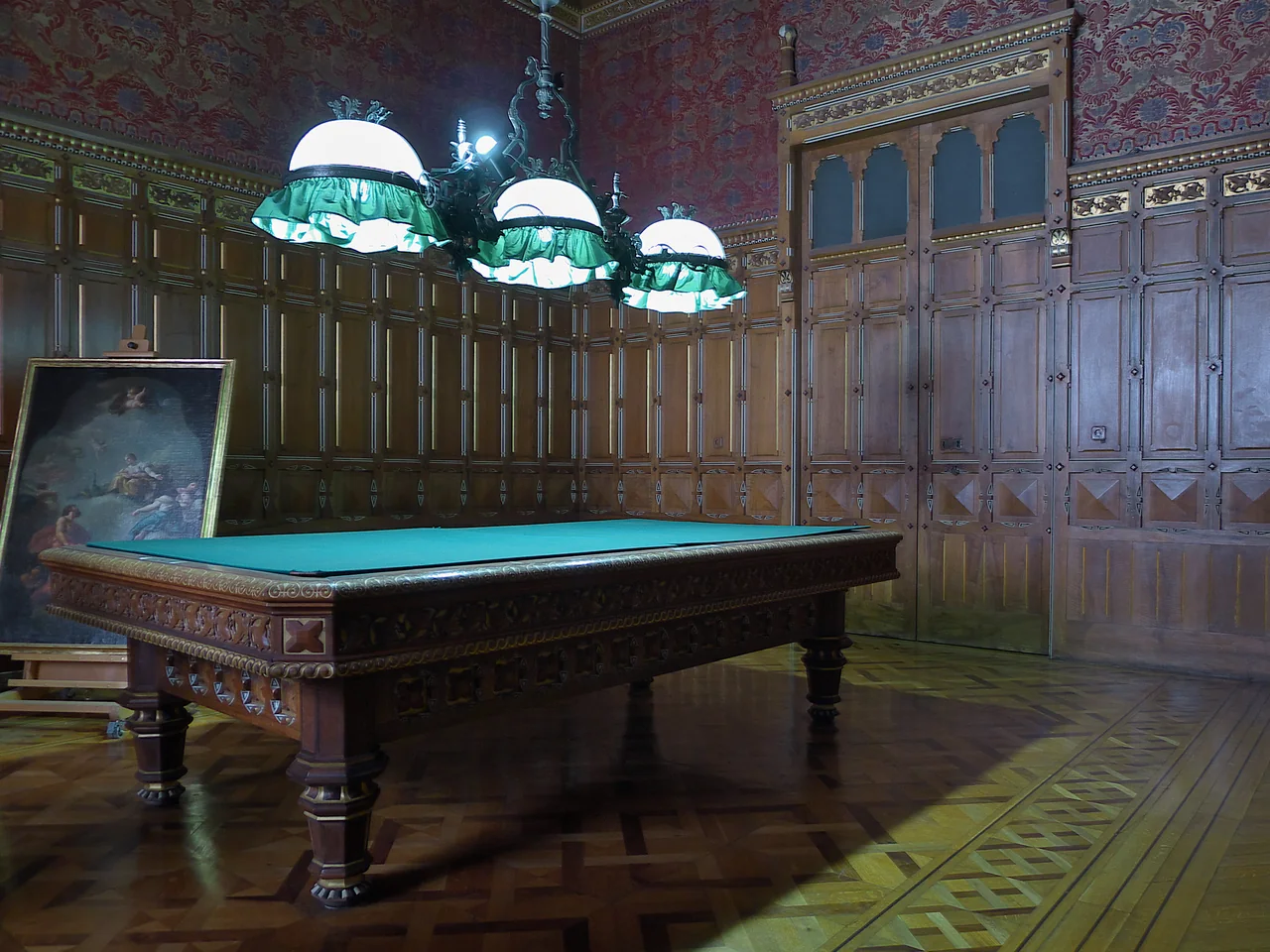
1. Royal Palace of Madrid
- Location: Madrid.
- Floor: panel parquet in the State Dining Room and the Billiard Room; in the Smoking Room, which has been lost, walnut, oak, plane and wood stained black.
- Intervention: José Segundo de Lema laid parquet in several rooms for Alfonso XII between 1878 and 1885; in the State Dining Room it replaced the marble of three salons.
The historian José Luis Sancho, of Patrimonio Nacional (the Spanish royal heritage agency), reconstructed Lema’s work in 1990 room by room, using the accounts in the Archivo General de Palacio. The work began in the Royal Bedchamber, whose parquet design was handed to Antonio Jorge in May 1878. It then moved on to the Billiard Room, the Smoking Room and the State Dining Room, which joined three salons on the west front.
The dining room was first used half-finished, at the king’s wedding to Maria Christina of Austria at the end of 1879. The account for the flooring, from Manuel Genné, is dated December 7, 1885, a few days after the king’s death. His death halted the decoration work in the palace.
See the full article on the floors of the Royal Palace of Madrid.
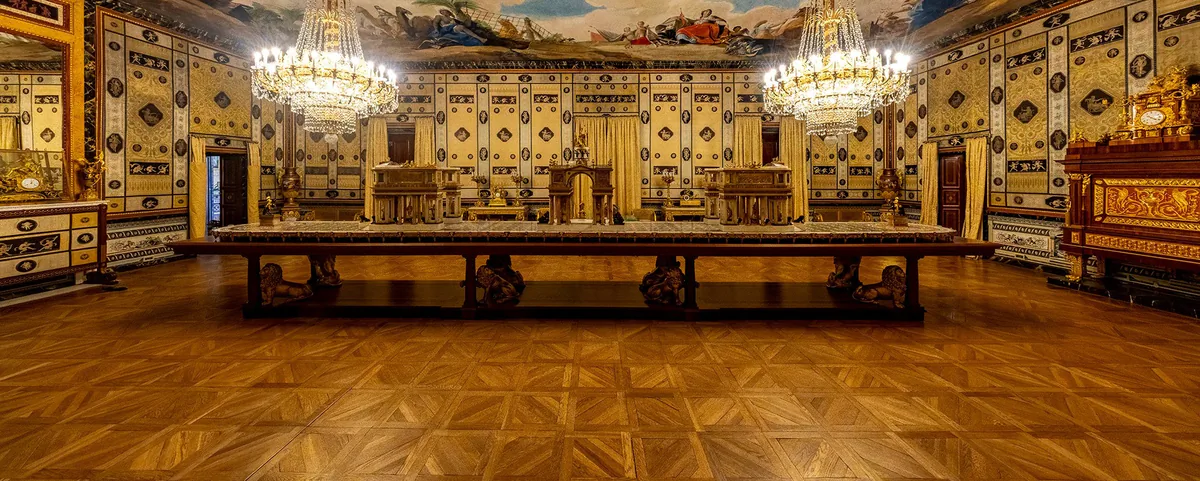
2. Casa del Labrador, Aranjuez
- Location: Aranjuez (Community of Madrid).
- Floor: diagonal panel flooring in the Great Hall; porcelain in the Drawing Room and marble in the Platinum Cabinet.
- Intervention: emergency works from 2021 to 2025, with the historic floors protected in place; afterwards the porcelain floor and the paving were restored.
The floors from the time of Charles IV are not wood. In the Drawing Room the king laid a porcelain floor, far too fragile to walk on, to show what the Real Fábrica del Buen Retiro (Royal Buen Retiro Porcelain Factory) could already do. The wood is in the Great Hall, also called the ballroom because of the use it was given in the time of Alfonso XIII.
After the restoration that ended in 2008, the house was visited in groups of ten, with covers over the shoes so as not to damage the floors. After storm Filomena, the emergency works reinforced the foundations with 536 micropiles, and King Felipe VI reopened the house on October 1, 2025.
See the full article on the floors of the Casa del Labrador.
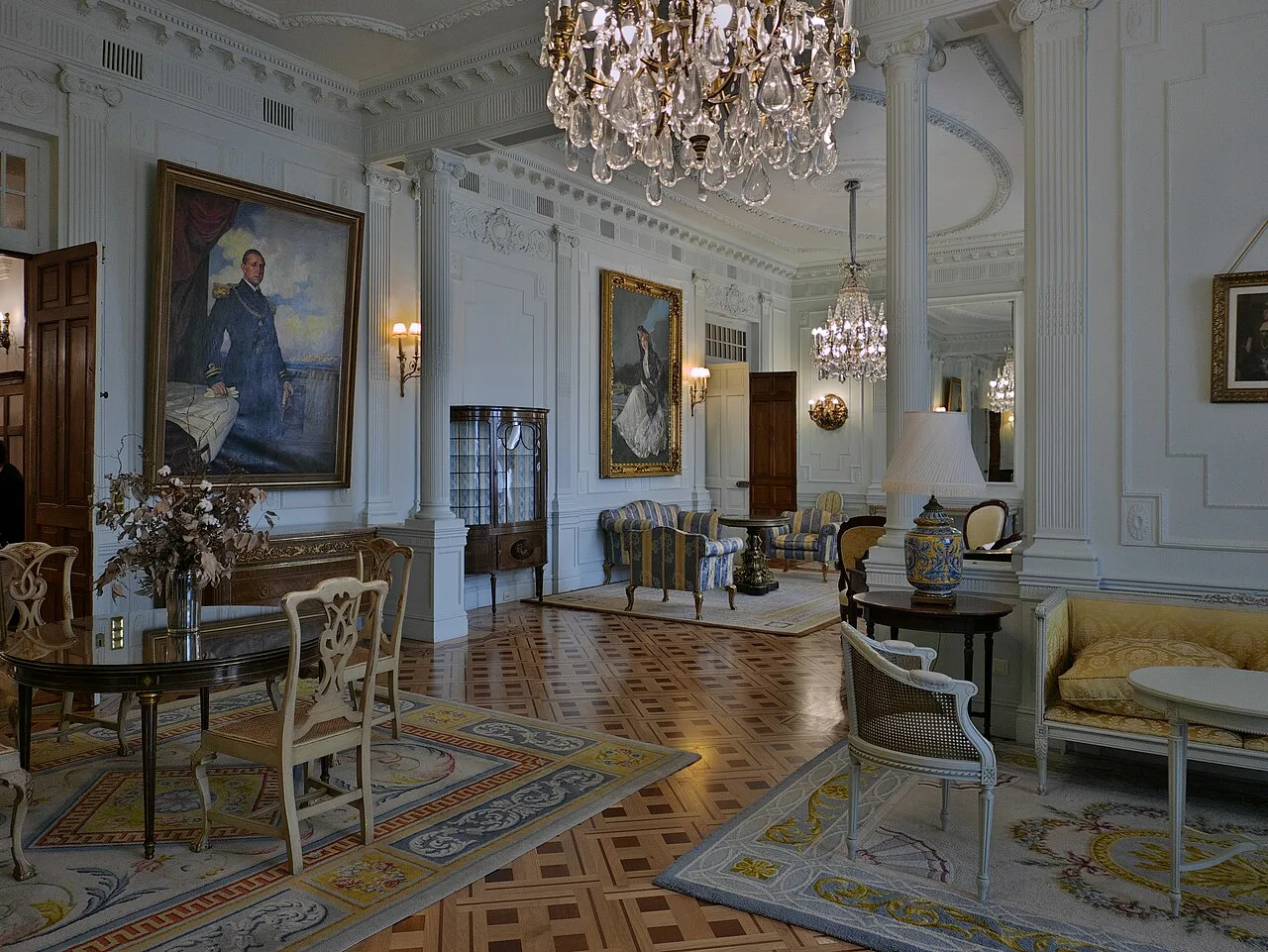
3. Palacio de la Magdalena, Santander
- Location: Santander (Cantabria).
- Floor: panel parquets with different designs in the salons; diagonal blocks of small strips in the main hall.
- Intervention: in 2020 the City Council replaced in full the wood floors of the Ballroom, the Family Room and the king’s study.
The palace was a gift from Santander to Alfonso XIII and Victoria Eugenie, paid for by public subscription, and their summer residence from 1913 to 1930. In the Family Room, of which there are before and after photos, the new floor repeats the design of the old one. They are diagonal panels with a grid of light strips that encloses small squares of dark wood.
The new floors were made in a workshop. According to the City Council, they were already laid by the end of May 2020, despite the ten days the pandemic stopped the work. In the room created by joining the Riancho and Bringas rooms, on the other hand, the old floor stayed. It was leveled so it could be sanded and varnished, and only the floor in the joining area was replaced.
See the full article on the floors of the Palacio de la Magdalena.
4. Royal Palace of Pedralbes, Barcelona
- Location: Barcelona.
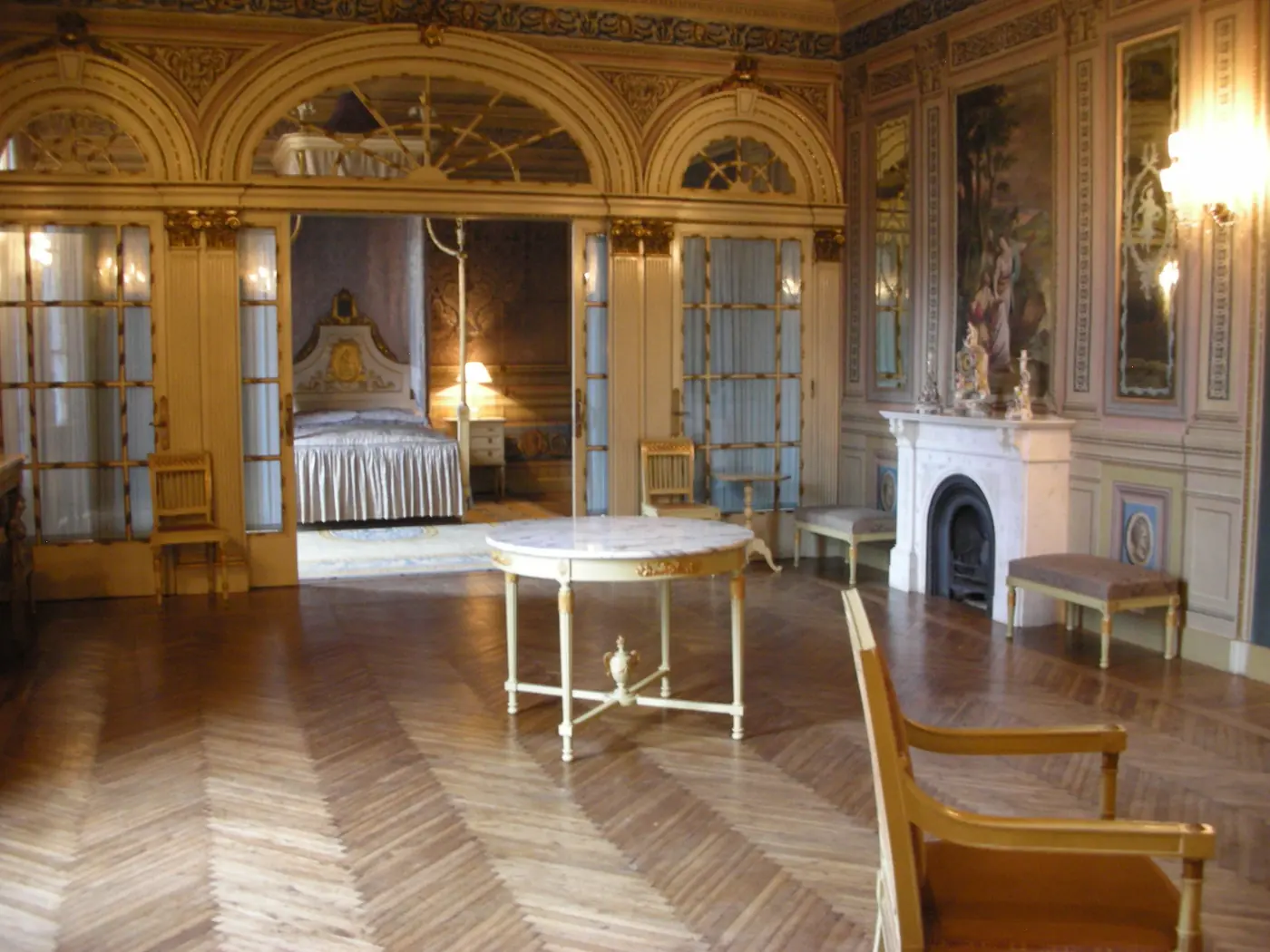
- Floor: oak parquet in chevron in the Royal Bedrooms; perimeter border and central rosette in a state room.
- Intervention: replica of a damaged border and consolidation of the rosette, by Parquets Nadal (published in 2017).
The parquet in the Royal Bedrooms, 110 m² on the first floor, was laid by the Barcelona firm Magí Pallarols. It was part of the decoration paid for by a committee of ladies of the Catalan nobility. The collection fell short: in January 1926 Pallarols was still claiming 24,000 pesetas, which the City Council paid months later.
In the state room, Parquets Nadal did the two things that come up with a marquetry parquet. It made a replica of the damaged border in its workshop in Arbeca. The central rosette, badly worn, it did not replace: it consolidated the loose pieces with resin and filler and sanded it only at the surface.
See the full article on the floors of the Royal Palace of Pedralbes.
Gaudí and Modernisme
Five works by Gaudí and one by Puig i Cadafalch, in the order they were begun. In several of them, the floor you walk on today is a replacement or a replica.
5. El Capricho de Gaudí, Comillas
- Location: Comillas (Cantabria).
- Floor: wood boards in the rooms, the corridor and the attic; marble in the entrance hall and the bathroom.
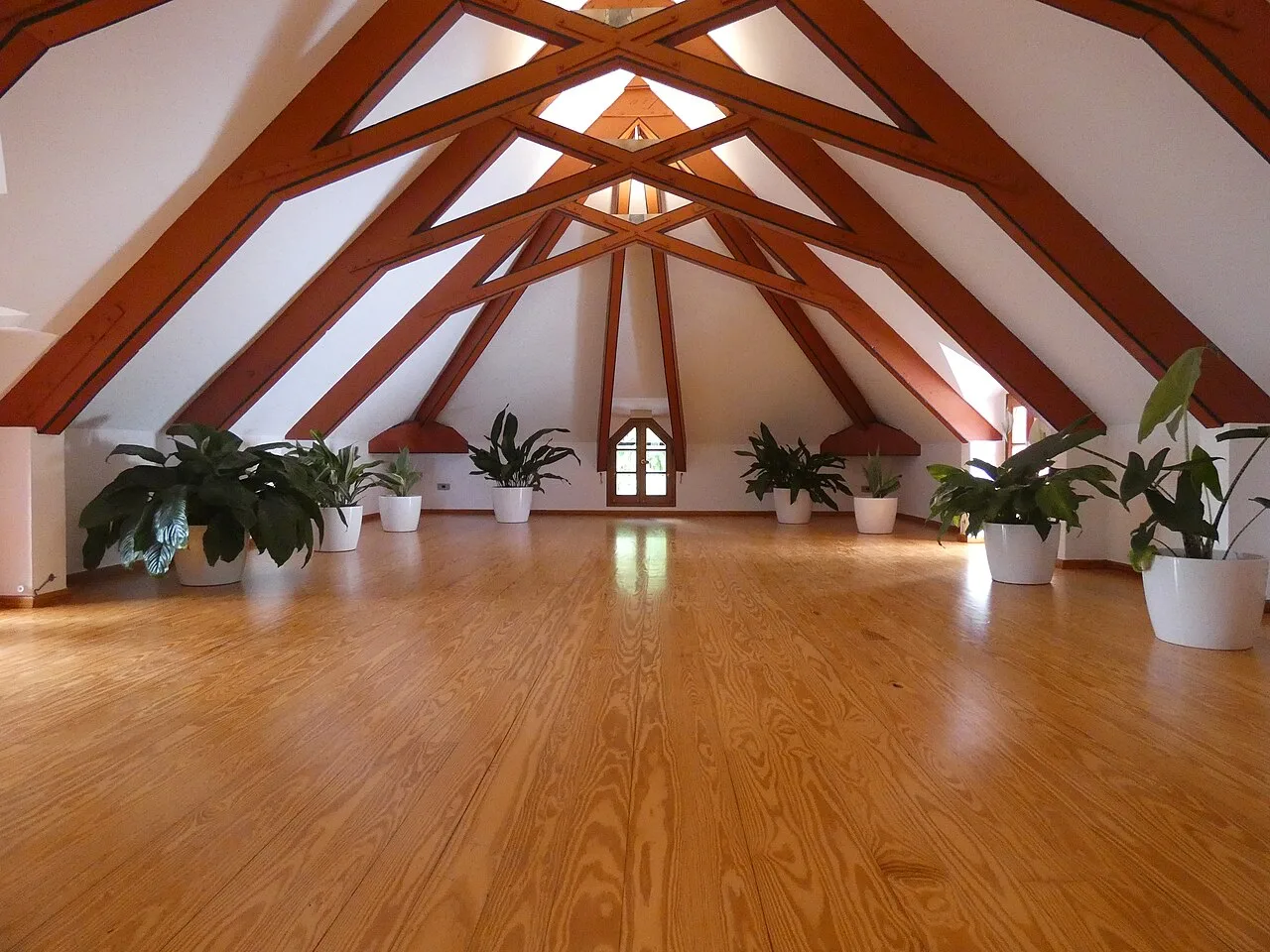
- Intervention: the wood of walls and floors was replaced or discarded because of age, wood-boring insects and damp.
The house spent nineteen years abandoned, including after Antonio Díez Vollrath bought it in 1977, and his children turned it into a restaurant. What is original can be told today by its color: the dark woods of the windows, eaves and coffered ceilings are from the original build, American pitch pine (pinotea), ebony or mahogany.
Nobody knows what wood the boards underfoot are, or what year they date from. They are honey-toned in the salon and the summerhouse, and wide and light in the attic, where the staff slept. In the salon and the smoking room, a narrow metal grille is set into the floor itself, next to the windows.
See the full article on the floors of El Capricho de Gaudí.
6. Episcopal Palace of Astorga
- Location: Astorga (León).
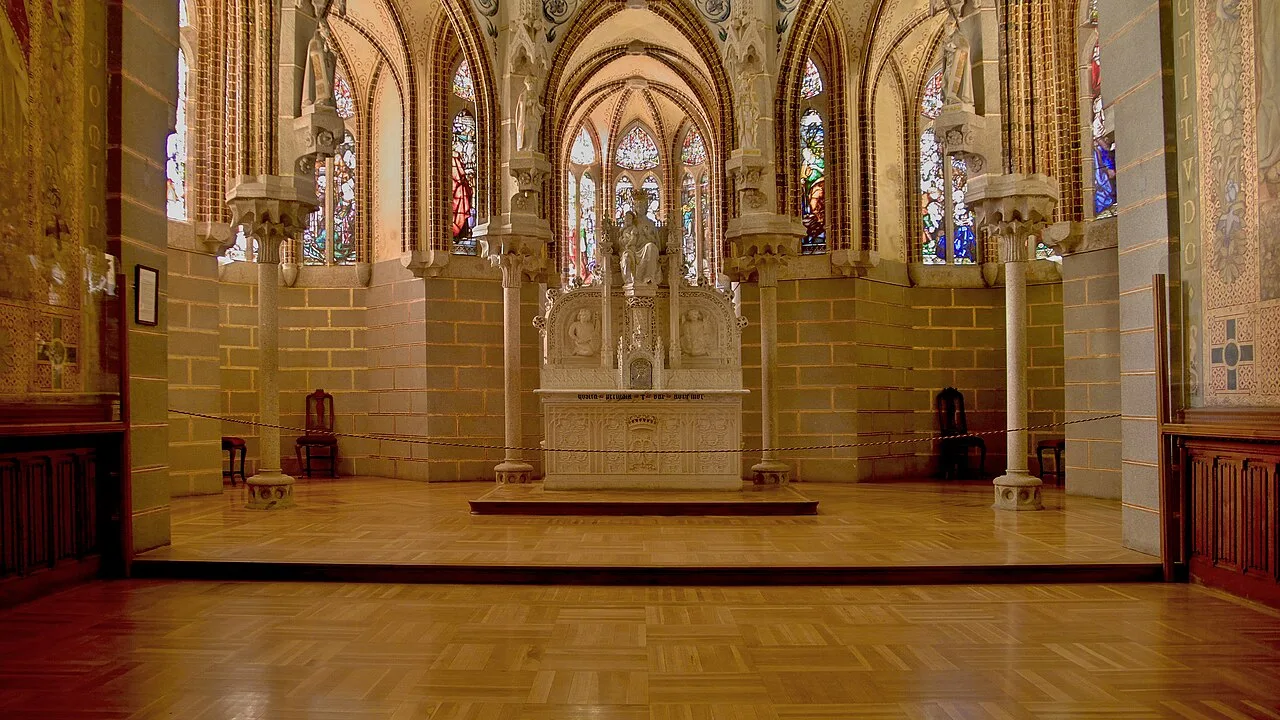
- Floor: squares of small strips in the chapel and the Throne Room, panels with bands in front of the chapel and herringbone in the vicar general’s office.
- Intervention: the project for the third phase of the restoration, from 2016 and 2017, included repairing the wood floors.
Gaudí resigned in 1893, after the death of the bishop who had commissioned the palace from him, and the work stopped. Until 1906 the building stood without a roof, and the floor of the main story, where the square-pattern parquets are today, served as the roof.
In the chapel, each square puts together three or four short strips and the next one turns them a quarter turn, like the weave of a basket. The design carries on unchanged over the presbytery dais. It is not known when the parquets seen today date from.
See the full article on the floors of the Episcopal Palace of Astorga.
7. Casa Botines, León
- Location: León.
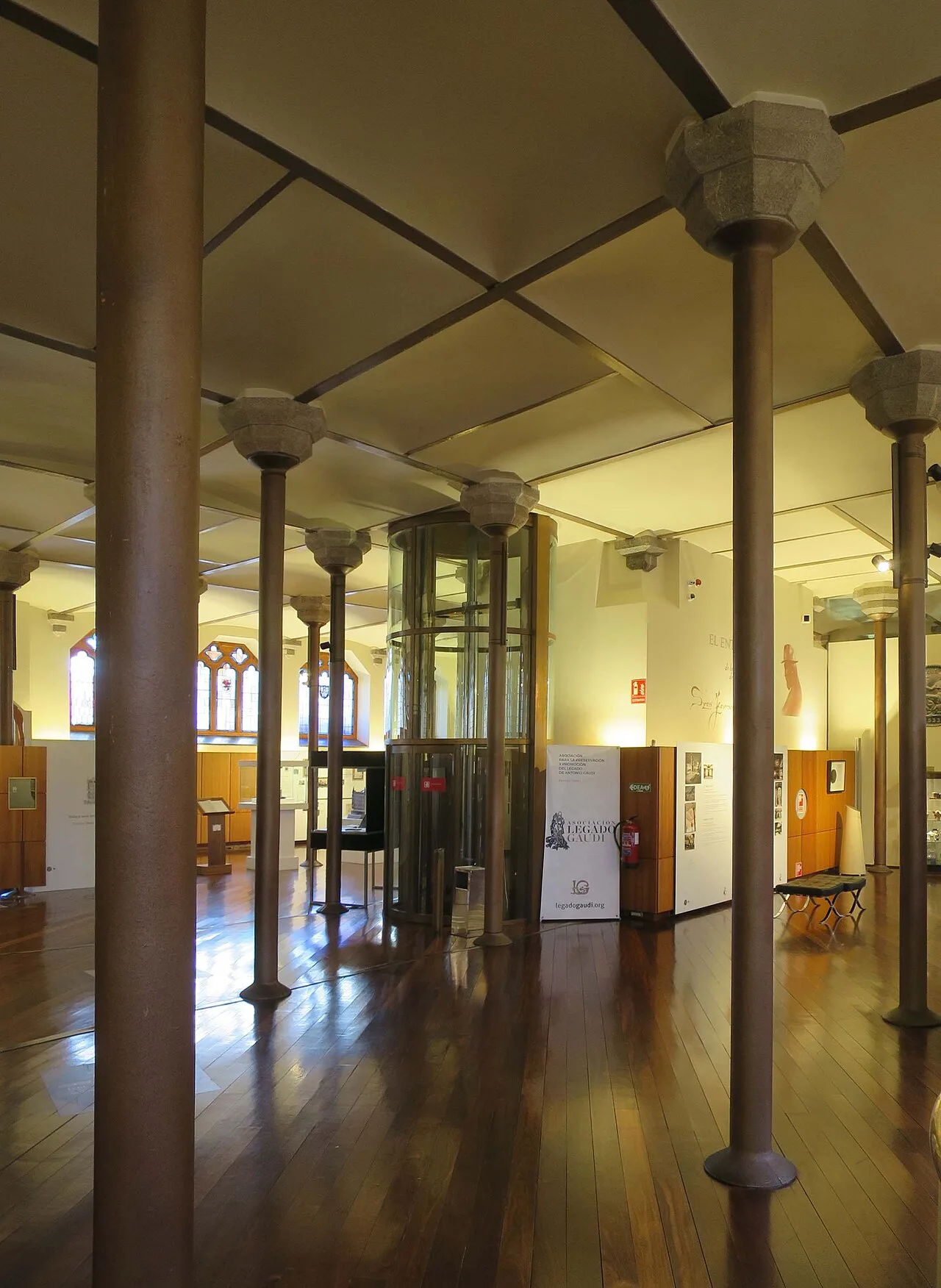
- Floor: solid wood flooring of narrow boards with staggered joints on the ground floor.
- Intervention: boards laid in the 1994–1996 rehabilitation in place of the 1953 marble; sanded and given a waterborne finish in 2026.
In 1953 the Caja de Ahorros savings bank clad the columns, the counters and the ground floor in white marble, and removed seven cast-iron columns. The Caja España rehabilitation undid that work, which the museum called “the misguided renovation” in 2017: it removed the marble, put the columns back and laid wood flooring.
In September 2026, the finish manufacturer Quide Group reported that its Deva brand had been used to restore the museum’s solid wood flooring. Parquets y Tarimas León sanded it with a multi-disc rotary sander and filled the joints before varnishing it.
See the full article on the floors of the Casa Botines.
8. Casa Amatller, Barcelona
- Location: Barcelona, Passeig de Gràcia.
- Floor: parquet of square tiles with a saltire cross in the center, in the salon and in a bedroom on the main floor.
- Intervention: mosaic, parquet and marble floors restored on the main floor, where work began in 2014.
Josep Puig i Cadafalch remodeled the house between 1898 and 1900 for the chocolate maker Antoni Amatller, who showed the best pieces of his collection in the salon. Each tile is a square with a frame of small strips and a center split into four triangles; nobody knows what wood it is or who laid the floor.
In 1960 the apartment became the seat of the Instituto Amatller de Arte Hispánico, with shelving on every wall possible. The restoration that ended in 2015 removed the library and returned the apartment almost to its 1900 state.
See the full article on the floors of the Casa Amatller.
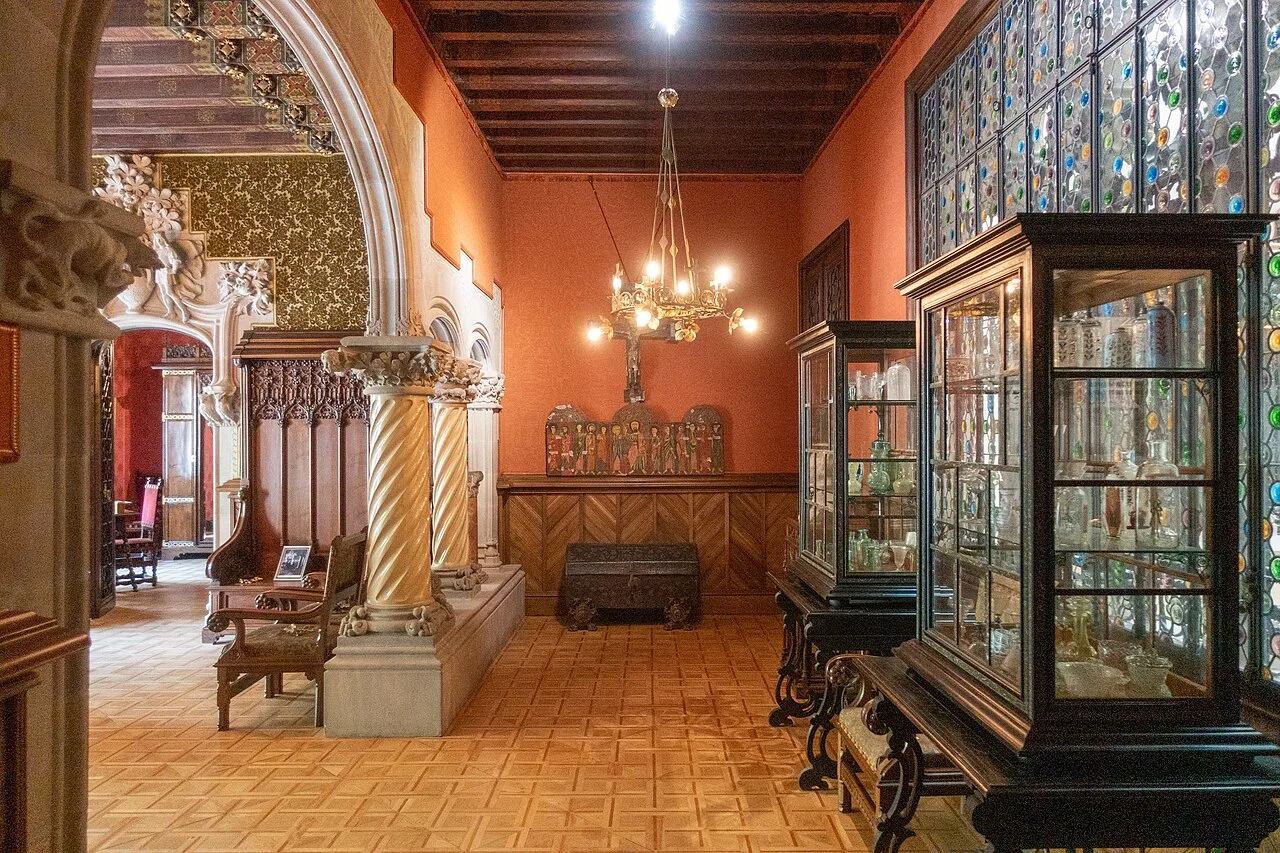
9. Casa Batlló, Barcelona
- Location: Barcelona, Passeig de Gràcia.
- Floor: square tiles of short strips in basketweave, on the diagonal to the walls, on the main floor.
- Intervention: replica of 400 m² and more than 1,600 tiles in century-old wood from beams and joists, made by Parquets Nadal in 2012.
Nadal bought century-old wood from factories, old beams and joists, treated it and cut it into the small pieces of each tile. The tiles were assembled and varnished in the workshop, and laid without closing the floor to visitors.
What was lifted may not have been Gaudí’s. According to the article published in 2020 by the architects of the latest restoration, the wood floor was a reproduction laid in the 1990s. If they are right, the 2012 tiles copy a copy.
See the full article on the floors of the Casa Batlló.
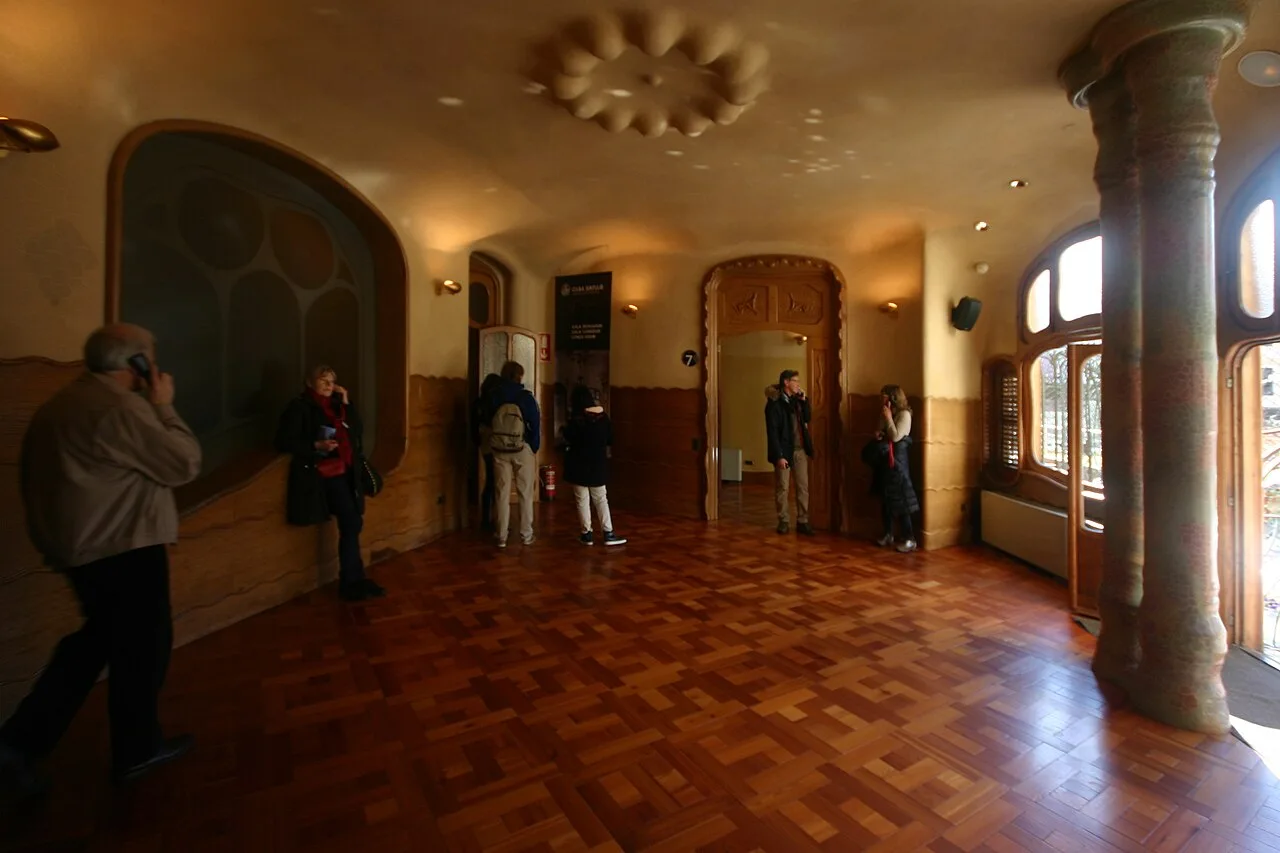
10. Casa Milà (La Pedrera), Barcelona
- Location: Barcelona, Passeig de Gràcia.
- Floor: hexagons of oak and poplar split into twelve triangles, in the main rooms of the apartments.
- Intervention: in 1927 Rosario Segimon had the parquet on the main floor torn up.
The parquet was made by the Barcelona workshop Casas i Bardés, which in 1907, with La Pedrera under construction, advertised itself as a maker of “parquets (wood floors, natural wood mosaic).” When the hexagons are joined, the divisions of one carry on into the next and form a two-color mosaic.
Rosario Segimon, the owner of the building, never liked the decoration Gaudí had done in her apartment. After the architect’s death she commissioned new work, and the 1927 quote included “pulling up the llatas (strips) of the parquets.” The apartment open to visitors is on the fourth floor. The Fundació does not say whether its floors are the 1911 ones or were replaced in the restoration that ended in 1996.
See the full article on the floors of the Casa Milà.
Stately homes and palaces
Two houses from the same fortune: Antonio López, the future Marquis of Comillas, bought the Palau Moja in 1870 and had Sobrellano built.
11. Palau Moja, Barcelona
- Location: Barcelona, La Rambla.
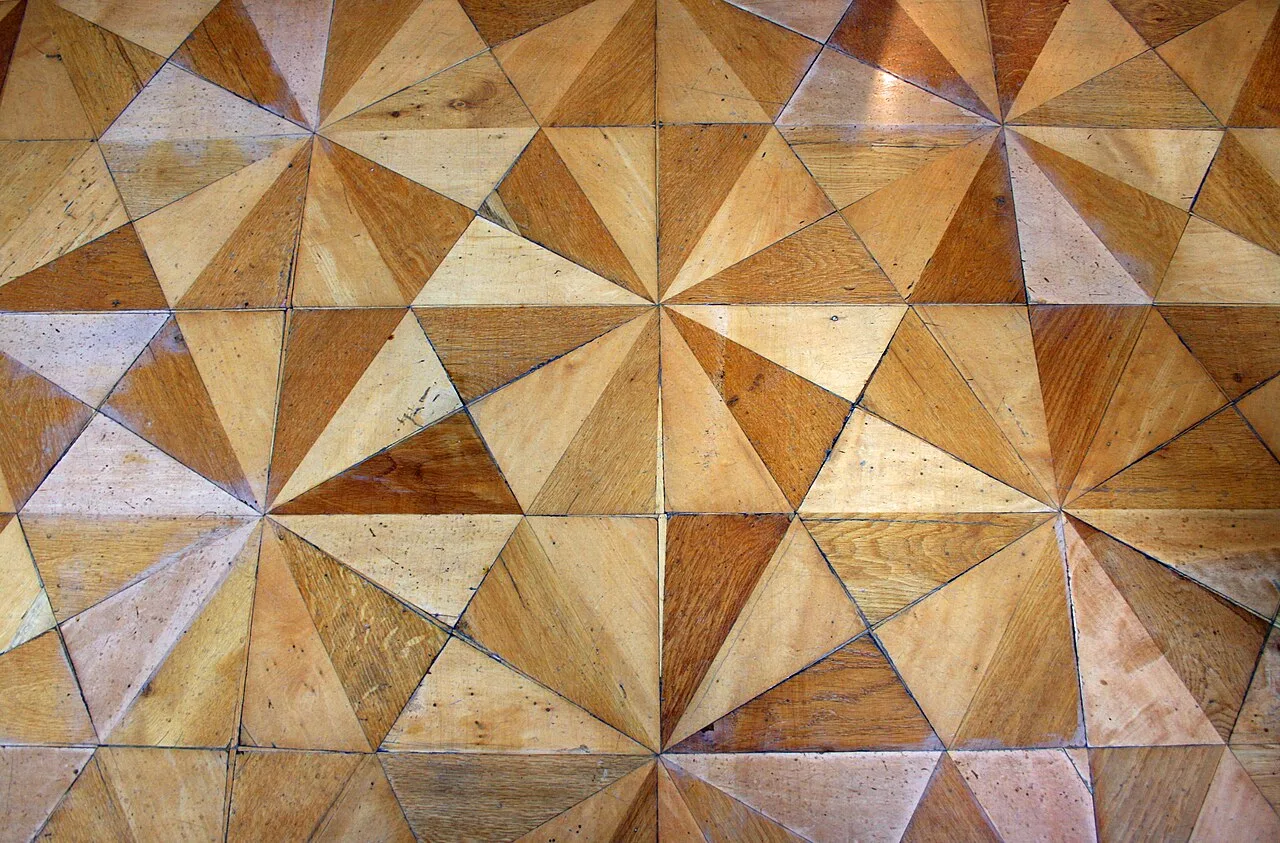
- Floor: parquet of square panels in two tones in the anteroom.
- Intervention: in 1875 Antonio López replaced the terracotta on the main floor with parquet.
Each panel in the anteroom is crossed diagonally by light strips that split it into four triangles, and each triangle holds a darker one inside. It is not known whether this is the 1875 parquet.
In the work the Generalitat (Catalan government) commissioned in 1982, the architect Francesc Mitjans wanted to replace the original floor of the Great Hall with Carrara marble. The director general, Jordi Bonet, answered that nothing in the hall’s decoration could be touched, and the marble was not laid.
See the full article on the floors of the Palau Moja.
12. Palacio de Sobrellano, Comillas
- Location: Comillas (Cantabria).
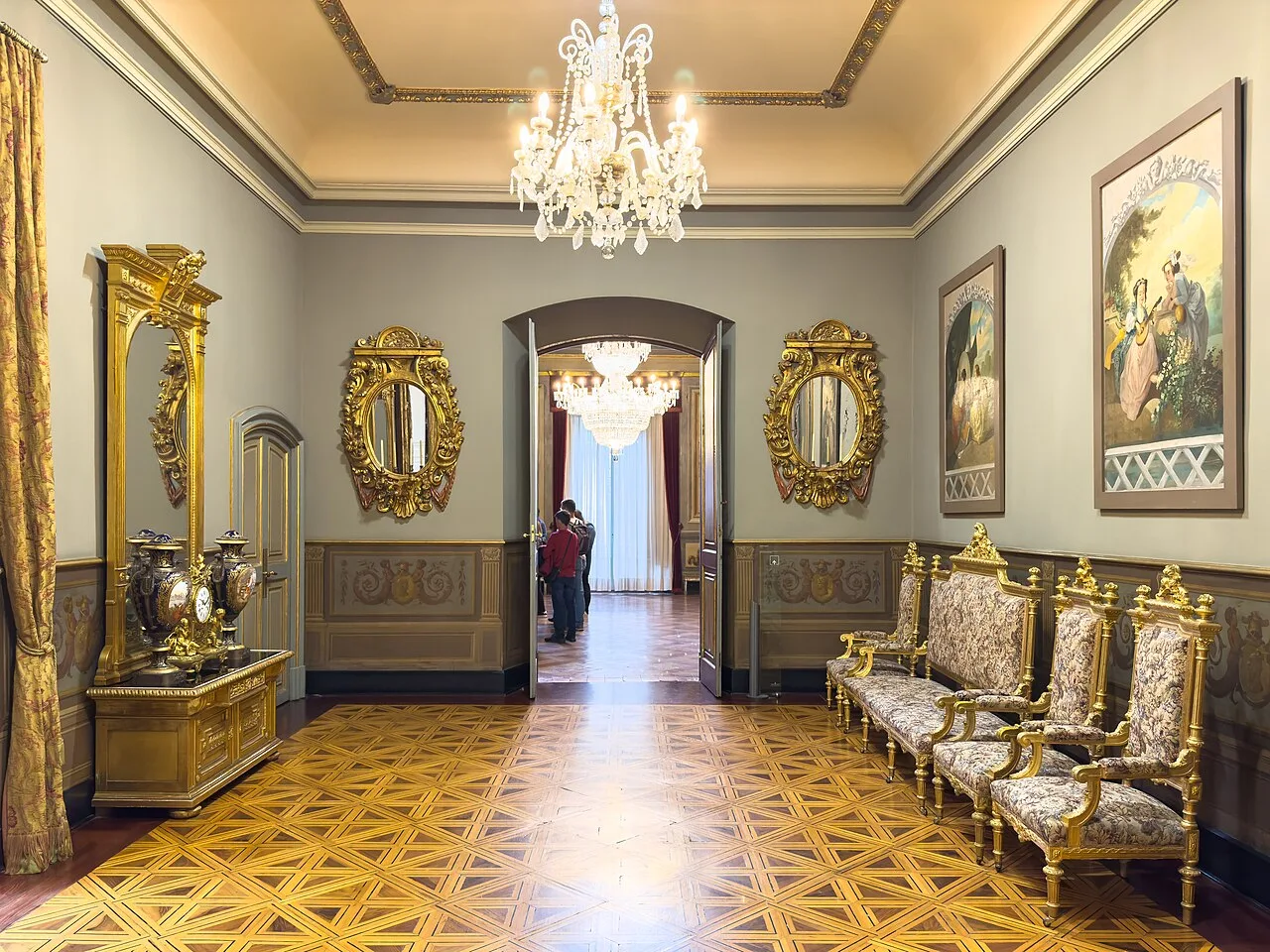
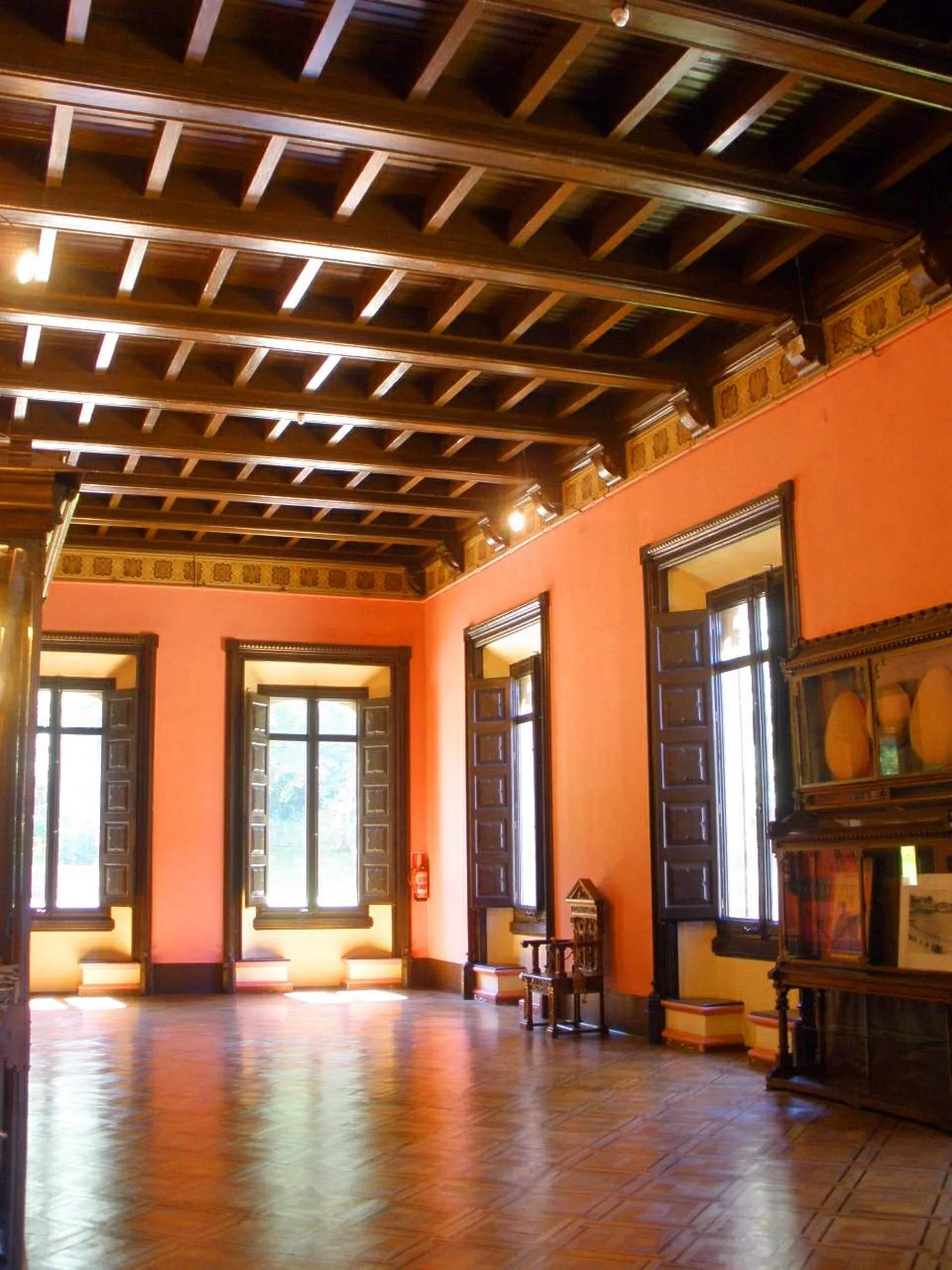
- Floor: oak and ebony floorboards; in the photos, diagonal squares, checkerboard and herringbone.
- Intervention: public purchase agreement of 1985, with 20 million pesetas set aside for works; listed as a Bien de Interés Cultural (heritage site) since 2002.
Antonio López y López, first Marquis of Comillas, commissioned the palace from Joan Martorell as a summer residence for his family and the royal family. The Cantabria Department of Culture, which manages it, singles out among its materials the oak and ebony floorboards.
Three wood designs can be seen in the photos of the rooms. There are diagonal squares in a room with a beamed ceiling, a checkerboard next to a carved fireplace and herringbone at the foot of a spiral staircase.
See the full article on the floors of the Palacio de Sobrellano.
Institutional seats and casinos
A provincial council, a casino and a club that is now a parliament. They are three 19th-century halls with the floor their owners consider original, or with the date it was lost.
13. Palacio de Navarra, Throne Room, Pamplona
- Location: Pamplona (Navarre).
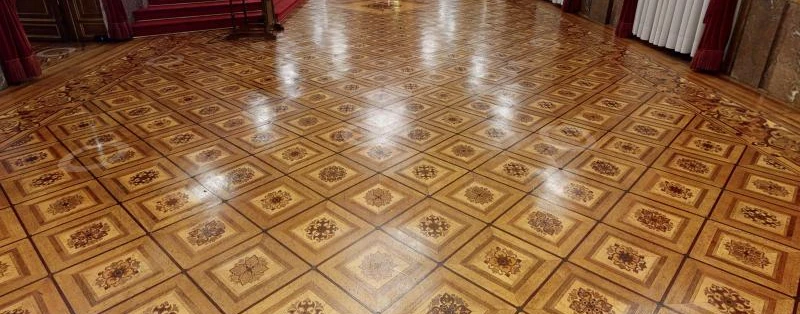
- Floor: marquetry flooring by the firm M. Laurent of Paris, with more than 500 diamonds and a fret border, across the whole Throne Room.
- Intervention: laid in 1862 by the carpenter Lázaro Peruchena.
The Throne Room had been left undecorated in 1851. Its decoration was undertaken in 1860, after a visit by Isabella II to Pamplona was announced that never took place. The work went ahead anyway, with the 1861 design by Maximiano Hijón, inspired by medieval art.
See the full article on the floors of the Palacio de Navarra.
14. Real Casino de Murcia
- Location: Murcia.
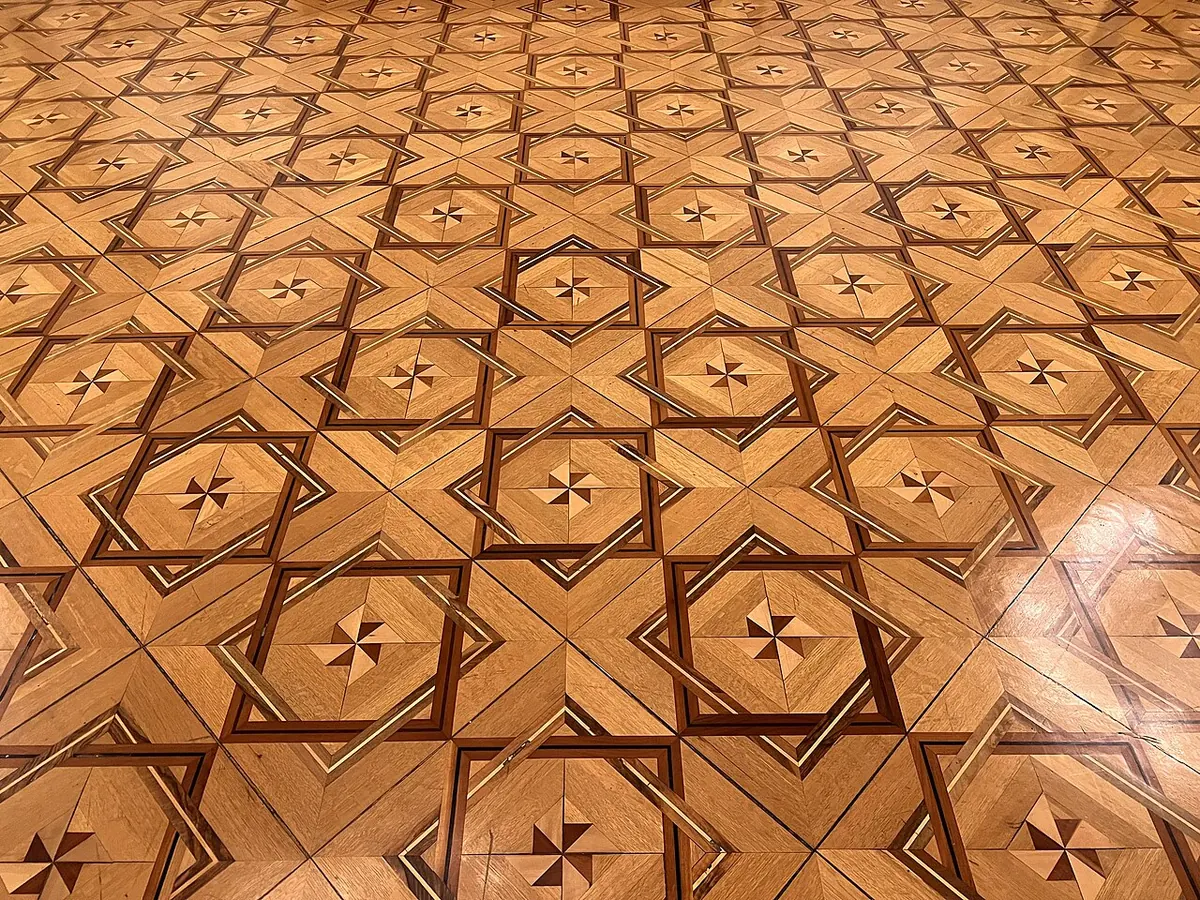
- Floor: marquetry flooring of octagons and eight-pointed stars on the dance floor of the Ballroom.
- Intervention: restoration of the building from 2006 to 2009 without replacing the dance floor, according to the Casino; carpet in the hall to protect the original floors.
The Casino dates the dance floor to 1877, two years after the hall was finished, and says it has not been replaced in any renovation.
There is more wood in the building. The English Library, made in 1913 by the British firm Waring & Gillow, has a parquet of crossed bands over air chambers. The Cantina keeps its original marquetry wood floor, which rain leaks had damaged and which was restored in full in 2023.
See the full article on the floors of the Real Casino de Murcia.
15. Parlament de les Illes Balears, Palma
- Location: Palma.
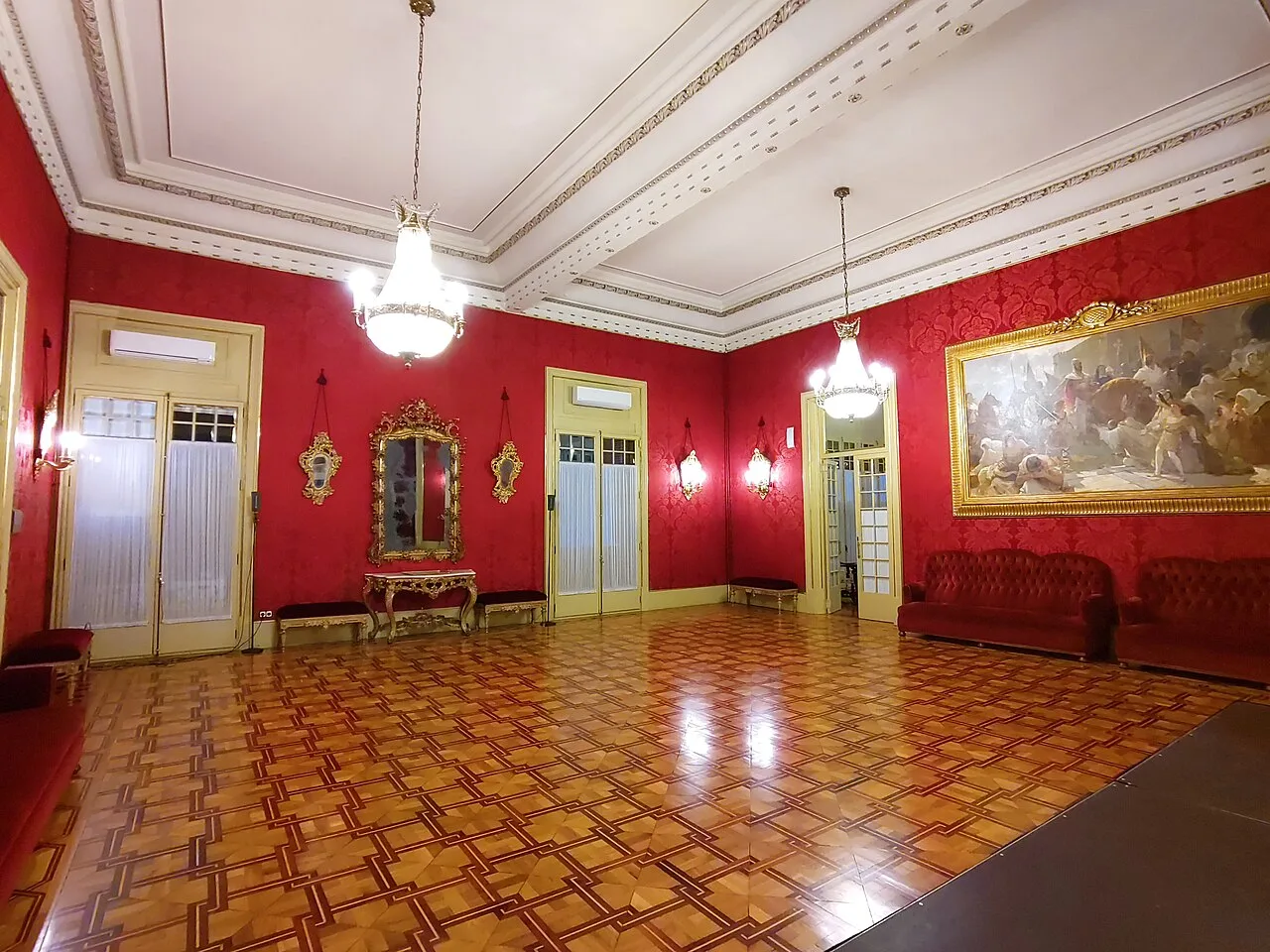
- Floor: panels with four-pointed stars and reddish bands in the Salón de Pasos Perdidos (lobby); ebony and mahogany inlays in the Senate hall.
- Intervention: the wooden dance floor of the old ballroom was replaced with marble in 1963.
The Parlament visitor guide says the wood of the Pasos Perdidos parquet is original from 1884. That year the painter Ricard Anckermann finished his work on the main floor of the Círculo Mallorquín. The renovation by Miquel Madorell, between 1913 and 1918, left those rooms untouched.
Between one panel and the next runs a reddish band with a light fillet, and at the crossings the bands tie into a knot. From 1884 the balls were held in Anckermann’s hall, which is now the Plenary Chamber.
See the full article on the floors of the Parlament de les Illes Balears.
Restore or replace
The same decision comes up again and again in these floors. In the Casa Batlló the tile floor was lifted and a replica was made in century-old wood. In the Magdalena the floors of three rooms were replaced in full. In the room that joined the Riancho and the Bringas, the old floor was leveled so it could be sanded and only the joining area was replaced. In Pedralbes a damaged border was replicated, and the rosette was consolidated and sanded only at the surface. And the Real Casino de Murcia keeps its dance floor, which according to the Casino has not been replaced in any renovation.
In a parquet at home the decision is made the same way, measuring first. What matters is the wood left above the tongue, and you can see it on the edge of a piece. If not, it is estimated from the age of the floor and the sandings it has had, and by sounding it out. Below 2 or 3 mm restoring is barely viable. A sanding removes from about 0.8 mm up to 3 mm or more, depending on the species and the leveling, and less the flatter the floor is. Pieces that sound hollow are injected or reglued, and the joints are closed with parquet resins, never with sawdust. With enough thickness, the job is to sand and restore; for a period floor, there is the historic parquet page.
Historic parquet restoration. Before restoring a period floor we measure how much wood it has left. Ask our parquet craftsmen.
Sources
- Jose Luis Filpo Cabana, Wikimedia Commons, CC BY 3.0.
- Jose Luis Filpo Cabana, Wikimedia Commons, CC BY 3.0.
- Patrimonio Nacional, Casa del Labrador (license not recorded).
- Jl FilpoC, Wikimedia Commons, CC BY-SA 4.0.
- Enric-Eduard Giménez, Wikimedia Commons, CC BY-SA 4.0.
- Artistosteles, Wikimedia Commons, CC BY-SA 4.0.
- José Luis Filpo Cabana, Wikimedia Commons, CC BY 3.0.
- Reinhard Dietrich, Wikimedia Commons, CC BY-SA 4.0.
- Kent Wang, Wikimedia Commons, CC BY-SA 2.0.
- José Luiz, Wikimedia Commons, CC BY-SA 3.0.
- Bert Kaufmann from Roermond, Netherlands, Wikimedia Commons, CC BY 2.0.
- Kent Wang, Wikimedia Commons, CC BY 4.0.
- Zarateman, Wikimedia Commons, CC0.
- Screenshot from the virtual tour of the Palacio de Navarra (Tantatic), license not recorded.
- Zandcee, Wikimedia Commons, CC BY-SA 4.0.
- Joan Gené, Wikimedia Commons, CC BY-SA 4.0.


