
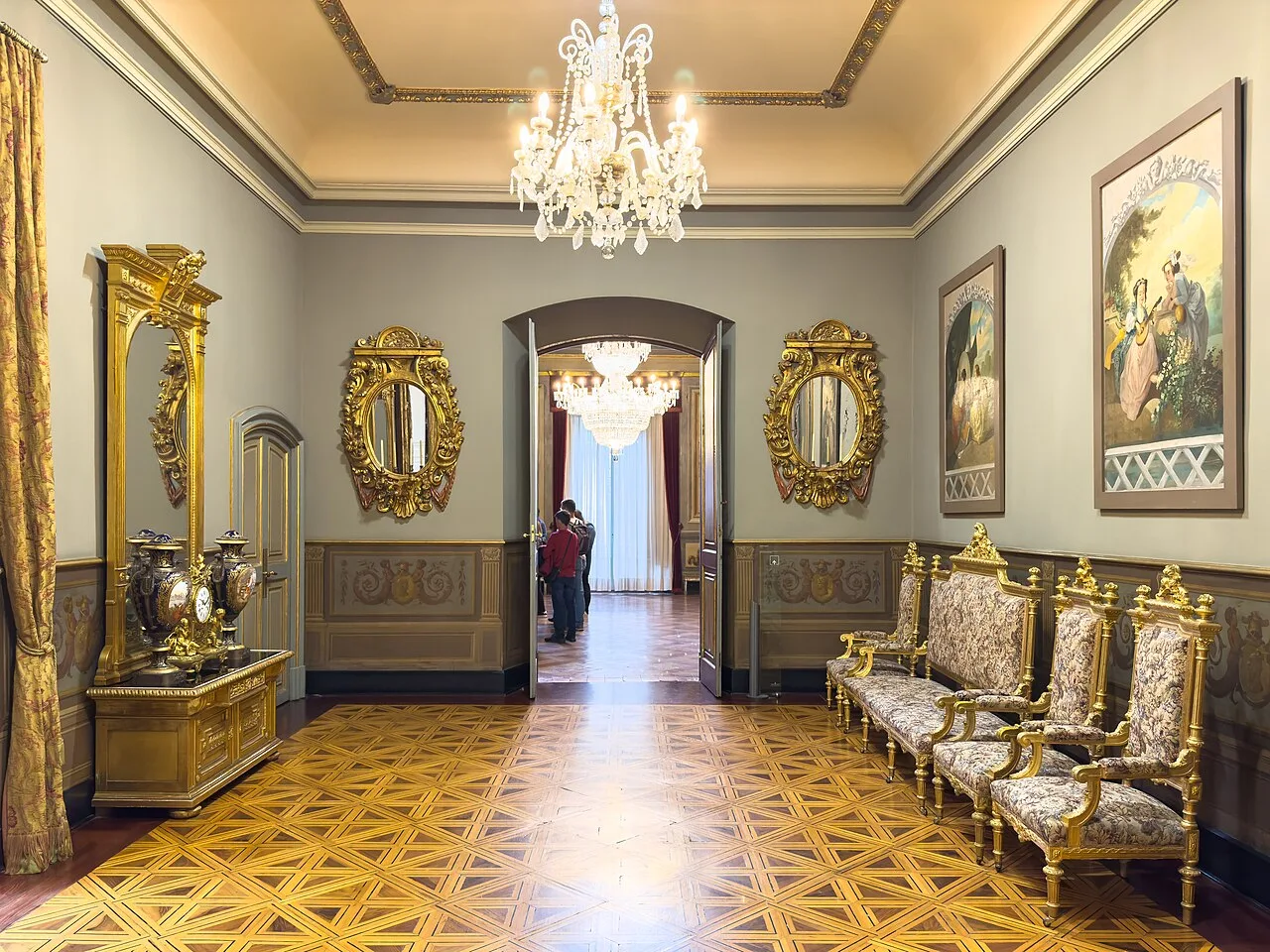
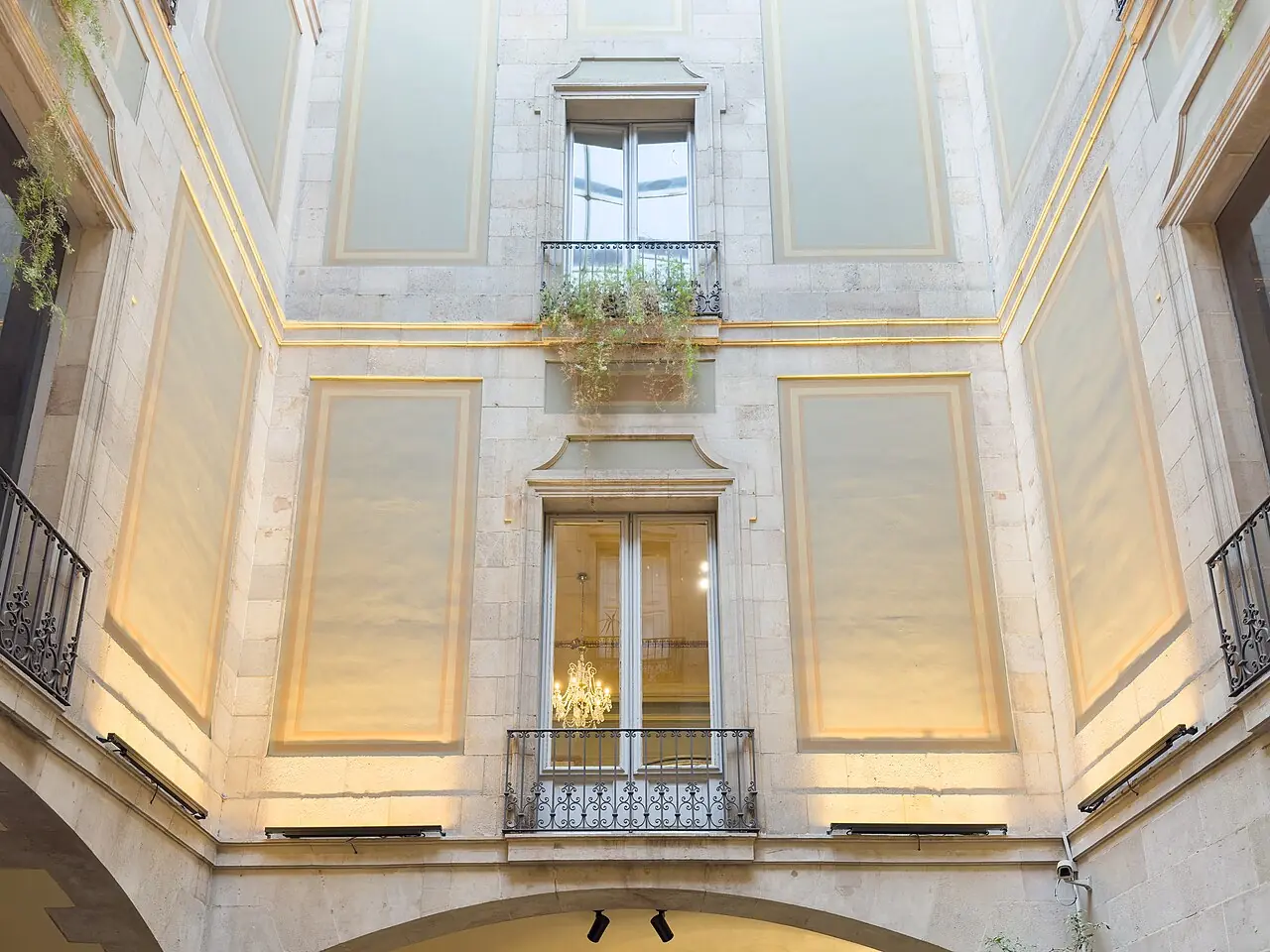
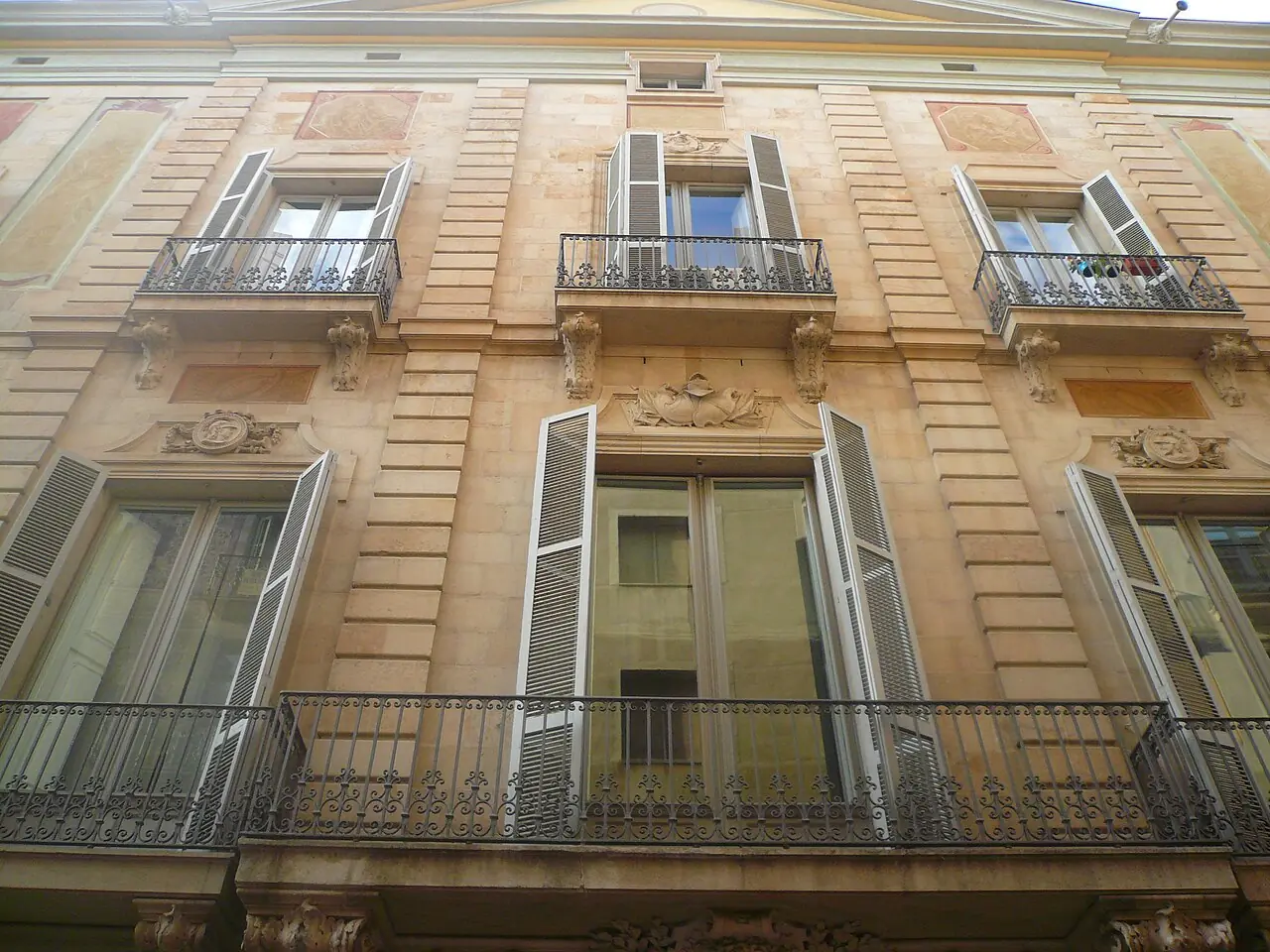
The Palau Moja, on the Rambla in Barcelona, opened in 1784 with terracotta floors in several colors on the main floor. In 1875 the shipowner Antonio López, later Marquis of Comillas, replaced them with parquet. Today the anteroom has a parquet of geometric panels in two tones, of unknown date. It is one of the cases in the best parquet floors in Spain.
The marchioness’s will
The last Marchioness of Moja, Josepa de Sarriera, died childless in 1865 and ordered everything sold for pious works. She required the buyer not to demolish the house or carry out works that would transform it; only the second and third floors could be reorganized.
Her heirs leased the palace to the Fomento de la Producción Nacional until Antonio López bought it in 1870. He had made his fortune in Cuba and, according to the Generalitat (the Catalan government), also in the illegal slave trade.
The 1875 remodel
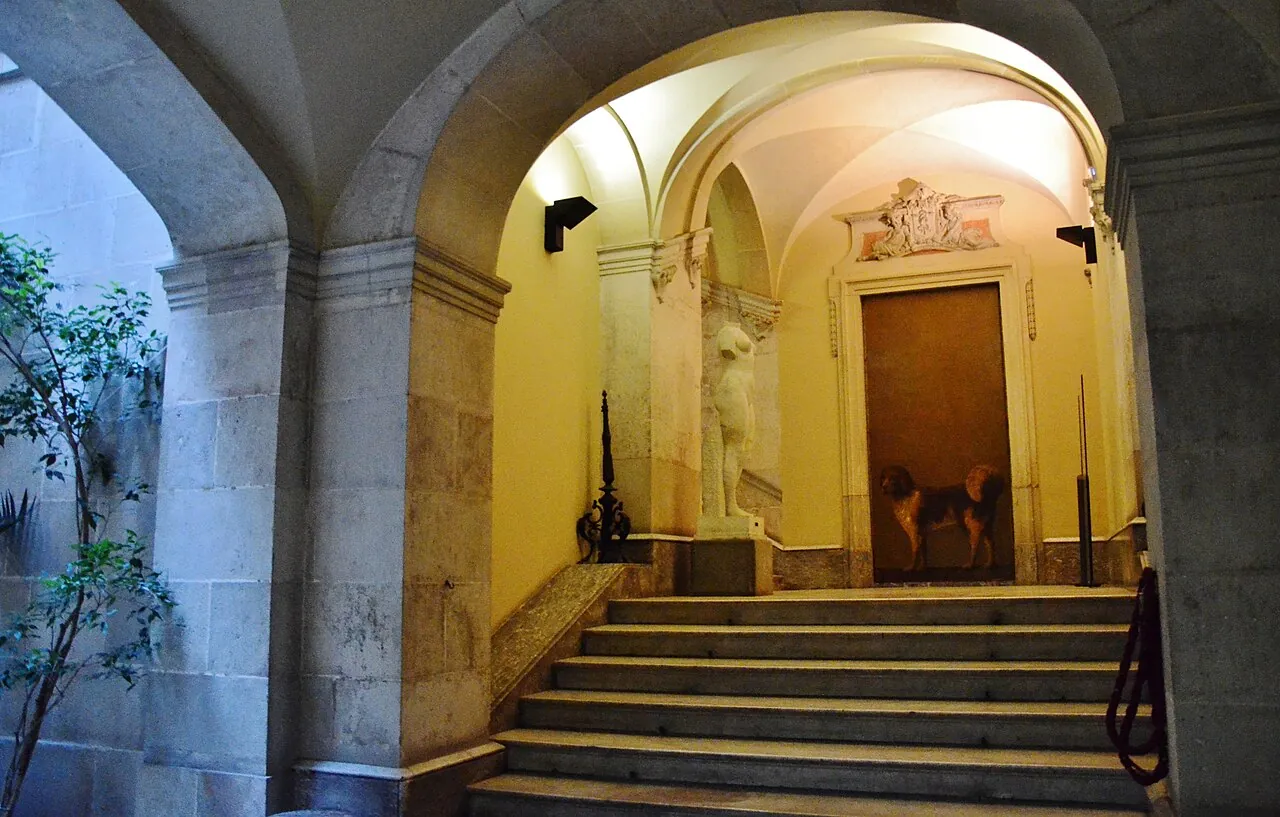
López threw himself into the return of the Bourbons, and in 1875, the year Alfonso XII rode into the palace on horseback, the interior remodel began. The main staircase was rebuilt with a flight of steps and a white marble balustrade.
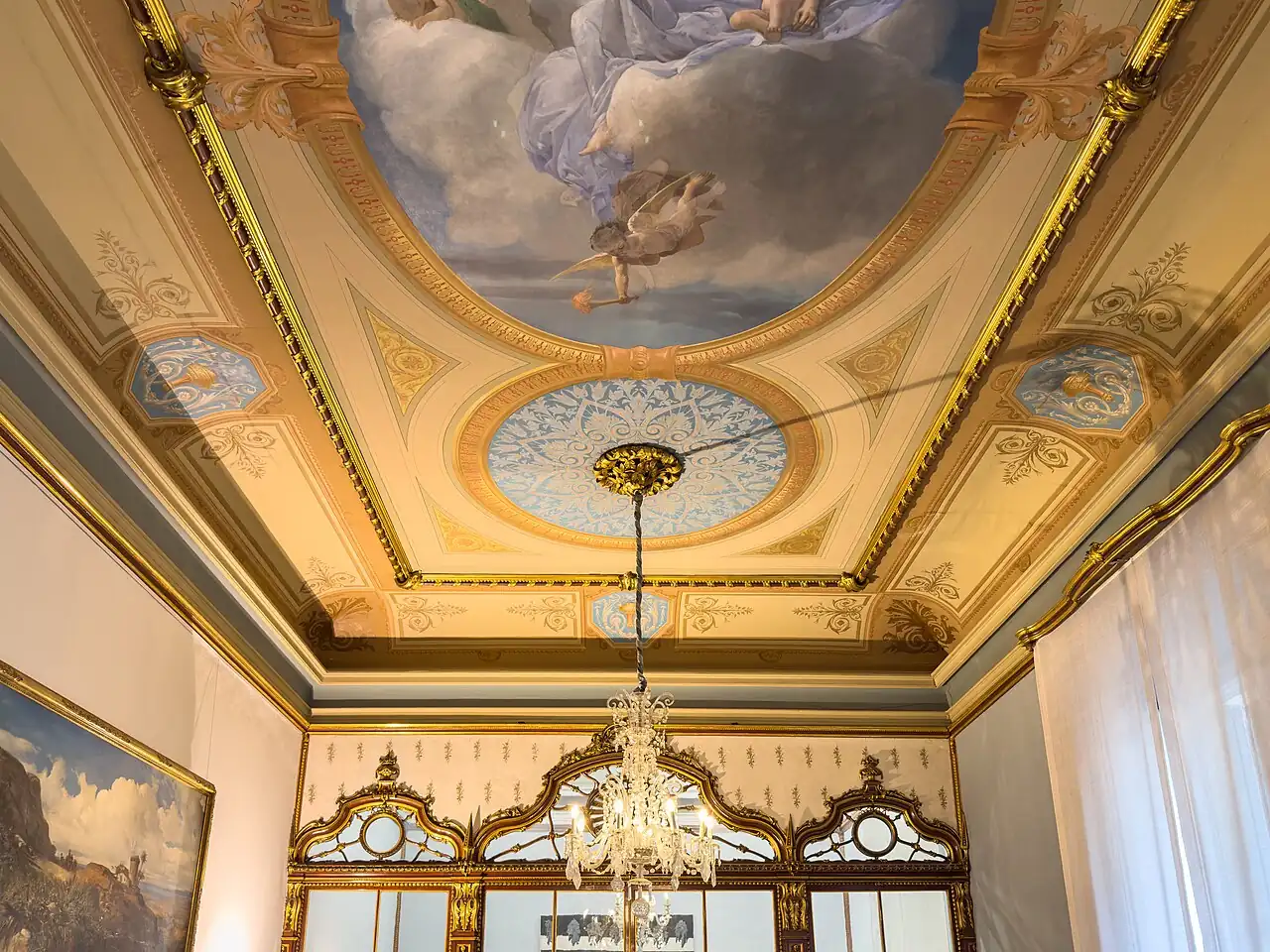
On the main floor the terracotta was taken up and parquet went in, which the historian Elisenda Rosàs calls “luxurious.” The ceilings of the estrados, the reception rooms, were also painted; a century later they would suffer from the work on the floor above.
Everything was brought up to date except the Great Hall (Saló del Vigatà), which the will protected. The two upper floors, which could be reorganized, were altered much more.
The anteroom
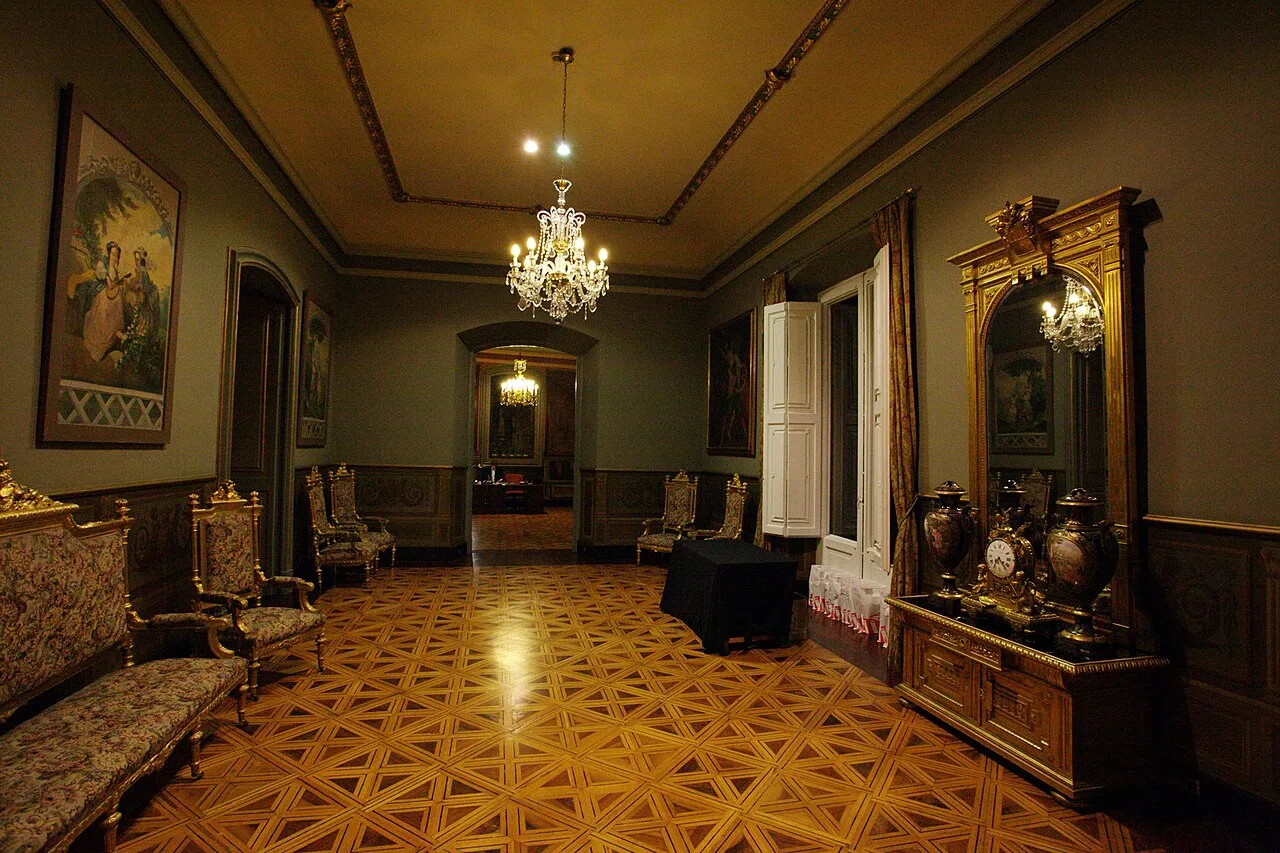
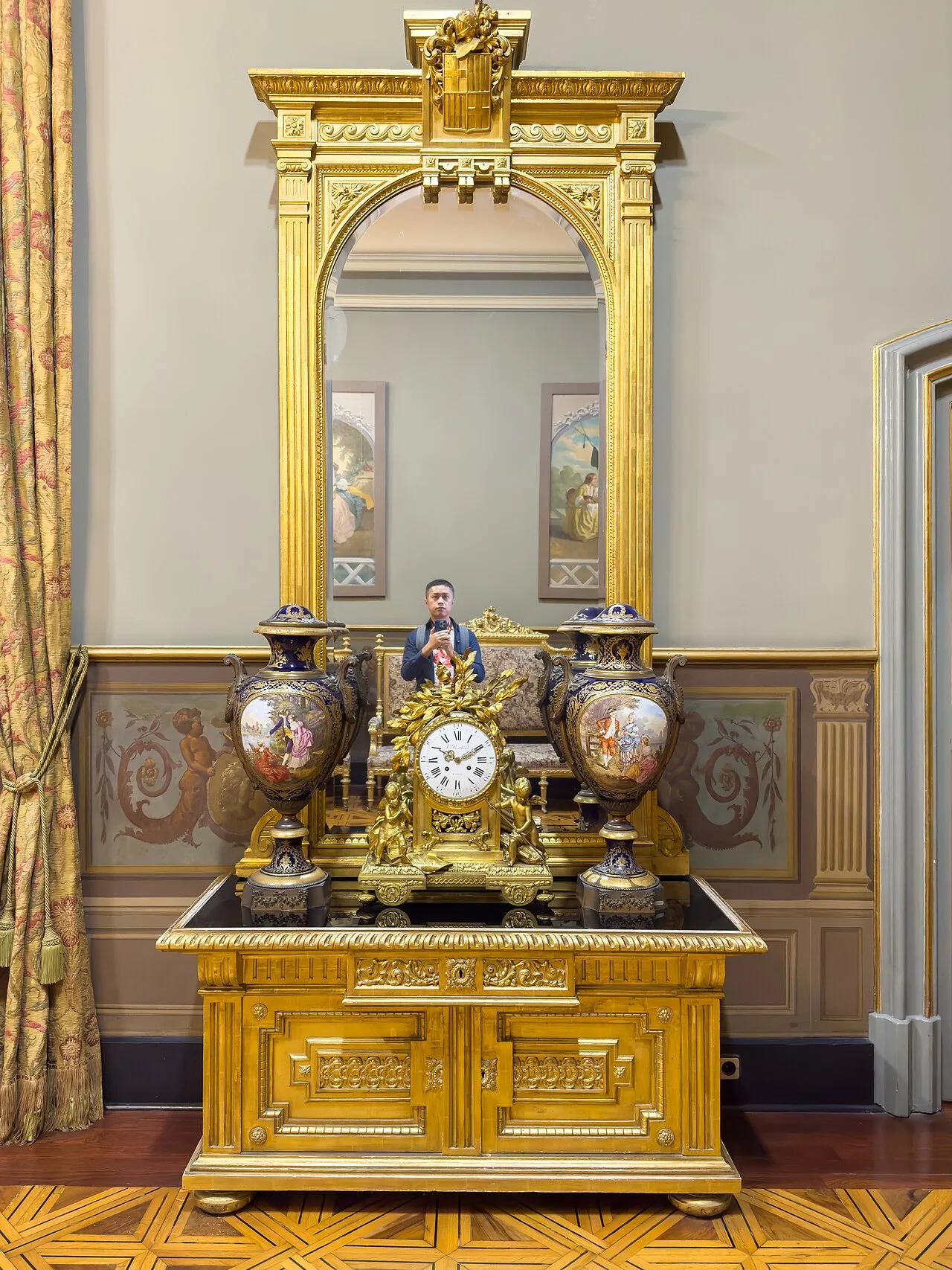
At the top of the staircase is the Pere Pau Muntanya Room, with paintings by that artist. The visitor guide from the Department of Culture warns that its wood floor creaks when you walk on it. Behind it comes the anteroom, which the guide photographs with the same gilded mirrors and the same set of chairs seen here.
Its floor is made of square parquet panels, crossed diagonally by light strips that divide them into four triangles. Each triangle holds a darker one inside, and dark fillets outline the strips. At the foot of the wainscot there is a band of dark board, and the pattern runs on to the door of the next room. The woods are unknown, as is whether this is the 1875 parquet.
The Great Hall
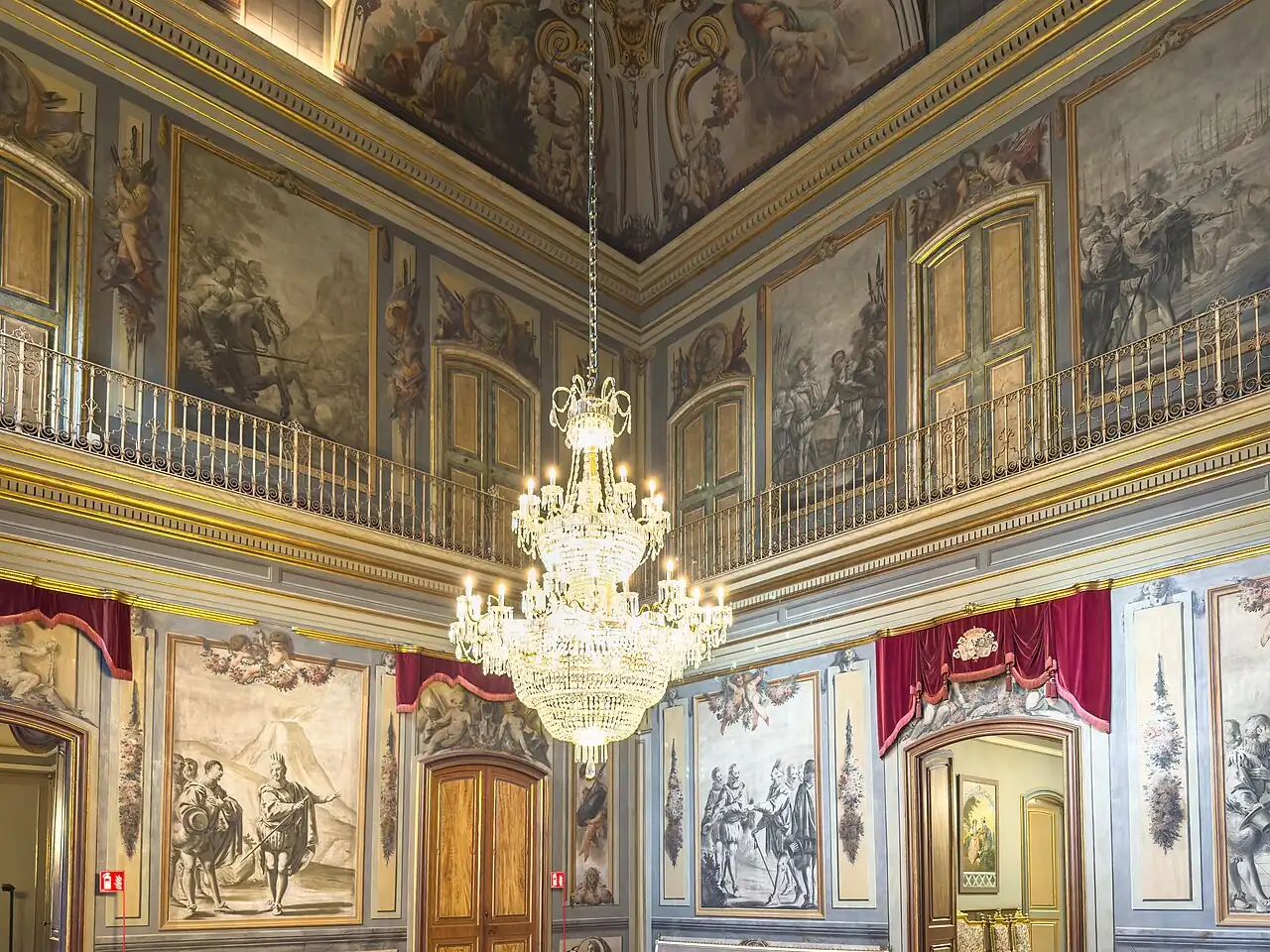
The Great Hall is square in plan and two stories high. Francesc Pla, known as el Vigatà, painted its walls and ceiling with the history of the Cartellà family, and sent his bill in 1791. It was the ballroom of the house, and the Generalitat recalls that the best balls in the city were held there. To one side opens a small chapel where Jacint Verdaguer, the family’s chaplain from 1876 to 1893, said mass.
A hall without a roof
From the 1960s the condition of the house got worse, and in 1969 it was protected as a Bien de Interés Cultural (listed heritage site). The protection limited the value of the plot, in a key spot in Barcelona. In the early 1970s, two “theoretically accidental” fires, in Rosàs’s words, ruined a good part of the rooms on the garden side.
The Great Hall was left black with smoke, with half the ceiling down and the roof tiles exposed, and pigeons flew in freely. In the eleven years of neglect, furniture and paintings disappeared, and some of them ended up on the antiques market.
The 1982 work
The Generalitat bought the palace in 1982 for its Directorate General of Cultural Heritage and commissioned the work from Francesc Mitjans. The architect was 73, had built Barça’s stadium in 1957 and was not a restoration specialist. The workers started demolishing without a project or a permit, and the civil servants moved in to work among them.
The floors of the second floor were originally, probably, clay tile on a wood boarding, a very local system. In the early 20th century they were replaced with black and white encaustic cement tile in a checkerboard. In the work, that tile was removed and a layer of mortar reinforced with steel bars was poured over the boards.
The mortar, too liquid, seeped between the boards and went through the plaster ceiling of the estrados on the main floor, ruining their paintings. On top, a linoleum was laid that imitated the checkerboard of the removed tile.
The new staircase, 1.50 m wide, took the place of the kitchen and a service stair. It was designed with marble on the first flight and linoleum on the rest, but in the end it was done entirely in marble.
Carrara marble
In the last phase, Mitjans wanted to replace the original floor of the Great Hall with one of Carrara marble. He also proposed hanging nine chandeliers and covering some of the painted flower panels with mirrors.
The director general, the architect Jordi Bonet, replied that nothing in the hall’s decoration could be touched and the cost could not go up. In a letter of June 1983 he asked him to “finish the work once and for all.” The marble was not laid.
Mitjans also intended to cut in half the hall’s 18th-century benches, which he apparently found too long. The restorer Emili Julià, who was working on the paintings from the scaffold, took them away to a storeroom of his own, and when the work was over they came back whole.
A parquet that makes noise
The noise of the floor in the room at the top of the stairs, which the guide warns about, is the first thing we would look at. If it sounds hollow, the area is injected or reglued depending on how far it has come loose, and that fixing goes with the restoration of the floor, not on a standalone visit. A similar case: the salons of Fernán Núñez, where we reglued by hand the loose pieces of the marquetry.
The Palau Moja in pictures
Restoration of historic parquet
A panel parquet with triangles and fillets, like the one in the anteroom, can be restored without losing the pattern. More on floors with history in Historic parquet.
Sources
- Kent Wang, Wikimedia Commons, CC BY 4.0.
- ca:user:amadalvarez, Wikimedia Commons, CC BY-SA 3.0.
- Kent Wang, Wikimedia Commons, CC BY 4.0.
- Kent Wang, Wikimedia Commons, CC BY 4.0.
- Kent Wang, Wikimedia Commons, CC BY 4.0.
- Kent Wang, Wikimedia Commons, CC BY 4.0.
- MARIA ROSA FERRE ✿, Wikimedia Commons, CC BY-SA 2.0.
- Pere López, Wikimedia Commons, CC BY-SA 3.0.


