
The seat of the Parlament de les Illes Balears (Balearic Islands Parliament), in Palma, was until 1983 the Círculo Mallorquín, the island’s high-society club. On the main floor, the Salón de Pasos Perdidos (Hall of Lost Steps) keeps a panel parquet with its wood from 1884, and the Salón del Senado (Senate Room) another of fine woods with inlays. It is one of the cases in the best parquet floors in Spain.
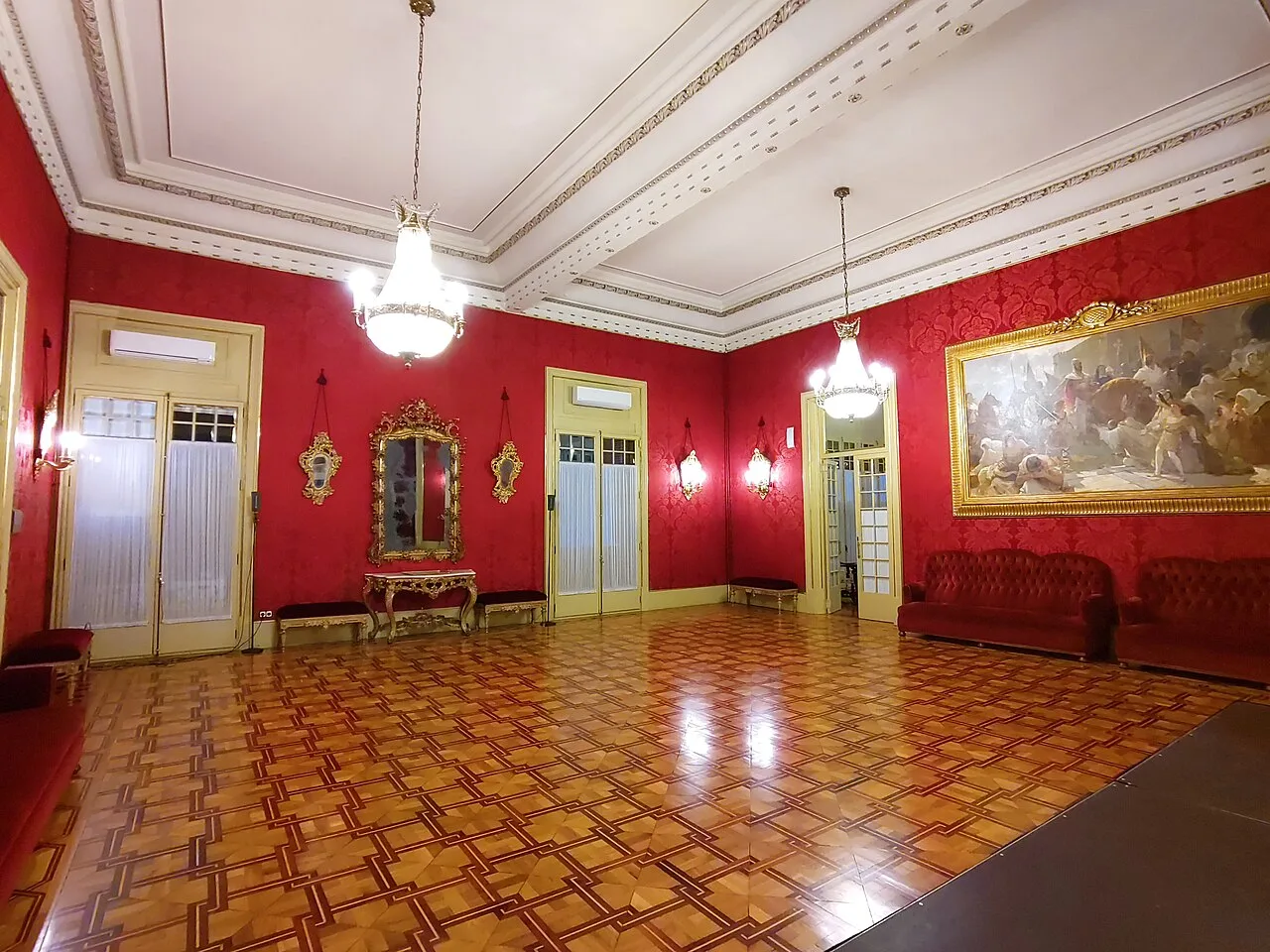
Pasos Perdidos
The room is next to the Plenary Hall and today is used for official ceremonies. It is also called the Red Room (Saló Vermell), after the red fabric that lines its walls. The floor is made of panels, squares of light wood in which the pieces change direction and draw a four-pointed star.
Between one panel and the next runs a reddish band with a light fillet in the middle. Where they cross, the bands tie into a knot, and from a distance the floor looks like an interlaced grille stretched from wall to wall. Under the light of the chandeliers, the floor shines and shows the change of grain between the points of each star.
Anckermann’s remodel
The Círculo’s great hall served as a theater for more than five years. In 1855, after the Casa de las Comedias in Palma was demolished, it was fitted out as a Coliseo, with 900 seats. When the city had a theater again, the Círculo began its remodeling with that stripped-out room.
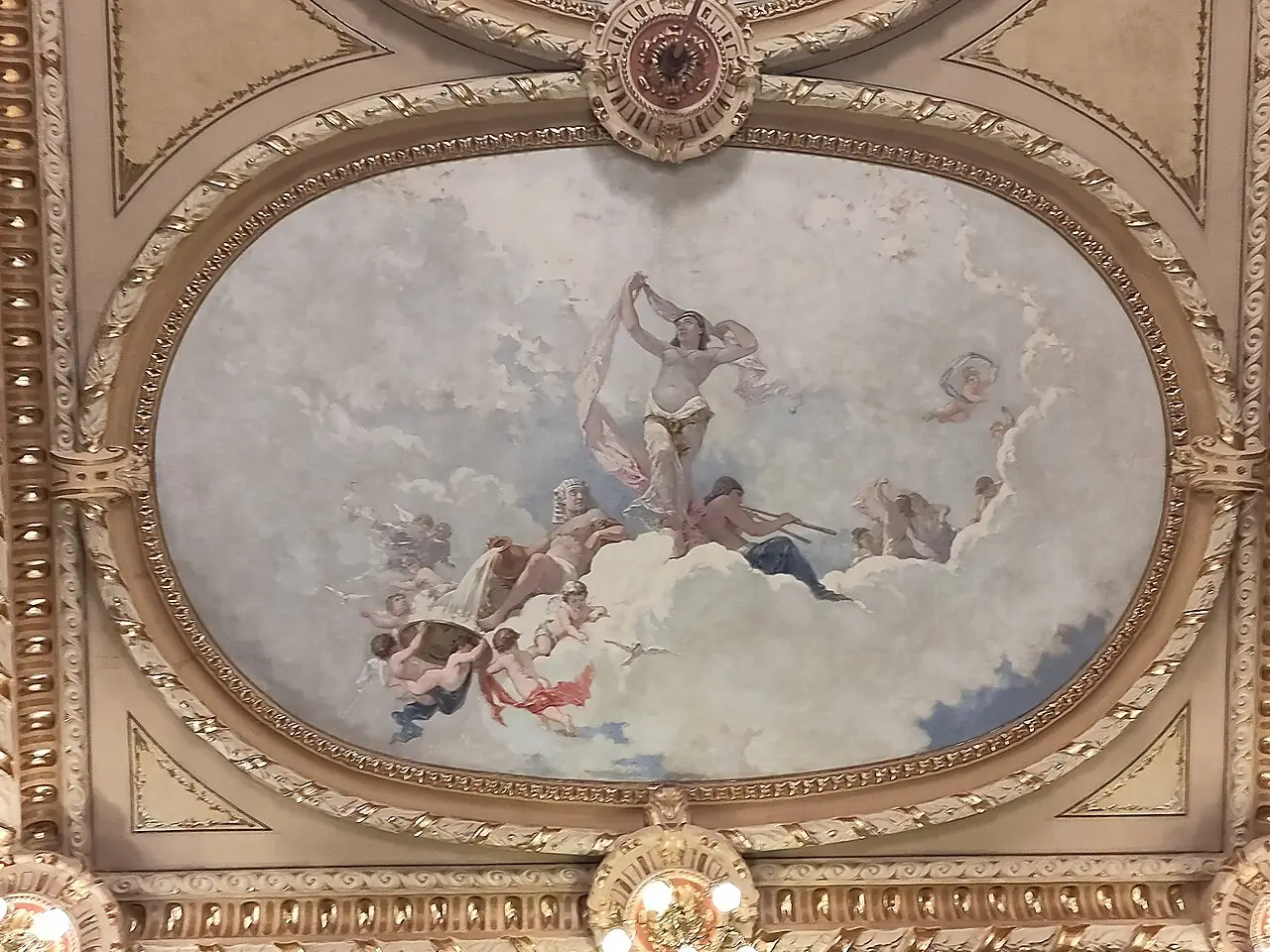
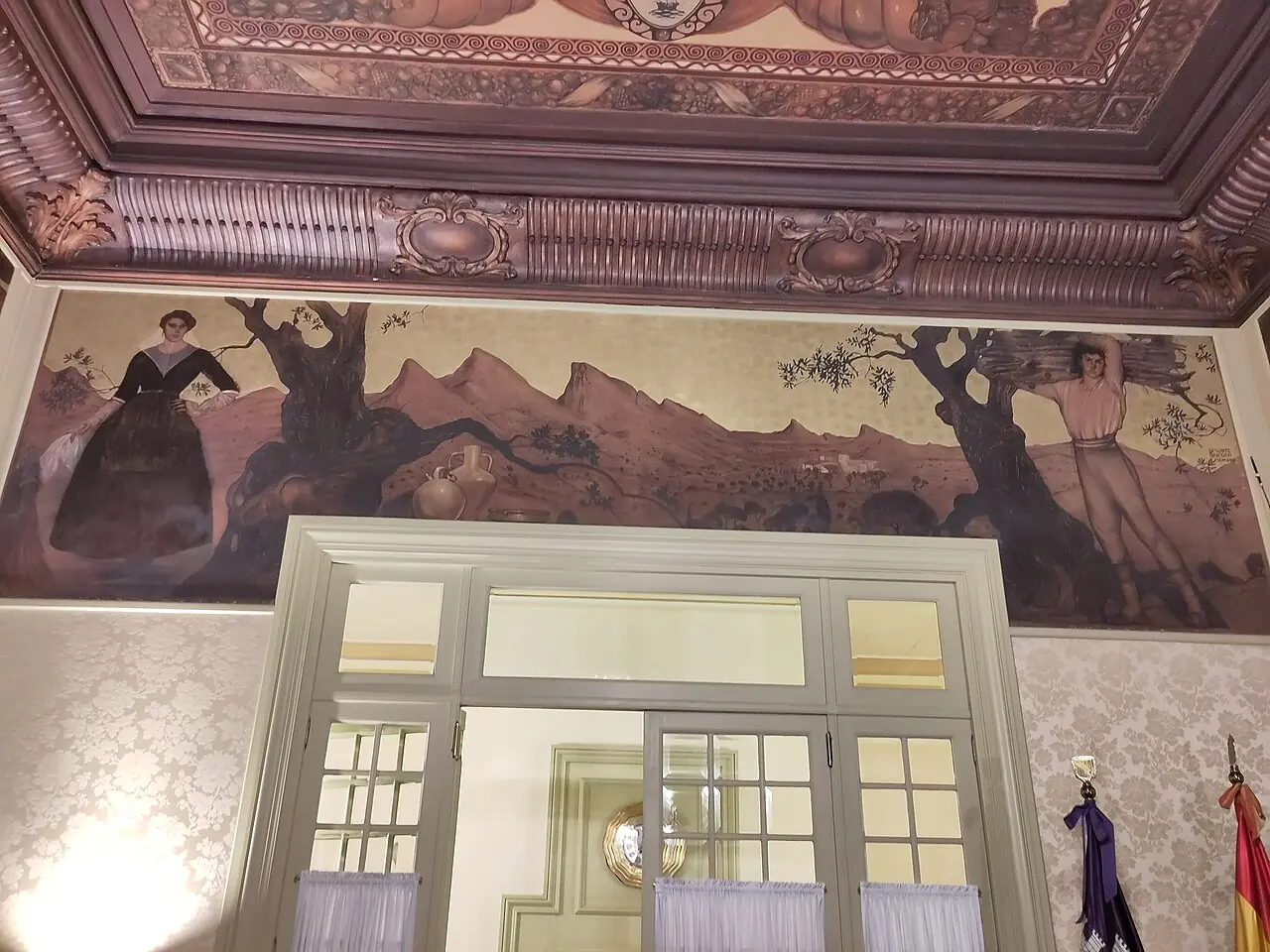
In 1882 it commissioned the work from the painter Ricard Anckermann, who designed a set of paintings and sculptures for the hall. In the same campaign the Red Room and the Senate Room were remodeled. The work was finished in February 1884. The Parlament’s visitor guide dates the floor of Pasos Perdidos to that year: “The wood of the parquet is original from 1884”.
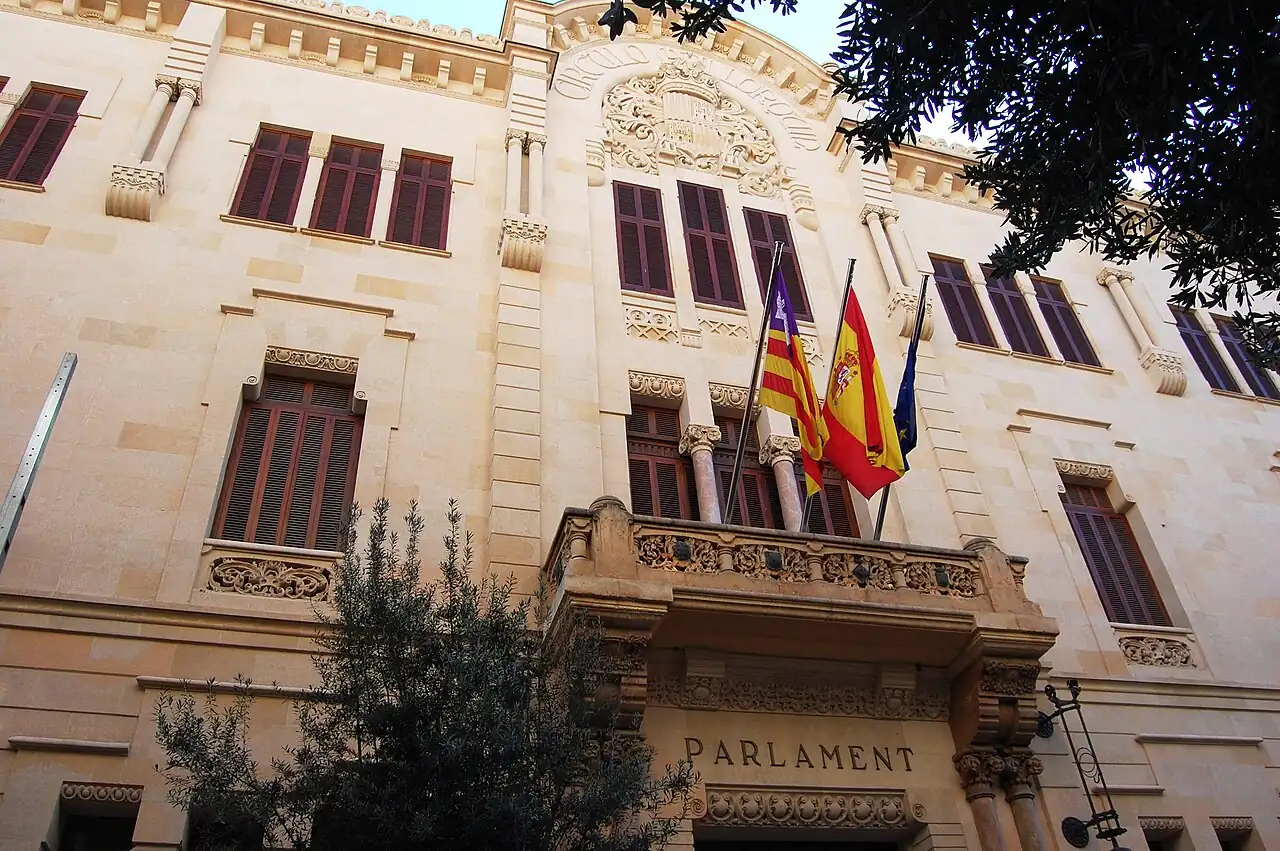
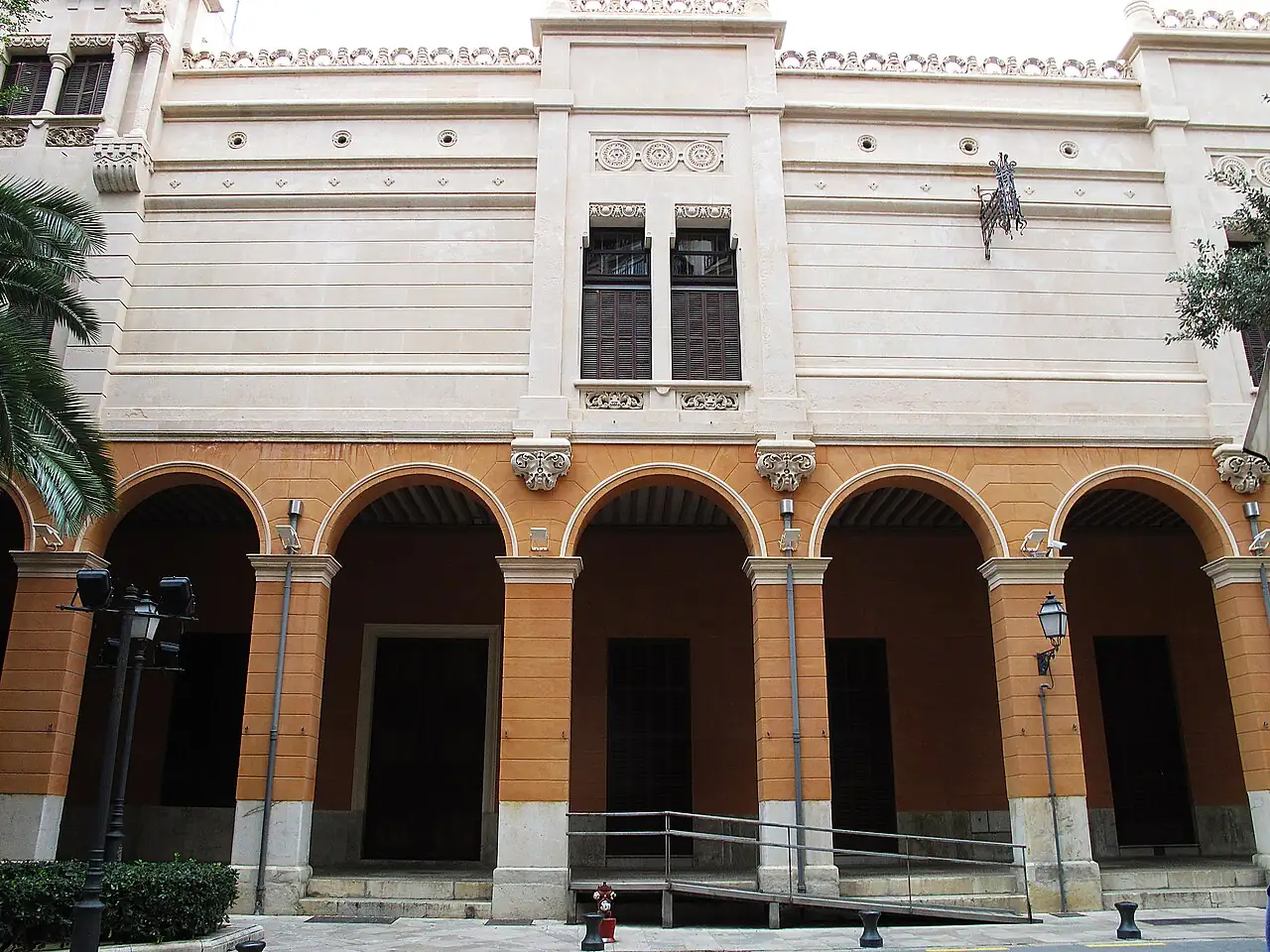
Between 1913 and 1918 the architect Miquel Madorell carried out the major remodel of the building, with the Modernista facade on Calle Conquistador. The main floor changed least: Anckermann’s rooms were left out of the work.
The Senate Room
The Bureau of the Parliament meets today in the Senate Room. Its parquet of fine woods has inlays of near-black ebony and reddish mahogany: pieces of those woods set into the pattern. The room is fully restored, and alongside the parquet it keeps the marble fireplace with an alabaster relief and the original armchairs of the Círculo’s regulars.
The dance floor that was lost
From 1884, Anckermann’s hall was the one for the balls and parties of Mallorcan high society, and its dance floor was wood. In 1963 the old wood floor of the ballroom was replaced with marble. The wood and pattern of that dance floor are unknown.
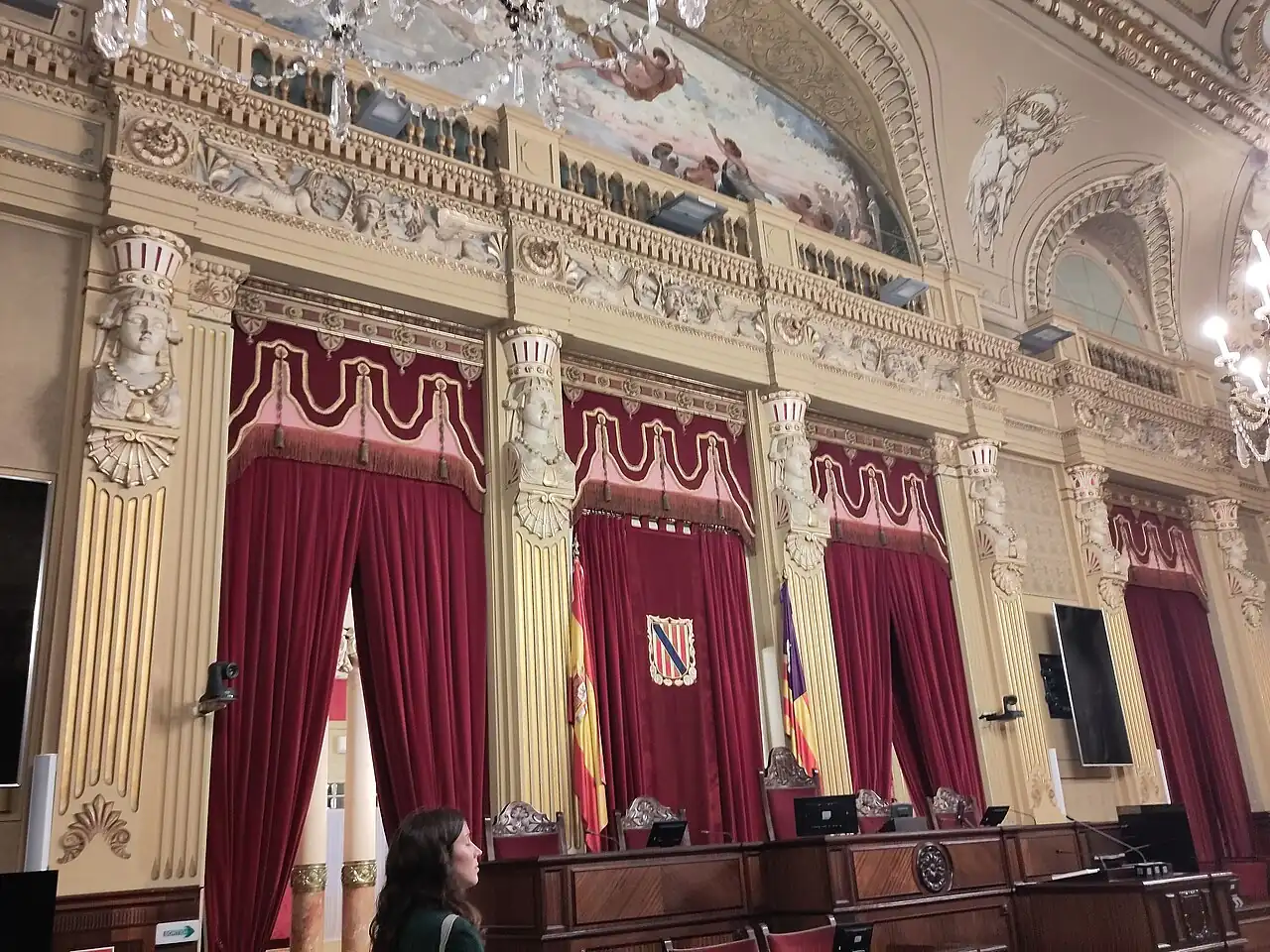
With the Parlament, the room became the Plenary Hall. It is also called the Hall of the Caryatids, after the figures that hold up its sides, and it houses the chamber, with the members’ seats and the speakers’ rostrum.
The library
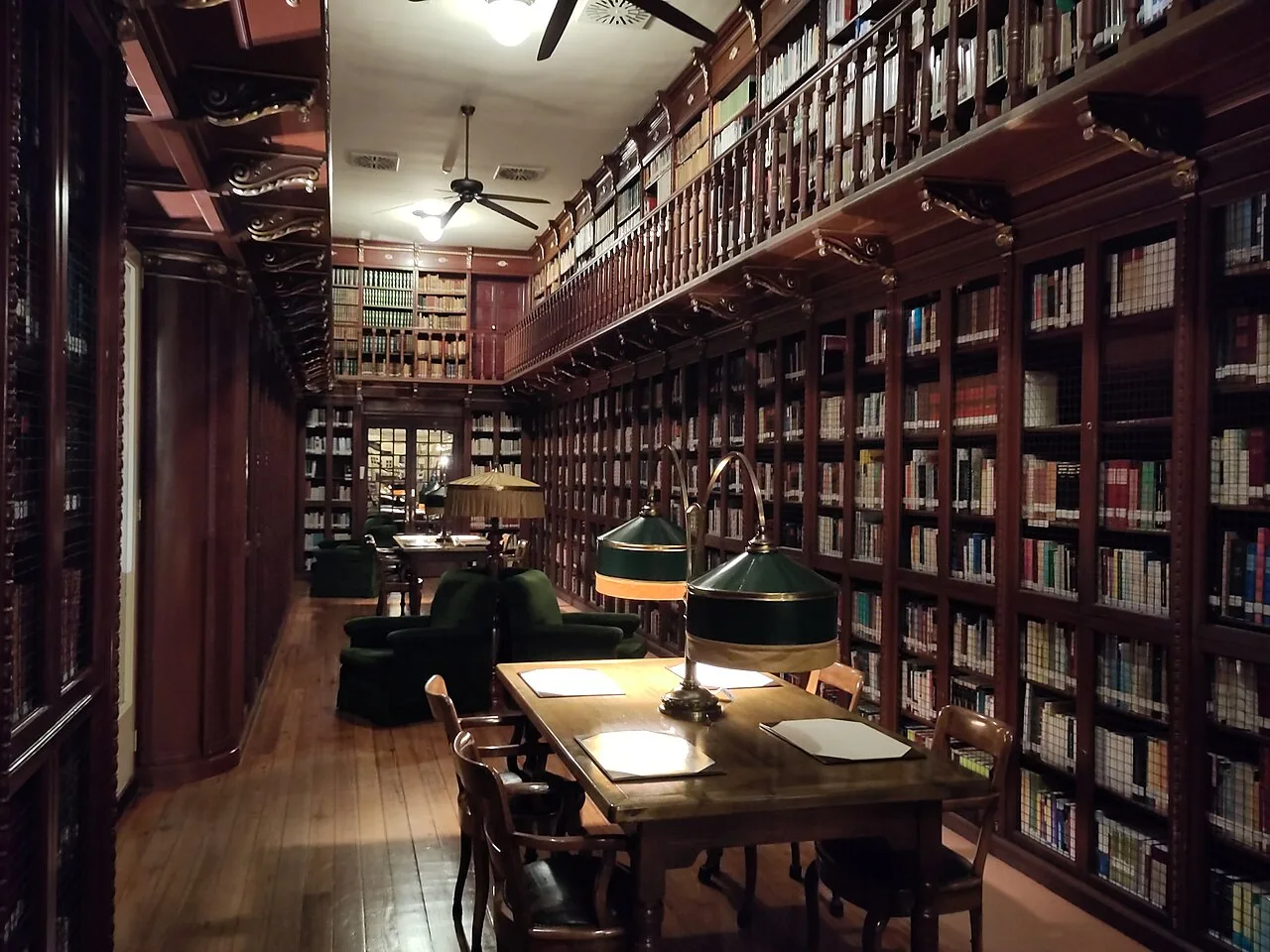
The library occupies the old terrace above the porticoes on Calle Palau Reial, which Madorell enclosed to install it. It is the only room in the building that keeps its original function, and its fine wood shelving was extended with new shelves identical to the old ones. In the photo, the floor is boarded with long, narrow boards, laid along the aisle between the shelves.
Before sanding Pasos Perdidos
The pattern of Pasos Perdidos reads through the contrast between the light wood of the panels and the reddish wood of the bands. When the floor is restored, a waterborne finish usually comes out lighter than the old varnishes. How much lighter is chosen without going to a stain, so that the bands still stand out against the panels. A similar case: the star-pattern parquet we restored at the Palacio de Zurbano.
The Parlament de les Illes Balears in pictures
Restoration of historic parquet
A panel parquet with stars and bands of another wood, like the one in Pasos Perdidos, is restored keeping its contrast. More on floors with history in Historic parquet.
Sources
- Joan Gené, Wikimedia Commons, CC BY-SA 4.0.
- Joan Gené, Wikimedia Commons, CC BY-SA 4.0.
- Joan Gené, Wikimedia Commons, Public domain.
- MARIA ROSA FERRE, Wikimedia Commons, CC BY-SA 2.0.
- Joan Gené, Wikimedia Commons, Public domain.
- Joan Gené, Wikimedia Commons, Public domain.
- Enric, Wikimedia Commons, CC BY-SA 4.0.


