
This is not a ranking: these are 16 cases outside Spain that teach something about how a wood floor is kept, patched or rebuilt. They are grouped in four sections by what weighs most in each building, and nearly all of them mix restoration, replacement and reconstruction room by room. The sections are floors kept and restored, floors rebuilt and reproduced, floors moved and lost, and contemporary floors in historic buildings. The Spanish ones are in The best parquet floors in Spain, and those in Madrid’s palaces are in Historic parquet in the palaces of Madrid.
Contents
- Floors kept and restored
- Floors rebuilt and reproduced
- Floors moved and lost
- Contemporary floors in historic buildings
Floors kept and restored
Eight floors that have been kept, with pieces replaced and restorations done room by room.
1. Palace of Versailles
- Country: France.
- Type: Versailles panel parquet.
- Wood: oak.
- System: panels with a frame and diagonals, assembled with tenons and wooden pegs, without glue.
- Work done: replacement of the worn parquet.
In the Grand Apartments the floors were marble laid in compartments, and they were cleaned by pouring water over them. According to Pierre de Nolhac, curator of the palace, the water seeped through the joints and rotted the floor structure, so in 1684 they were replaced with parquet.
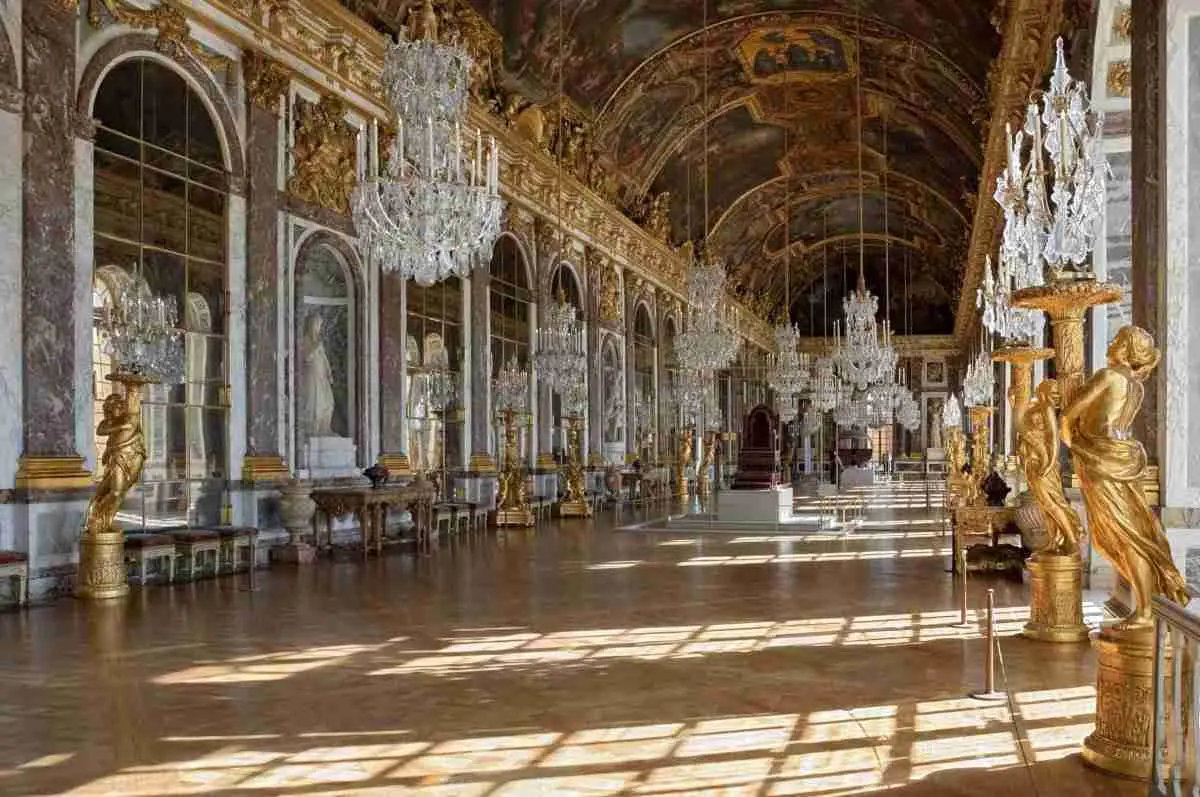
In 2004 about 700 m² of parquet laid in the 1950s were removed from the Hall of Mirrors (Galerie des Glaces). According to VINCI, it was worn and had been laid without the traditional joinery, so an identical floor was made in new oak. The Ateliers Saint-Jacques and Briatte did the work without closing the gallery, and the electrical networks were hidden under the new floor.
Read the full article on the floors of the Palace of Versailles.
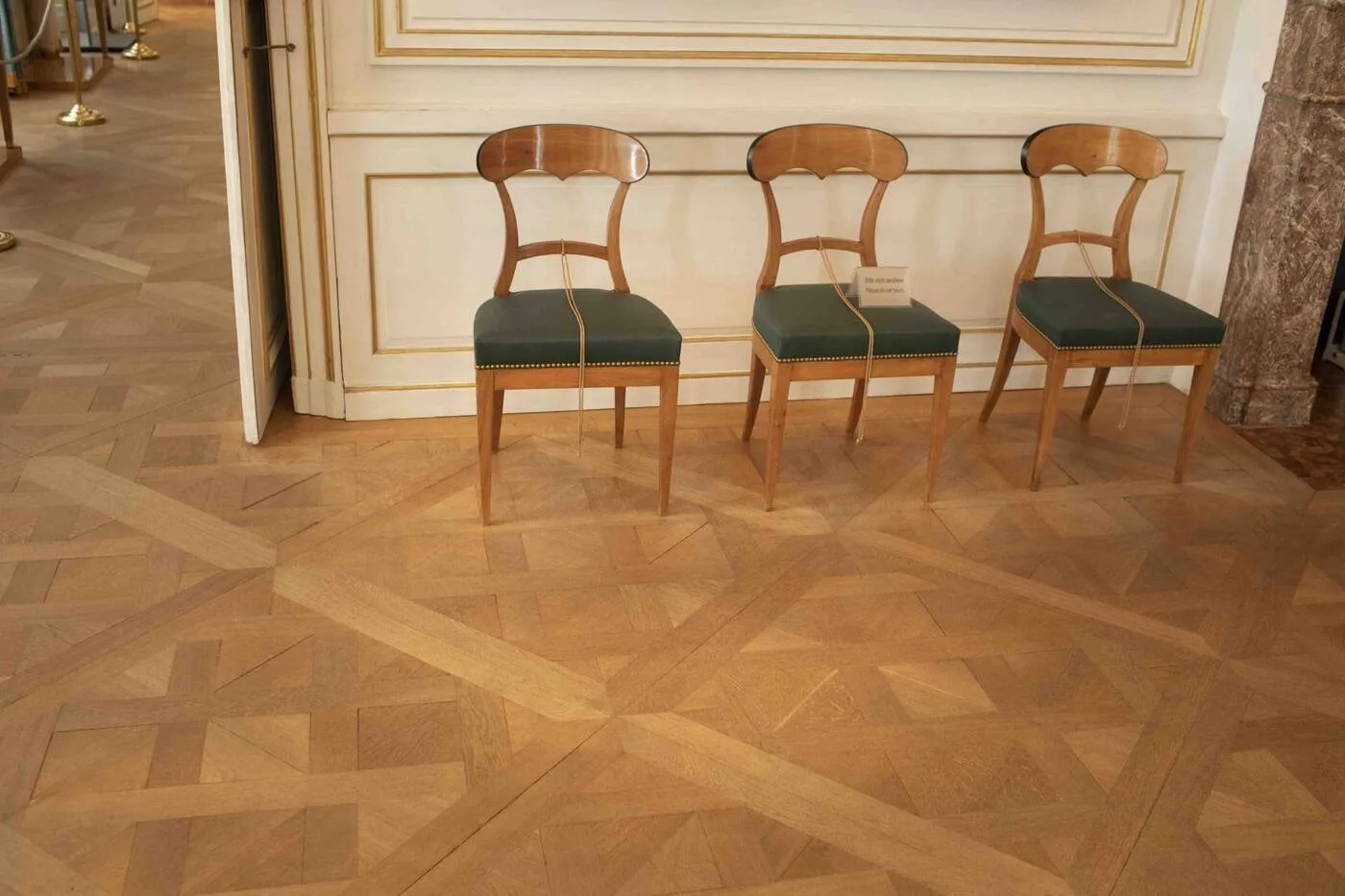
2. Nymphenburg Palace, Munich
- Country: Germany.
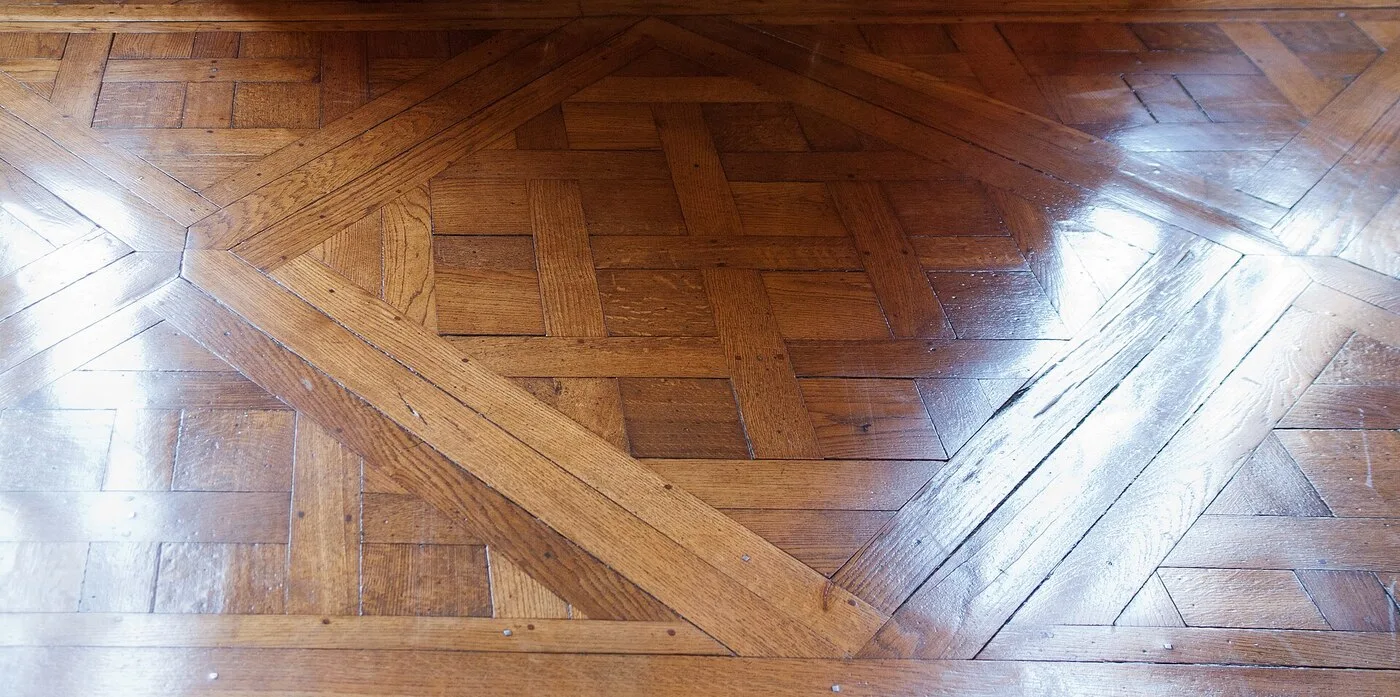
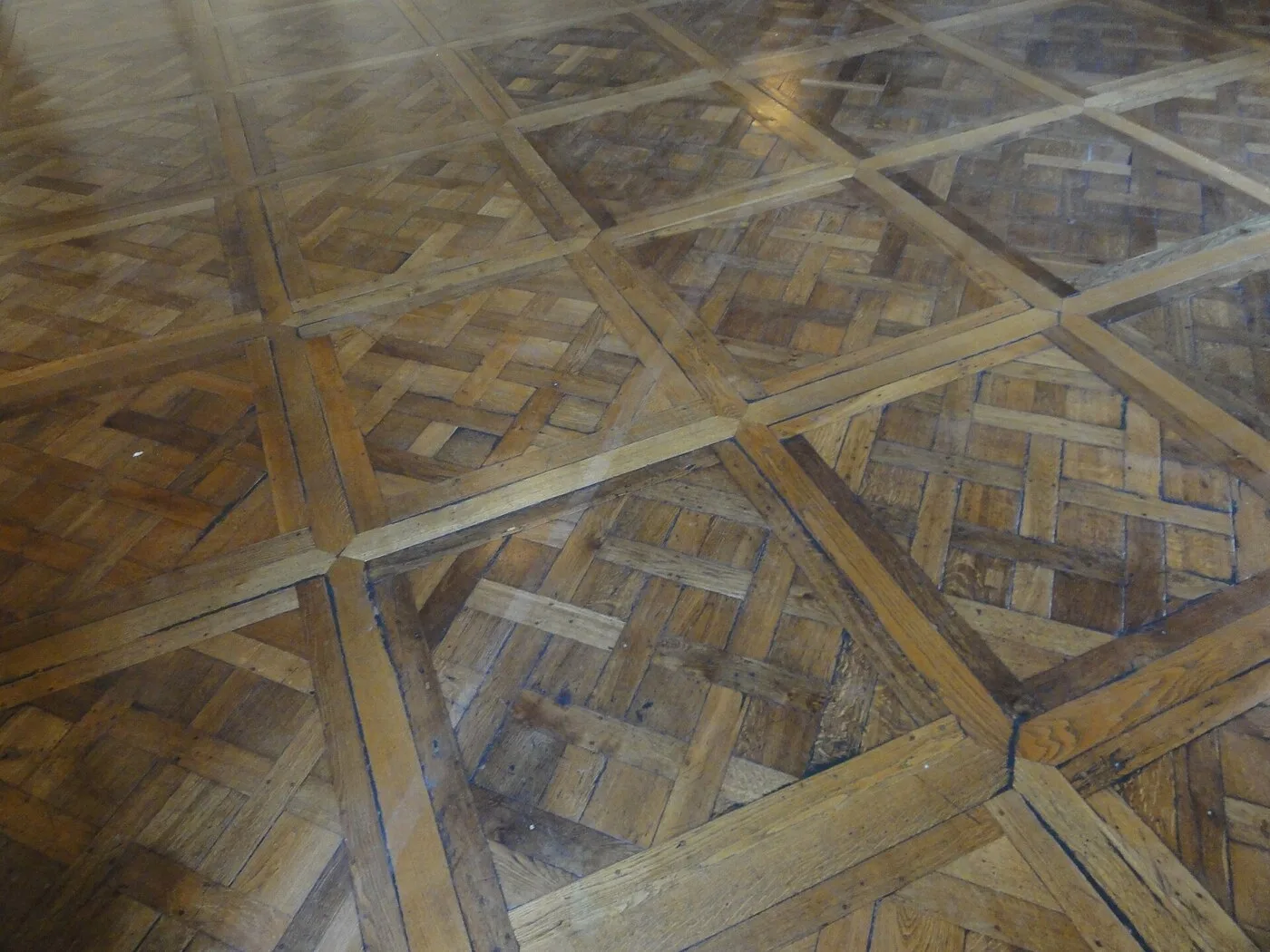
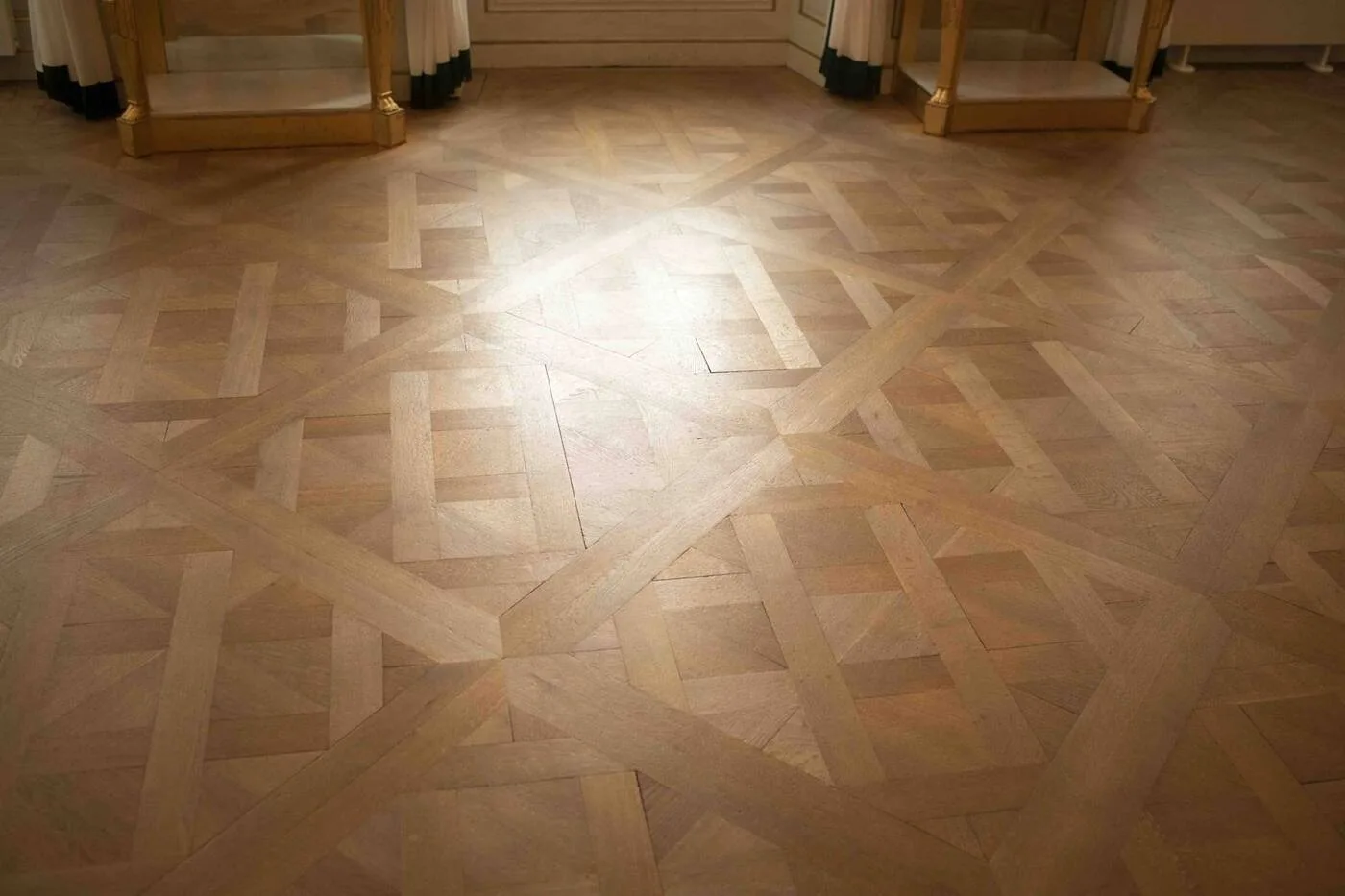
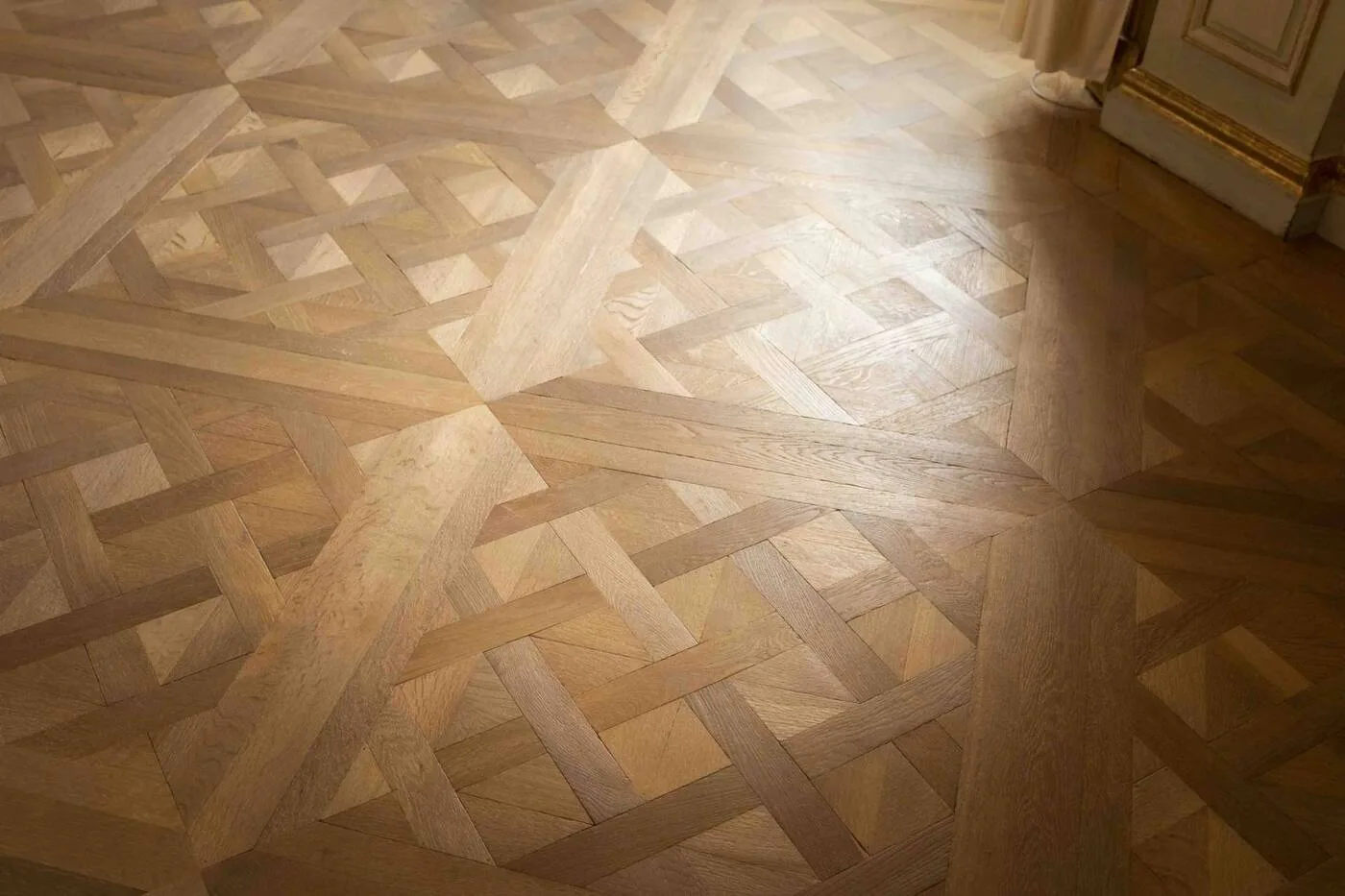
- Type: Versailles-style panel parquet, panels of about 0.75 m².
- Wood: oak.
- System: panels made in the workshop and laid without glue.
- Work done: wax that can be removed (hard paraffin, microcrystalline wax, beeswax and carnauba), without sanding.
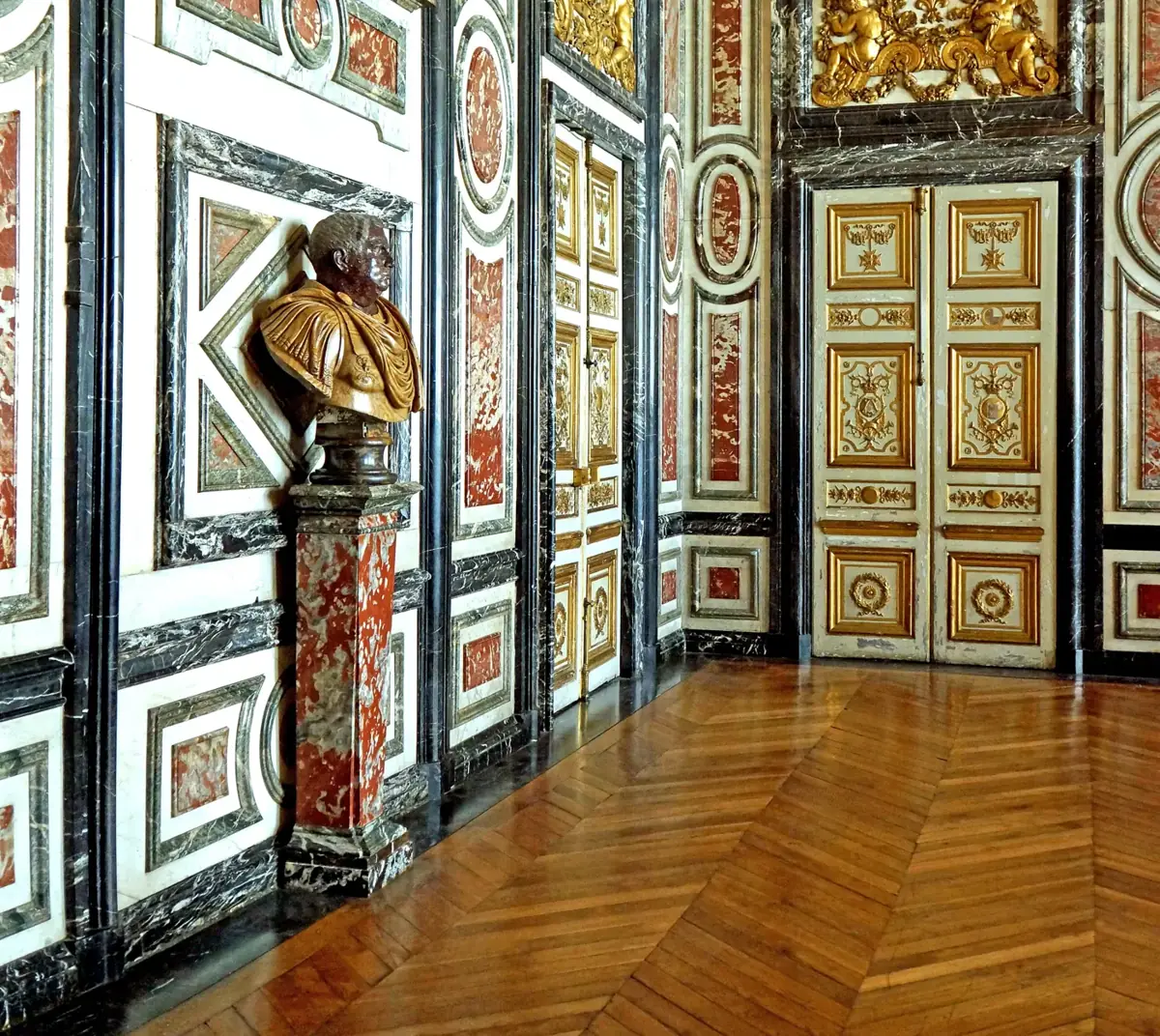
Nymphenburg Palace has about 1,200 m² of oak parquet, and until the early 2000s visitors were guided over carpets. Dust worked into the wax and formed a paste that abraded the wood, and the carpets left depressions of up to 3 mm.
When the floors were examined, no trace of oil turned up: they had always been treated with wax. They are not oiled today either, because oil penetrates up to 2 mm into the fibers and does not come out without chemicals or sanding. Wax, on the other hand, can be removed: in the Gallery of Beauties, restored in 2019 and 2020, thinning it took one hour per m².
Read the full article on the floors of Nymphenburg Palace.
3. Louvre Museum, Salle Mollien
- Country: France.
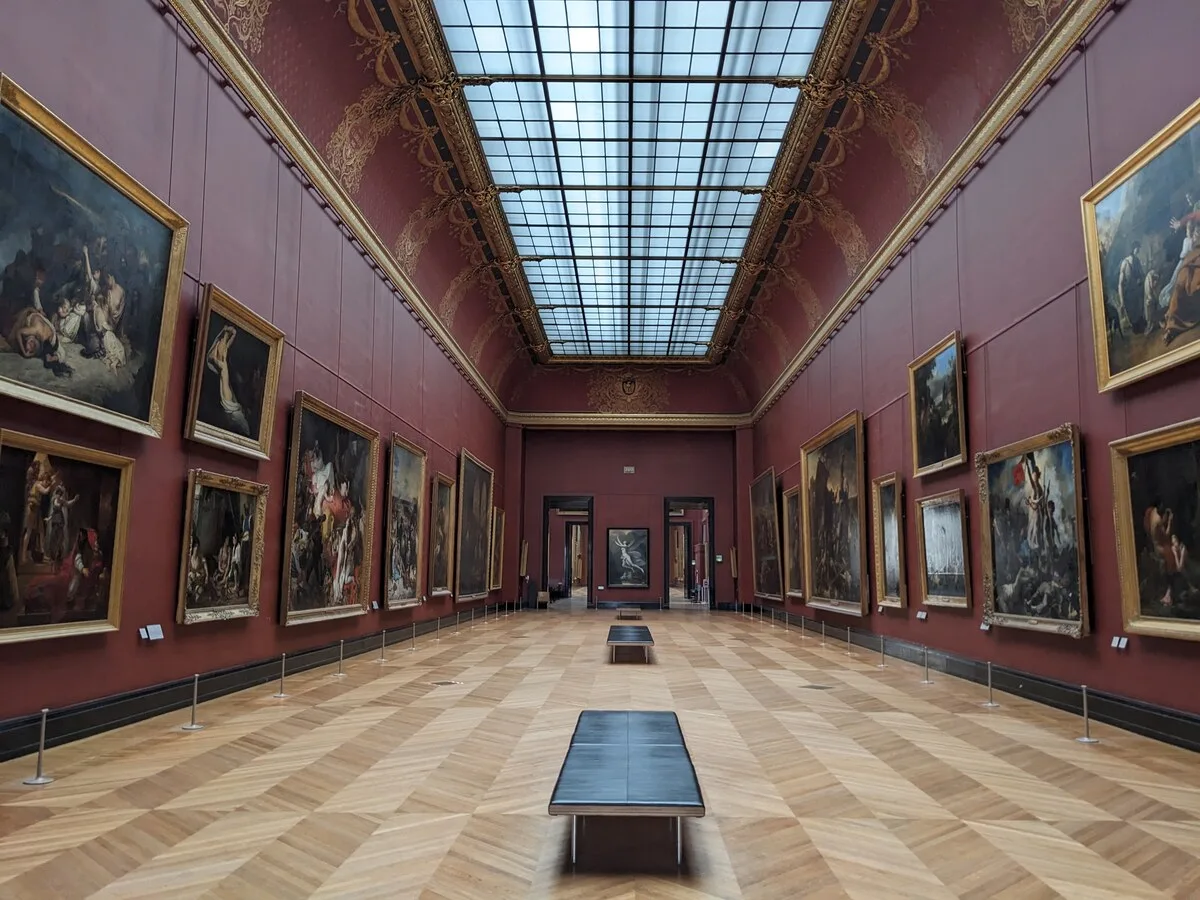
- Type: solid chevron parquet.
- Wood: French oak.
- System: strips with ends cut at an angle that meet in a point along the axis of the room.
- Work done: restoration of the parquet with new strips.
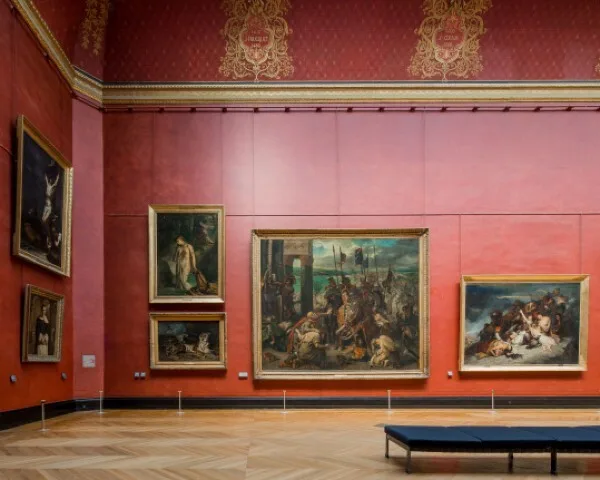
The Salle Mollien, room 700 and one of the red rooms of the Denon wing, is part of Napoleon III’s extension of the Louvre. To restore its parquet, the Groupe Ducerf sawmill supplied solid French oak strips almost 4 cm thick. According to the sawmill, the parquet fitter first machined and varnished them, and then laid them within the limits of restoring a floor that already existed.
Read the full article on the floors of the Louvre Museum.
4. Élysée Palace, Green Room (Salon Vert)
- Country: France.
- Type: chevron parquet in the Green Room and in the neighboring state rooms.
- Wood: not stated in the sources.
- System: parquet on joists, with the plaster infill of French floor structures between them.
- Work done: in August 2022, restoration of the parquet in twenty-three days, after removing the carpet and the lead-laden dust beneath it.
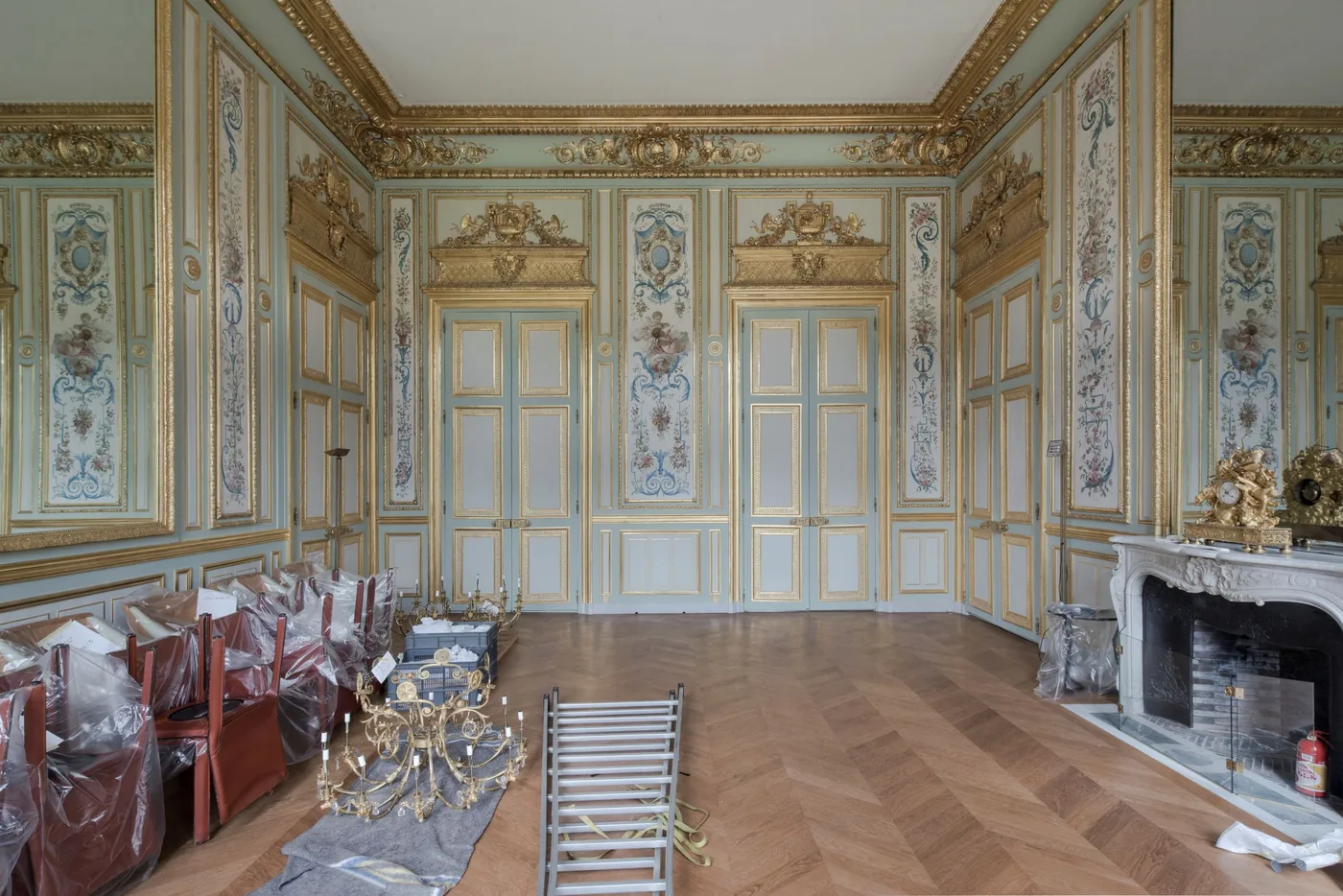
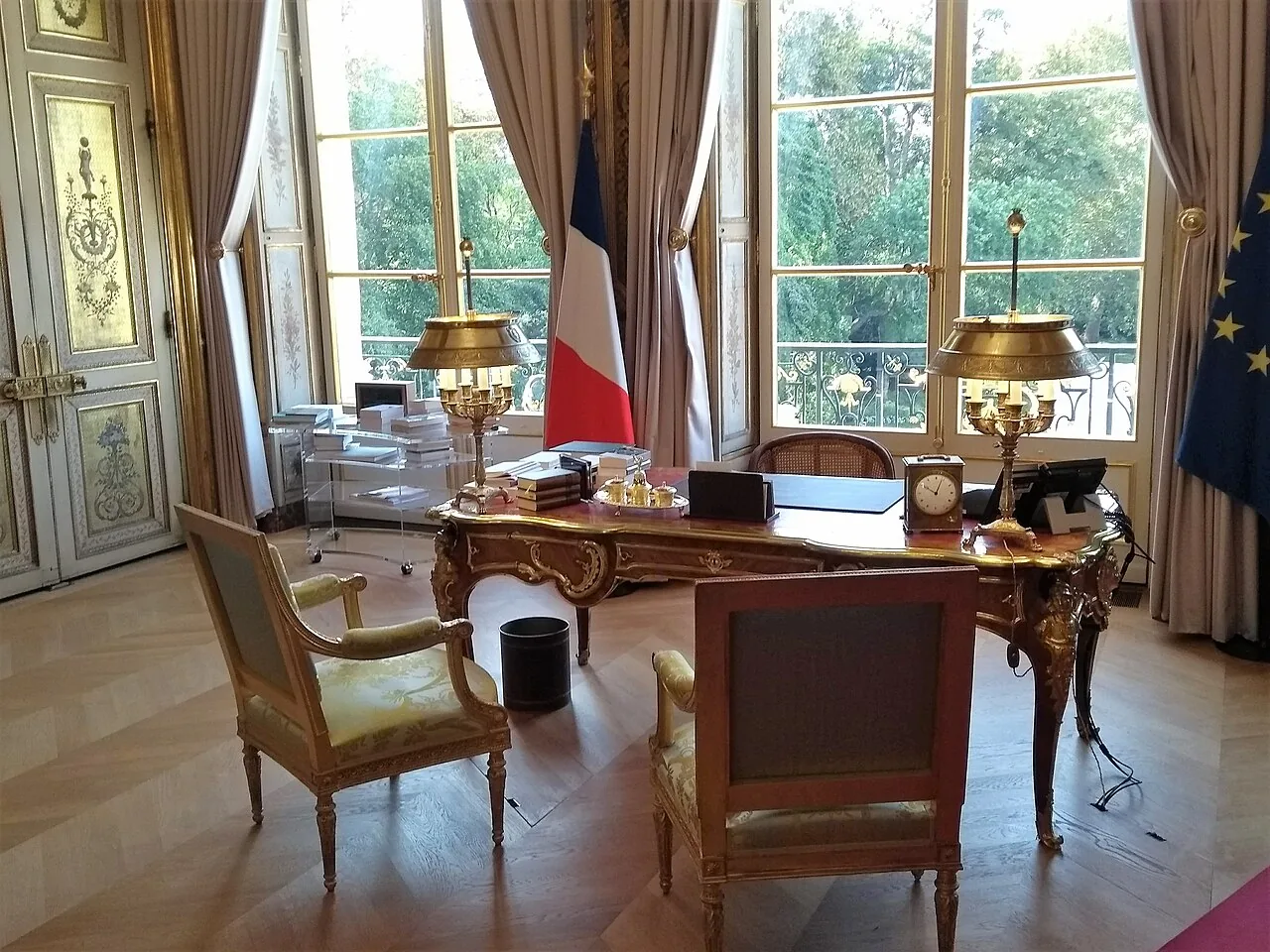
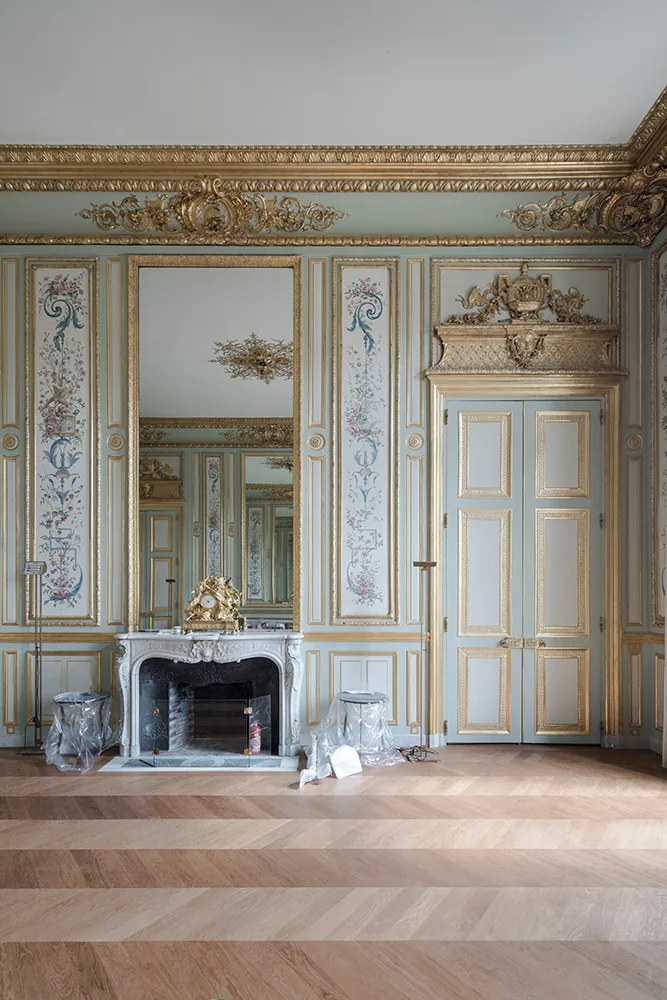
Before the 2022 work, the parquet in the Green Room was out of use and covered with carpet, and over hundreds of years lead-laden dust had built up underneath, according to OPPIC. The Green Room (Salon Vert) adjoins the Golden Room (Salon Doré), the office of the President of the Republic. So as not to disrupt the running of the palace, the crews entered the site through a window from a platform built on the south terrace, which held a workshop and the staff decontamination airlock. The job took three weeks, with crews relieving each other in two eight-hour shifts, and the parquet was restored by Parquets Briatte.
Read the full article on the floors of the Élysée Palace.
5. Palace of Fontainebleau, Guards’ Room (Salle des Gardes)
- Country: France.
- Type: marquetry parquet.
- Wood: various woods, light and dark, with black fillets.
- System: marquetry of light and dark pieces with black fillets, matching the motifs of the ceiling.
- Work done: new floor laid when the room was renovated under Louis-Philippe.
Under Louis-Philippe several rooms at Fontainebleau were renovated, and the joiner Poncet made the new parquet for two of them. In the Ballroom (Salle de Bal) he laid it between 1835 and 1836, matching the gilded coffers of the ceiling. He then moved on to the Guards’ Room (Salle des Gardes), where in 1837 he assembled a marquetry of light and dark woods with black fillets. There the floor repeats the layout of the ceiling.
Read the full article on the floors of the Palace of Fontainebleau.
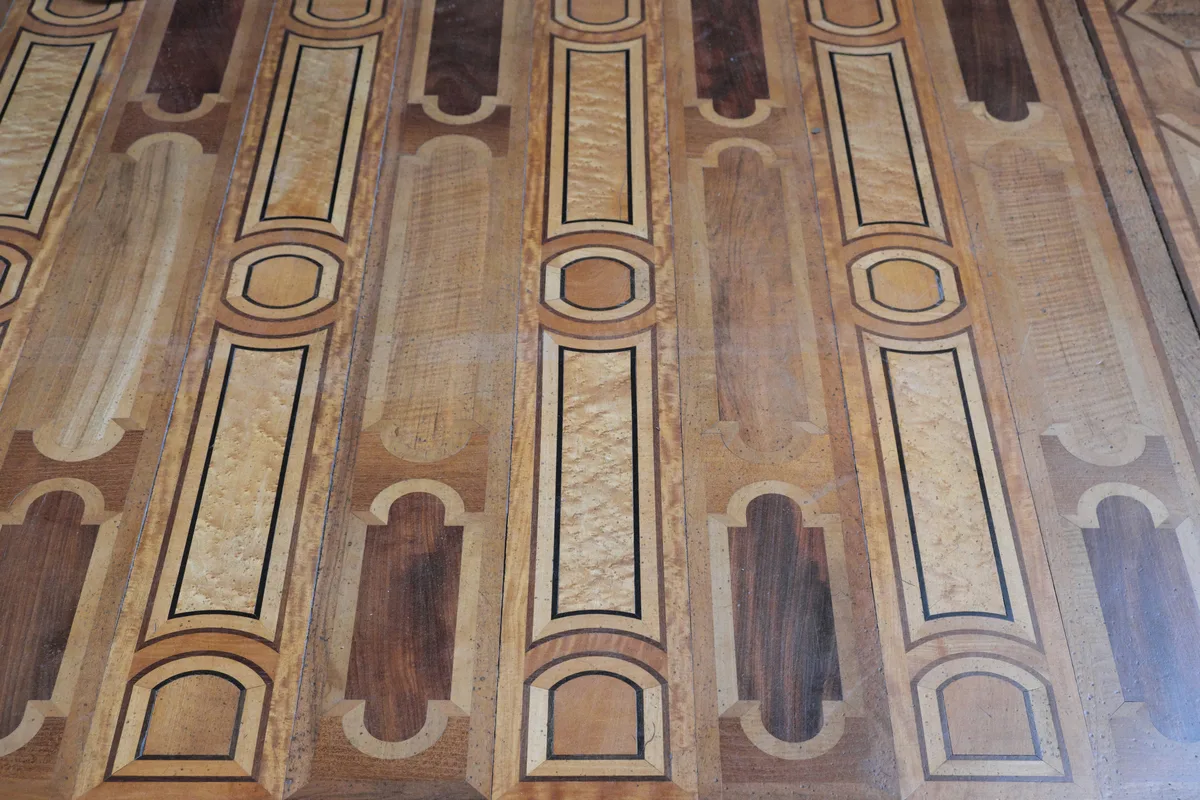
6. Rundāle Palace
- Country: Latvia.
- Type: marquetry parquet in the state rooms and board floors in the private apartments.
- Wood: oak in the thirteen parquets of 1738, according to the museum; several woods in the one in the State Bedroom; softwood boards in the Small Gallery.
- System: in the State Bedroom, squares framed by dark bands with a pointed star in the center.
- Work done: restoration of the palace between 1972 and 2014; the parquet of the State Bedroom was finished in 2005.
In 1738 the joiner Eger had finished the oak paneling of 33 rooms and 13 oak parquets, according to the museum. In 1739 part of the parquet was taken to Jelgava, and when the duke was arrested in 1740 the work stopped and what had been prepared went to St. Petersburg. From that work the parquet of the State Bedroom survives, made in 1739 by Johann Baptist Eger to a design by Rastrelli. The one in the Billiard Room dates from the 1760s, when the duke had already returned from exile. After military and school use in the 20th century, the palace was restored between 1972 and 2014.
Read the full article on the floors of Rundāle Palace.
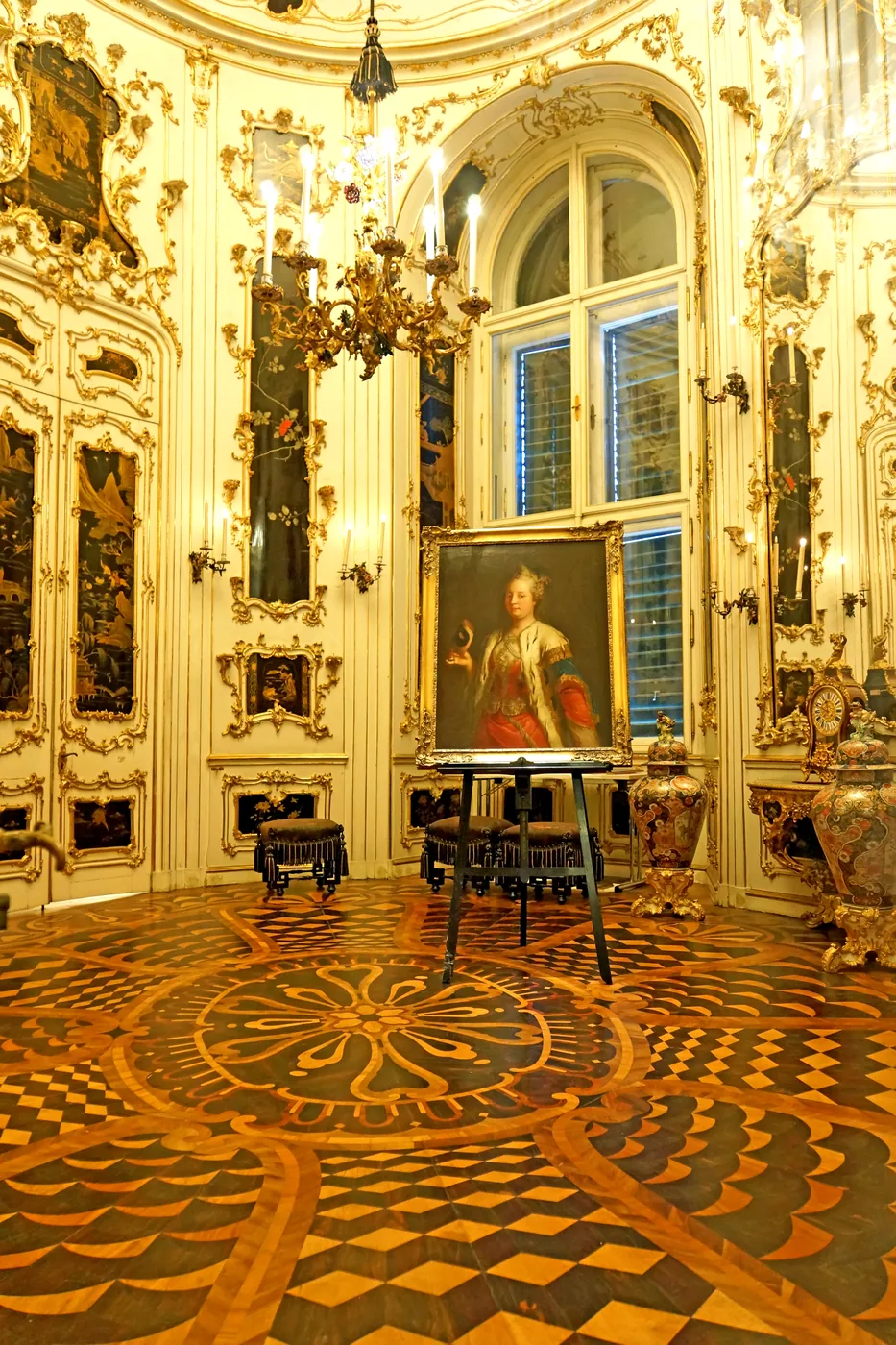
7. Schönbrunn Palace, Vienna
- Country: Austria.
- Type: Baroque board parquet and cabinet marquetry.
- Wood: walnut boards in the Ceremonial Hall; exotic woods in Maria Theresa’s private rooms.
- System: board parquet (Tafelparkett) that is lifted piece by piece and laid again.
- Work done: taken up for restoration; it goes back in place when the work on the room is finished.
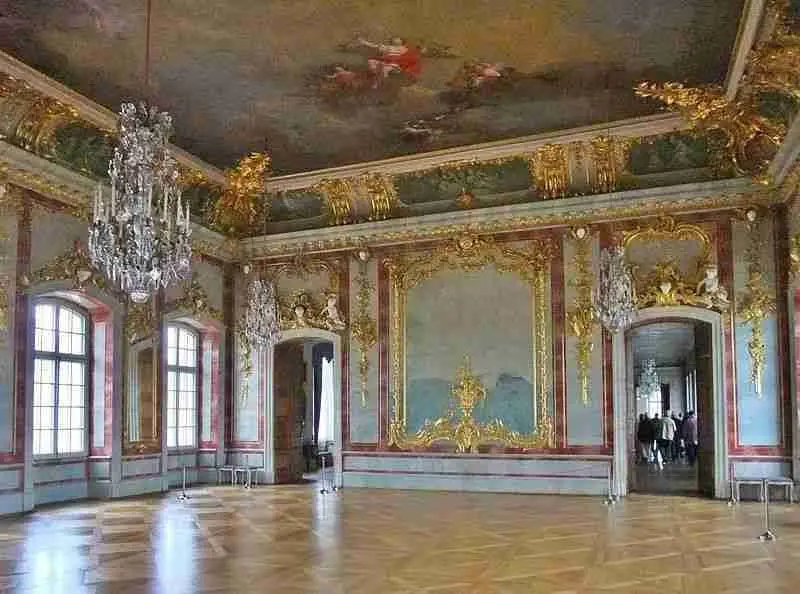
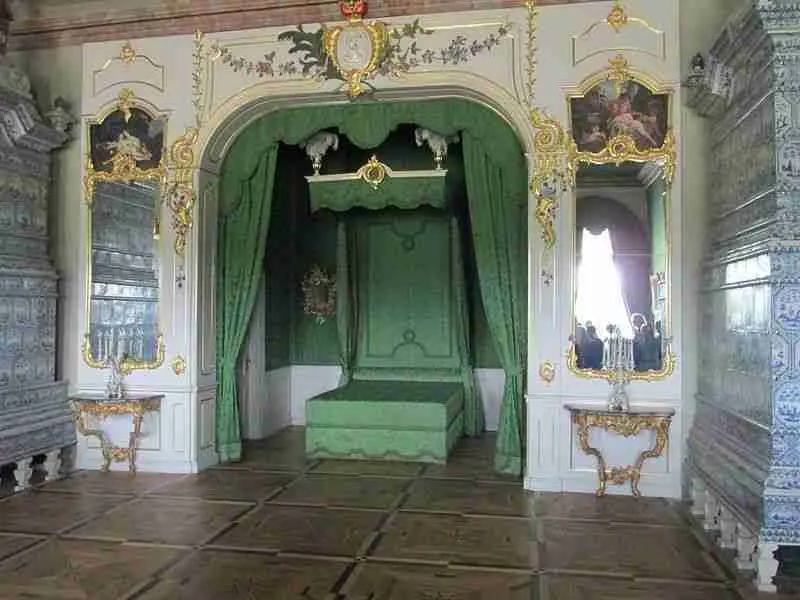
The Ceremonial Hall at Schönbrunn has a Baroque walnut parquet made of boards, in a room of 190.76 m². The palace has taken it up for restoration and will lay it again when the work is finished, with reopening announced for 2027. Beforehand, the Töpfer firm surveyed the room with photogrammetry and laser scanning and photographed the floor systematically.
Read the full article on the floors of Schönbrunn Palace.
8. State Hermitage Museum, St. Petersburg
- Country: Russia.
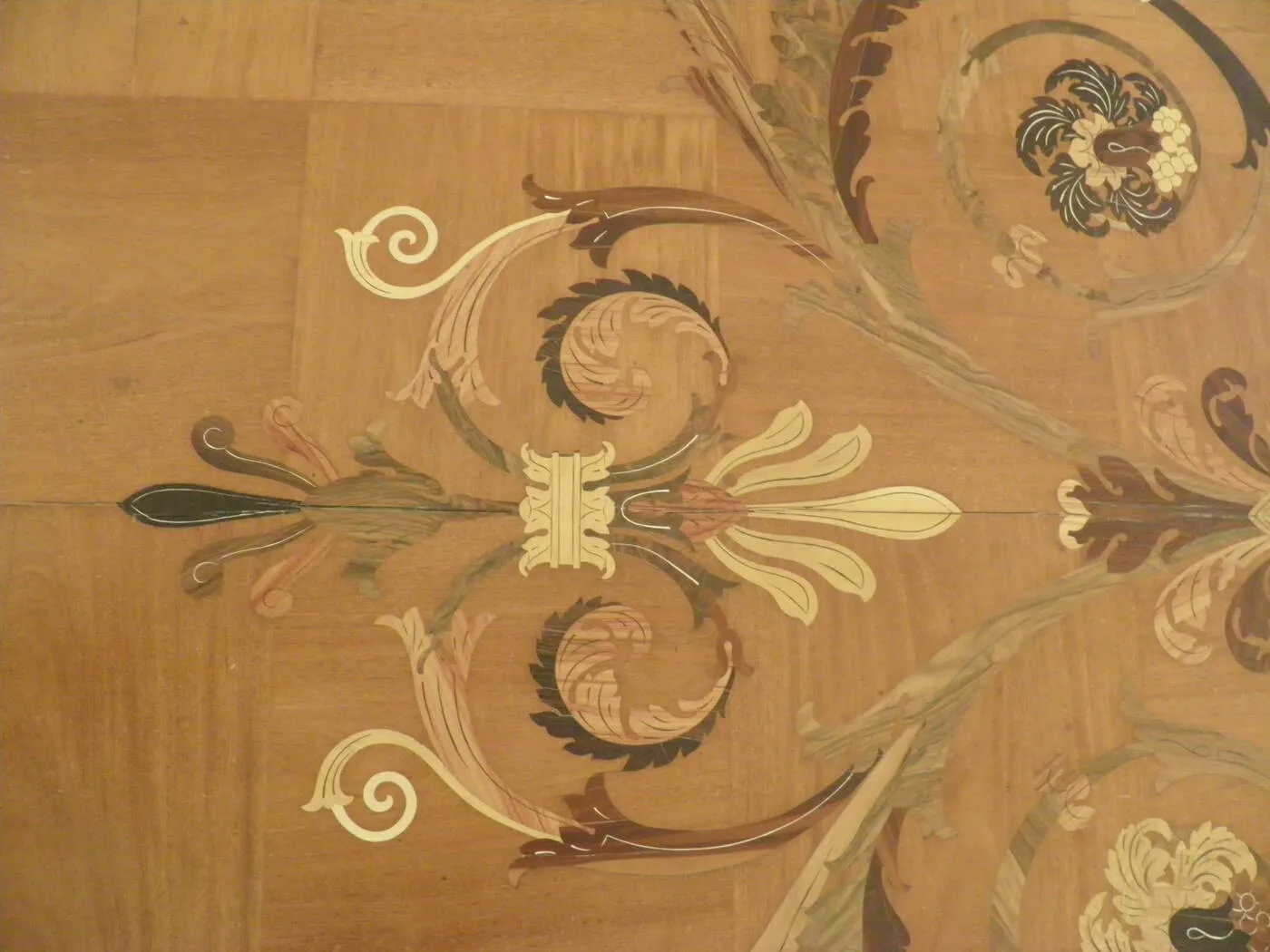
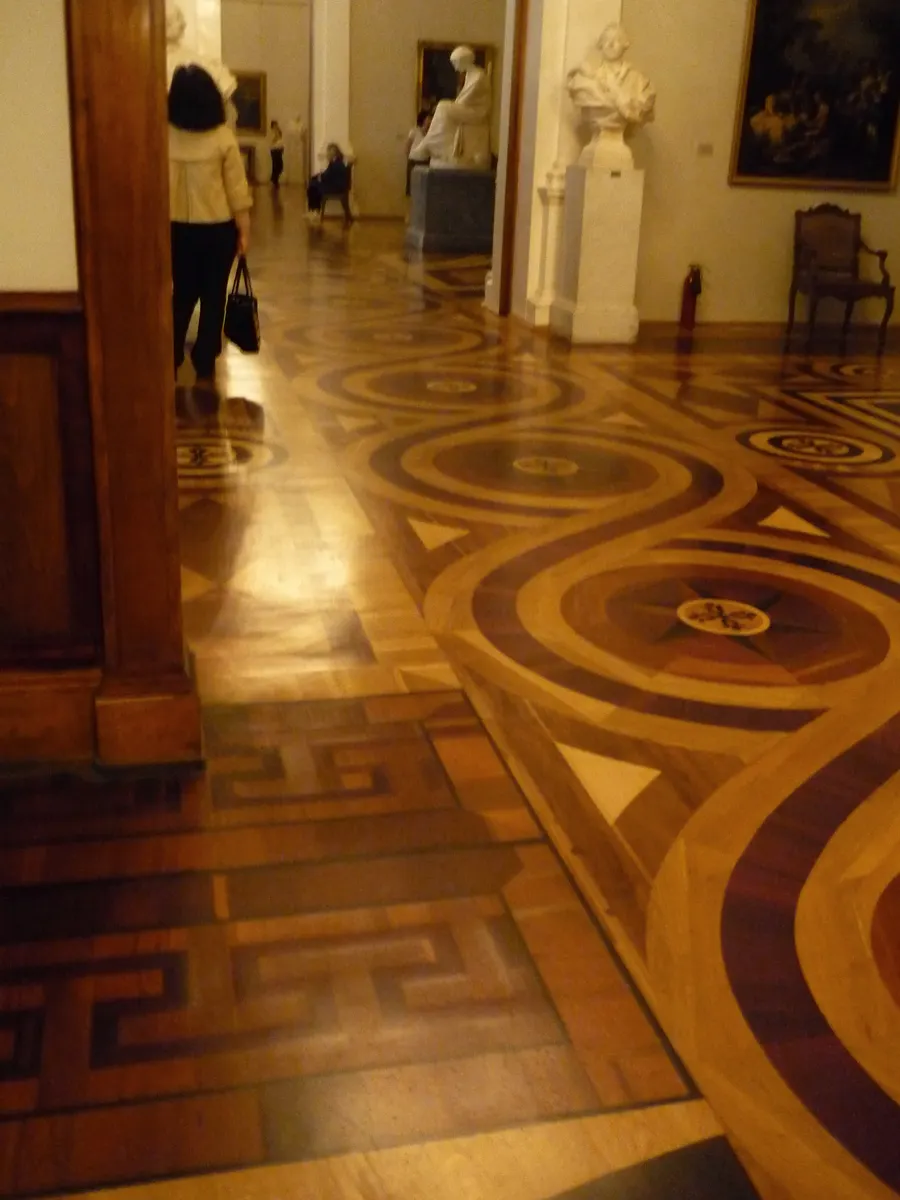
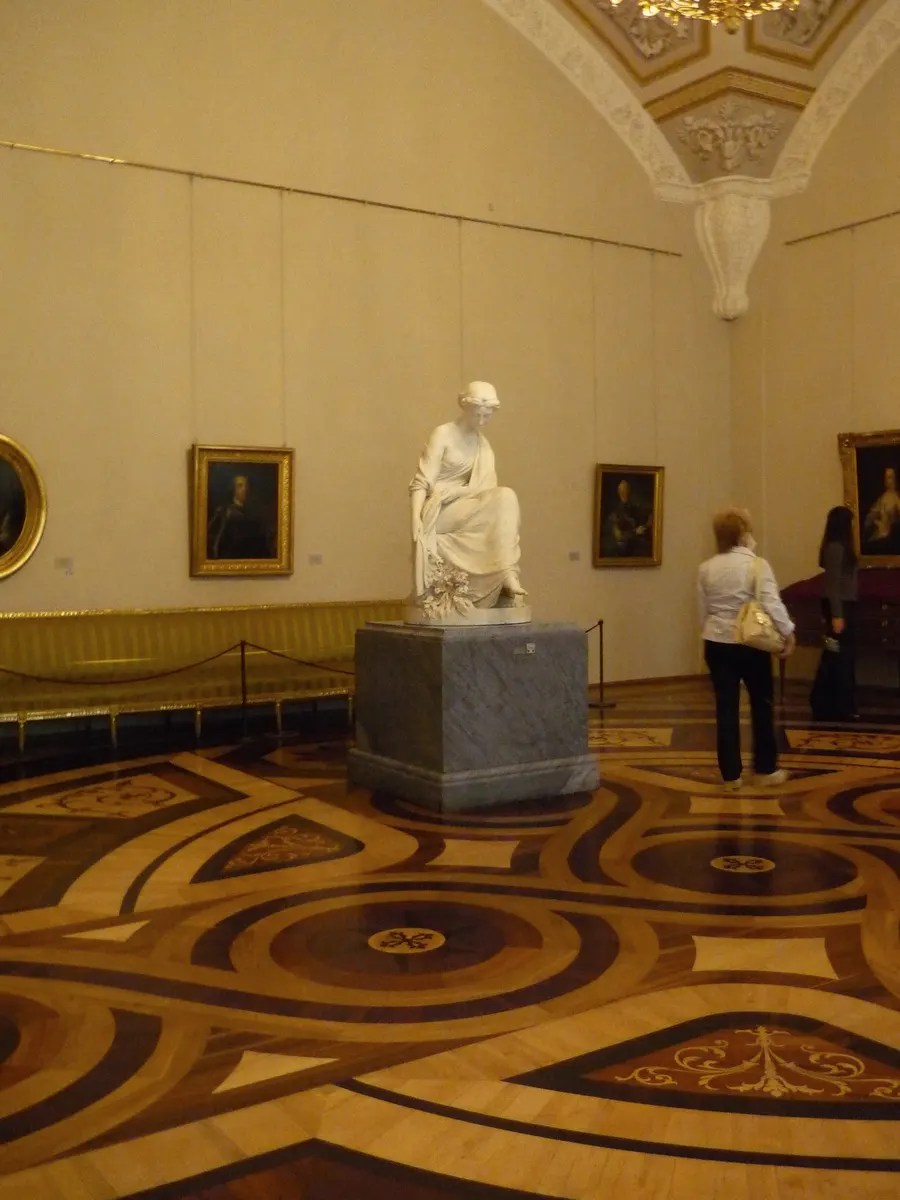
- Type: marquetry parquet in the rooms of the Winter Palace.
- Wood: oak, walnut, maple, birch, boxwood, rosewood, amaranth, sandalwood and ebony, among others.
- System: marquetry layer on a subfloor of pine boards and battens.
- Work done: restoration room by room: substrate repaired, pieces replaced, engraving redone and waterborne finish.
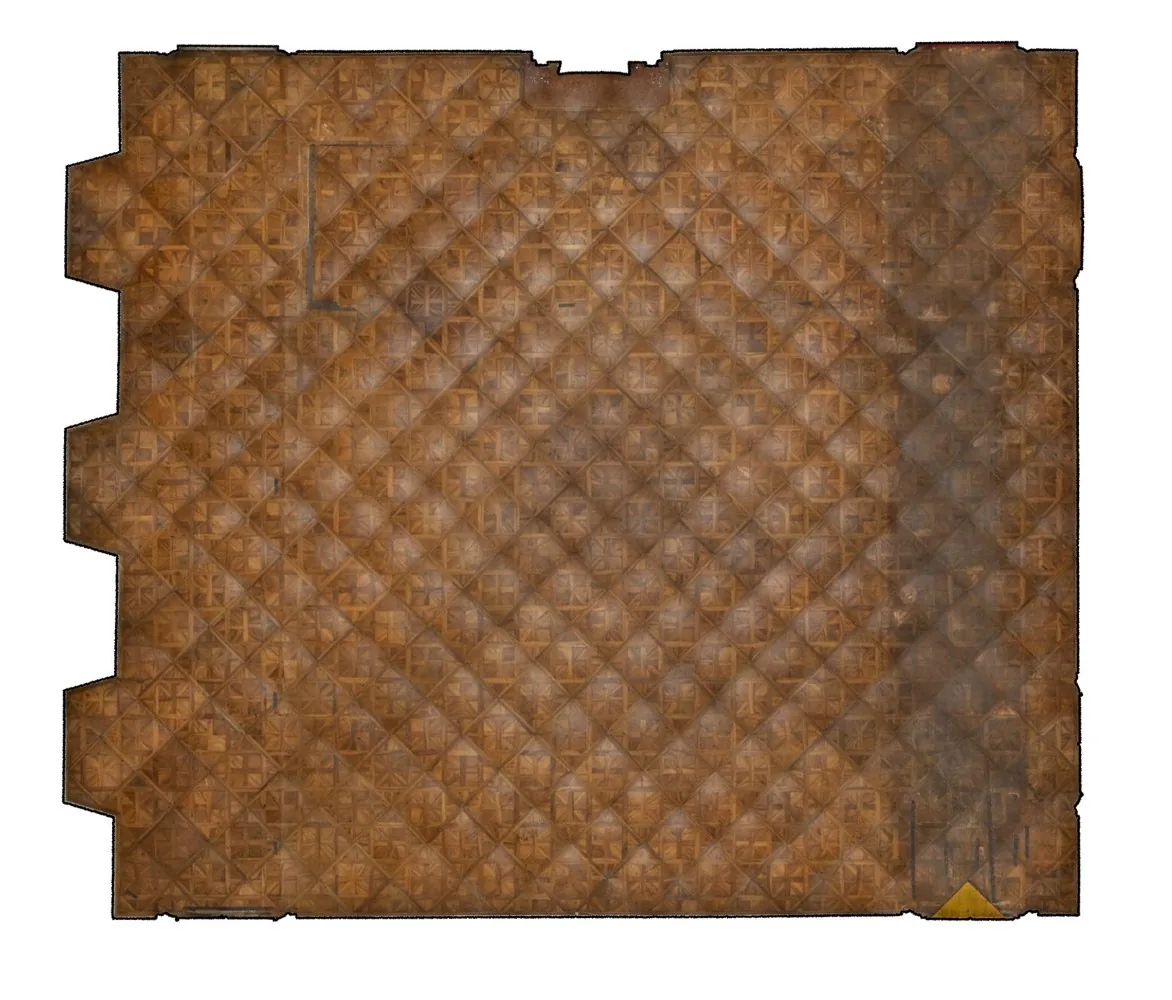
After the fire of 1837, Bryullov decorated the White Hall, which has areas of up to 2,000 pieces per square meter, according to the museum, and the Greuze Room. In the Greuze Room there were strips of 0.5 to 2 mm left, against the 9 mm of a new piece, and in 2002 the decision was made to recreate the entire floor.
In 1880 an explosion lifted the parquet of the tsar’s dining room in the Winter Palace. Stepan Khalturin, hired at the palace as a carpenter, had been storing dynamite in the basement. The explosion killed ten soldiers of the guard, according to the official report; other figures go as high as eleven.
Read the full article on the floors of the State Hermitage Museum.
Floors rebuilt and reproduced
Four floors that were remade from photographs, drawings and surviving pieces, after a fire (La Fenice, Windsor), a war (Catherine Palace) or wear that no longer allowed restoration (Kremlin).
9. La Fenice Theater, Venice
- Country: Italy.
- Type: parquet of the Sale Apollinee, remade after the 1996 fire.
- Wood: several species in the originals.
- System: new floor structure of solid larch beams and an 8 cm concrete slab.
- Work done: reproduction from photographs and documents of the original, with laser cutting according to Berti.
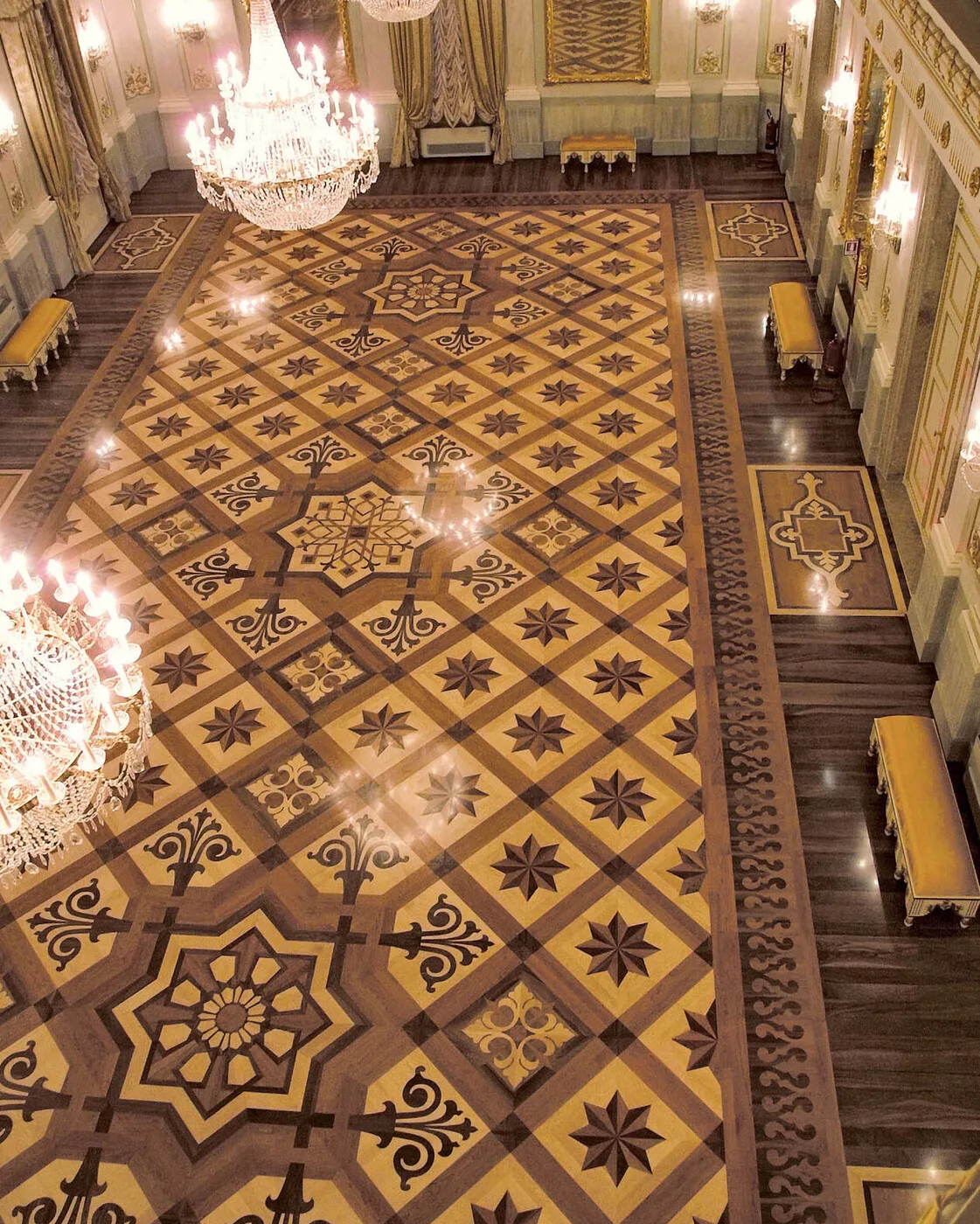
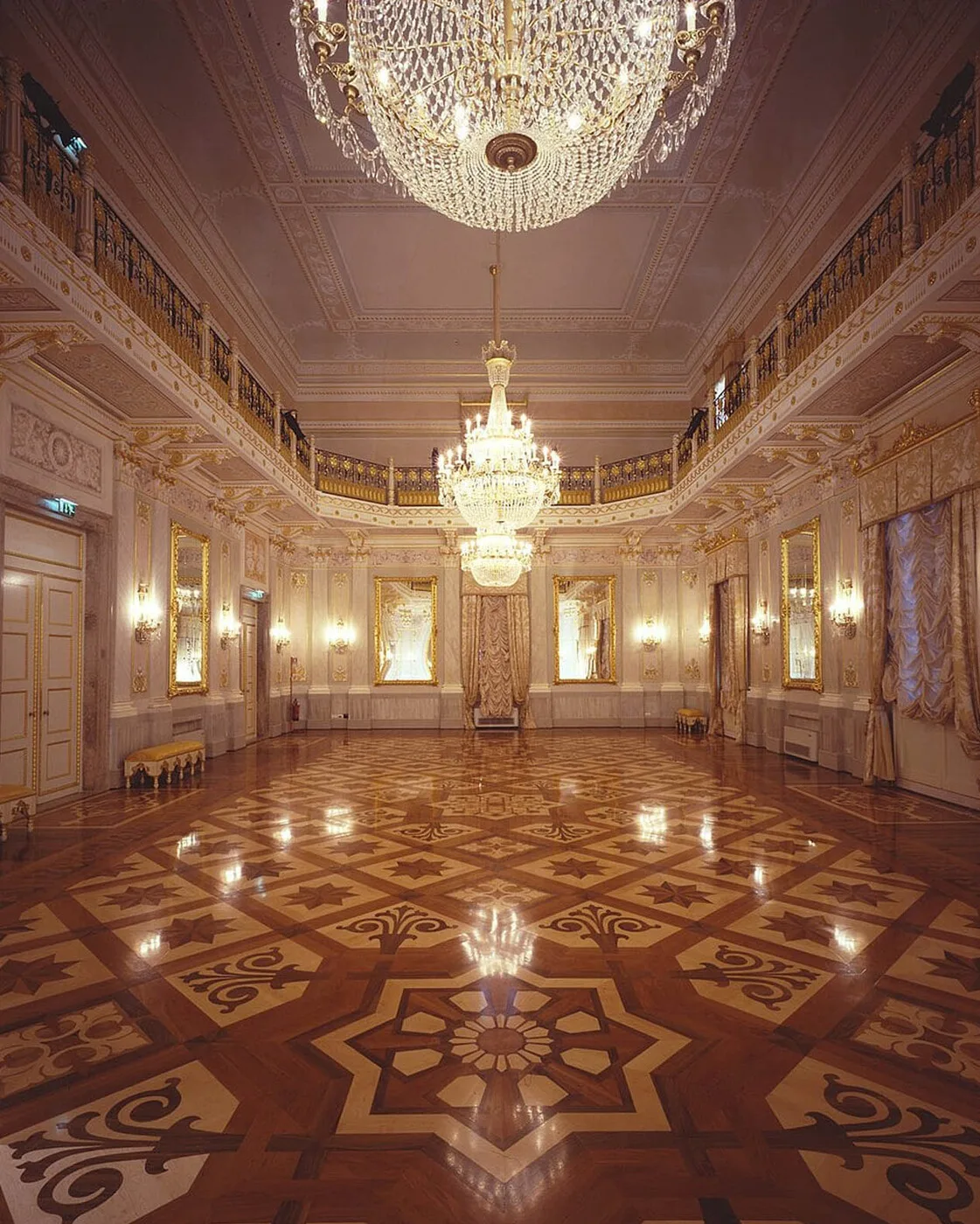
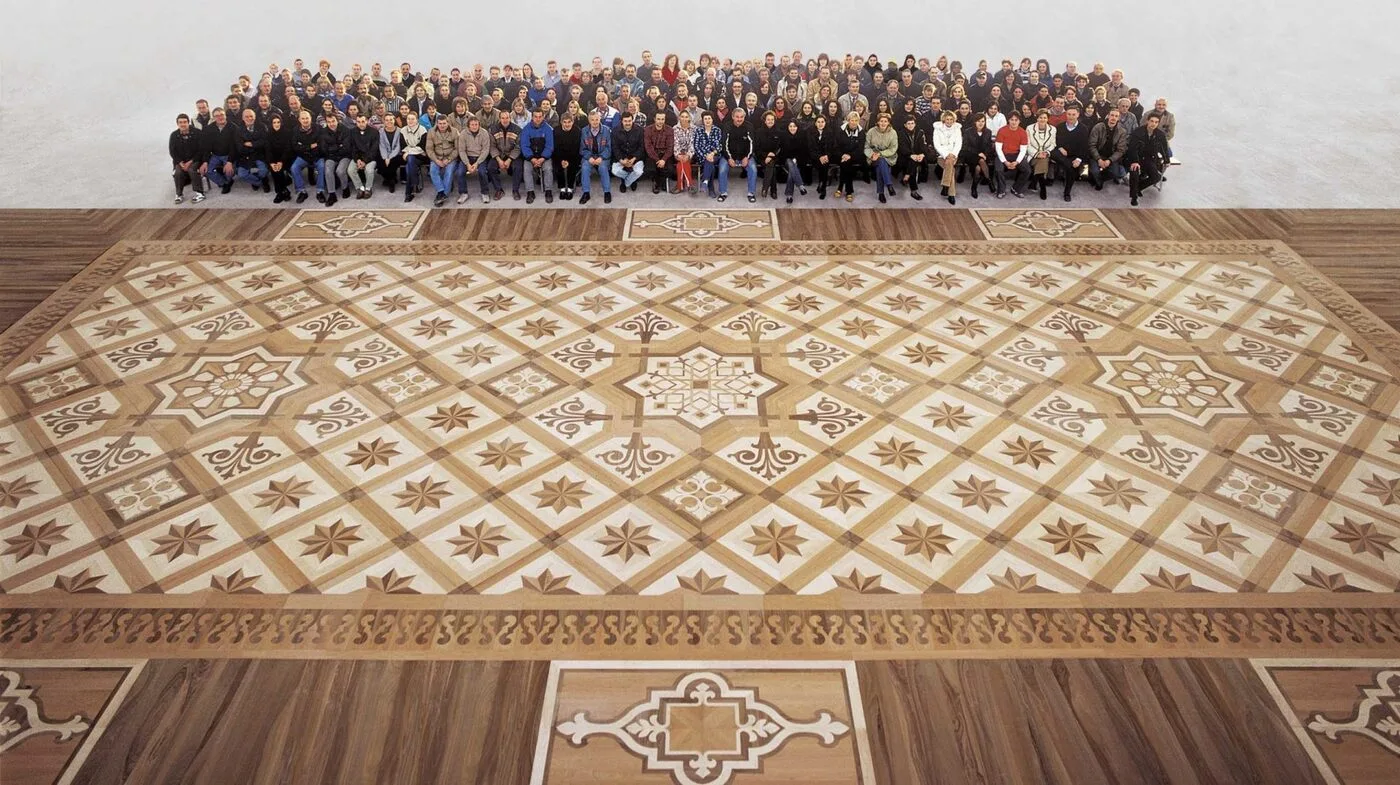
The arson fire of January 29, 1996 destroyed all the parquet floors of the Sale Apollinee and part of their Venetian terrazzo, when the beams that carried them were charred. The new floor structures have solid larch beams of 17 × 25 cm and an 8 cm concrete slab, designed to carry at least 500 kg/m². On top of them, Berti says that from 2002 it remade the parquet using the documents and photographs of the original. The theater was handed over on December 8, 2003 for the opening week and for good on May 8, 2004.
Read the full article on the floors of La Fenice Theater.
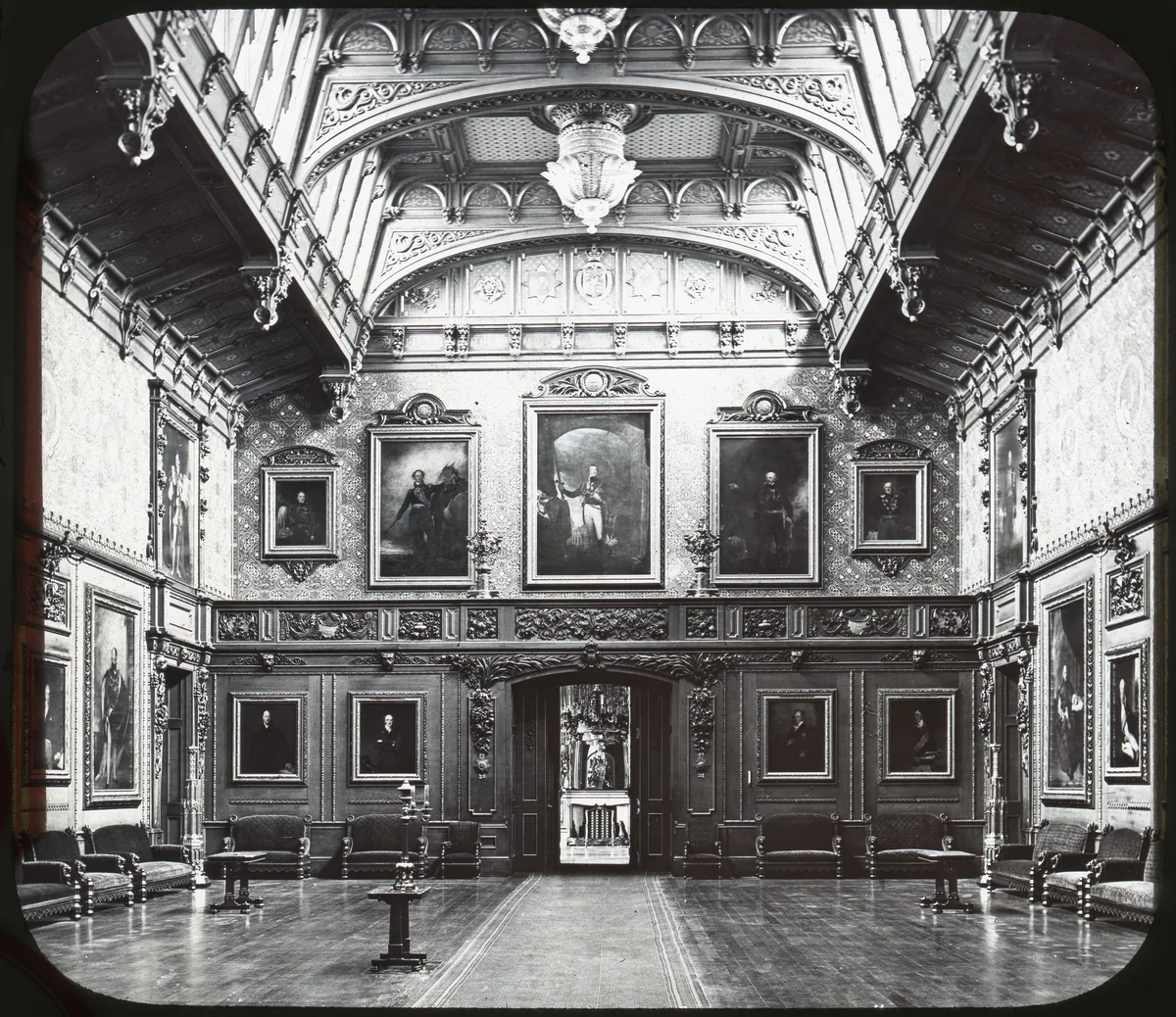
10. Windsor Castle
- Country: United Kingdom.
- Type: marquetry parquet of the Crimson Drawing Room (1854), destroyed in the 1992 fire.
- Wood: wood marquetry, with no species given in the sources.
- System: the pattern of the 1854 floor, designed by Leopold Gruner, is not recorded.
- Work done: restoration 1992–1997; Berti states that it reproduced floors in the castle with laser cutting.
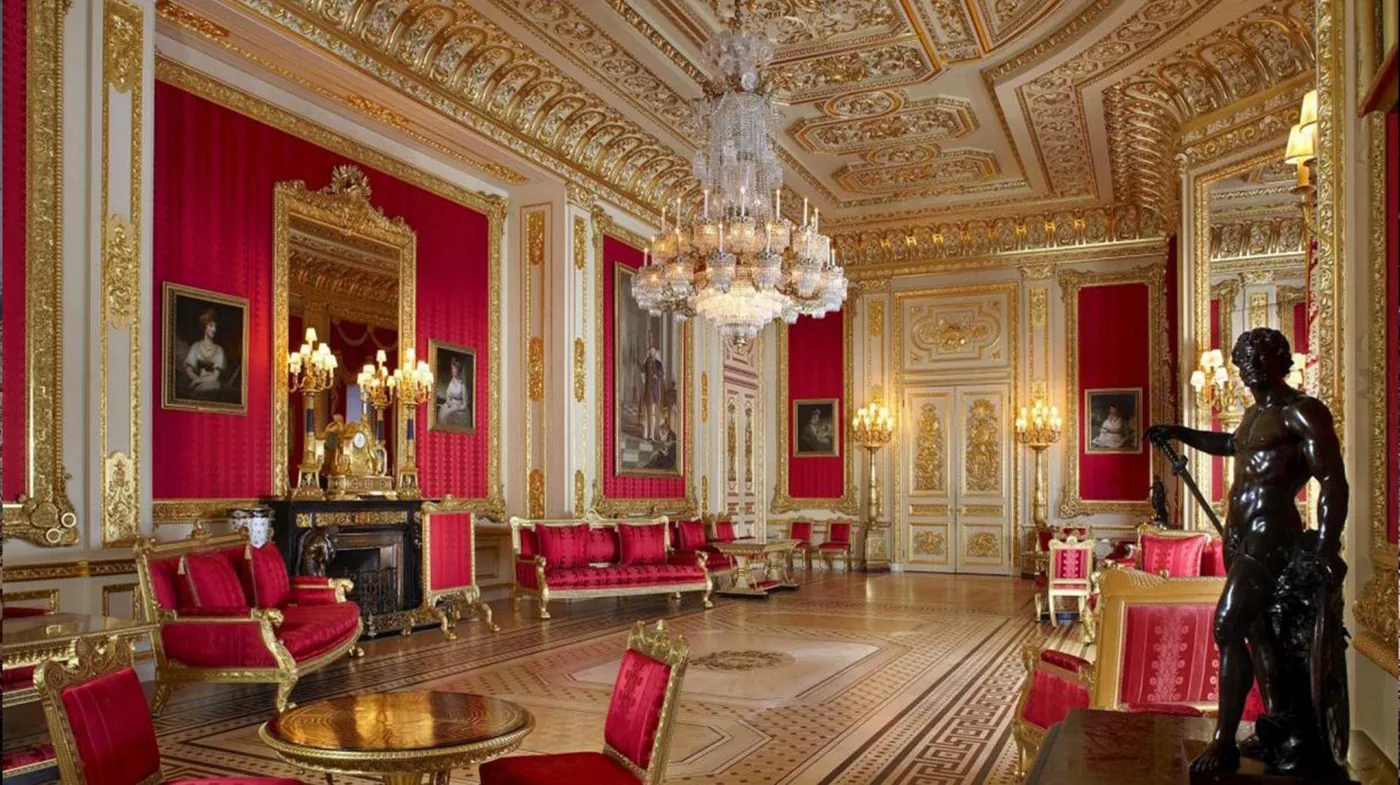
On November 20, 1992 a faulty spotlight set fire to a curtain next to the altar of Queen Victoria’s private chapel. The fire spread through the voids in the roof, the false ceiling of St George’s Hall and the chute for coal carts that ran under the floor, and in the Grand Reception Room it burned for eight and a half hours. The notes of the Royal Collection say that the floor of the Crimson Drawing Room, a Gruner design of 1854, was destroyed. The restoration was finished on November 20, 1997.
Read the full article on the Windsor fire and the floor of the Crimson Drawing Room.
11. Catherine Palace, Tsarskoye Selo
- Country: Russia.
- Type: marquetry parquets rebuilt after the Second World War, alongside others recovered or kept.
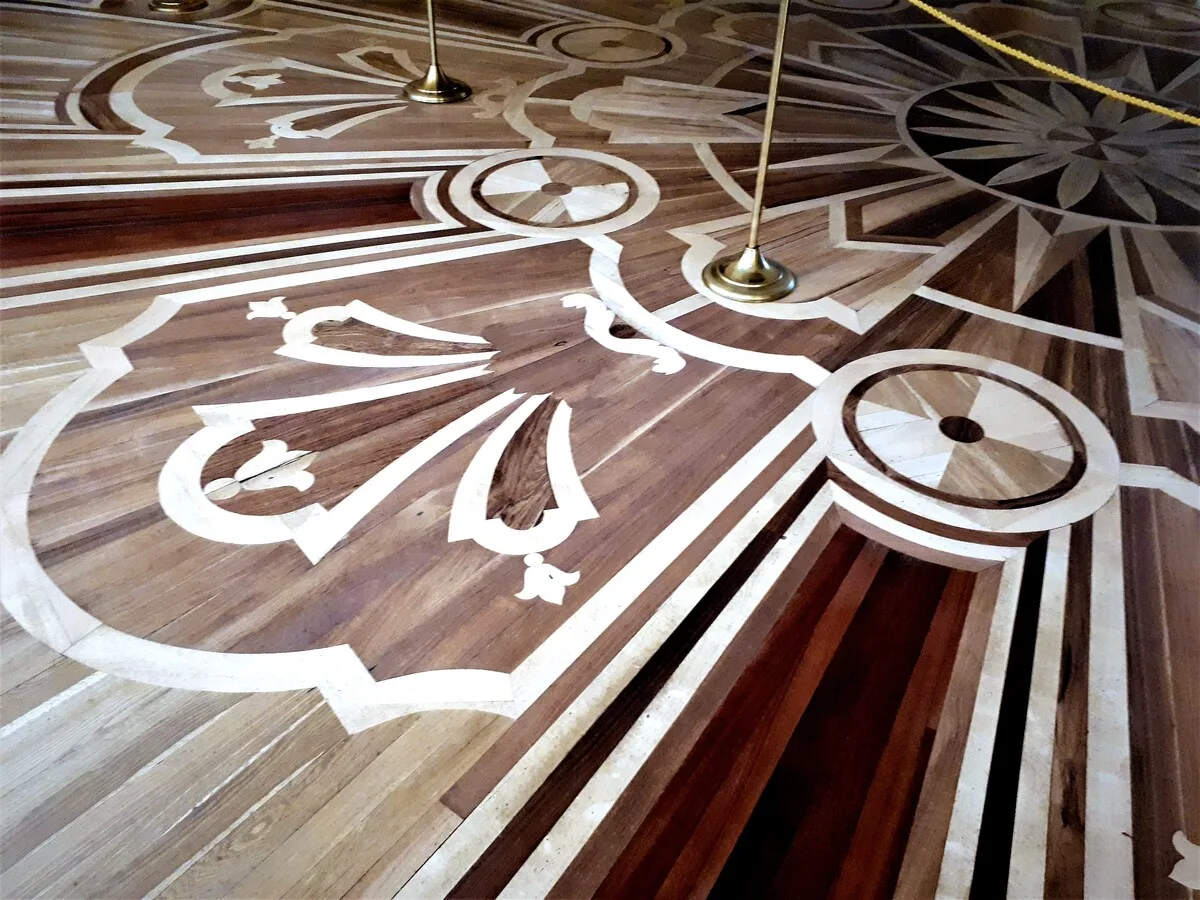
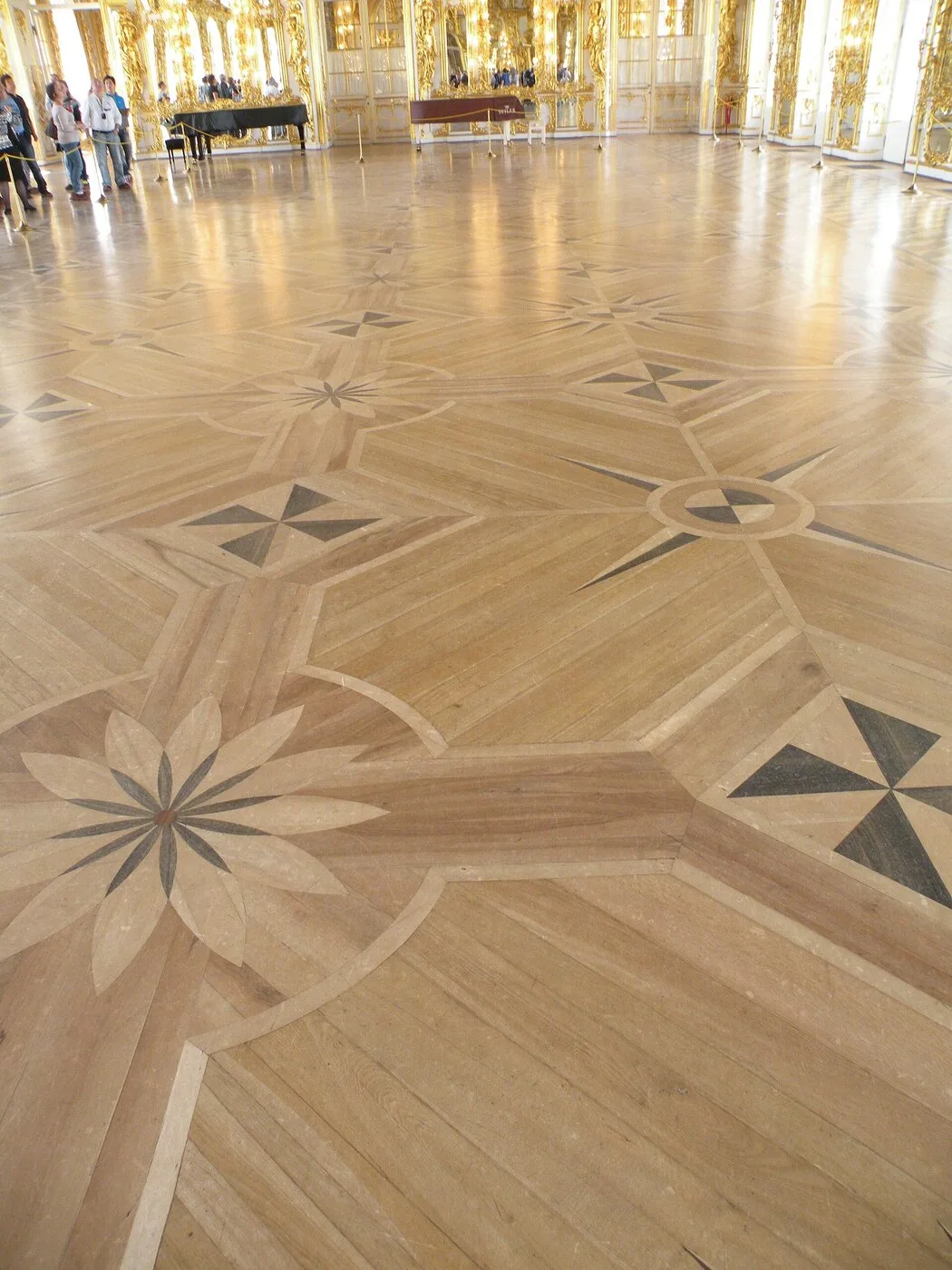
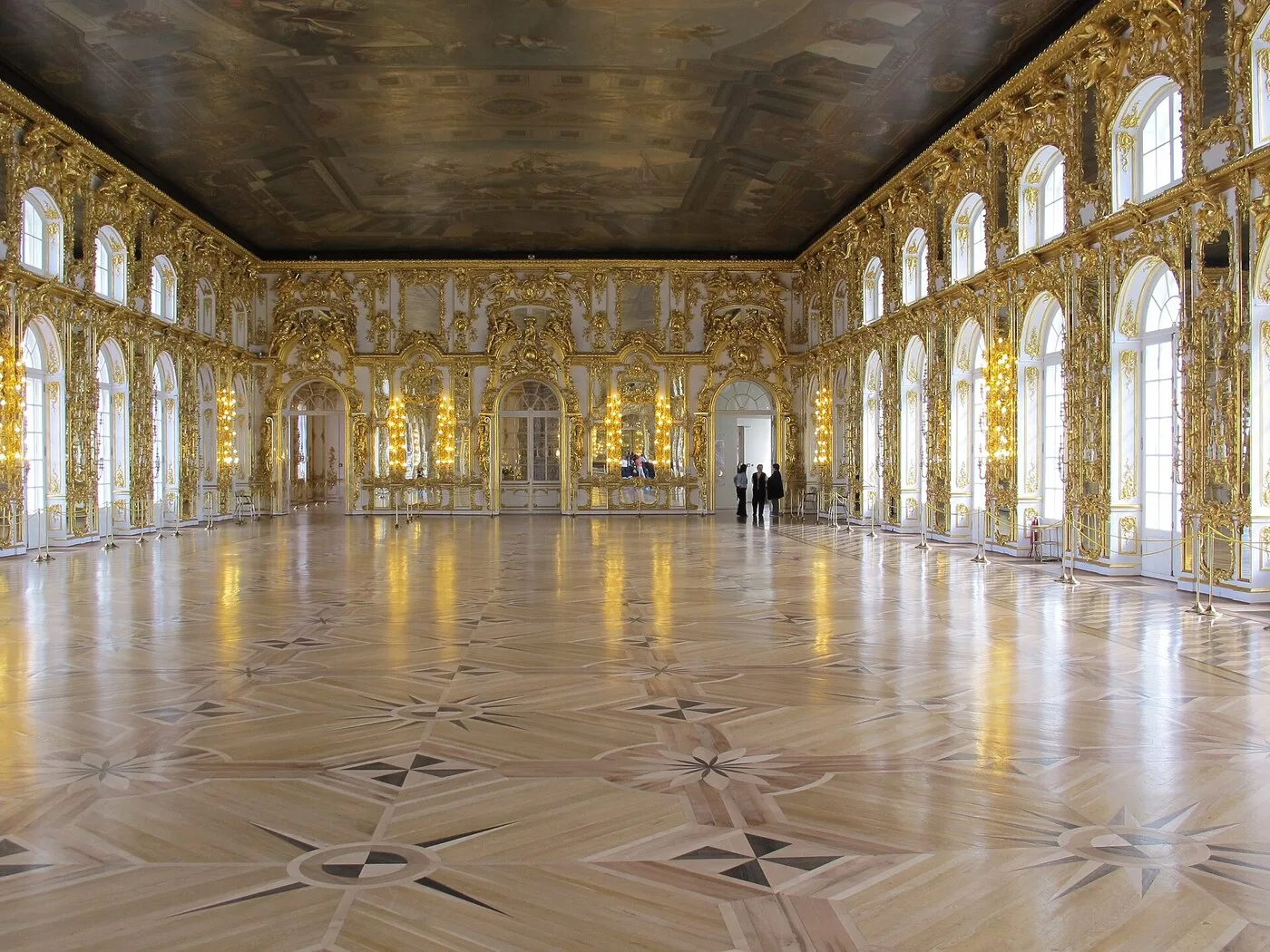
- Wood: light oak and bog oak in the Great Hall; walnut, amaranth, rosewood, maple and birch in the Lyon Drawing Room.
- System: geometric marquetry of borders, medallions and stars in dark wood on a light field.
- Work done: reconstruction following Rastrelli’s designs and restoration of the original pieces that survived.
The parquet of the Lyon Drawing Room was looted during the war, turned up in Berlin and returned to Tsarskoye Selo in 1947, although the room was not restored until 2021. In the Zubov Wing, by contrast, 474 m² had to be recreated in eight private rooms of Catherine II, opened in 2024. The restoration of the wing took five years and 200 specialists, among them modelers, gilders, carvers and painters. The Great Hall, with stars of light oak and bog oak, was rebuilt following Rastrelli’s designs.
Read the full article on the floors of the Catherine Palace.
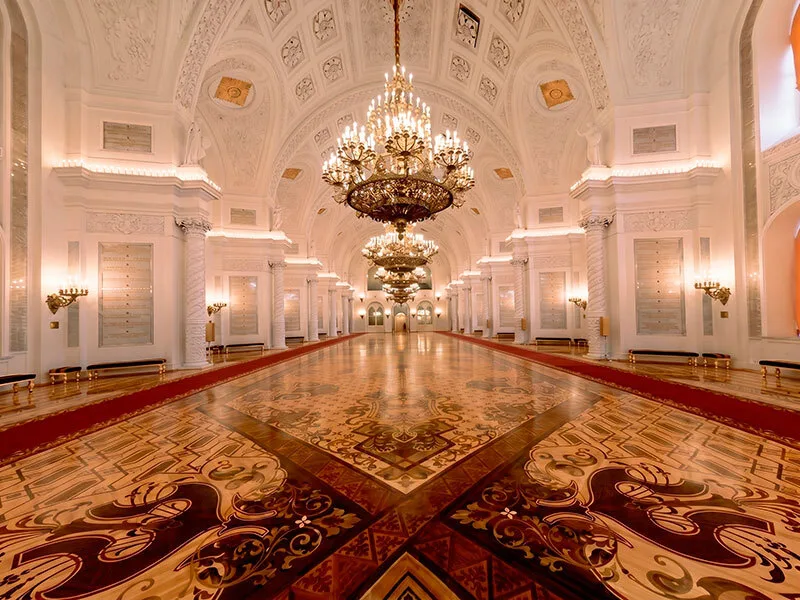
12. Grand Kremlin Palace, St. George’s Hall
- Country: Russia.
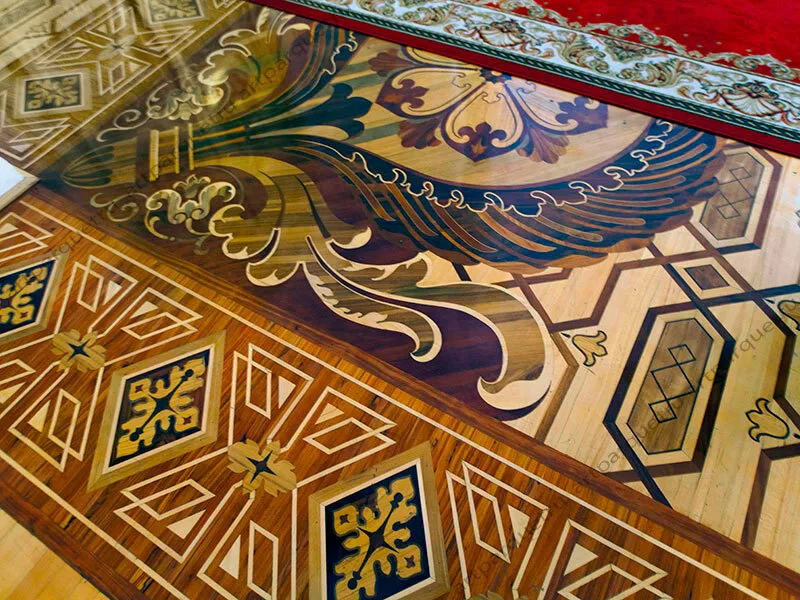
- Type: marquetry parquet of St. George’s Hall (Георгиевский зал), reproduced in 2018–2019.
- Wood: more than 20 species, among them oak, beech, ash, walnut, rosewood, padauk and plane.
- System: workshop-made modules and mosaic assembled on site on a base of boards, with pine beams resting on the brick vault.
- Work done: reproduction of Fyodor Solntsev’s design with panels made in the workshop and mosaic assembled by hand on site.
The parquet panels of St. George’s Hall were made in 1845 in Georg Müller’s workshop in St. Petersburg, according to an inscription in French. They were laid in 1848, and in 1941 an unexploded bomb punched through the floor next to the fourth pillar. After 170 years of use, the wood had only 1 to 1.5 mm left in some spots, so the decision was made to replace the parquet. The new one, about 1,200 m² in a room of 61 × 20.5 m, was laid between 2018 and 2019. Ten square meters of the original were kept, the best preserved because they were in the least walked area.
Read the full article on the floors of the Grand Kremlin Palace.
Floors moved and lost
One floor that changed palaces and another that now exists only in photographs and drawings.
13. Rosenborg Castle, Copenhagen
- Country: Denmark.
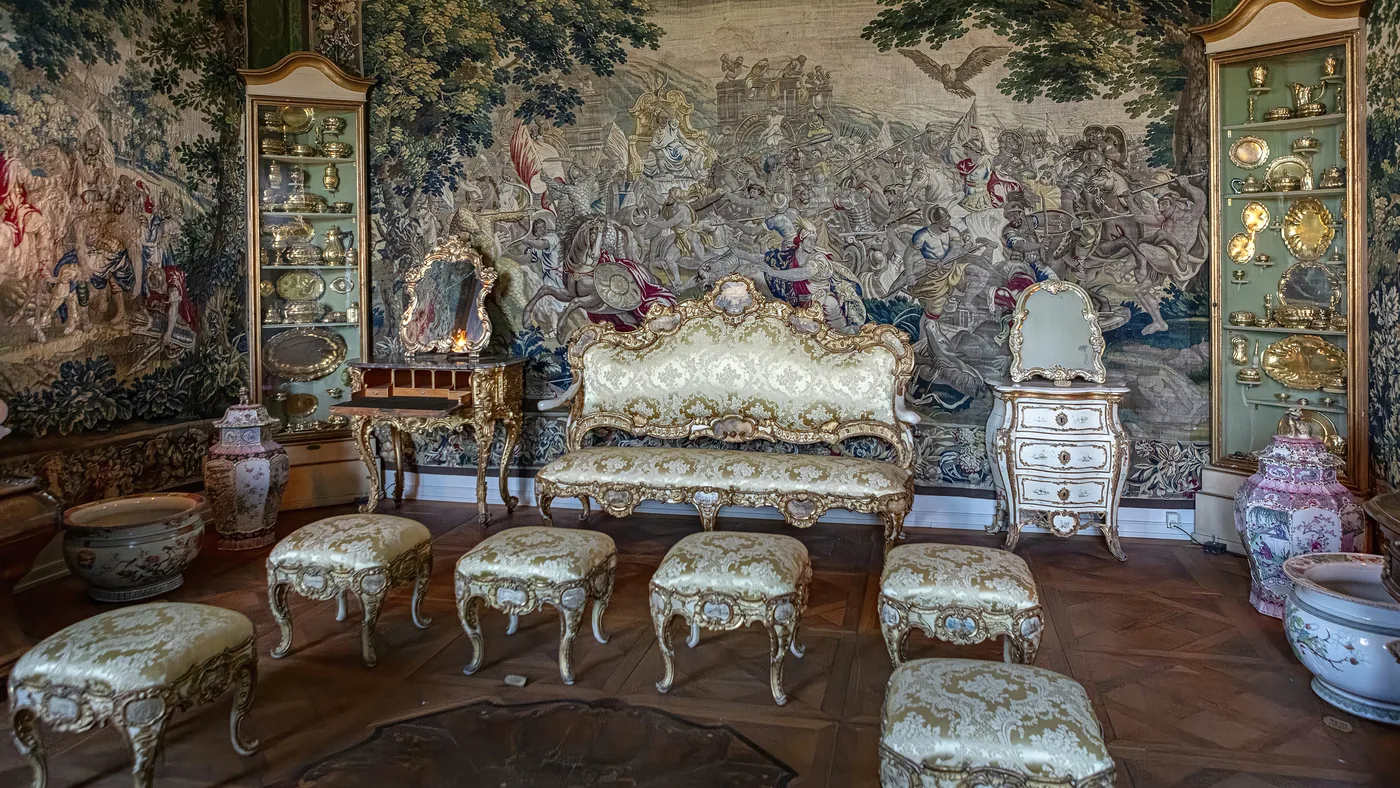
- Type: historic parquet moved from elsewhere.
- Wood: no species in the records for these rooms (oak and walnut in the Garden Room, from 1707).
- System: parquets taken up in other palaces and laid again.
- Work done: moved from Frederiksberg and the Prince’s Palace (Prinsens Palæ) in the 19th century; new subfloor and old parquet relaid in 2007.
Rosenborg has been a museum of the royal collection since 1838. Several rooms on the first floor were later fitted with floors and ceilings from other residences of the crown. From Frederiksberg Palace came, with their ceiling paintings, the parquet of the Rose Room and, between 1860 and 1870, that of the Christian VI room; the one in Frederik IV’s cabinet came from the Prince’s Palace.
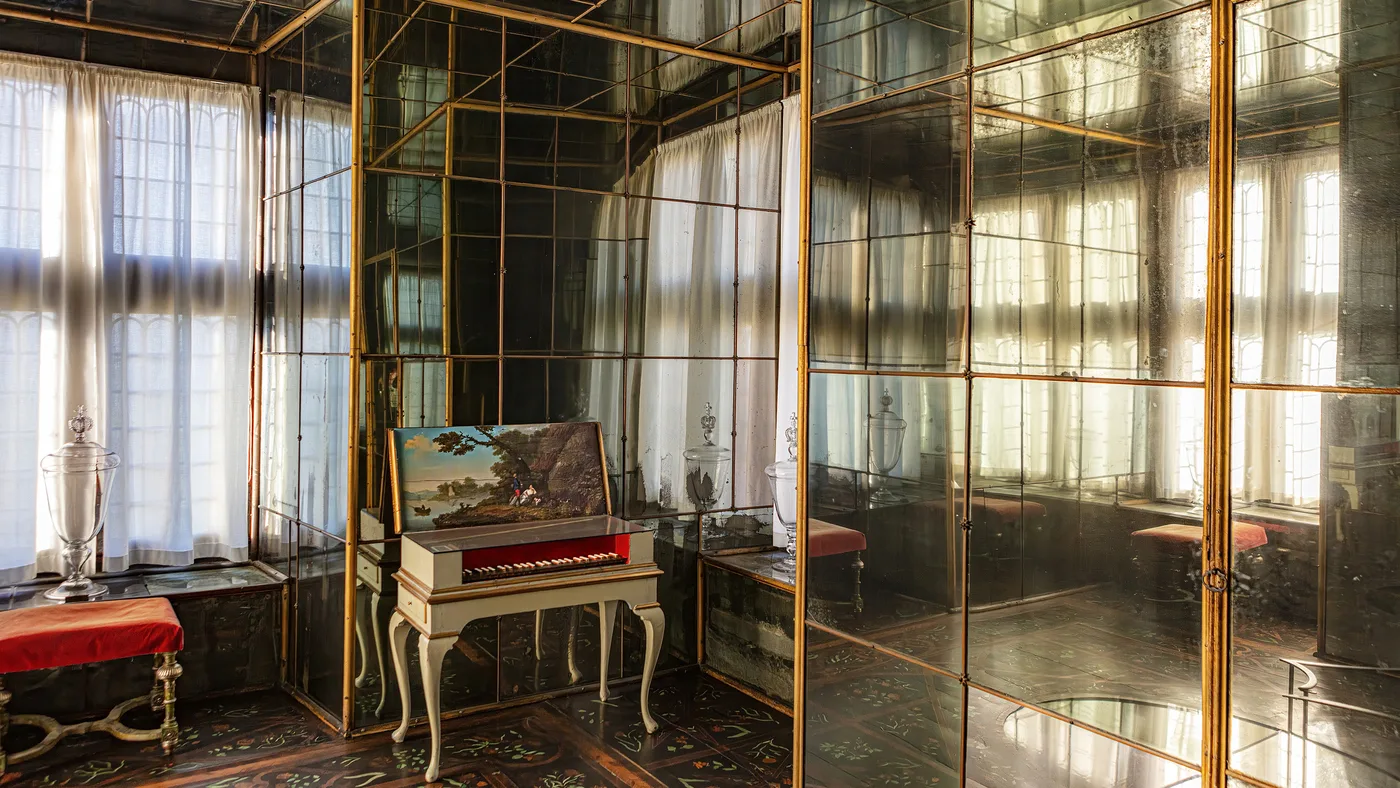
The Mirror Cabinet was made for Christian V between 1684 and 1687. In 1705 Frederik IV added the parquet, with an oval mirror inlaid in the floor.
Read the full article on the floors of Rosenborg Castle.
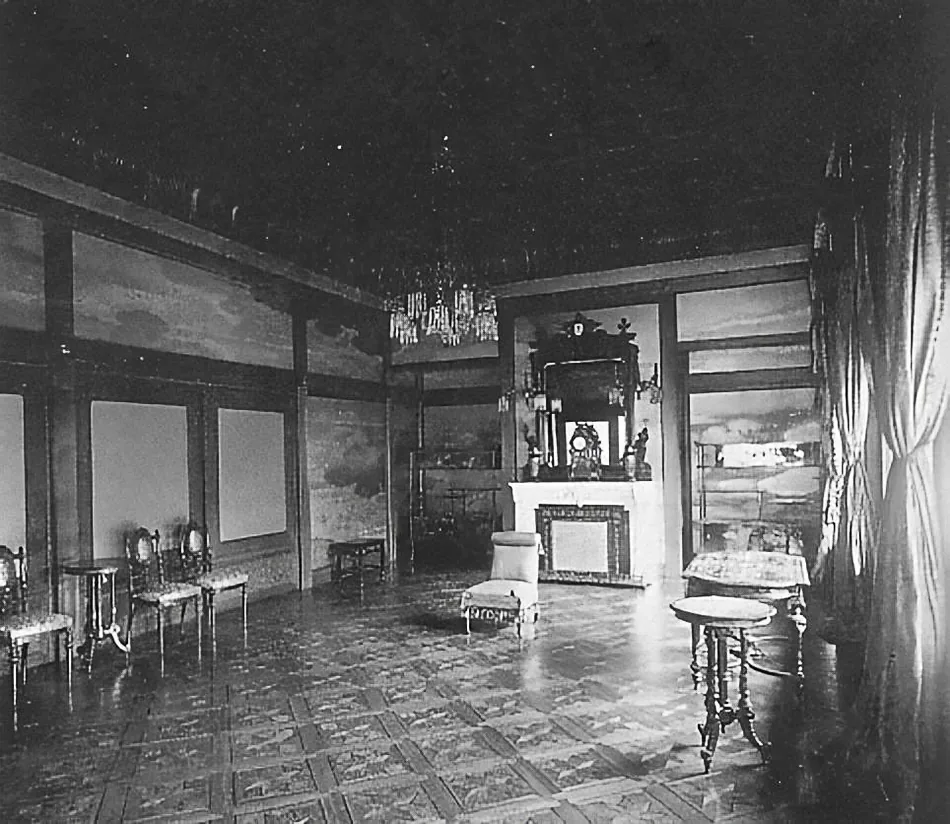
14. Meiji Palace, Tokyo
- Country: Japan.
- Type: lost piece parquet (寄木張り).
- Wood: not recorded in the surviving sources.
- System: piece parquet on a double board floor, joists and beams, with steam and air heating underneath.
- Work done: a documentary case: the palace burned in 1945 and period photos and floor plans remain.
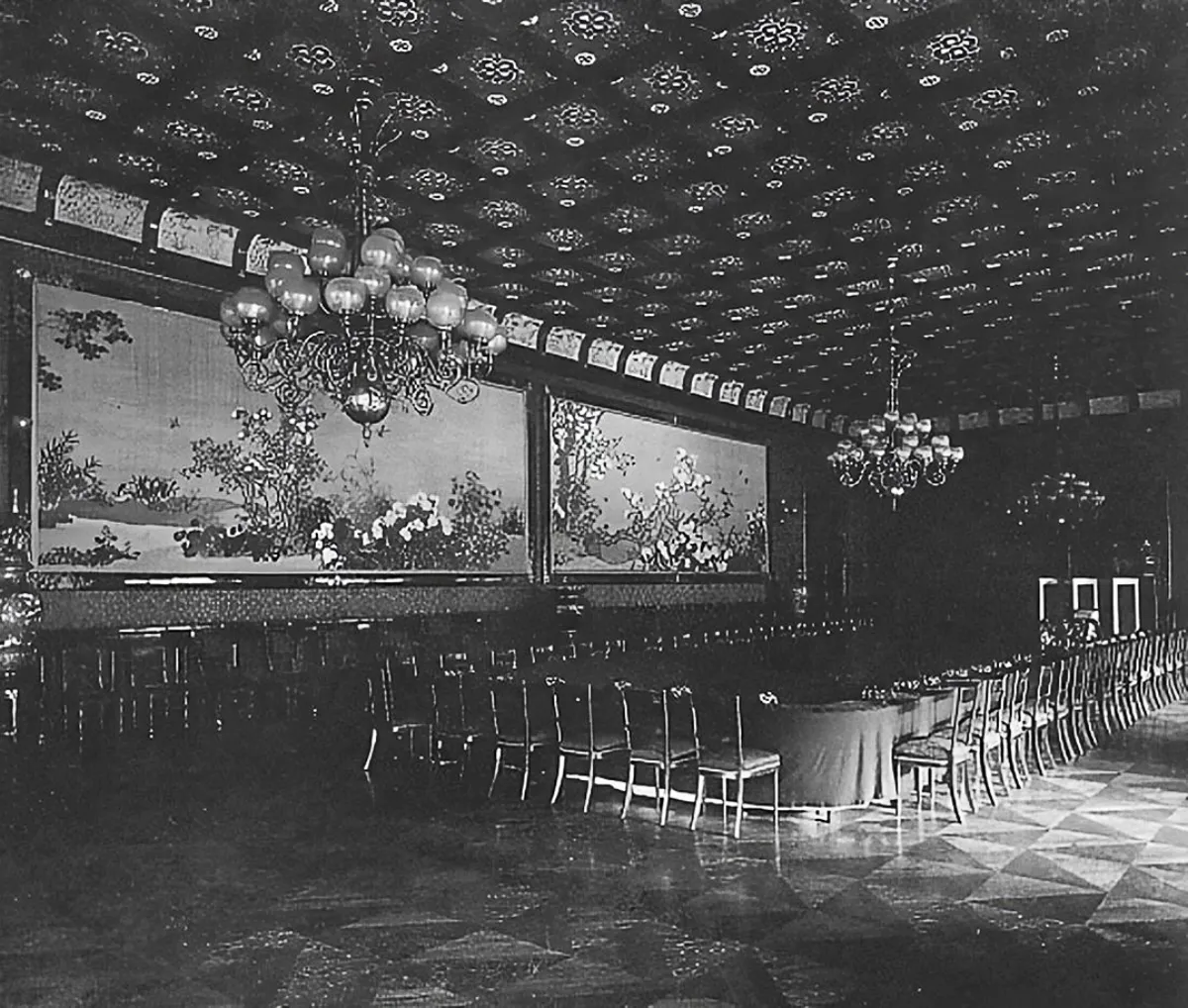
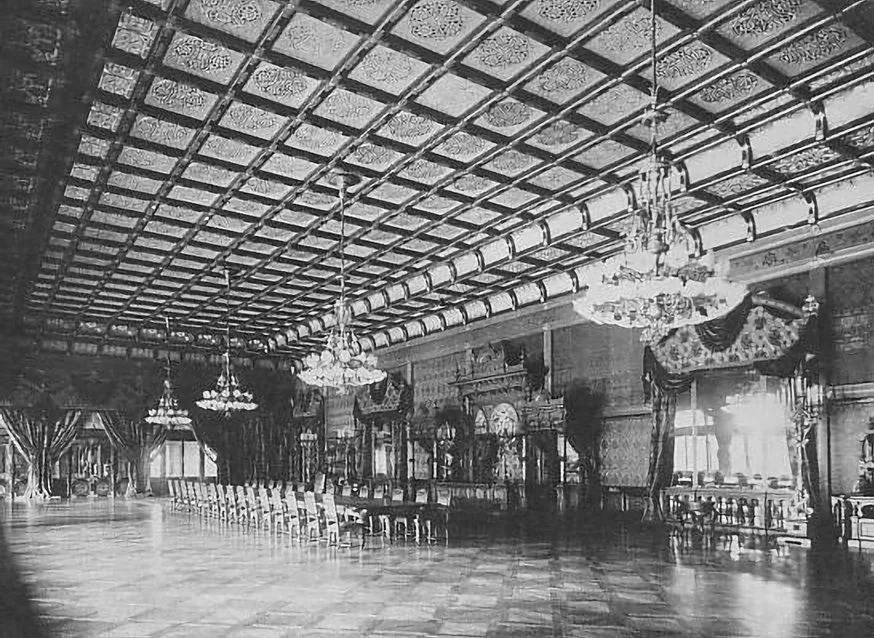
The Meiji Palace was completed in Tokyo in 1888 for audiences and official receptions. According to the Tokyo Metropolitan Library, the audience hall (Seiden), with no partitions, and its parquet floor assume a Western ceremonial, conducted standing. The Constitution was promulgated in the Seiden on February 11, 1889. The plans in that library’s Kiko collection draw the parquet: straight and diagonal grids, five quality grades and a fret border in the entrance rooms. A plan from 1885 shows that the floor level changed with the function of each room. The palace burned in 1945.
Read the full article on the floors of the Meiji Palace.
Contemporary floors in historic buildings
Two new wood floors, designed for historic buildings.
15. Lange Voorhout Palace / Escher in The Palace
- Country: Netherlands.
- Type: contemporary parquet in a historic building.
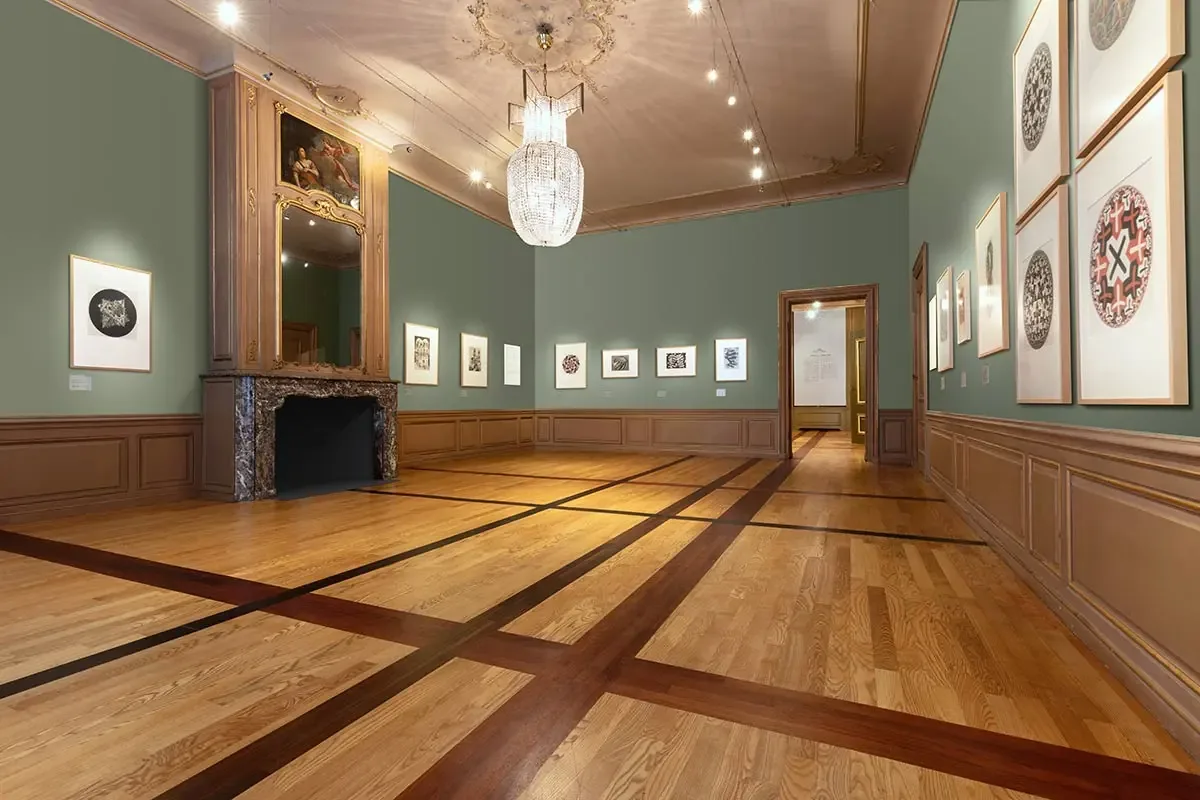
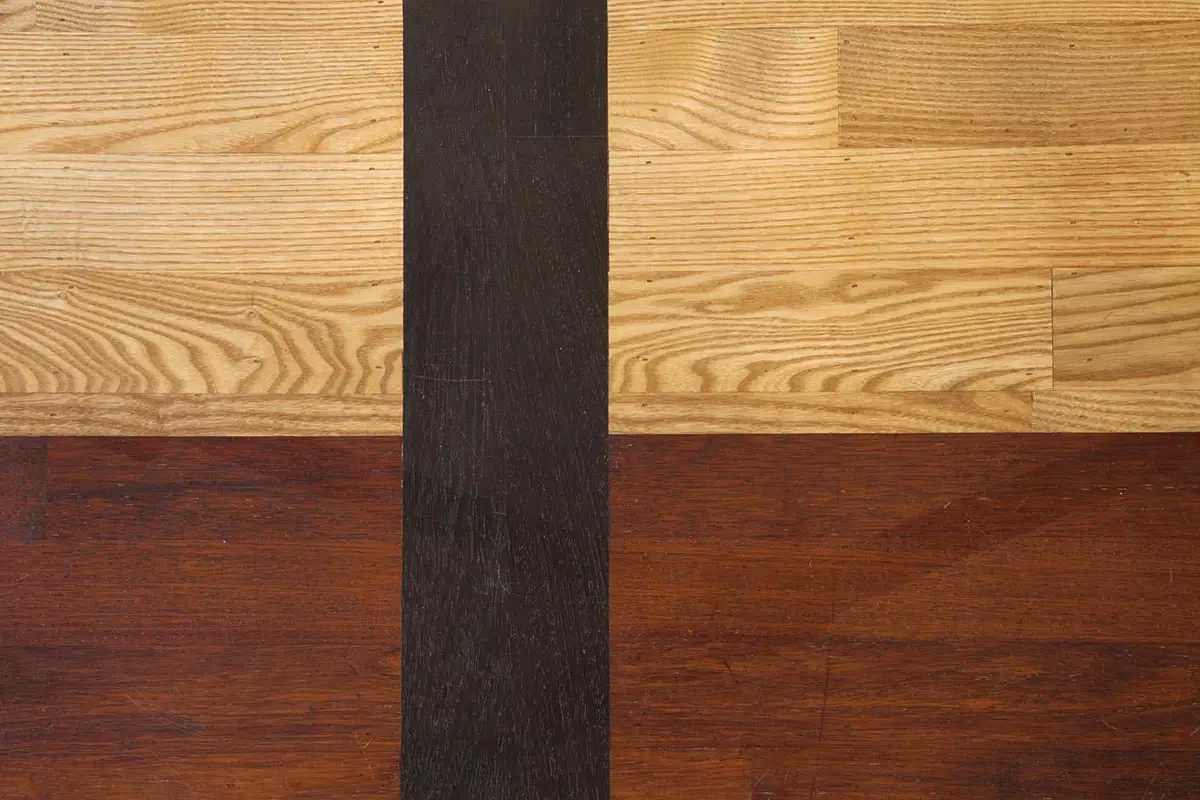
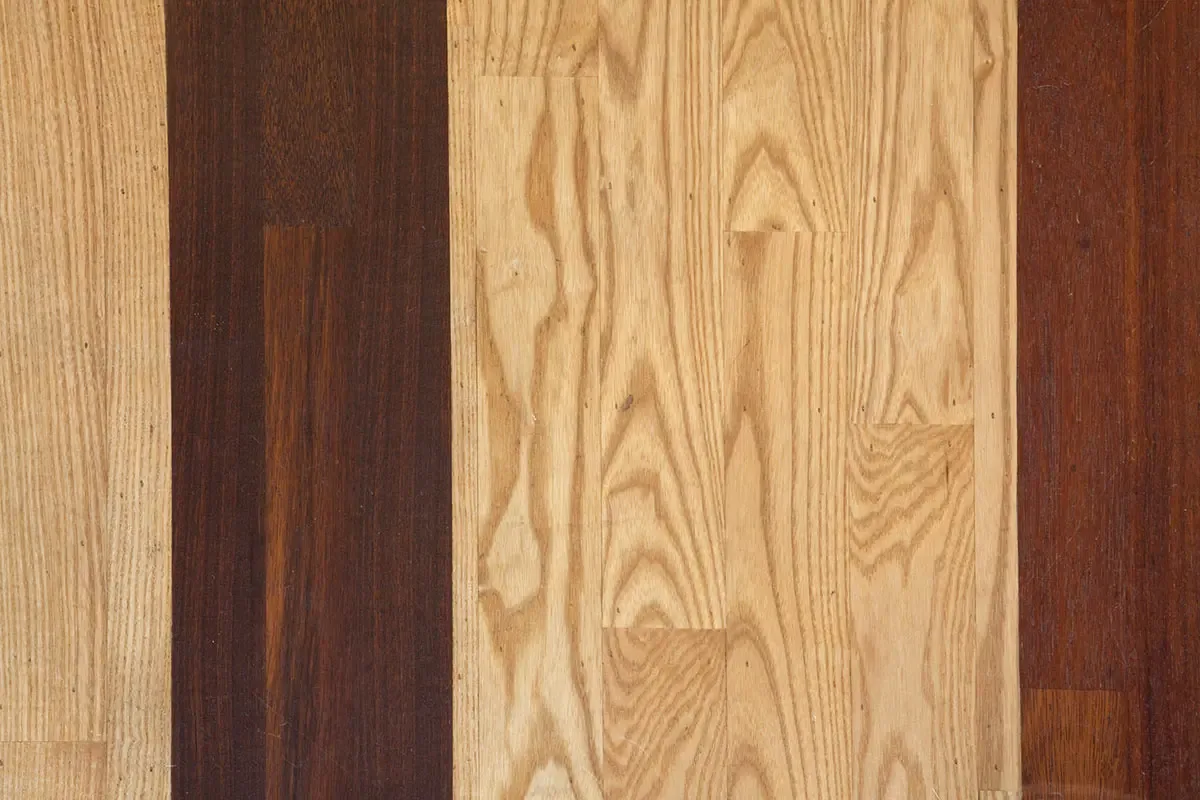
- Wood: ash, kambala, wenge, merbau and angelique (basralocus in some sources).
- System: lengthwise and crosswise stripes of varying width and color.
- Work done: design of a whole floor of the building.
In 1992 Rudi Fuchs, then director of the Hague Municipal Museum (Gemeentemuseum), commissioned Donald Judd to design the floor that was to replace the 1882 parquet. In January and March Judd drew bands at a quarter, a third and half of each floor, in both directions, running across doorways and partitions. In August 1992, according to the museum, the 1882 parquet, with stars framed in octagons, had to be replaced, and it was stored at the museum. In 1999, seven years later, it was reassembled in the foyer of the Royal Theater of The Hague (Koninklijke Schouwburg).
Read the full article on the floors of Lange Voorhout Palace.
16. Oval Office, White House
- Country: United States.
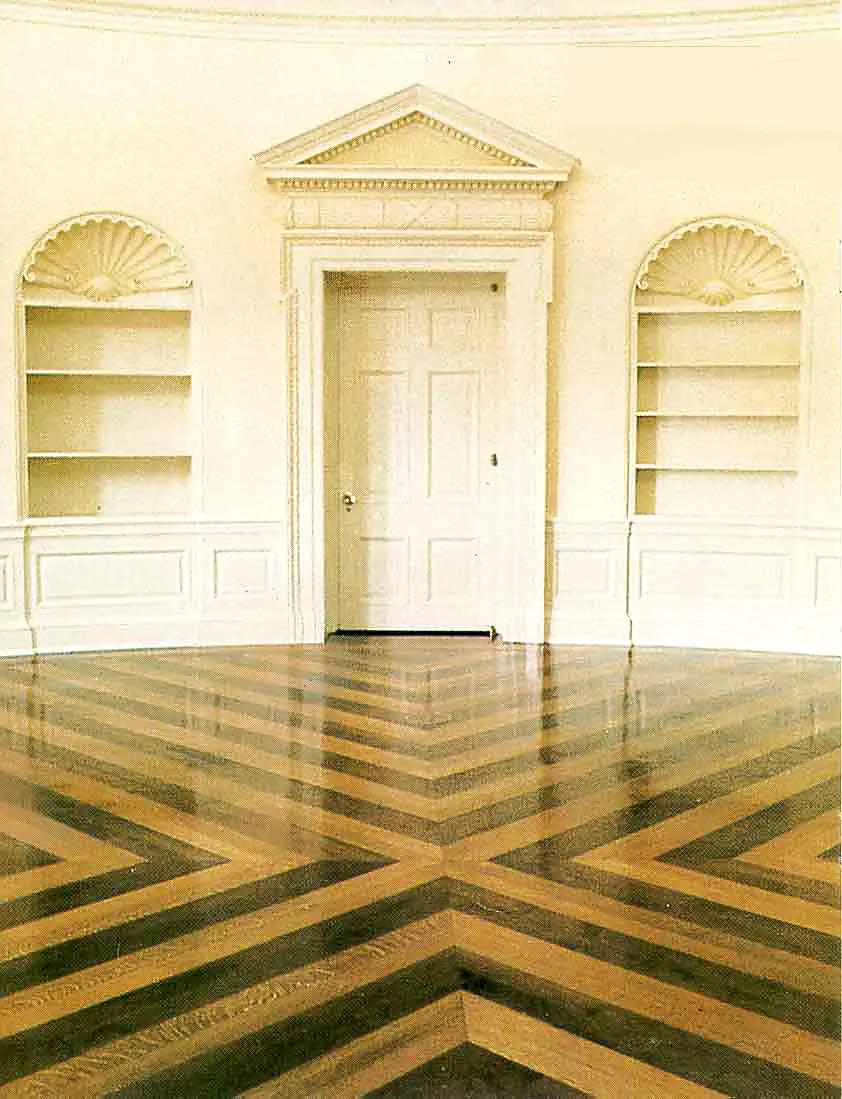
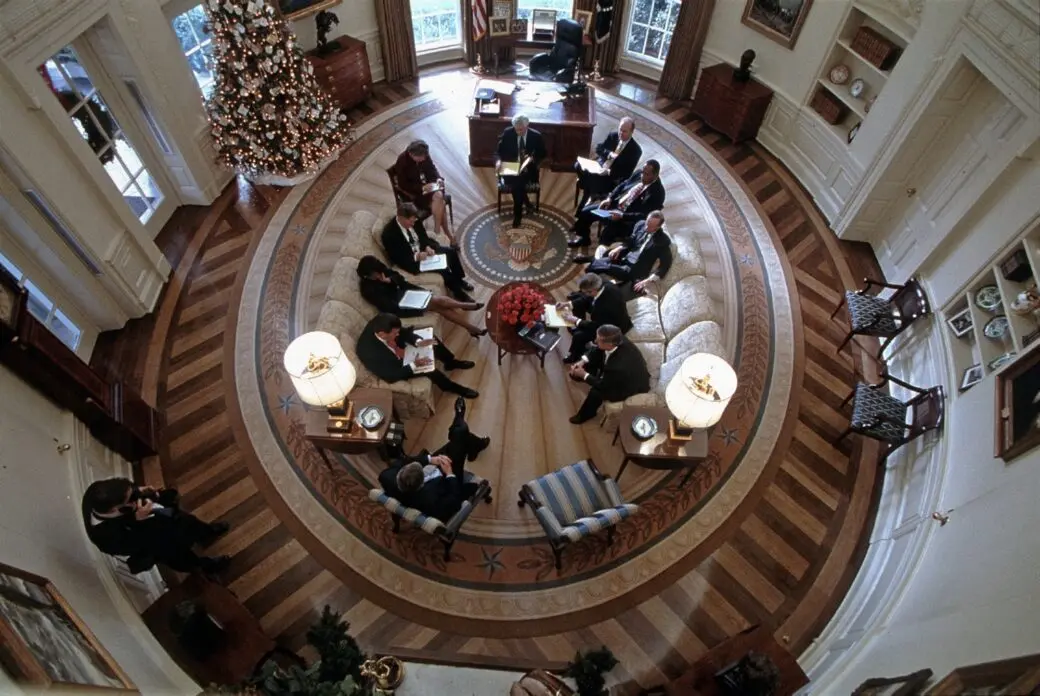
- Type: 1982 parquet in a 1934 office, copied in full in 2005.
- Wood: quartersawn white oak and walnut.
- System: multi-layer boards of 19 × 102 mm glued to the floor structure, in a cross pattern, with a three-band border.
- Work done: in 2005 the 1982 floor was torn out and an identical one was made.
In August 1982 Kentucky Wood Floors made the parquet that replaced the office’s wood-look vinyl. Before the vinyl, in the 1950s, Eisenhower’s golf shoes left hundreds of marks on the floor. The pattern, a cross of oak and walnut strips of 19 × 102 mm with a 35.5 cm border in three bands, came from a sketch by Eric Gugler, the architect of the 1934 office. In August 2005 the floor was torn out entirely and an identical one was made.
Read the full article on the floors of the Oval Office.
Restore or replace: the measure of thickness
In these floors one decision keeps coming back when a parquet is worn. In the Georgievsky Hall of the Kremlin only 1 to 1.5 mm of wood was left in some spots, and a new parquet was made. In the Greuze Room of the Hermitage there were strips of 0.5 to 2 mm, and the decision was made to recreate the floor. At Nymphenburg, on the other hand, the oak is kept with waxes that can be removed.
In a parquet at home the same thing happens on another scale. The usable thickness is measured at the edge. If it cannot be seen, you ask the age of the floor and how many times it has been sanded, and you sound it out by tapping. Below 2-3 mm of wood above the tongue, restoration is barely viable. A sanding takes off from about 0.8 mm up to 3 mm or more, depending on the species and the leveling: the flatter the floor, the less is removed. With enough thickness, the job is to sand and restore; for a period floor, there is the page on historic parquet.
Restoration of historic parquet. A worn panel or marquetry floor is restored or replaced depending on the wood it has left. Ask our parquet craftsmen.
Sources
- Myrabella, Wikimedia Commons, CC BY-SA 3.0.
- Fanny Schertzer, Wikimedia Commons, CC BY-SA 3.0.
- Dennis G. Jarvis, Wikimedia Commons, CC BY-SA 2.0 (cropped).
- Trizek, Wikimedia Commons, CC BY-SA 3.0.
- © Frank Stolle / Munich Travel, munich.travel.
- © Frank Stolle / Munich Travel, munich.travel.
- © Frank Stolle / Munich Travel, munich.travel.
- Shonagon, Wikimedia Commons, CC0.
- Groupe Ducerf, ducerf.com.
- OPPIC, oppic.fr.
- patrick janicek, Wikimedia Commons, CC BY 2.0.
- OPPIC, oppic.fr.
- GFreihalter, Wikimedia Commons, CC BY-SA 4.0.
- Nikater, Wikimedia Commons, CC BY-SA 3.0.
- Rundāle Palace Museum.
- Töpfer, toepfer.at, license not recorded.
- Dennis G. Jarvis, Wikimedia Commons, CC BY-SA 2.0.
- Gzen92, Wikimedia Commons, CC BY-SA 4.0.
- Zmorgan, Wikimedia Commons, public domain.
- Zmorgan, Wikimedia Commons, public domain.
- Berti Pavimenti Legno, berti.net.
- Pietro Tessarin, Wikimedia Commons, CC BY-SA 4.0.
- Berti Pavimenti Legno, berti.net.
- Berti Pavimenti Legno, berti.net.
- Edmund F. Arras, Wikimedia Commons (DPLA), public domain.
- GAlexandrova, Wikimedia Commons, CC BY-SA 4.0.
- Chatsam, Wikimedia Commons, CC BY-SA 3.0.
- Sailko, Wikimedia Commons, CC BY-SA 3.0.
- ArtParquet, artparquet.ru.
- ArtParquet, artparquet.ru.
- The Royal Danish Collection denkongeligesamling.dk, license not recorded.
- The Royal Danish Collection denkongeligesamling.dk, license not recorded.
- Period photograph, Wikimedia Commons commons.wikimedia.org, public domain.
- Period photograph, Wikimedia Commons commons.wikimedia.org, public domain.
- Period photograph, Wikimedia Commons commons.wikimedia.org, public domain.
- Gerrit Schreurs, Escher in The Palace escherinhetpaleis.nl, license not recorded.
- Zaida Oenema, Escher in The Palace escherinhetpaleis.nl, license not recorded.
- Zaida Oenema, Escher in The Palace escherinhetpaleis.nl, license not recorded.
- White House, Wikimedia Commons commons.wikimedia.org, public domain.
- White House Historical Association whitehousehistory.org, license not recorded.


