
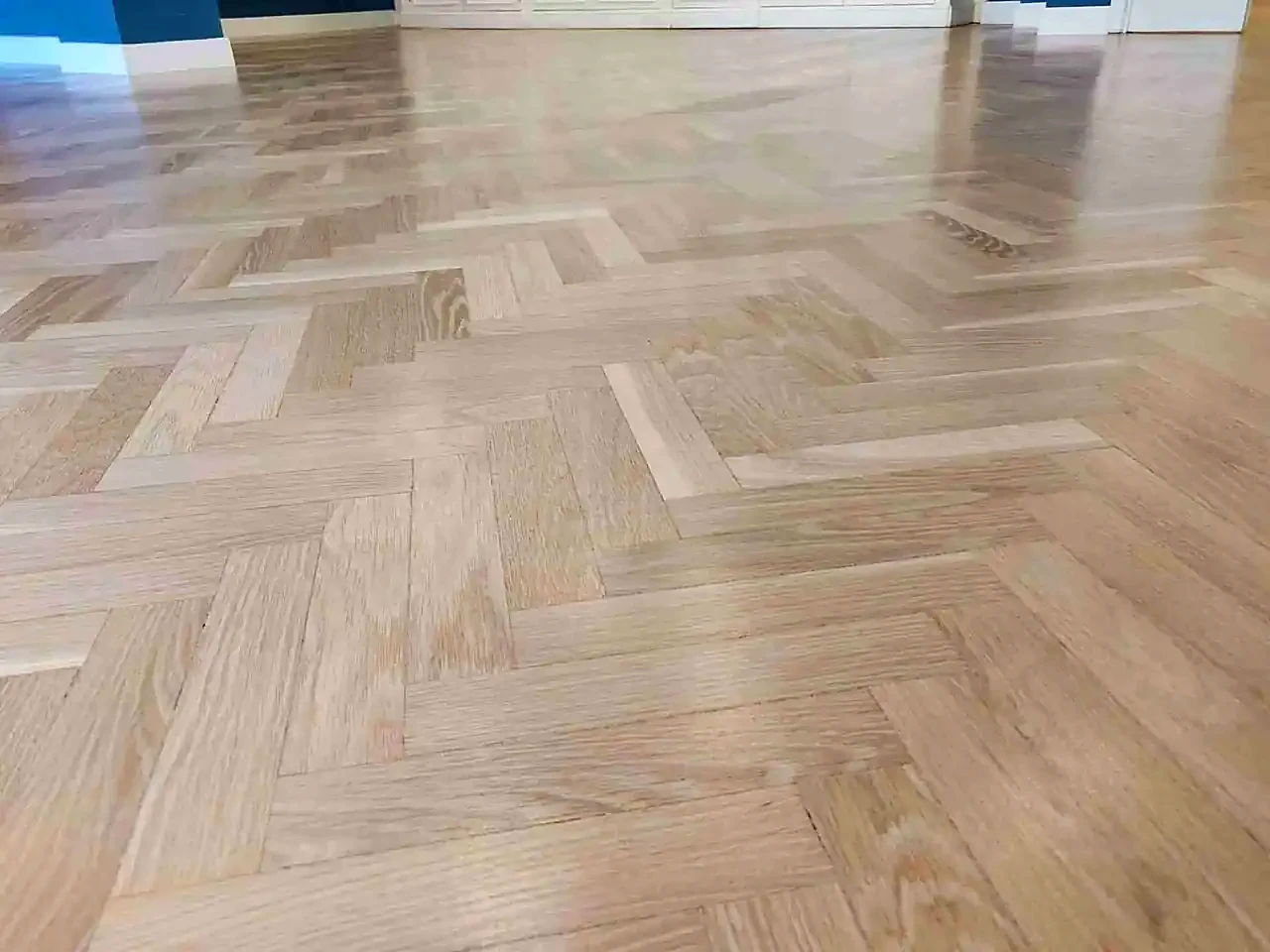
Solid Parquet Flooring in Madrid
Noble hardwood parquet in traditional herringbone, Hungarian chevron or custom patterns for singular residences and architectural projects in Madrid.
Solid parquet refers to small- or medium-format noble hardwood bonded directly to concrete screed. The current industry benchmark format is 42 cm in length, 7 cm in width, and 1.4 cm in thickness, glued to screed with high-elasticity silane adhesives.
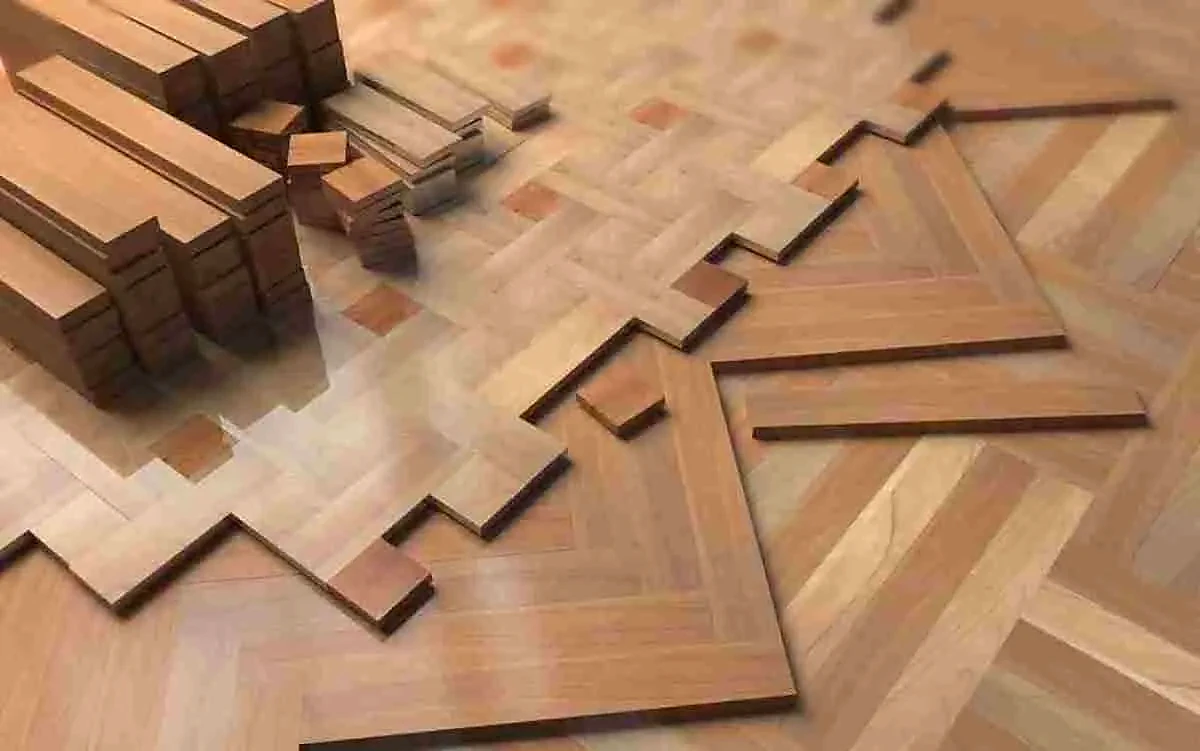
Craftsmanship Specifications
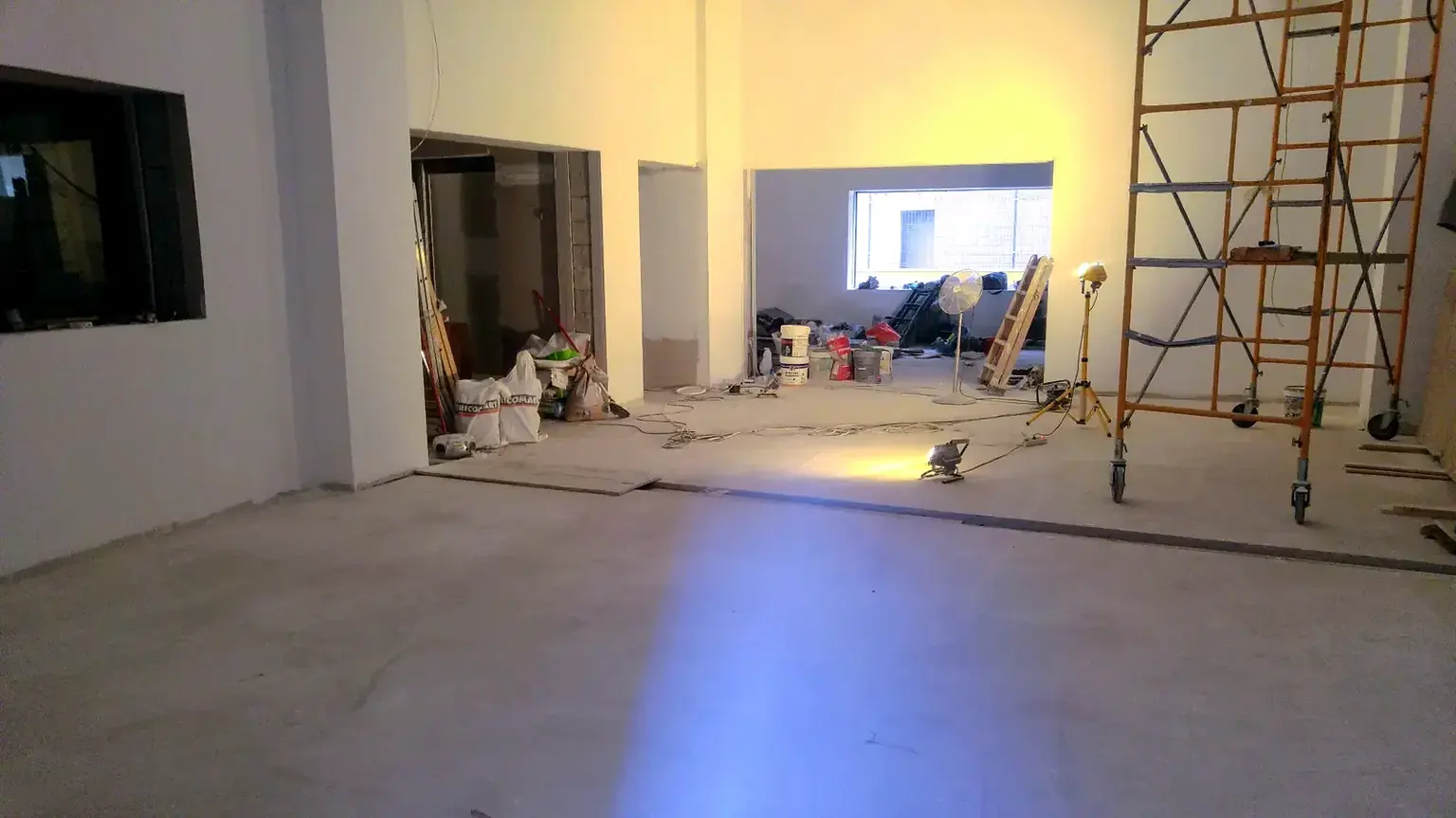
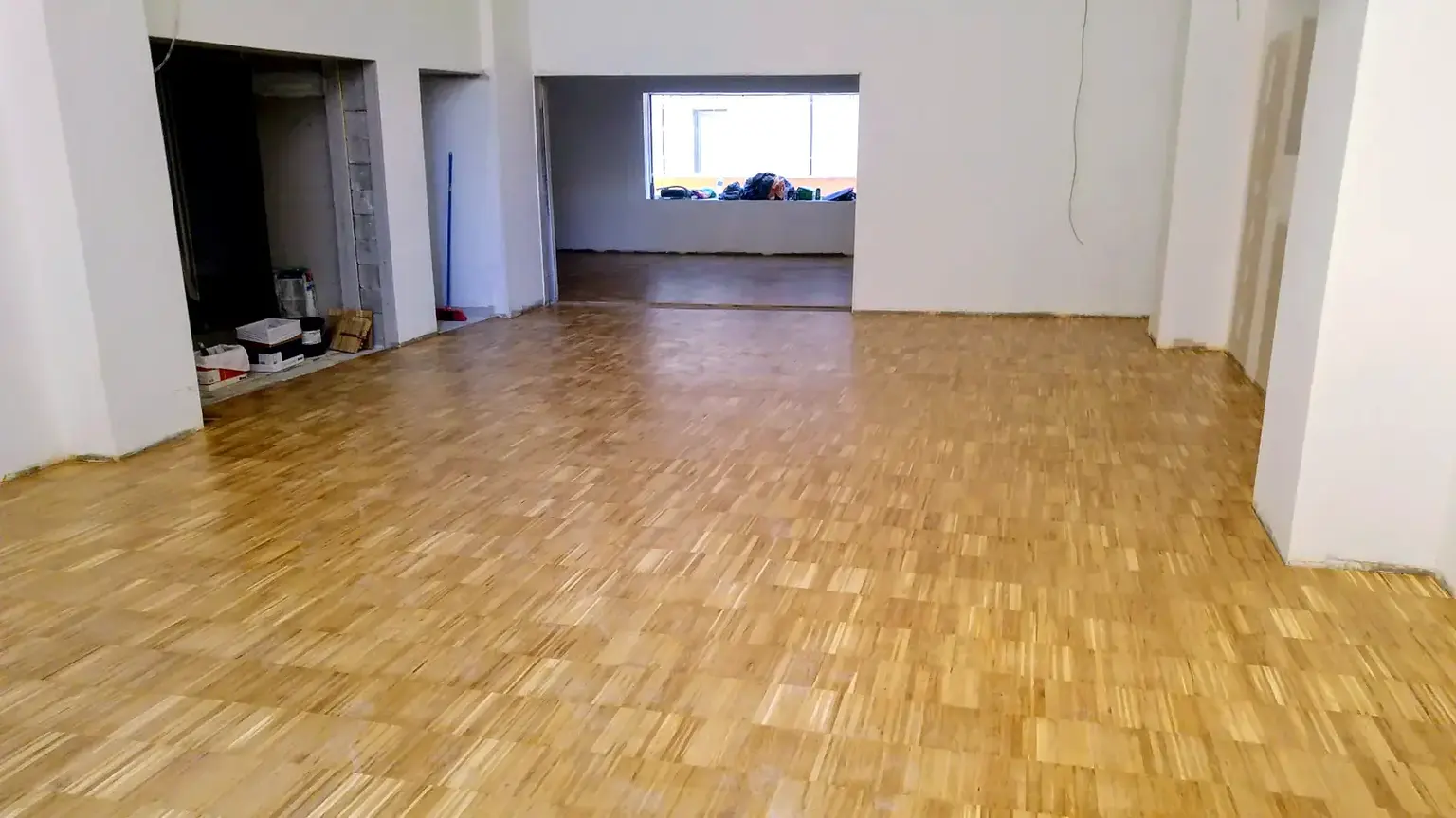
Before / After
Woods
Technical catalog of noble wood species: hygrothermal stability in Madrid, underfloor heating suitability, and mechanical resistance.
Quick comparison
Compare up to 3 woods
Dimensional stability and compatibility with underfloor heating / dry Madrid climate.
High
6 woods
Continental Europe (river basins of Ukraine, Poland, and Central Europe)European OakThe benchmark timber: optimal dimensional stability and excellent performance over radiant floor heating in Madrid.
The benchmark timber for noble wood flooring. In solid wide-plank installations, the densest selections originate from continental Central and Eastern European forests, where severe winters slow growth, yielding tight annual rings with optimal dimensional stability against Madrid's dry indoor heating.
Pros
- Superior wear and indentation resistance
- Optimal performance over radiant floor heating
- Ages with noble patina and fully refinishable
Cons
- Requires rigorous on-site acclimation before installation
- Tannic acid reactivity upon contact with ferrous metals
- Heavy, high-density timber
North AmericaAmerican OakVibrant grain and high hardness; requires tannin-blocking primers before waterborne finishing.
North American hardwood variety with faster growth than European oak, featuring open pore structure and warm pinkish to light brown hues. Its higher tannic acid reactivity requires blocking primers before applying 2K waterborne polyurethane finishes to prevent yellowing or hazy discolouration.
Pros
- High mechanical hardness
- Distinctive and continuous grain pattern
- Takes stains and pigmented oils exceptionally well
Cons
- More open pore structure than European oak
- Higher tangential hygroscopicity
- Slight tonal variation across production batches
Northern Spain (Galicia, Asturias) and Central EuropeSweet ChestnutSuperb dimensional stability and heritage charm; ideal for traditional joist installations.
Native Iberian timber with pronounced grain structure and golden brown tone. Noted for low volumetric shrinkage (0.38%) and high natural durability due to its high tannin content, making it biologically resilient against fungal decay. A classic Madrid heritage timber, seen in period apartments in Chamberí and the Barrio de las Letras.
Pros
- Low volumetric shrinkage and exceptional stability
- High natural durability against damp and insects
- Authentic historical character in Madrid restorations
Cons
- Lower surface hardness than oak (susceptible to sharp indentations)
- High tannin content requires barrier sealers
- Irregular availability in extra-wide formats
North AmericaAmerican WalnutPrestige hardwood with exceptional natural tone and stability; requires ultra-matte protection.
North American noble hardwood ranging from chocolate brown to dark espresso with cream sapwood highlights. Highly prized in bespoke cabinetmaking and custom flooring for its dimensional stability, supple machining properties, and rich natural colour that requires no staining. We protect it with ultra-matte waterborne 2K sealers to preserve its raw silk luster.
Pros
- Unrivalled natural aesthetics without artificial tinting
- High dimensional stability in dry indoor environments
- Soft, warm tactile feel underfoot
Cons
- Moderate Janka hardness (sensitive to stiletto heels and heavy impacts)
- High raw timber cost
- Tends to lighten slightly with prolonged direct UV exposure
South America (Amazon basin)Ipê (Brazilian Walnut)Supreme density (>1,000 kg/m³); immune to rot and point loads, both indoors and outdoors.
One of the densest and hardest commercial timbers in the world (approx. 1,050 kg/m³). Naturally rich in lapachol mineral deposits, it exhibits fire resistance comparable to concrete (Class A / Bfl-s1) and natural immunity to rot and termites. Suitable for both luxury outdoor decking and high-traffic interior flooring.
Pros
- World-leading hardness and structural strength
- Impervious to rot, termites, and fungal attack without chemicals
- Proven performance outdoors and in covered verandas
Cons
- Extremely heavy; requires pre-drilling for every fixing screw
- Natural lapachol deposits can alter drying times of standard varnishes
- Requires specific solvent degreasing before silane adhesive bonding
Tropical West and Central AfricaIrokoAfrican golden timber patinating to teak brown; highly stable and naturally durable.
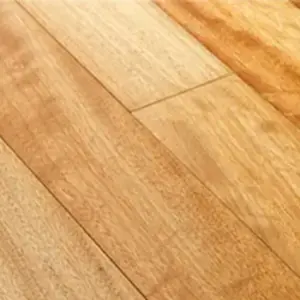
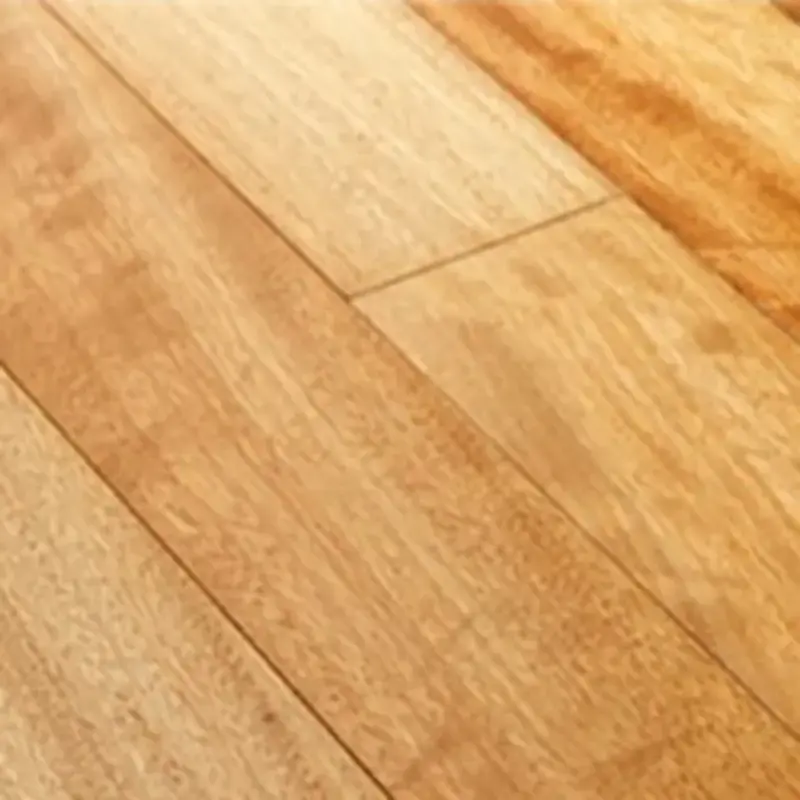
African hardwood (Milicia excelsa) with medium-to-coarse grain and slightly interlocked fiber. Initially golden yellow, it patinates to warm teak brown with light exposure. High natural durability; natural chlorophorin oil in its pores requires solvent degreasing of bonding surfaces before applying silane or polyurethane adhesives.
Pros
- Excellent dimensional stability in variable environments
- Natural resistance to fungi and insects without chemical treatment
- Very balanced elastic performance underfoot
Cons
- Sawing and sanding dust can cause respiratory irritation
- Natural chlorophorin oil can retard curing of synthetic oil varnishes
- Pronounced color change from freshly milled to oxidized timber
Low to Medium
1 wood
Central and Northern EuropeEuropean BeechVery hard timber with high hygroscopic shrinkage; strictly unsuited for underfloor heating.
European hardwood with cream to whitish tones and very fine grain. While offering high surface hardness, its cellular structure exhibits high volumetric shrinkage (0.50%), making it sensitive to sharp winter humidity drops caused by central heating in Madrid. In solid wood installations, strictly avoid radiant heating and specify vapor-barrier underlays.
Pros
- Homogeneous surface with fine, uniform grain
- High impact resistance
- Steamed variety offers stable pinkish-cream tones
Cons
- High hygroscopic movement in dry Madrid winters
- Unsuitable for radiant floor heating
- Requires continuous relative humidity control (40-60%)
Medium
3 woods
North America and Central EuropeHard MapleLuminous, dense, closed-grain timber; demands non-yellowing aliphatic sealers.
Light-toned timber with closed pore structure, very fine grain, and dense compact fiber. Provides a sleek luminous floor that amplifies interior natural light. Due to its dense cellular structure, it requires fine sanding sequences to prevent circular swirl marks and non-yellowing aliphatic waterborne finishes.
Pros
- High surface hardness and abrasion resistance
- Minimalist, uniform, and light-reflective aesthetic
- Closed pore that resists surface dirt penetration
Cons
- Pore density makes uniform on-site staining difficult
- Can yellow if exposed to aromatic solvent varnishes
- Demands meticulous sanding with silicon carbide mesh
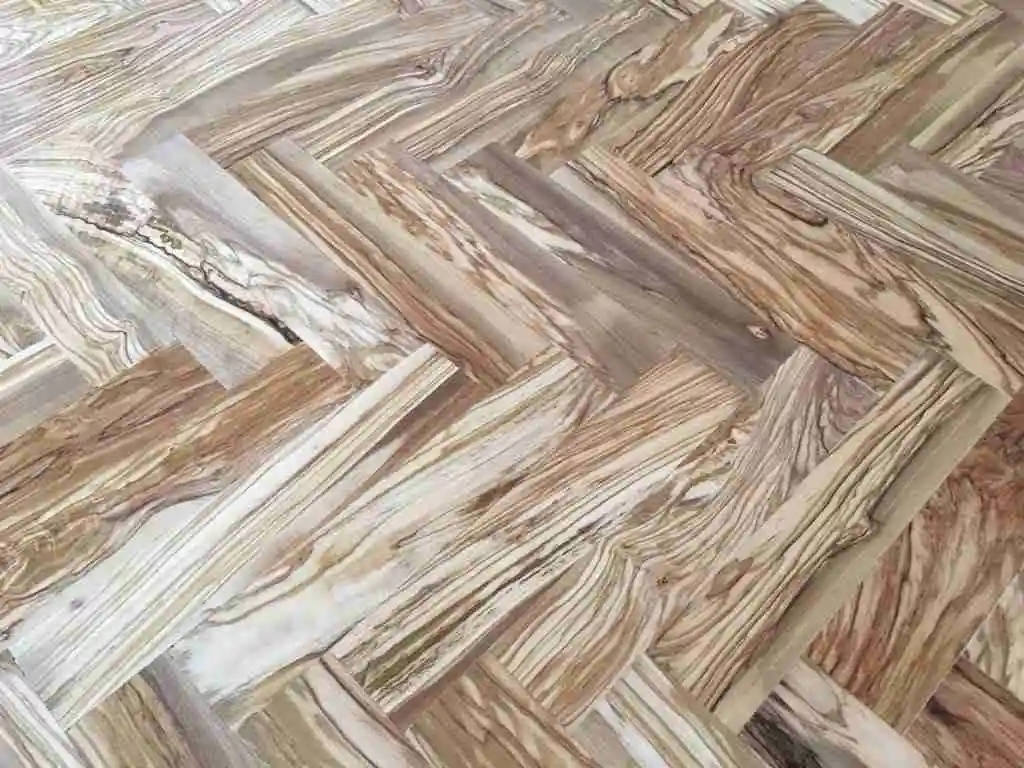
Mediterranean Basin (Spain and Southern Europe)Mediterranean Olive WoodStriking marbled aesthetic and extreme hardness; best installed in herringbone or parquetry.
Mediterranean noble timber with irregular, highly figured marbled grain and intense golden-brown streaks. Its exceptional density and hardness make it virtually impervious to surface wear. Typically installed in small format (traditional herringbone or Versailles borders) due to the limited dimension of olive trunks.
Pros
- One-of-a-kind marbled grain of striking aesthetic value
- Extreme surface hardness and dent resistance
- Silky finish with natural oils
Cons
- Limited piece dimensions (small blocks and mosaics)
- Irregular grain requires skilled craft cutting and alignment
- High raw material cost and limited availability
Sustainably managed plantations (Spain, Portugal, Australia)Red & White EucalyptusDense plantation timber with high hardness; requires strict kiln-drying verification.
Dense timber from managed fast-regenerating forest plantations, available in reddish or creamy-white varieties (Eucalyptus grandis / globulus). Features high mechanical strength, though its fibrous cellular nature demands strictly controlled kiln drying to prevent internal stress or cupping during installation.
Pros
- High mechanical hardness and structural density
- Sustainable origin from fast-regenerating plantations
- Compact wear surface with good abrasion resistance
Cons
- Natural growth stresses demand optimal technical kiln drying
- Less historic tradition in Madrid residential interiors
- Demands strict subfloor and board moisture checks before installation
Exceptional
4 woods
Historic 19th and early 20th-century demolitions in Madrid (virgin Southern Yellow Pine)Reclaimed Pitch Pine (Pino Melis)Madrid's heritage timber: saturated with protective resin, centenary amber patina, fully stable.
Historic virgin pitch pine (Pinus palustris) salvaged from 19th and early 20th-century buildings in Madrid. Slow-grown centuries ago in virgin forests, its saturated heartwood resin (tea) delivers unmatched rot resistance, biological immunity, and deep amber patina that no modern pine can replicate. Demands specialized resin-blocking primer before applying 2K waterborne polyurethanes.
Pros
- Irreplaceable historical patina and centenary grain density
- Exceptional dimensional stability with zero seasonal movement
- High natural resin content resistant to insects and moisture
Cons
- Finite availability; requires meticulous salvage and de-nailing
- Abundant crystalline resin requires alcohol-based blocking primers
- Requires experienced craft restorers for seamless board matching
Southeast Asia and OceaniaMerbauSuperb dimensional stability (0.35% shrinkage); golden mineral flecks and copper patina.

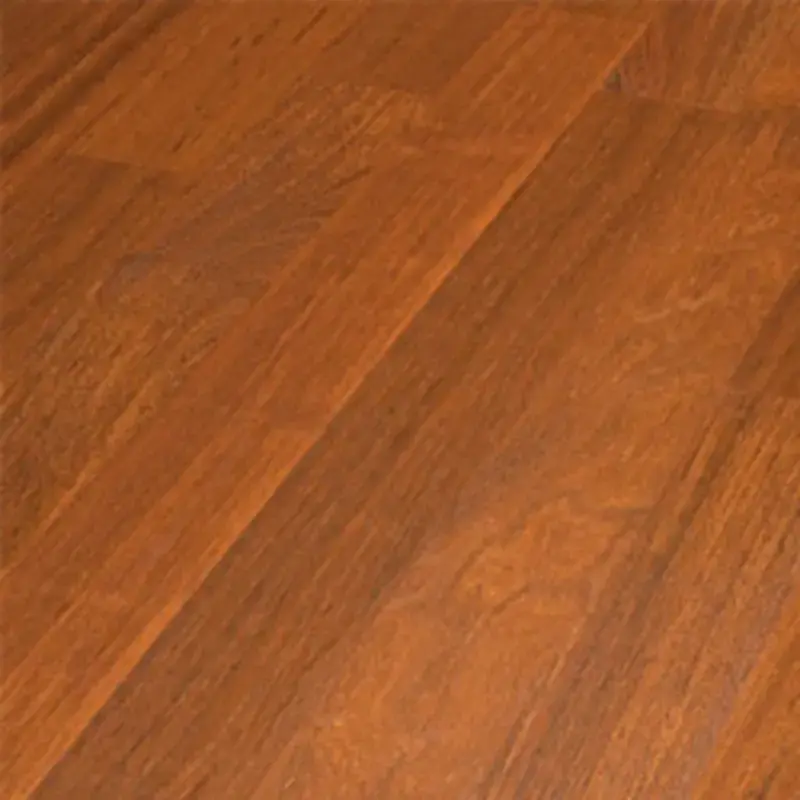
Southeast Asian hardwood characterized by coppery-brown tones with tiny golden mineral flecks in its vessels. Renowned for outstanding dimensional stability (exceptionally low volumetric shrinkage, 0.35%). Contains water-soluble tannins that must be properly sealed to prevent tannin bleeding if exposed to free moisture.
Pros
- Exceptionally low volumetric shrinkage (0.35%)
- Natural resistance to termites and wood-boring insects
- High dimensional stability in dry indoor climates
Cons
- Water-soluble tannins can bleed if accidentally soaked
- Demands rigorous perimeter expansion sealing
- Requires verified legal certification of sustainable origin
West and Central AfricaAfrormosia (African Teak)Teak-like stability and docile straight grain; exceptionally stable under seasonal climate shifts.
Noble African hardwood (Pericopsis elata) traditionally known as African Teak. Features fine texture, straight grain, and extraordinary dimensional stability. Its hygrothermal behavior makes it one of the most reliable tropical hardwoods for indoor flooring in climates with sharp seasonal shifts.
Pros
- Dimensional stability comparable to authentic Burmese teak
- Straight, docile grain for secure tongue-nailing
- Matures beautifully under non-yellowing 2K waterborne finishes
Cons
- Protected species regulated under CITES Appendix II
- Limited availability in international timber markets
- Oxidizes toward warm olive-brown under daylight
Southeast Asia (Burma / Myanmar / Plantations)TeakWorld-benchmark stability (0.25% shrinkage); naturally oily, water-repellent and prestigious.
Iconic Asian tropical timber (Tectona grandis) celebrated for its natural essential oils and silica content. Virtually impervious to water and sharp humidity swings, it has minimal volumetric shrinkage (0.25%). In glued-down floors, requires adhesion-promoting primers to ensure elastic silane bonding to its oily surface.
Pros
- Minimal volumetric shrinkage (0.25%) and impervious to water
- Absolute natural resistance to fungi, termites, and weather
- Silky tactile feel and prestigious natural aging
Cons
- Natural oil content requires adhesion primers before adhesive bonding
- Requires strict sustainable forest origin certification
- Intermediate Janka hardness; sensitive to stiletto point indentation
Medium to High
3 woods
Central and South America (Brazil)Jatoba (Brazilian Cherry)Extreme hardness (double that of oak); virtually indestructible under heavy traffic.
South American tropical timber with extraordinary physical density (950 kg/m³) and deep reddish-brown colouring that matures to rich russet under light. Its mechanical hardness exceeds oak by more than double, offering supreme resistance to high-heel denting and continuous foot traffic.
Pros
- Exceptional Janka hardness (~2,350 lbf)
- Extreme resistance to scratching and point loads
- High natural durability against fungi and insects
Cons
- Heavy and tough to cut on site (blunts carbide tooling)
- Darkens substantially with initial UV exposure
- Dense dust requires high-filtration HEPA vacuum equipment
South America (Brazil)SucupiraDense chocolate-toned hardwood with exceptional wear resistance and interlocked grain.
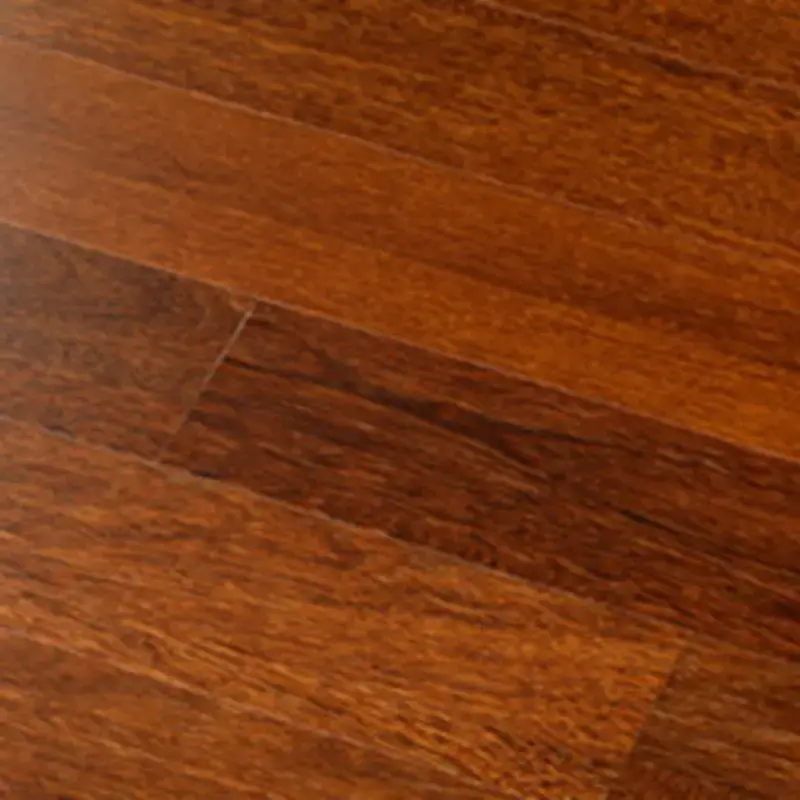
Brazilian tropical hardwood with warm chestnut-to-chocolate tones and contrasting golden streaks. Its interlocked grain and 950 kg/m³ density deliver outstanding wear resistance and tenacity against point-load indentation.
Pros
- Very high mechanical resistance to surface abrasion
- Interlocked grain prevents longitudinal splitting
- High natural durability against biological agents
Cons
- Crossed grain requires experienced sanding techniques on site
- Irregular availability of extra-wide single planks
- Requires high-tack silane or polyurethane elastic adhesives
Equatorial Central Africa (Cameroon, Gabon)Bubinga (African Rosewood)Exotic figured hardwood with dense grain and purple-red hues; regulated under CITES.
Equatorial hardwood with rich reddish-violet coloration and dark undulating figure, boasting density over 900 kg/m³. Its tight grain and mechanical tenacity make it exceptionally resistant to warping and denting. Requires professional sanding machinery and silicon carbide abrasives to prepare the pore properly.
Pros
- High density (>900 kg/m³) and superb mechanical tenacity
- Striking figured grain with rare dark undulating waters
- Outstanding resistance to surface traffic
Cons
- International trade strictly regulated under CITES Appendix II
- Heavy weight and demanding machining
- Requires extended acclimation times on site
High in controlled environments
1 wood
Central Africa (DR Congo, Cameroon)WengeStriking dark graphic timber; natural black-brown tone requiring extractive-blocking primers.
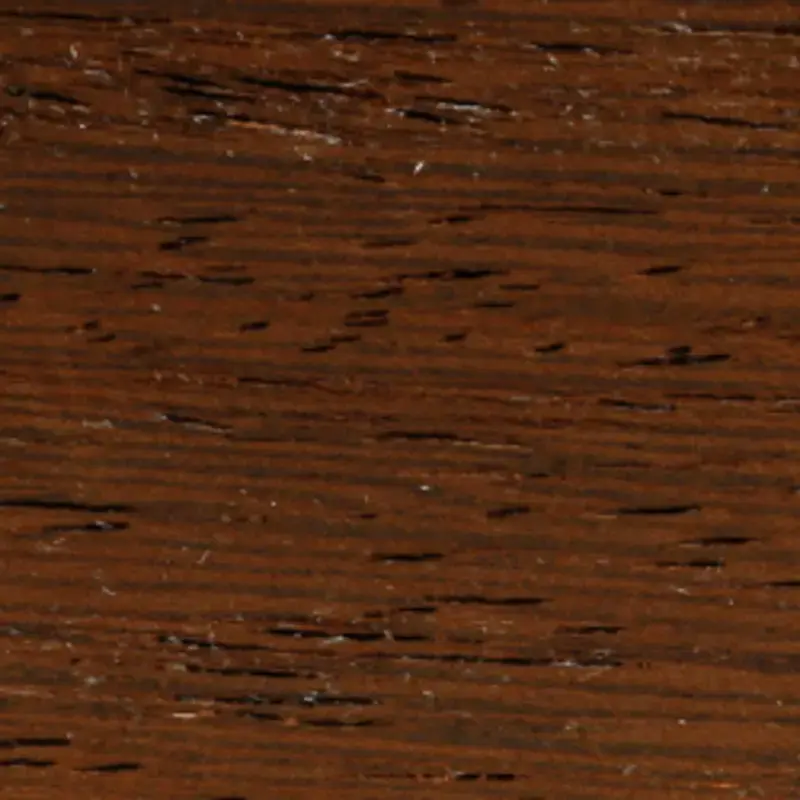
African hardwood with striking espresso-brown to jet-black colouring and contrasting fine brown grain lines. Its straight grain and open pore create a bold graphic statement in contemporary architectural projects. Demands meticulous sanding and specialized alcohol or polyurethane primers to seal dark extractives before waterborne topcoating.
Pros
- Deep natural black-brown tone without artificial tinting
- Very high density and mechanical hardness (Janka 1,930 lbf)
- High dimensional stability in climate-controlled spaces
Cons
- Brittle end-grain fibers prone to splintering if mishandled
- Irritating fine sanding dust requiring strict extraction
- Natural extractives demand specialized blocking sealers
High once seasoned
1 wood
Central and West AfricaElondo (Tali)Extreme impact hardness; unbeatable durability for heavy commercial and residential traffic.
African timber (Erythrophleum ivorense) exceptionally heavy and hard. Weighing approx. 920 kg/m³ with Janka hardness over 2,200 lbf, it is the classic choice for flooring subjected to heavy, continuous foot traffic without showing indentation marks or wear.
Pros
- Exceptional resistance to impact and point-load indentation
- High dimensional stability once fully seasoned and fixed
- Naturally immune to wood-boring insects and fungi
Cons
- Very heavy and tough to nail (requires pre-drilling)
- Intertwined grain requires careful multi-grit sanding
- Understated grain with less graphic contrast than oak
Indentation resistance, impact strength, and mechanical density according to Janka / Brinell scales.
Very hard / Extreme
12 woods
Continental Europe (river basins of Ukraine, Poland, and Central Europe)European OakThe benchmark timber: optimal dimensional stability and excellent performance over radiant floor heating in Madrid.
The benchmark timber for noble wood flooring. In solid wide-plank installations, the densest selections originate from continental Central and Eastern European forests, where severe winters slow growth, yielding tight annual rings with optimal dimensional stability against Madrid's dry indoor heating.
Pros
- Superior wear and indentation resistance
- Optimal performance over radiant floor heating
- Ages with noble patina and fully refinishable
Cons
- Requires rigorous on-site acclimation before installation
- Tannic acid reactivity upon contact with ferrous metals
- Heavy, high-density timber
North AmericaAmerican OakVibrant grain and high hardness; requires tannin-blocking primers before waterborne finishing.
North American hardwood variety with faster growth than European oak, featuring open pore structure and warm pinkish to light brown hues. Its higher tannic acid reactivity requires blocking primers before applying 2K waterborne polyurethane finishes to prevent yellowing or hazy discolouration.
Pros
- High mechanical hardness
- Distinctive and continuous grain pattern
- Takes stains and pigmented oils exceptionally well
Cons
- More open pore structure than European oak
- Higher tangential hygroscopicity
- Slight tonal variation across production batches
Central and Northern EuropeEuropean BeechVery hard timber with high hygroscopic shrinkage; strictly unsuited for underfloor heating.
European hardwood with cream to whitish tones and very fine grain. While offering high surface hardness, its cellular structure exhibits high volumetric shrinkage (0.50%), making it sensitive to sharp winter humidity drops caused by central heating in Madrid. In solid wood installations, strictly avoid radiant heating and specify vapor-barrier underlays.
Pros
- Homogeneous surface with fine, uniform grain
- High impact resistance
- Steamed variety offers stable pinkish-cream tones
Cons
- High hygroscopic movement in dry Madrid winters
- Unsuitable for radiant floor heating
- Requires continuous relative humidity control (40-60%)
North America and Central EuropeHard MapleLuminous, dense, closed-grain timber; demands non-yellowing aliphatic sealers.
Light-toned timber with closed pore structure, very fine grain, and dense compact fiber. Provides a sleek luminous floor that amplifies interior natural light. Due to its dense cellular structure, it requires fine sanding sequences to prevent circular swirl marks and non-yellowing aliphatic waterborne finishes.
Pros
- High surface hardness and abrasion resistance
- Minimalist, uniform, and light-reflective aesthetic
- Closed pore that resists surface dirt penetration
Cons
- Pore density makes uniform on-site staining difficult
- Can yellow if exposed to aromatic solvent varnishes
- Demands meticulous sanding with silicon carbide mesh
Mediterranean Basin (Spain and Southern Europe)Mediterranean Olive WoodStriking marbled aesthetic and extreme hardness; best installed in herringbone or parquetry.
Mediterranean noble timber with irregular, highly figured marbled grain and intense golden-brown streaks. Its exceptional density and hardness make it virtually impervious to surface wear. Typically installed in small format (traditional herringbone or Versailles borders) due to the limited dimension of olive trunks.
Pros
- One-of-a-kind marbled grain of striking aesthetic value
- Extreme surface hardness and dent resistance
- Silky finish with natural oils
Cons
- Limited piece dimensions (small blocks and mosaics)
- Irregular grain requires skilled craft cutting and alignment
- High raw material cost and limited availability
Central and South America (Brazil)Jatoba (Brazilian Cherry)Extreme hardness (double that of oak); virtually indestructible under heavy traffic.
South American tropical timber with extraordinary physical density (950 kg/m³) and deep reddish-brown colouring that matures to rich russet under light. Its mechanical hardness exceeds oak by more than double, offering supreme resistance to high-heel denting and continuous foot traffic.
Pros
- Exceptional Janka hardness (~2,350 lbf)
- Extreme resistance to scratching and point loads
- High natural durability against fungi and insects
Cons
- Heavy and tough to cut on site (blunts carbide tooling)
- Darkens substantially with initial UV exposure
- Dense dust requires high-filtration HEPA vacuum equipment
South America (Amazon basin)Ipê (Brazilian Walnut)Supreme density (>1,000 kg/m³); immune to rot and point loads, both indoors and outdoors.
One of the densest and hardest commercial timbers in the world (approx. 1,050 kg/m³). Naturally rich in lapachol mineral deposits, it exhibits fire resistance comparable to concrete (Class A / Bfl-s1) and natural immunity to rot and termites. Suitable for both luxury outdoor decking and high-traffic interior flooring.
Pros
- World-leading hardness and structural strength
- Impervious to rot, termites, and fungal attack without chemicals
- Proven performance outdoors and in covered verandas
Cons
- Extremely heavy; requires pre-drilling for every fixing screw
- Natural lapachol deposits can alter drying times of standard varnishes
- Requires specific solvent degreasing before silane adhesive bonding
Central Africa (DR Congo, Cameroon)WengeStriking dark graphic timber; natural black-brown tone requiring extractive-blocking primers.
African hardwood with striking espresso-brown to jet-black colouring and contrasting fine brown grain lines. Its straight grain and open pore create a bold graphic statement in contemporary architectural projects. Demands meticulous sanding and specialized alcohol or polyurethane primers to seal dark extractives before waterborne topcoating.
Pros
- Deep natural black-brown tone without artificial tinting
- Very high density and mechanical hardness (Janka 1,930 lbf)
- High dimensional stability in climate-controlled spaces
Cons
- Brittle end-grain fibers prone to splintering if mishandled
- Irritating fine sanding dust requiring strict extraction
- Natural extractives demand specialized blocking sealers
South America (Brazil)SucupiraDense chocolate-toned hardwood with exceptional wear resistance and interlocked grain.
Brazilian tropical hardwood with warm chestnut-to-chocolate tones and contrasting golden streaks. Its interlocked grain and 950 kg/m³ density deliver outstanding wear resistance and tenacity against point-load indentation.
Pros
- Very high mechanical resistance to surface abrasion
- Interlocked grain prevents longitudinal splitting
- High natural durability against biological agents
Cons
- Crossed grain requires experienced sanding techniques on site
- Irregular availability of extra-wide single planks
- Requires high-tack silane or polyurethane elastic adhesives
Southeast Asia and OceaniaMerbauSuperb dimensional stability (0.35% shrinkage); golden mineral flecks and copper patina.
Southeast Asian hardwood characterized by coppery-brown tones with tiny golden mineral flecks in its vessels. Renowned for outstanding dimensional stability (exceptionally low volumetric shrinkage, 0.35%). Contains water-soluble tannins that must be properly sealed to prevent tannin bleeding if exposed to free moisture.
Pros
- Exceptionally low volumetric shrinkage (0.35%)
- Natural resistance to termites and wood-boring insects
- High dimensional stability in dry indoor climates
Cons
- Water-soluble tannins can bleed if accidentally soaked
- Demands rigorous perimeter expansion sealing
- Requires verified legal certification of sustainable origin
Equatorial Central Africa (Cameroon, Gabon)Bubinga (African Rosewood)Exotic figured hardwood with dense grain and purple-red hues; regulated under CITES.
Equatorial hardwood with rich reddish-violet coloration and dark undulating figure, boasting density over 900 kg/m³. Its tight grain and mechanical tenacity make it exceptionally resistant to warping and denting. Requires professional sanding machinery and silicon carbide abrasives to prepare the pore properly.
Pros
- High density (>900 kg/m³) and superb mechanical tenacity
- Striking figured grain with rare dark undulating waters
- Outstanding resistance to surface traffic
Cons
- International trade strictly regulated under CITES Appendix II
- Heavy weight and demanding machining
- Requires extended acclimation times on site
Central and West AfricaElondo (Tali)Extreme impact hardness; unbeatable durability for heavy commercial and residential traffic.
African timber (Erythrophleum ivorense) exceptionally heavy and hard. Weighing approx. 920 kg/m³ with Janka hardness over 2,200 lbf, it is the classic choice for flooring subjected to heavy, continuous foot traffic without showing indentation marks or wear.
Pros
- Exceptional resistance to impact and point-load indentation
- High dimensional stability once fully seasoned and fixed
- Naturally immune to wood-boring insects and fungi
Cons
- Very heavy and tough to nail (requires pre-drilling)
- Intertwined grain requires careful multi-grit sanding
- Understated grain with less graphic contrast than oak
Hard
5 woods
North AmericaAmerican WalnutPrestige hardwood with exceptional natural tone and stability; requires ultra-matte protection.
North American noble hardwood ranging from chocolate brown to dark espresso with cream sapwood highlights. Highly prized in bespoke cabinetmaking and custom flooring for its dimensional stability, supple machining properties, and rich natural colour that requires no staining. We protect it with ultra-matte waterborne 2K sealers to preserve its raw silk luster.
Pros
- Unrivalled natural aesthetics without artificial tinting
- High dimensional stability in dry indoor environments
- Soft, warm tactile feel underfoot
Cons
- Moderate Janka hardness (sensitive to stiletto heels and heavy impacts)
- High raw timber cost
- Tends to lighten slightly with prolonged direct UV exposure
West and Central AfricaAfrormosia (African Teak)Teak-like stability and docile straight grain; exceptionally stable under seasonal climate shifts.
Noble African hardwood (Pericopsis elata) traditionally known as African Teak. Features fine texture, straight grain, and extraordinary dimensional stability. Its hygrothermal behavior makes it one of the most reliable tropical hardwoods for indoor flooring in climates with sharp seasonal shifts.
Pros
- Dimensional stability comparable to authentic Burmese teak
- Straight, docile grain for secure tongue-nailing
- Matures beautifully under non-yellowing 2K waterborne finishes
Cons
- Protected species regulated under CITES Appendix II
- Limited availability in international timber markets
- Oxidizes toward warm olive-brown under daylight
Tropical West and Central AfricaIrokoAfrican golden timber patinating to teak brown; highly stable and naturally durable.
African hardwood (Milicia excelsa) with medium-to-coarse grain and slightly interlocked fiber. Initially golden yellow, it patinates to warm teak brown with light exposure. High natural durability; natural chlorophorin oil in its pores requires solvent degreasing of bonding surfaces before applying silane or polyurethane adhesives.
Pros
- Excellent dimensional stability in variable environments
- Natural resistance to fungi and insects without chemical treatment
- Very balanced elastic performance underfoot
Cons
- Sawing and sanding dust can cause respiratory irritation
- Natural chlorophorin oil can retard curing of synthetic oil varnishes
- Pronounced color change from freshly milled to oxidized timber
Southeast Asia (Burma / Myanmar / Plantations)TeakWorld-benchmark stability (0.25% shrinkage); naturally oily, water-repellent and prestigious.
Iconic Asian tropical timber (Tectona grandis) celebrated for its natural essential oils and silica content. Virtually impervious to water and sharp humidity swings, it has minimal volumetric shrinkage (0.25%). In glued-down floors, requires adhesion-promoting primers to ensure elastic silane bonding to its oily surface.
Pros
- Minimal volumetric shrinkage (0.25%) and impervious to water
- Absolute natural resistance to fungi, termites, and weather
- Silky tactile feel and prestigious natural aging
Cons
- Natural oil content requires adhesion primers before adhesive bonding
- Requires strict sustainable forest origin certification
- Intermediate Janka hardness; sensitive to stiletto point indentation
Sustainably managed plantations (Spain, Portugal, Australia)Red & White EucalyptusDense plantation timber with high hardness; requires strict kiln-drying verification.
Dense timber from managed fast-regenerating forest plantations, available in reddish or creamy-white varieties (Eucalyptus grandis / globulus). Features high mechanical strength, though its fibrous cellular nature demands strictly controlled kiln drying to prevent internal stress or cupping during installation.
Pros
- High mechanical hardness and structural density
- Sustainable origin from fast-regenerating plantations
- Compact wear surface with good abrasion resistance
Cons
- Natural growth stresses demand optimal technical kiln drying
- Less historic tradition in Madrid residential interiors
- Demands strict subfloor and board moisture checks before installation
Medium hardness
2 woods
Northern Spain (Galicia, Asturias) and Central EuropeSweet ChestnutSuperb dimensional stability and heritage charm; ideal for traditional joist installations.
Native Iberian timber with pronounced grain structure and golden brown tone. Noted for low volumetric shrinkage (0.38%) and high natural durability due to its high tannin content, making it biologically resilient against fungal decay. A classic Madrid heritage timber, seen in period apartments in Chamberí and the Barrio de las Letras.
Pros
- Low volumetric shrinkage and exceptional stability
- High natural durability against damp and insects
- Authentic historical character in Madrid restorations
Cons
- Lower surface hardness than oak (susceptible to sharp indentations)
- High tannin content requires barrier sealers
- Irregular availability in extra-wide formats
Historic 19th and early 20th-century demolitions in Madrid (virgin Southern Yellow Pine)Reclaimed Pitch Pine (Pino Melis)Madrid's heritage timber: saturated with protective resin, centenary amber patina, fully stable.
Historic virgin pitch pine (Pinus palustris) salvaged from 19th and early 20th-century buildings in Madrid. Slow-grown centuries ago in virgin forests, its saturated heartwood resin (tea) delivers unmatched rot resistance, biological immunity, and deep amber patina that no modern pine can replicate. Demands specialized resin-blocking primer before applying 2K waterborne polyurethanes.
Pros
- Irreplaceable historical patina and centenary grain density
- Exceptional dimensional stability with zero seasonal movement
- High natural resin content resistant to insects and moisture
Cons
- Finite availability; requires meticulous salvage and de-nailing
- Abundant crystalline resin requires alcohol-based blocking primers
- Requires experienced craft restorers for seamless board matching
Classification by natural wood tone, grain pattern, and workshop finishing.
Classic / warm
9 woods
Continental Europe (river basins of Ukraine, Poland, and Central Europe)European OakThe benchmark timber: optimal dimensional stability and excellent performance over radiant floor heating in Madrid.
The benchmark timber for noble wood flooring. In solid wide-plank installations, the densest selections originate from continental Central and Eastern European forests, where severe winters slow growth, yielding tight annual rings with optimal dimensional stability against Madrid's dry indoor heating.
Pros
- Superior wear and indentation resistance
- Optimal performance over radiant floor heating
- Ages with noble patina and fully refinishable
Cons
- Requires rigorous on-site acclimation before installation
- Tannic acid reactivity upon contact with ferrous metals
- Heavy, high-density timber
North AmericaAmerican OakVibrant grain and high hardness; requires tannin-blocking primers before waterborne finishing.
North American hardwood variety with faster growth than European oak, featuring open pore structure and warm pinkish to light brown hues. Its higher tannic acid reactivity requires blocking primers before applying 2K waterborne polyurethane finishes to prevent yellowing or hazy discolouration.
Pros
- High mechanical hardness
- Distinctive and continuous grain pattern
- Takes stains and pigmented oils exceptionally well
Cons
- More open pore structure than European oak
- Higher tangential hygroscopicity
- Slight tonal variation across production batches
Northern Spain (Galicia, Asturias) and Central EuropeSweet ChestnutSuperb dimensional stability and heritage charm; ideal for traditional joist installations.
Native Iberian timber with pronounced grain structure and golden brown tone. Noted for low volumetric shrinkage (0.38%) and high natural durability due to its high tannin content, making it biologically resilient against fungal decay. A classic Madrid heritage timber, seen in period apartments in Chamberí and the Barrio de las Letras.
Pros
- Low volumetric shrinkage and exceptional stability
- High natural durability against damp and insects
- Authentic historical character in Madrid restorations
Cons
- Lower surface hardness than oak (susceptible to sharp indentations)
- High tannin content requires barrier sealers
- Irregular availability in extra-wide formats
North AmericaAmerican WalnutPrestige hardwood with exceptional natural tone and stability; requires ultra-matte protection.
North American noble hardwood ranging from chocolate brown to dark espresso with cream sapwood highlights. Highly prized in bespoke cabinetmaking and custom flooring for its dimensional stability, supple machining properties, and rich natural colour that requires no staining. We protect it with ultra-matte waterborne 2K sealers to preserve its raw silk luster.
Pros
- Unrivalled natural aesthetics without artificial tinting
- High dimensional stability in dry indoor environments
- Soft, warm tactile feel underfoot
Cons
- Moderate Janka hardness (sensitive to stiletto heels and heavy impacts)
- High raw timber cost
- Tends to lighten slightly with prolonged direct UV exposure
Mediterranean Basin (Spain and Southern Europe)Mediterranean Olive WoodStriking marbled aesthetic and extreme hardness; best installed in herringbone or parquetry.
Mediterranean noble timber with irregular, highly figured marbled grain and intense golden-brown streaks. Its exceptional density and hardness make it virtually impervious to surface wear. Typically installed in small format (traditional herringbone or Versailles borders) due to the limited dimension of olive trunks.
Pros
- One-of-a-kind marbled grain of striking aesthetic value
- Extreme surface hardness and dent resistance
- Silky finish with natural oils
Cons
- Limited piece dimensions (small blocks and mosaics)
- Irregular grain requires skilled craft cutting and alignment
- High raw material cost and limited availability
Historic 19th and early 20th-century demolitions in Madrid (virgin Southern Yellow Pine)Reclaimed Pitch Pine (Pino Melis)Madrid's heritage timber: saturated with protective resin, centenary amber patina, fully stable.
Historic virgin pitch pine (Pinus palustris) salvaged from 19th and early 20th-century buildings in Madrid. Slow-grown centuries ago in virgin forests, its saturated heartwood resin (tea) delivers unmatched rot resistance, biological immunity, and deep amber patina that no modern pine can replicate. Demands specialized resin-blocking primer before applying 2K waterborne polyurethanes.
Pros
- Irreplaceable historical patina and centenary grain density
- Exceptional dimensional stability with zero seasonal movement
- High natural resin content resistant to insects and moisture
Cons
- Finite availability; requires meticulous salvage and de-nailing
- Abundant crystalline resin requires alcohol-based blocking primers
- Requires experienced craft restorers for seamless board matching
West and Central AfricaAfrormosia (African Teak)Teak-like stability and docile straight grain; exceptionally stable under seasonal climate shifts.
Noble African hardwood (Pericopsis elata) traditionally known as African Teak. Features fine texture, straight grain, and extraordinary dimensional stability. Its hygrothermal behavior makes it one of the most reliable tropical hardwoods for indoor flooring in climates with sharp seasonal shifts.
Pros
- Dimensional stability comparable to authentic Burmese teak
- Straight, docile grain for secure tongue-nailing
- Matures beautifully under non-yellowing 2K waterborne finishes
Cons
- Protected species regulated under CITES Appendix II
- Limited availability in international timber markets
- Oxidizes toward warm olive-brown under daylight
Tropical West and Central AfricaIrokoAfrican golden timber patinating to teak brown; highly stable and naturally durable.
African hardwood (Milicia excelsa) with medium-to-coarse grain and slightly interlocked fiber. Initially golden yellow, it patinates to warm teak brown with light exposure. High natural durability; natural chlorophorin oil in its pores requires solvent degreasing of bonding surfaces before applying silane or polyurethane adhesives.
Pros
- Excellent dimensional stability in variable environments
- Natural resistance to fungi and insects without chemical treatment
- Very balanced elastic performance underfoot
Cons
- Sawing and sanding dust can cause respiratory irritation
- Natural chlorophorin oil can retard curing of synthetic oil varnishes
- Pronounced color change from freshly milled to oxidized timber
Central and West AfricaElondo (Tali)Extreme impact hardness; unbeatable durability for heavy commercial and residential traffic.
African timber (Erythrophleum ivorense) exceptionally heavy and hard. Weighing approx. 920 kg/m³ with Janka hardness over 2,200 lbf, it is the classic choice for flooring subjected to heavy, continuous foot traffic without showing indentation marks or wear.
Pros
- Exceptional resistance to impact and point-load indentation
- High dimensional stability once fully seasoned and fixed
- Naturally immune to wood-boring insects and fungi
Cons
- Very heavy and tough to nail (requires pre-drilling)
- Intertwined grain requires careful multi-grit sanding
- Understated grain with less graphic contrast than oak
Modern / light
3 woods
Central and Northern EuropeEuropean BeechVery hard timber with high hygroscopic shrinkage; strictly unsuited for underfloor heating.
European hardwood with cream to whitish tones and very fine grain. While offering high surface hardness, its cellular structure exhibits high volumetric shrinkage (0.50%), making it sensitive to sharp winter humidity drops caused by central heating in Madrid. In solid wood installations, strictly avoid radiant heating and specify vapor-barrier underlays.
Pros
- Homogeneous surface with fine, uniform grain
- High impact resistance
- Steamed variety offers stable pinkish-cream tones
Cons
- High hygroscopic movement in dry Madrid winters
- Unsuitable for radiant floor heating
- Requires continuous relative humidity control (40-60%)
North America and Central EuropeHard MapleLuminous, dense, closed-grain timber; demands non-yellowing aliphatic sealers.
Light-toned timber with closed pore structure, very fine grain, and dense compact fiber. Provides a sleek luminous floor that amplifies interior natural light. Due to its dense cellular structure, it requires fine sanding sequences to prevent circular swirl marks and non-yellowing aliphatic waterborne finishes.
Pros
- High surface hardness and abrasion resistance
- Minimalist, uniform, and light-reflective aesthetic
- Closed pore that resists surface dirt penetration
Cons
- Pore density makes uniform on-site staining difficult
- Can yellow if exposed to aromatic solvent varnishes
- Demands meticulous sanding with silicon carbide mesh
Sustainably managed plantations (Spain, Portugal, Australia)Red & White EucalyptusDense plantation timber with high hardness; requires strict kiln-drying verification.
Dense timber from managed fast-regenerating forest plantations, available in reddish or creamy-white varieties (Eucalyptus grandis / globulus). Features high mechanical strength, though its fibrous cellular nature demands strictly controlled kiln drying to prevent internal stress or cupping during installation.
Pros
- High mechanical hardness and structural density
- Sustainable origin from fast-regenerating plantations
- Compact wear surface with good abrasion resistance
Cons
- Natural growth stresses demand optimal technical kiln drying
- Less historic tradition in Madrid residential interiors
- Demands strict subfloor and board moisture checks before installation
Exotic / dark
7 woods
Central and South America (Brazil)Jatoba (Brazilian Cherry)Extreme hardness (double that of oak); virtually indestructible under heavy traffic.
South American tropical timber with extraordinary physical density (950 kg/m³) and deep reddish-brown colouring that matures to rich russet under light. Its mechanical hardness exceeds oak by more than double, offering supreme resistance to high-heel denting and continuous foot traffic.
Pros
- Exceptional Janka hardness (~2,350 lbf)
- Extreme resistance to scratching and point loads
- High natural durability against fungi and insects
Cons
- Heavy and tough to cut on site (blunts carbide tooling)
- Darkens substantially with initial UV exposure
- Dense dust requires high-filtration HEPA vacuum equipment
South America (Amazon basin)Ipê (Brazilian Walnut)Supreme density (>1,000 kg/m³); immune to rot and point loads, both indoors and outdoors.
One of the densest and hardest commercial timbers in the world (approx. 1,050 kg/m³). Naturally rich in lapachol mineral deposits, it exhibits fire resistance comparable to concrete (Class A / Bfl-s1) and natural immunity to rot and termites. Suitable for both luxury outdoor decking and high-traffic interior flooring.
Pros
- World-leading hardness and structural strength
- Impervious to rot, termites, and fungal attack without chemicals
- Proven performance outdoors and in covered verandas
Cons
- Extremely heavy; requires pre-drilling for every fixing screw
- Natural lapachol deposits can alter drying times of standard varnishes
- Requires specific solvent degreasing before silane adhesive bonding
Central Africa (DR Congo, Cameroon)WengeStriking dark graphic timber; natural black-brown tone requiring extractive-blocking primers.
African hardwood with striking espresso-brown to jet-black colouring and contrasting fine brown grain lines. Its straight grain and open pore create a bold graphic statement in contemporary architectural projects. Demands meticulous sanding and specialized alcohol or polyurethane primers to seal dark extractives before waterborne topcoating.
Pros
- Deep natural black-brown tone without artificial tinting
- Very high density and mechanical hardness (Janka 1,930 lbf)
- High dimensional stability in climate-controlled spaces
Cons
- Brittle end-grain fibers prone to splintering if mishandled
- Irritating fine sanding dust requiring strict extraction
- Natural extractives demand specialized blocking sealers
South America (Brazil)SucupiraDense chocolate-toned hardwood with exceptional wear resistance and interlocked grain.
Brazilian tropical hardwood with warm chestnut-to-chocolate tones and contrasting golden streaks. Its interlocked grain and 950 kg/m³ density deliver outstanding wear resistance and tenacity against point-load indentation.
Pros
- Very high mechanical resistance to surface abrasion
- Interlocked grain prevents longitudinal splitting
- High natural durability against biological agents
Cons
- Crossed grain requires experienced sanding techniques on site
- Irregular availability of extra-wide single planks
- Requires high-tack silane or polyurethane elastic adhesives
Southeast Asia and OceaniaMerbauSuperb dimensional stability (0.35% shrinkage); golden mineral flecks and copper patina.
Southeast Asian hardwood characterized by coppery-brown tones with tiny golden mineral flecks in its vessels. Renowned for outstanding dimensional stability (exceptionally low volumetric shrinkage, 0.35%). Contains water-soluble tannins that must be properly sealed to prevent tannin bleeding if exposed to free moisture.
Pros
- Exceptionally low volumetric shrinkage (0.35%)
- Natural resistance to termites and wood-boring insects
- High dimensional stability in dry indoor climates
Cons
- Water-soluble tannins can bleed if accidentally soaked
- Demands rigorous perimeter expansion sealing
- Requires verified legal certification of sustainable origin
Equatorial Central Africa (Cameroon, Gabon)Bubinga (African Rosewood)Exotic figured hardwood with dense grain and purple-red hues; regulated under CITES.
Equatorial hardwood with rich reddish-violet coloration and dark undulating figure, boasting density over 900 kg/m³. Its tight grain and mechanical tenacity make it exceptionally resistant to warping and denting. Requires professional sanding machinery and silicon carbide abrasives to prepare the pore properly.
Pros
- High density (>900 kg/m³) and superb mechanical tenacity
- Striking figured grain with rare dark undulating waters
- Outstanding resistance to surface traffic
Cons
- International trade strictly regulated under CITES Appendix II
- Heavy weight and demanding machining
- Requires extended acclimation times on site
Southeast Asia (Burma / Myanmar / Plantations)TeakWorld-benchmark stability (0.25% shrinkage); naturally oily, water-repellent and prestigious.
Iconic Asian tropical timber (Tectona grandis) celebrated for its natural essential oils and silica content. Virtually impervious to water and sharp humidity swings, it has minimal volumetric shrinkage (0.25%). In glued-down floors, requires adhesion-promoting primers to ensure elastic silane bonding to its oily surface.
Pros
- Minimal volumetric shrinkage (0.25%) and impervious to water
- Absolute natural resistance to fungi, termites, and weather
- Silky tactile feel and prestigious natural aging
Cons
- Natural oil content requires adhesion primers before adhesive bonding
- Requires strict sustainable forest origin certification
- Intermediate Janka hardness; sensitive to stiletto point indentation
Dimensions & Formats
Large Format (Contemporary standard): Planks of 420 × 70 mm and 14 mm thickness. Medium Format (versatile): Planks of 300 × 60 mm with 10 mm thickness. Mosaic & Checkerboard (classic): Small parquet fingers (120–160 mm).
Layout Patterns
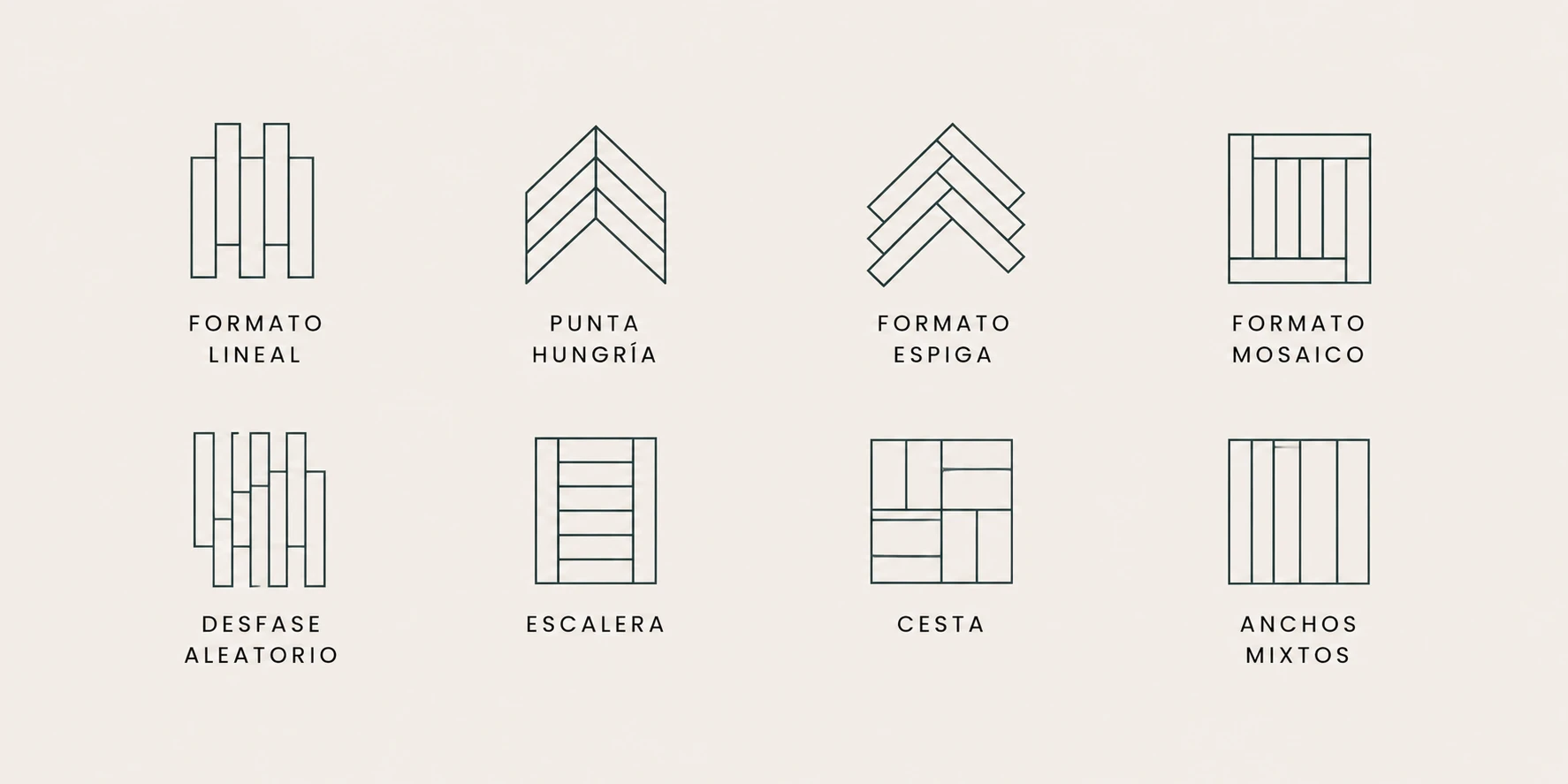
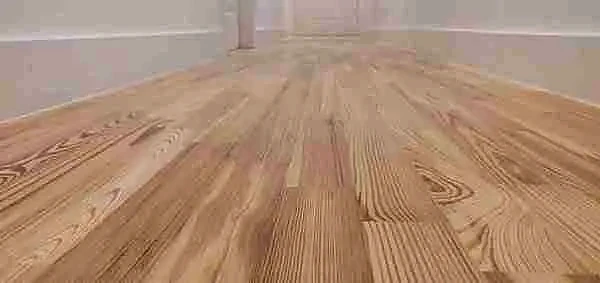
Straight lay solid parquet
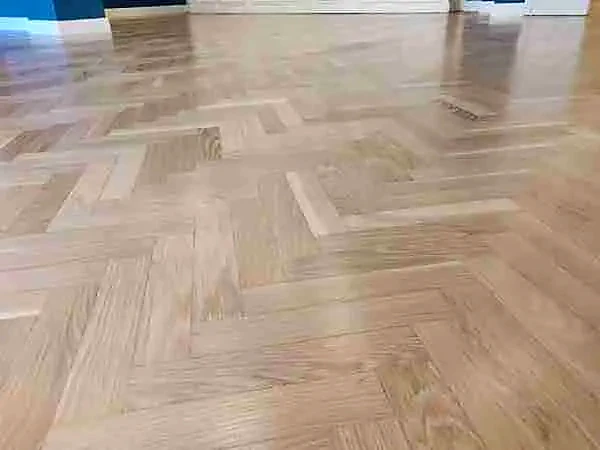
Herringbone solid parquet
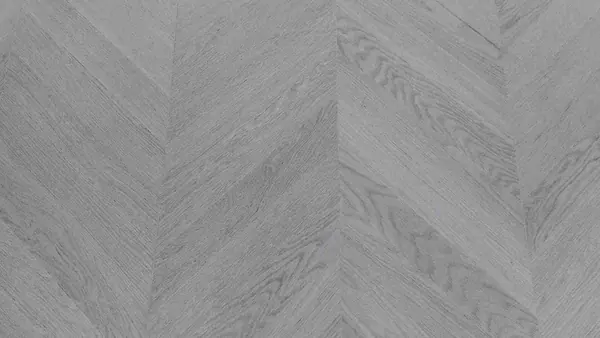
Chevron solid parquet
Screed or Joists
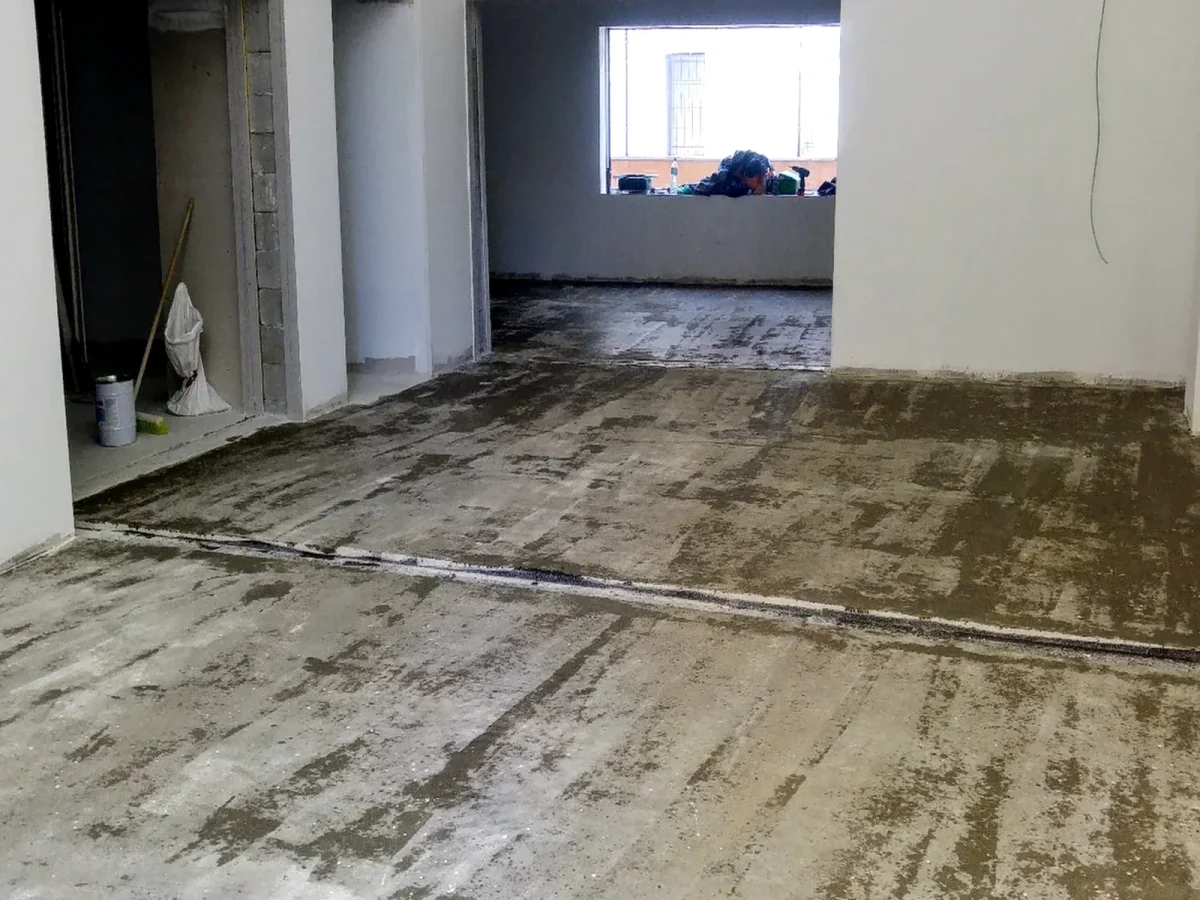
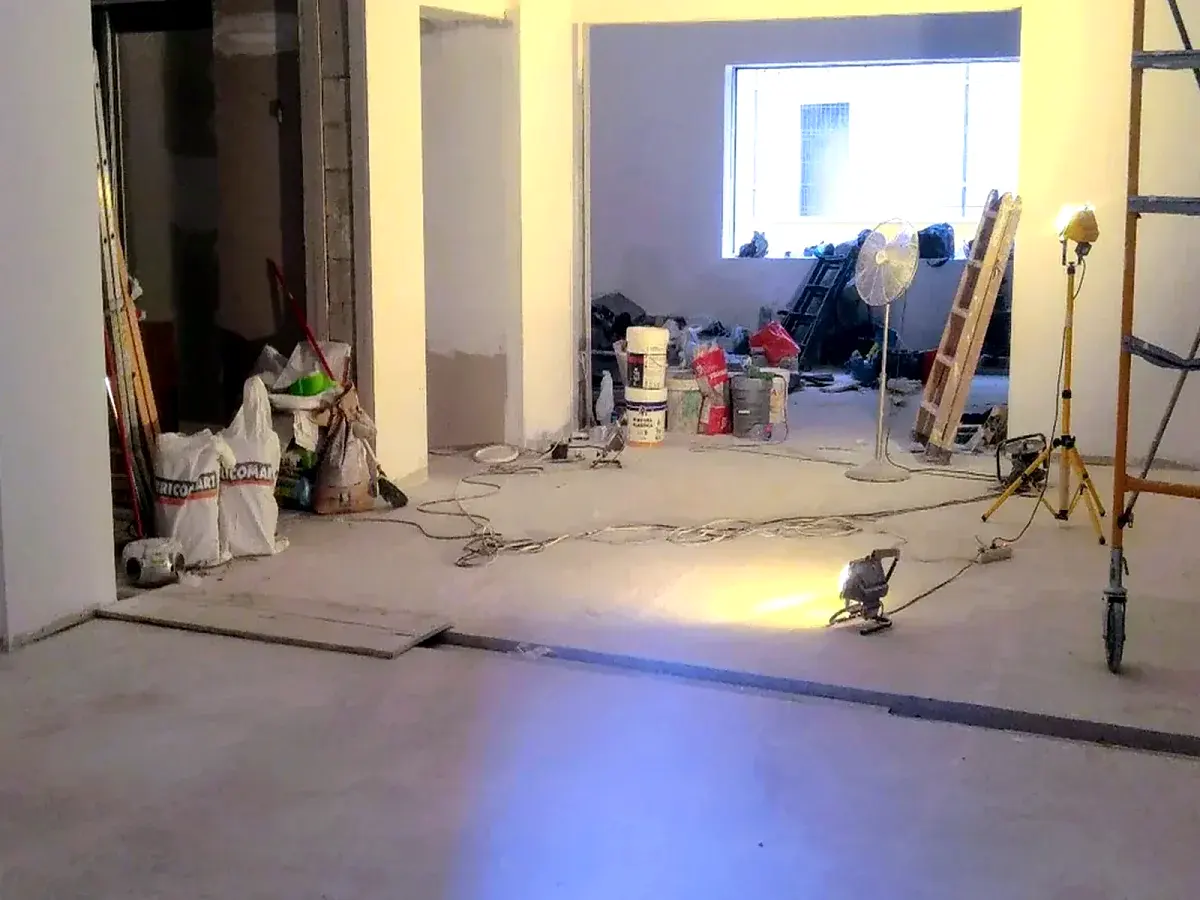
The structural quality of the screed determines the long-term behavior of glued parquet. We verify surface flatness, mechanical cohesion, and residual moisture via calcium carbide reaction before bonding.
High-traffic 2K waterborne polyurethanes and open-pore natural oils. Sheen levels ranging from 2% ultramatt to classic satin. View finishes guide.
Investment in Bonded Parquet
Supply, layout planning, and complete installation under technical specifications.
Selected Oak Large Format: Continuous screed bonding with elastic silane polymer adhesives.
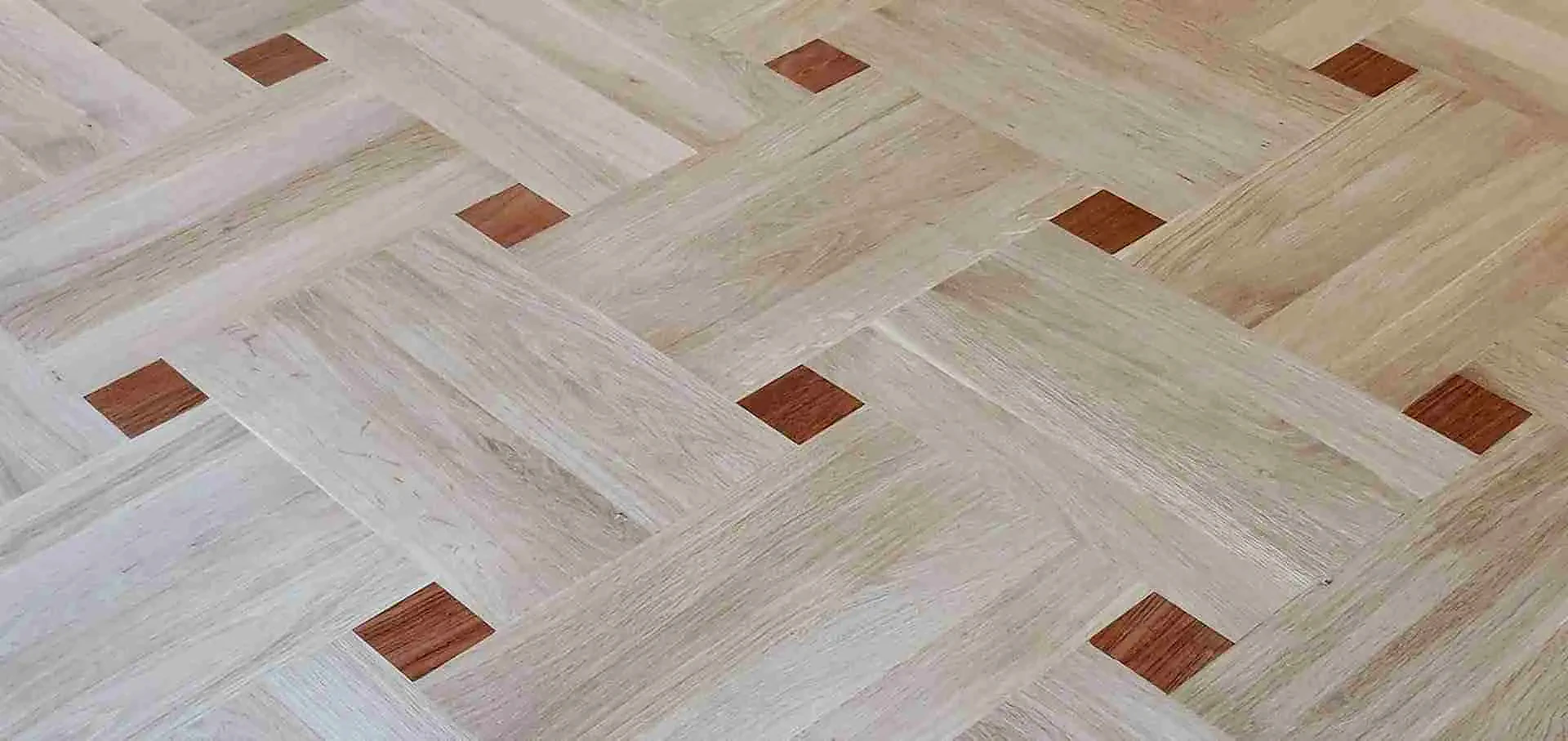
Bespoke Layout Patterns: Classic 90° herringbone, chevron, and checkerboard with custom perimeter borders.
Screed Conditioning: Leveling with high-compression self-leveling compounds and residual moisture below 2.0% CM.
Binding quotes prepared following on-site technical substrate inspection and project measurement in Madrid.
Completed Projects
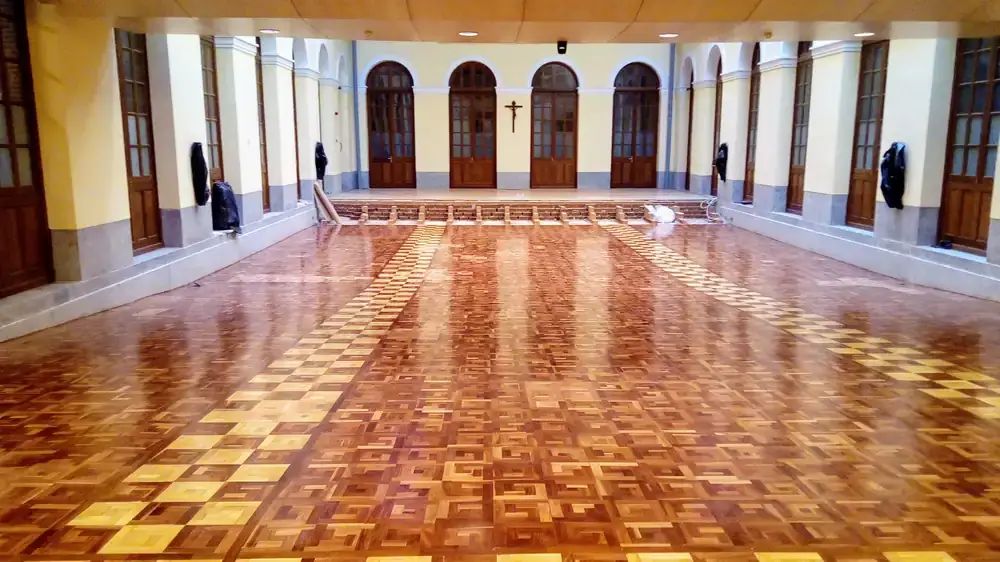


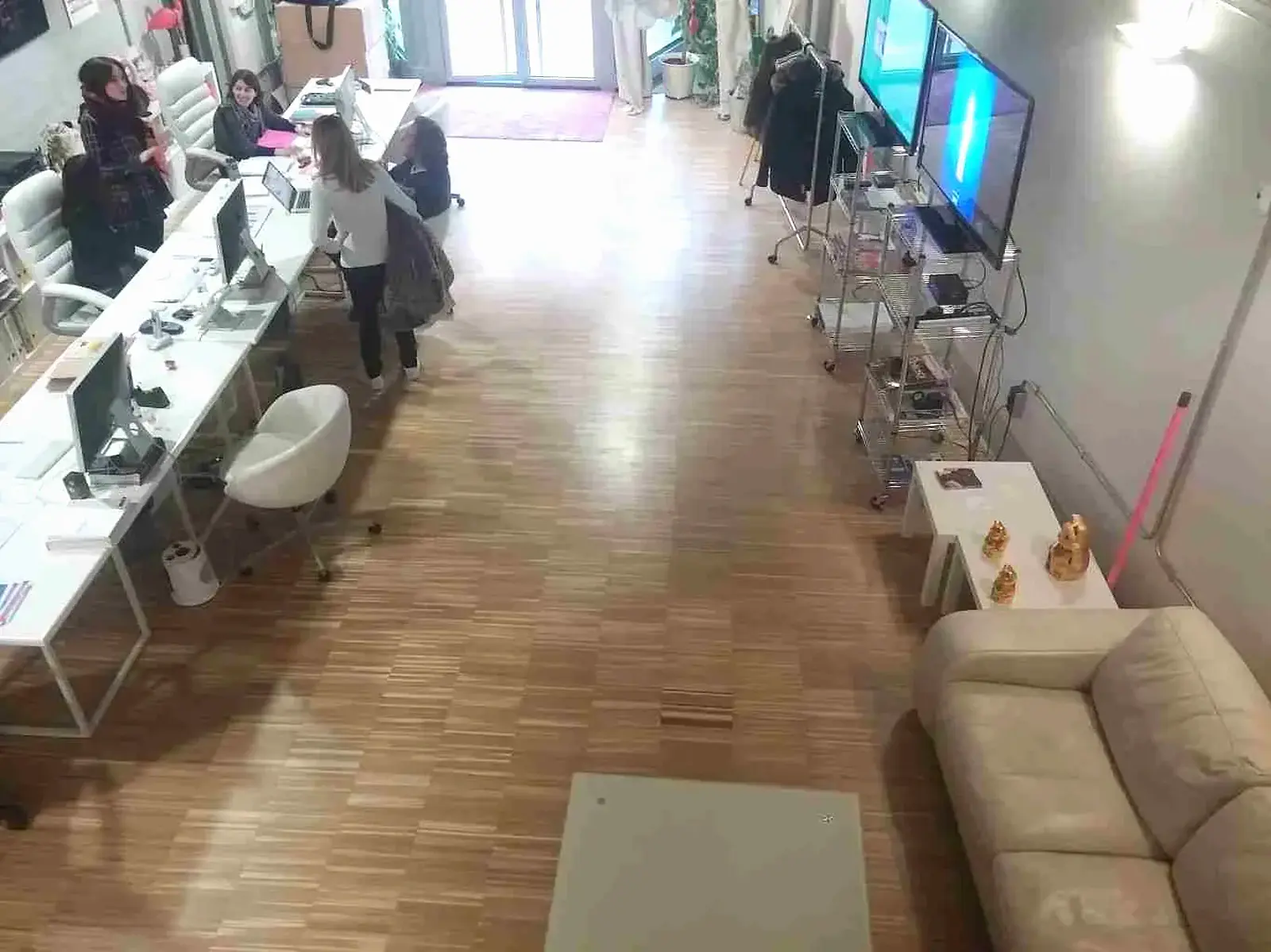
Craftsmanship Principles & Warranty
Heritage Since 1968
Over 55 years installing and restoring solid wood parquet in Madrid. Complete mastery in herringbone, double herringbone, chevron, and basket weave over engineered screeds.
Chamberí Showroom & Samples
Full-scale sample collections of classic patterns in noble hardwoods (oak, chestnut, jatoba, walnut) and ecological finishes at C/ Donoso Cortés 24. By appointment.
In-House Specialists & Warranty
Master parquet layers on company staff. Screed moisture verification via calcium carbide hygrometer (≤ 2.0% CM), installation to UNE 56810 tolerances and written warranty.
Request an Assessment for Solid Parquet
Email: info@parksinta.com
Phone: +34 91 543 90 62 · Mobile: +34 637 83 51 27
C/ Donoso Cortés 24, 28015, Madrid (Chamberí)
Scope of work: Full projects and technical restorations in the Community of Madrid, from 40 m². We do not work with synthetic or laminate flooring.