
The dance floor of the Ballroom at the Real Casino de Murcia is a wood floor with marquetry of octagons and stars. The Casino dates it to 1877 and says that it is the only floor in the building that has not been replaced in any remodel. To protect the original floors of the room from wear, the Casino uses a carpet. It is one of the cases in the best parquet floors in Spain.
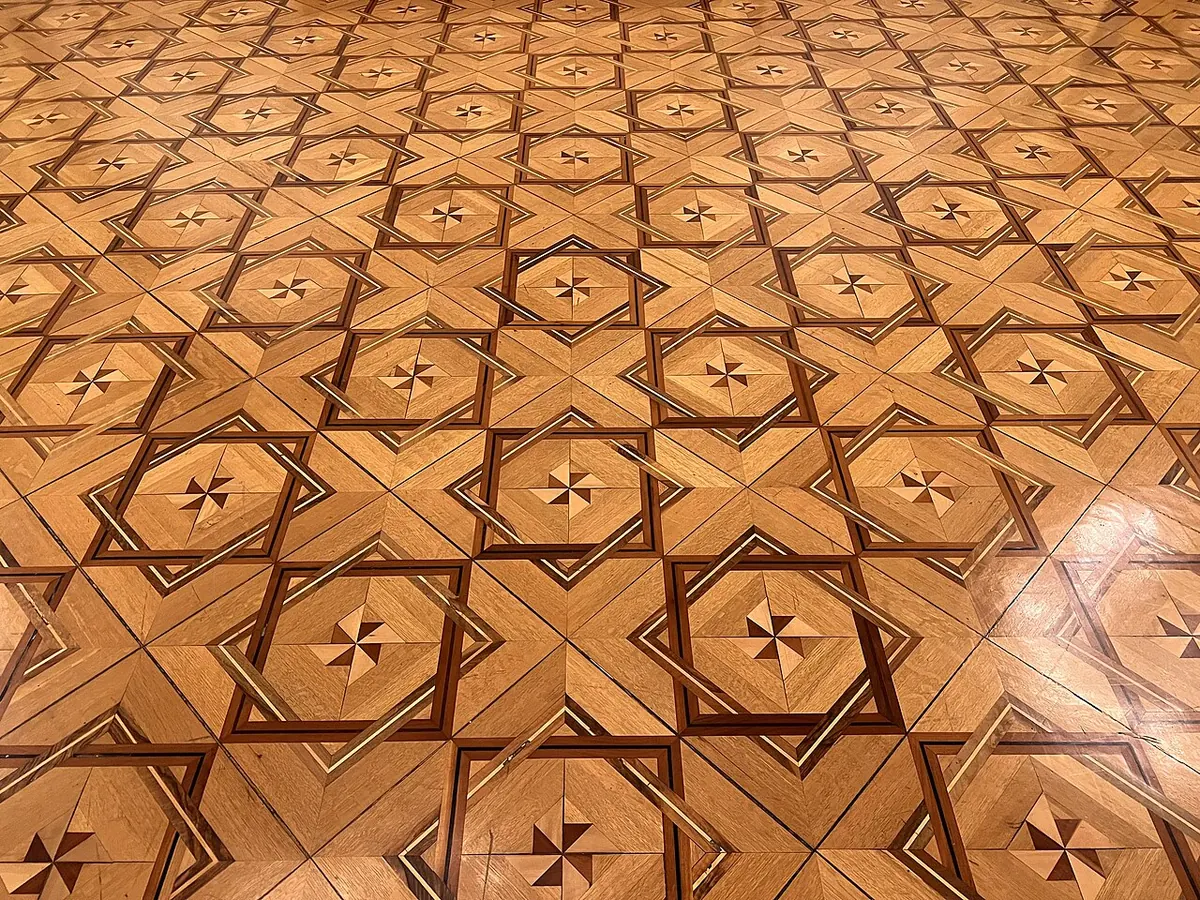
The 1877 dance floor
The Ballroom was built between 1870 and 1875, in a French-inspired Neo-Baroque style, and the dance floor arrived two years later, according to the Casino. It was designed by the Casino’s first architect, Francisco Bolarín, and on his death in 1871 José Ramón Berenguer carried on the work.
Photos of the dance floor show octagons with an eight-pointed star in the center, linked by bands of light and dark wood. No source gives the woods. The room is large: the painted canvas on the ceiling measures 10.7 by 17.8 m, about 190 m², according to the Casino’s magazine.
Dances on the floor
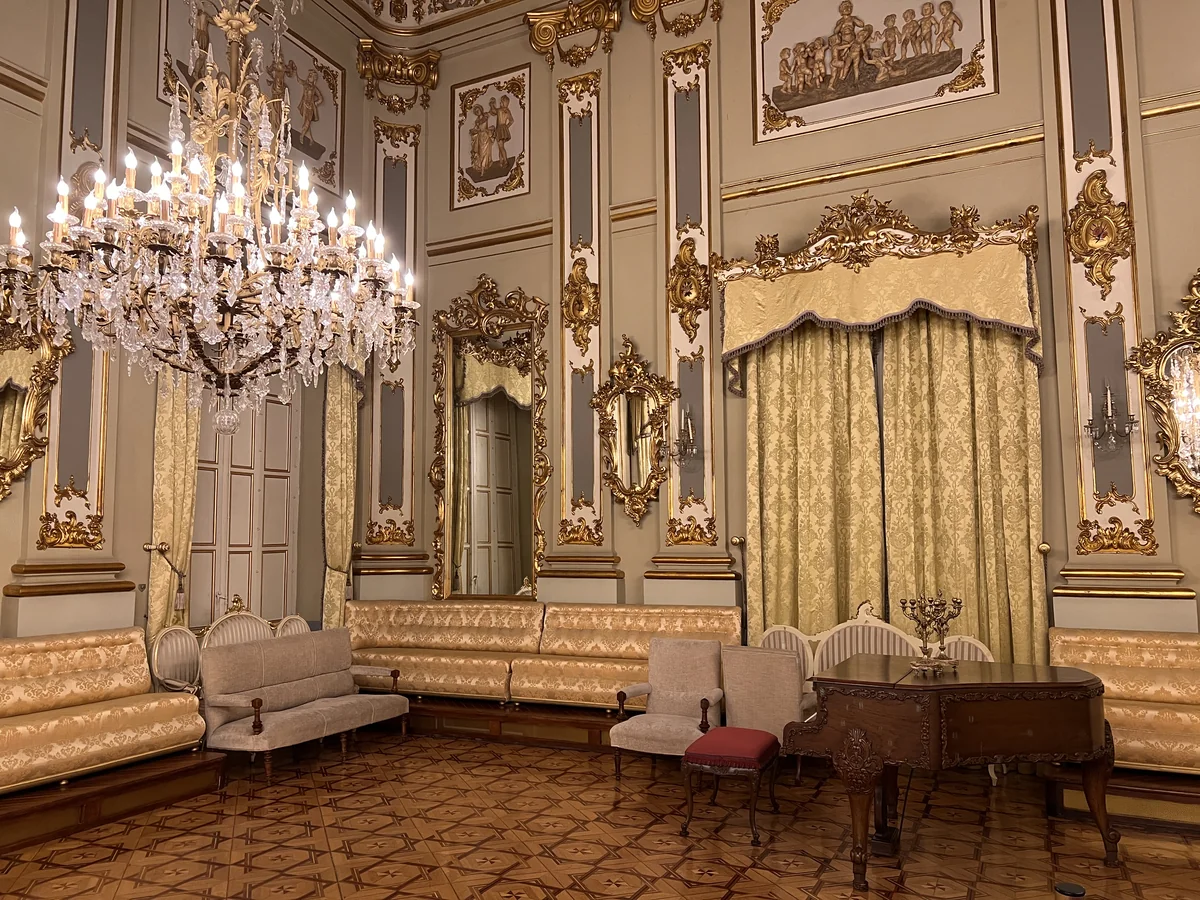
A run of benches goes around the dance floor. From there, according to the Casino, the ladies who chaperoned the young women of Murcia watched how their charges danced, while the musicians played from the small balconies above.
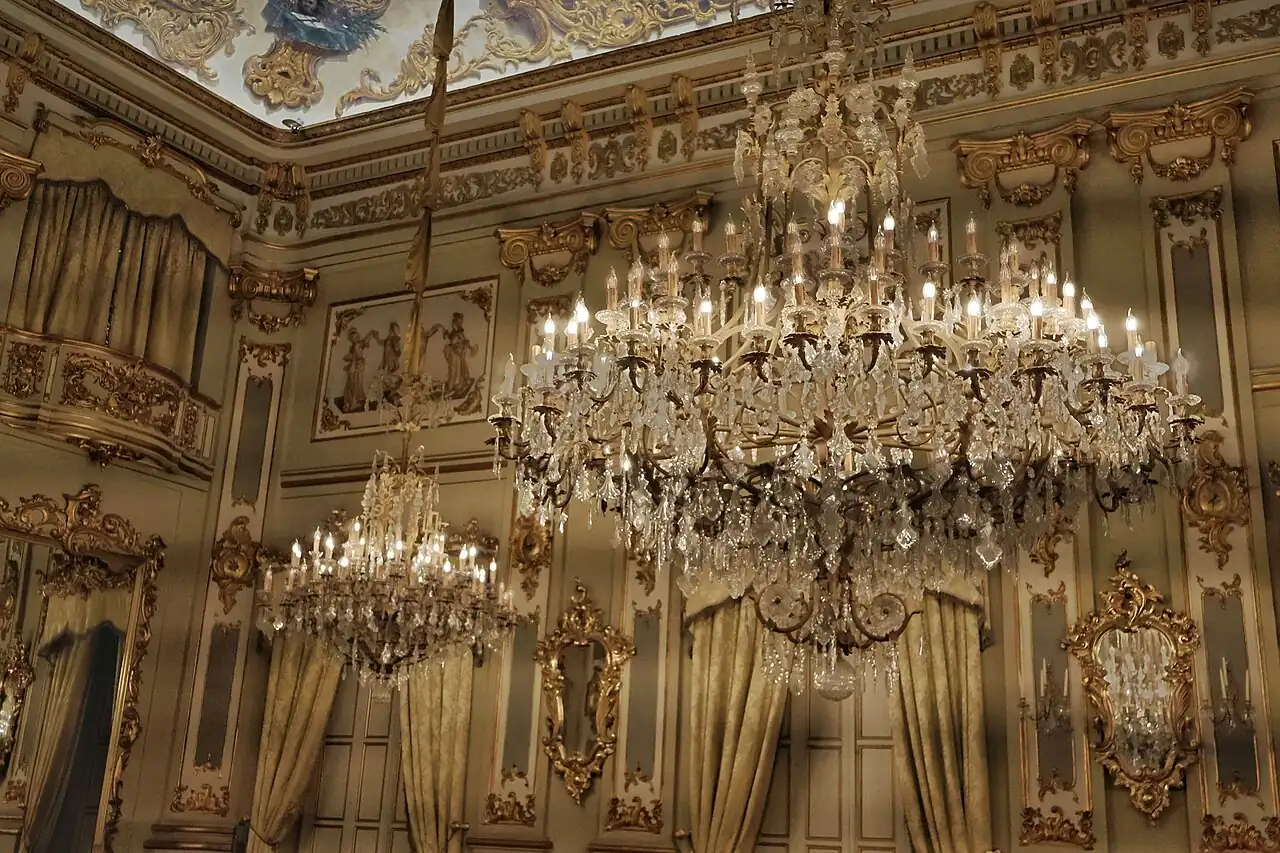
The five chandeliers of bronze and Baccarat crystal were bought in Paris in December 1886. They were first lit at a masked ball on Sunday, February 20, 1887, according to Loreto López, and the Casino says they were the first in Murcia with electric light.
Masked balls were held in the building at Carnival, New Year’s and Candlemas from at least 1859. The Candlemas ball was revived after the last restoration.
The 2006 to 2009 work
The building was restored in full between 2006 and 2009, “including the structures, foundations, floors, walls and roofs,” according to the Casino. The work was directed by the architect Juan Carlos Cartagena. In the Ballroom there was a 20 cm crack in a load-bearing wall.
During the 2006 to 2009 work, graffiti turned up hidden in the fabric behind the ceiling of the room. One called for a “Federal Republic,” next to the date 1876, according to the Casino’s magazine: a worker wrote it while the room was being decorated.
The dance floor was not replaced, according to the Casino. The doors reopened on November 5, 2009, after almost four years closed. For that restoration, King Juan Carlos I gave the Casino the title of Real (Royal). The room’s carpet was changed in September 2025, according to the Casino itself, which describes it as a barrier against wear on the original 19th-century floors.
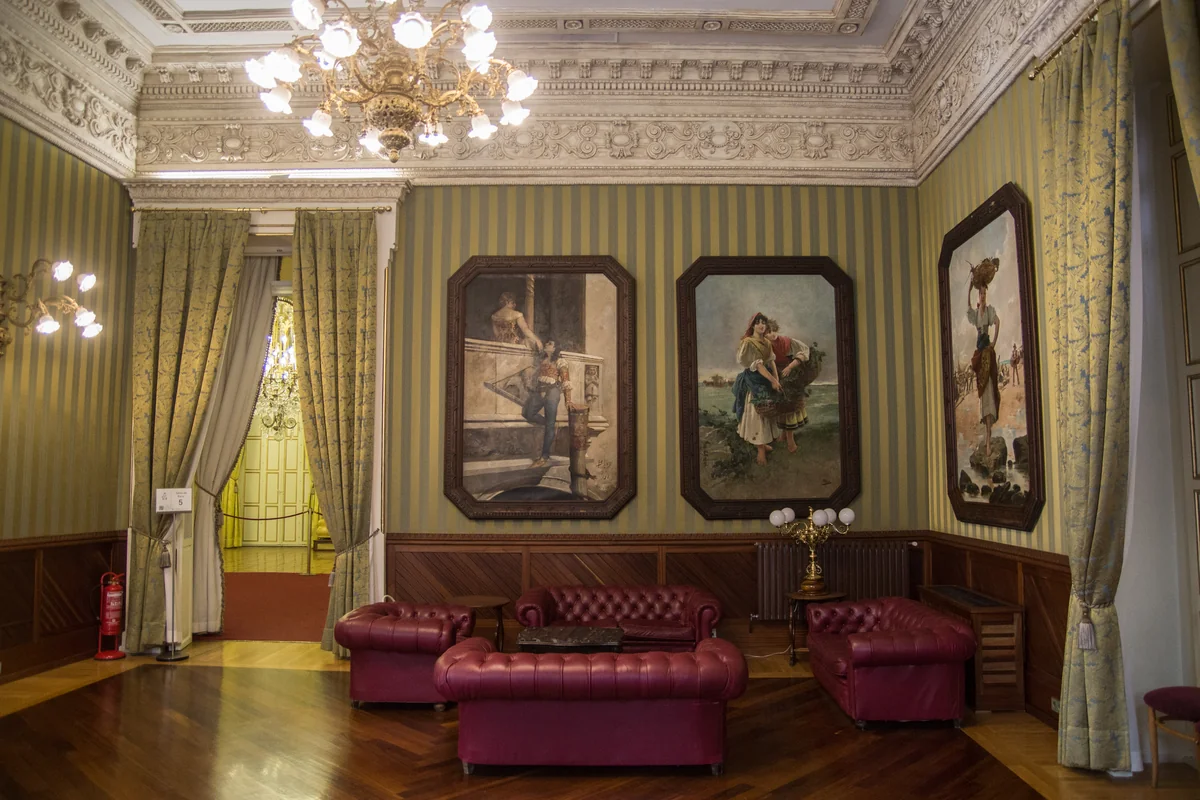
The Congresillo
In the 19th century the Congresillo was the fireplace anteroom, next to the Ballroom, according to the Casino’s magazine. It suffered a fire in 1869 and took on its present look in 1909, with plasterwork by the decorator Manuel Castaño, according to Loreto López. In 1890 the cabinetmaker José Noguera Arqués worked on its furniture.
The youngest members met there, around a stove, in a circle that at one point wanted to break away from the board and lasted until 1980. The photo shows a floor of dark boards laid diagonally with a light band along the wall.
Four days before the 2009 reopening, with the new furniture stored in the Congresillo, a hailstorm drove water in through the ceiling. The president and the architect ended up mopping it out, one mop each.
Other wood floors in the building
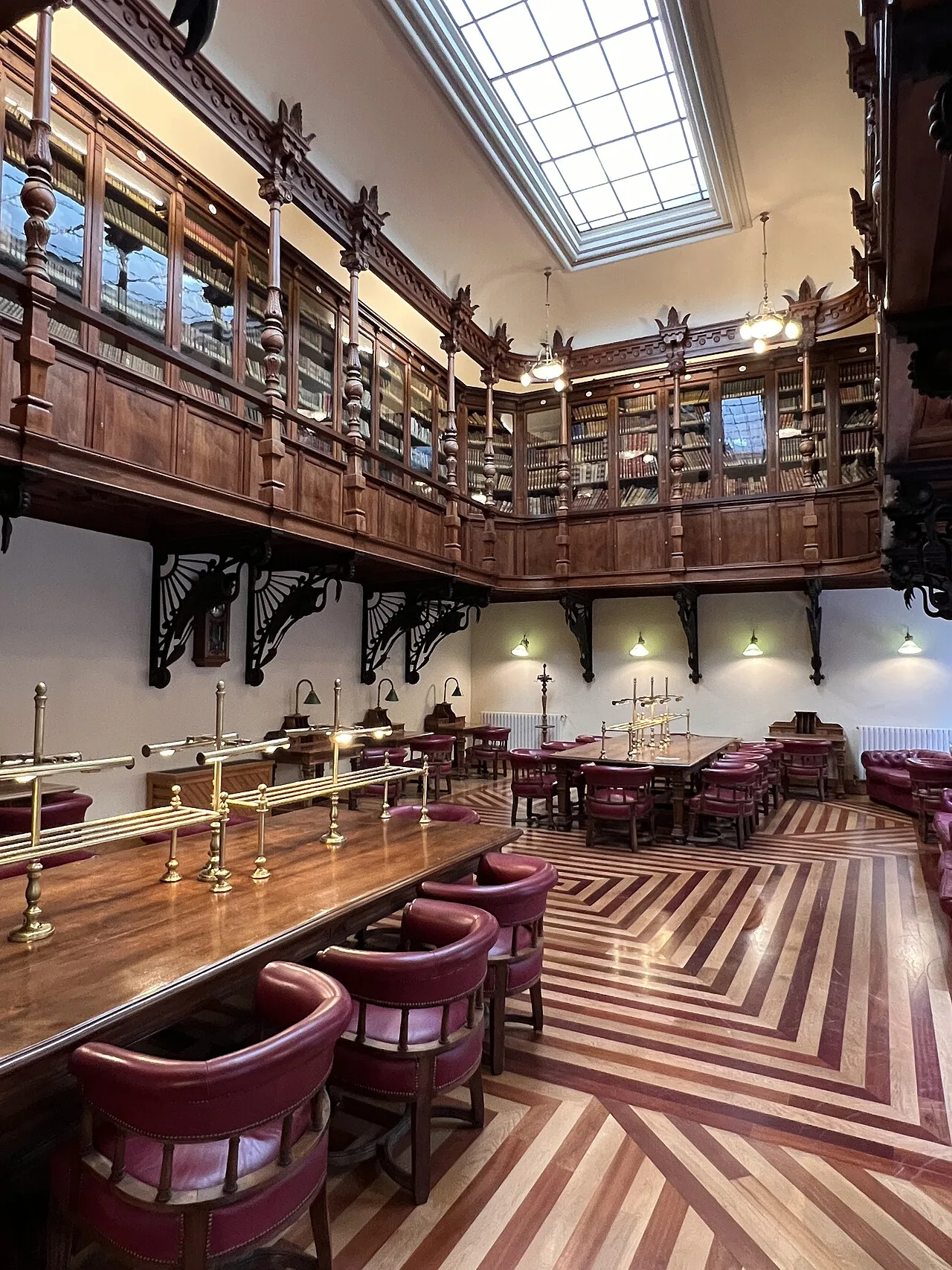
The English Library was made in 1913 by the British firm Waring & Gillow, according to the Casino. Its parquet, of light and dark bands that cross at an angle, sits over air chambers. In 2018 the Casino announced that it would repair it and fit grilles to ventilate them and prevent damp.
The Cantina, or Members’ Café, keeps its original marquetry wood floor. Rainwater leaks had badly damaged it, and in 2023 it was restored in full, under Cartagena’s supervision.
The Ladies’ Powder Room takes up part of the old Arms Room and was in use until the 2006 work. The Casino’s photos show square panels with an inlaid star and a dark band; in 2019 that parquet was sanded and varnished. The following year the one in the Members’ Lounge was restored.
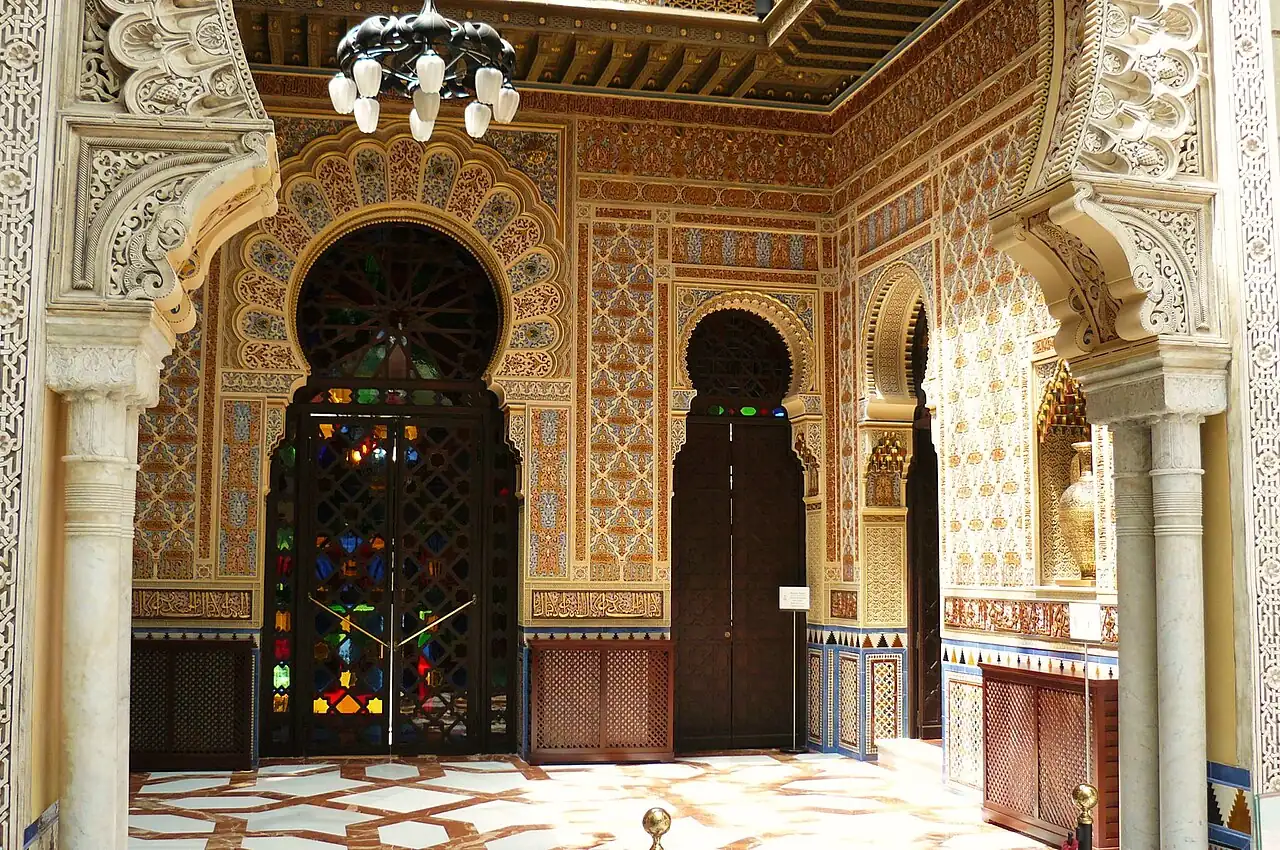
Outside the salons, the floor changes material. Going from the Ballroom to the Anteroom, the warmth of silk and wood gives way to the cold of marble, as the Casino describes it. The galleries are covered with Macael and Cehegín marbles. The mosaic of the Arab Courtyard had to be rebuilt from a 1:1 scale drawing, since every piece is different.
What gets checked before touching it
The 1877 dance floor is marquetry, and in marquetry the margin for sanding is set by the visible wood above the base, not by a tongue. Since the dance floor was not replaced in the full restoration of the building, that wood is what has carried the dancing since 1877. A similar case: the ballroom at Zurbano, with marquetry stars that we reglued by hand.
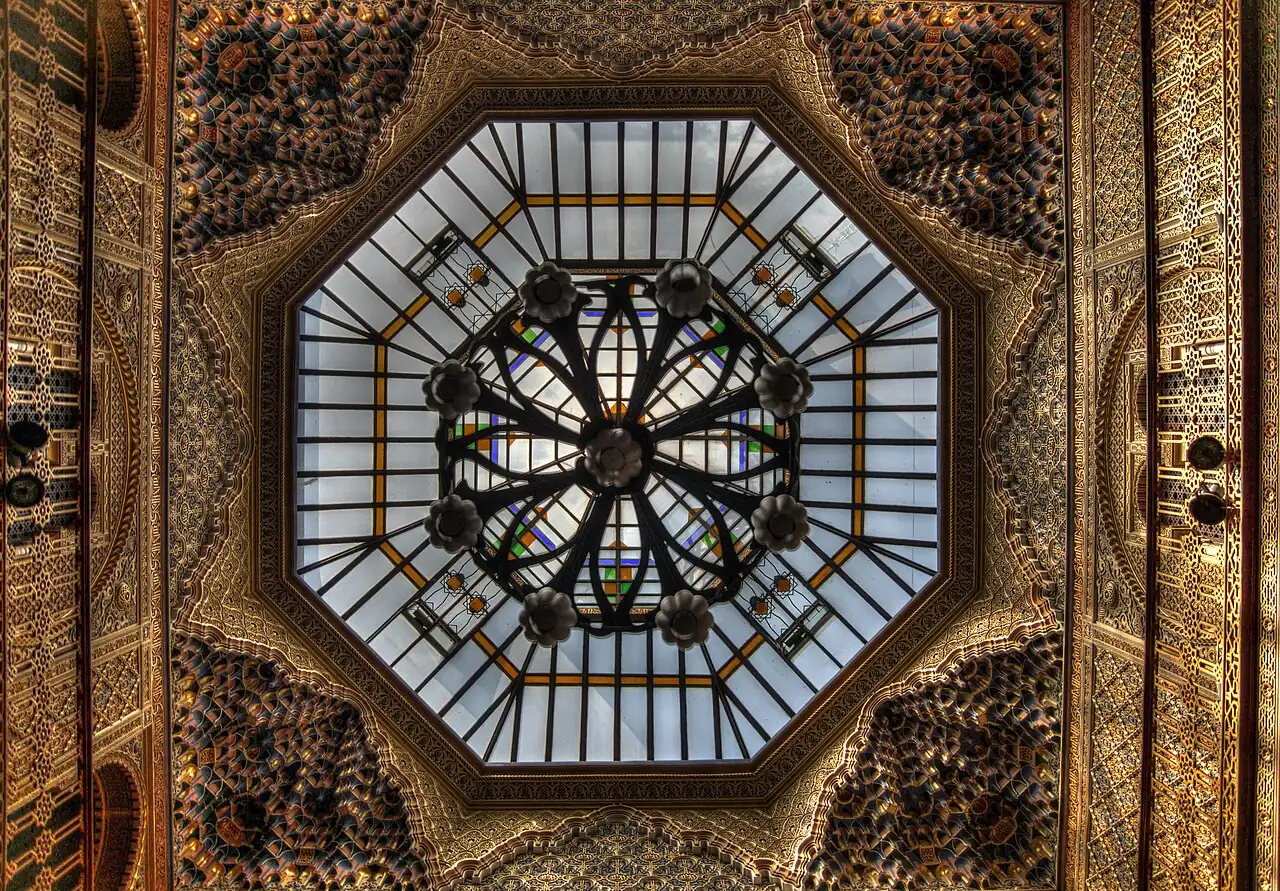
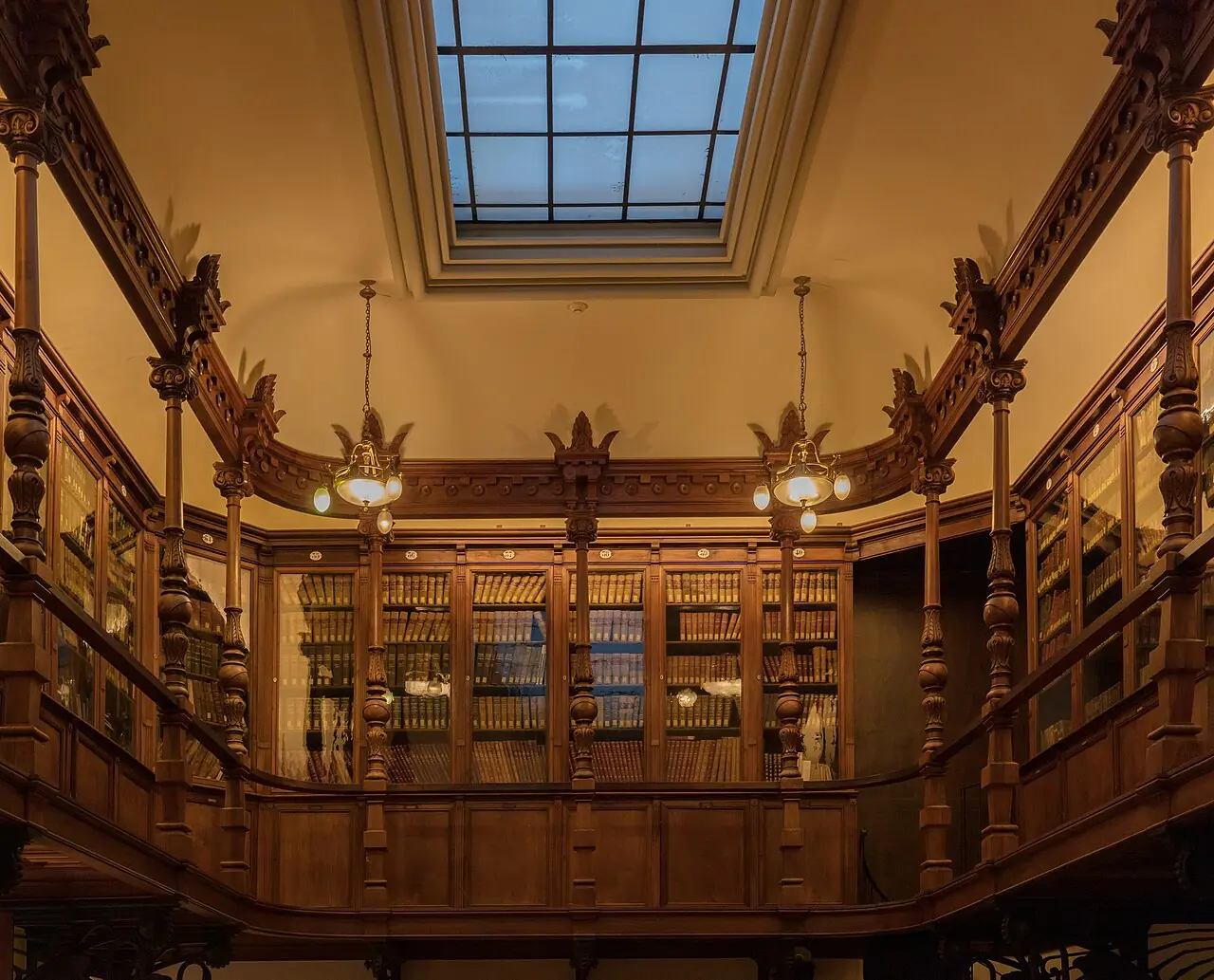
The Real Casino de Murcia in pictures
Restoration of historic parquet
A 19th-century marquetry floor with stars and octagons can be restored piece by piece without redoing the pattern. More on floors with history in Historic parquet.
Sources
- Zandcee, Wikimedia Commons, CC BY-SA 4.0.
- Zandcee, Wikimedia Commons, CC BY-SA 4.0.
- Pedro J Pacheco, Wikimedia Commons, CC BY-SA 3.0 es.
- Zandcee, Wikimedia Commons, CC BY-SA 4.0.
- Pedro J Pacheco, Wikimedia Commons, CC BY-SA 3.0 es.
- MOs810, Wikimedia Commons, CC BY-SA 3.0.
- Hetemacaba, Wikimedia Commons, CC0.
- Diego Delso, Wikimedia Commons, CC BY-SA 4.0.


