
The Palacio Real de Pedralbes (Royal Palace of Pedralbes), in Barcelona, was finished in 1924 to house Alfonso XIII during his stays in the city. Two of its parquet floors are documented. The one in the Royal Bedrooms, 110 m² on the first floor, is oak laid in chevron. The one in a state room has a border around the perimeter and a rosette in the center, restored by Parquets Nadal. It is one of the cases in the best parquet floors in Spain.
A palace from 1924
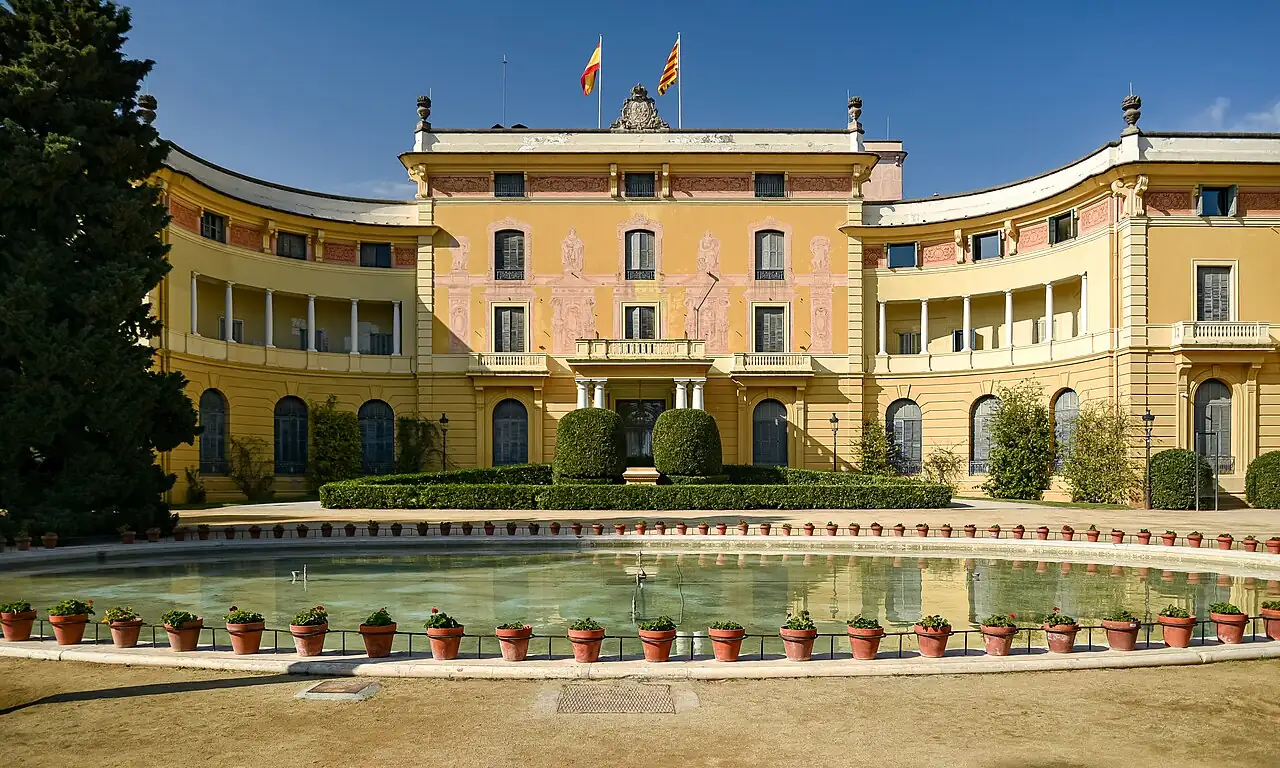
The palace was built on the Güell family’s summer estate in Pedralbes, on the site of their old country house. The design was by Eusebi Bona, who resigned in 1922 with the works stalled for lack of money. The City Council eventually joined the project, and Francesc Nebot took charge of finishing it.
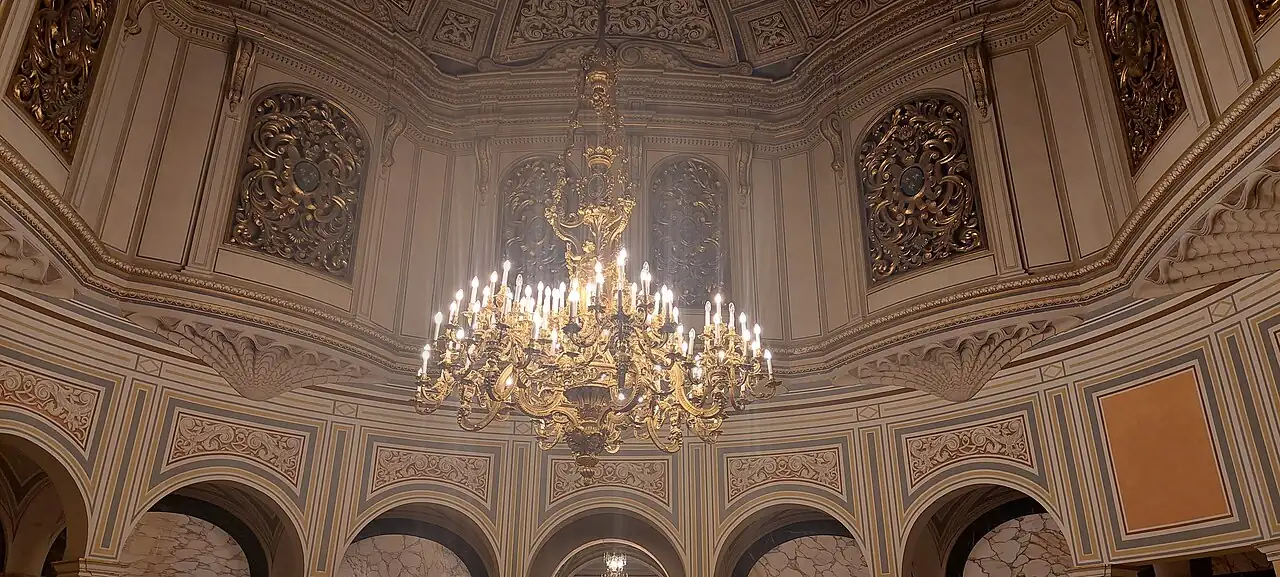
Barcelona’s journalists toured the building on May 8, 1924, days before the King and Queen arrived. La Vanguardia counted fourteen reception rooms on the ground floor and twenty bedrooms upstairs. Its reporter wrote that “rather than newly built, it seems to date back a century.”
The King and Queen slept there for the first time that same month. The palace passed to the Crown in 1926, to the City Council under the Republic and to the Generalitat (Catalan regional government) in 2022, and since 2010 it has shared the building with the Union for the Mediterranean.
The border and the rosette
The firm Parquets Nadal says the palace called it in to replace a damaged border in the state room. It made the replica to measure in its workshop in Arbeca, in Lleida, and published the work in January 2017.
While studying the job they saw that the central rosette in that room was also badly worn. Their craftsmen consolidated the loose pieces with resin and filler, sanded it only at the surface and gave it one coat of eco-friendly varnish.
In the photos Nadal published you can see a herringbone field of reddish wood and a border of linked circles between two light fillets. In one stretch the border follows a curved wall. The rosette is a square set on point, with a crown and a monogram in the center and another band of circles around it.
The Royal Bedrooms
The Royal Bedrooms occupy the center of the main facade on the first floor. To pay for their decoration a committee of ladies from the Catalan nobility was formed, headed by Dolors de Càrcer, Baroness of Maldà. The commission went to the Barcelona firm Magí Pallarols, which made furniture and complete interior decoration schemes.
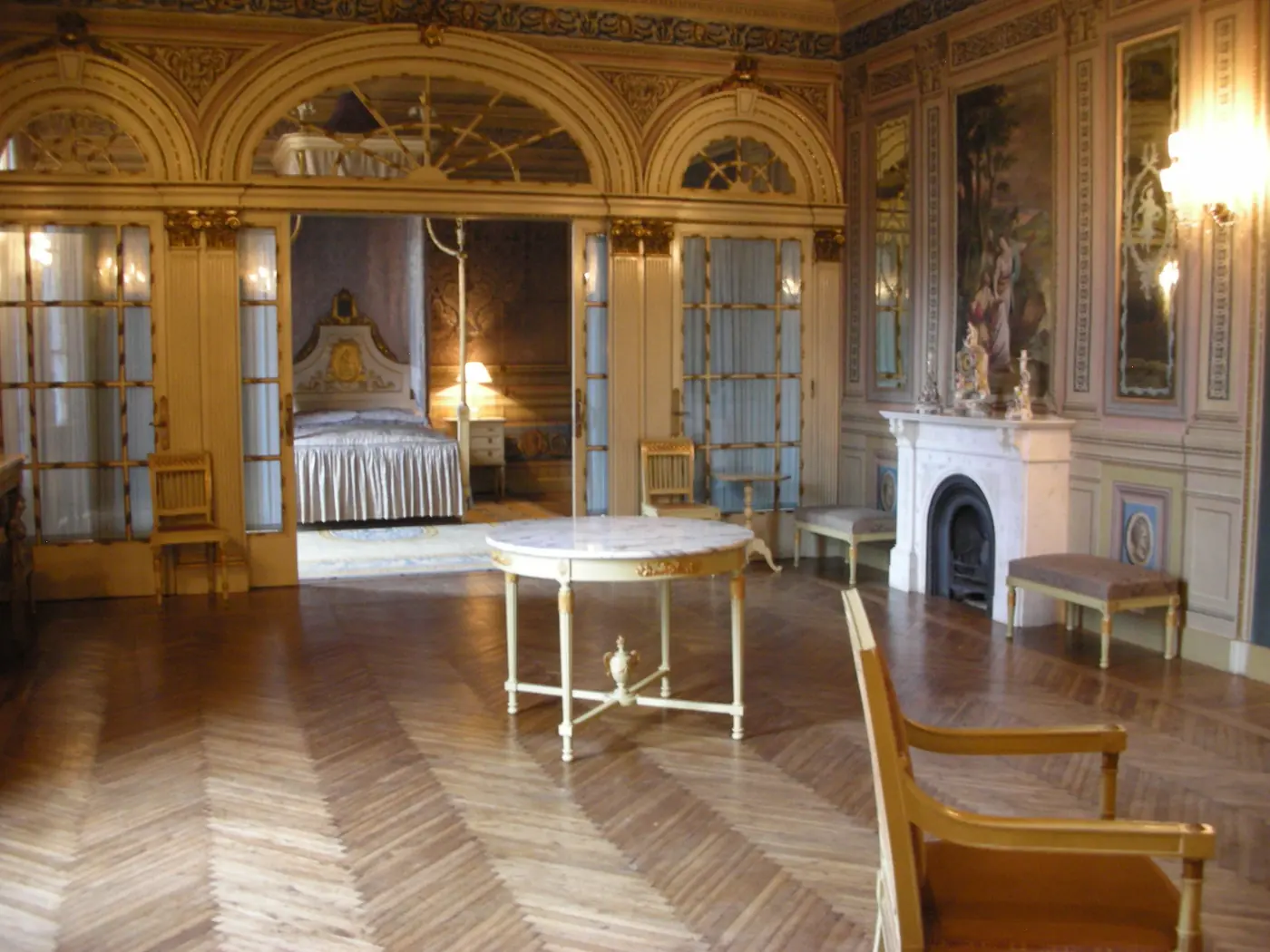
Pallarols supplied furniture, drapery, carpets and the electrical installation, and laid the parquet, in oak, according to a 2016 account by Josep Capsir, curator at the city’s decorative arts museum. In current photos that oak appears laid in chevron: slats cut at an angle whose tips form V shapes along the room.
The ladies’ collection fell short. In January 1926 Pallarols was still claiming 24,000 pesetas for the work on the bedrooms, which the City Council paid months later. From the municipal file, Capsir estimates that the complete job came to more than 50,000 pesetas.
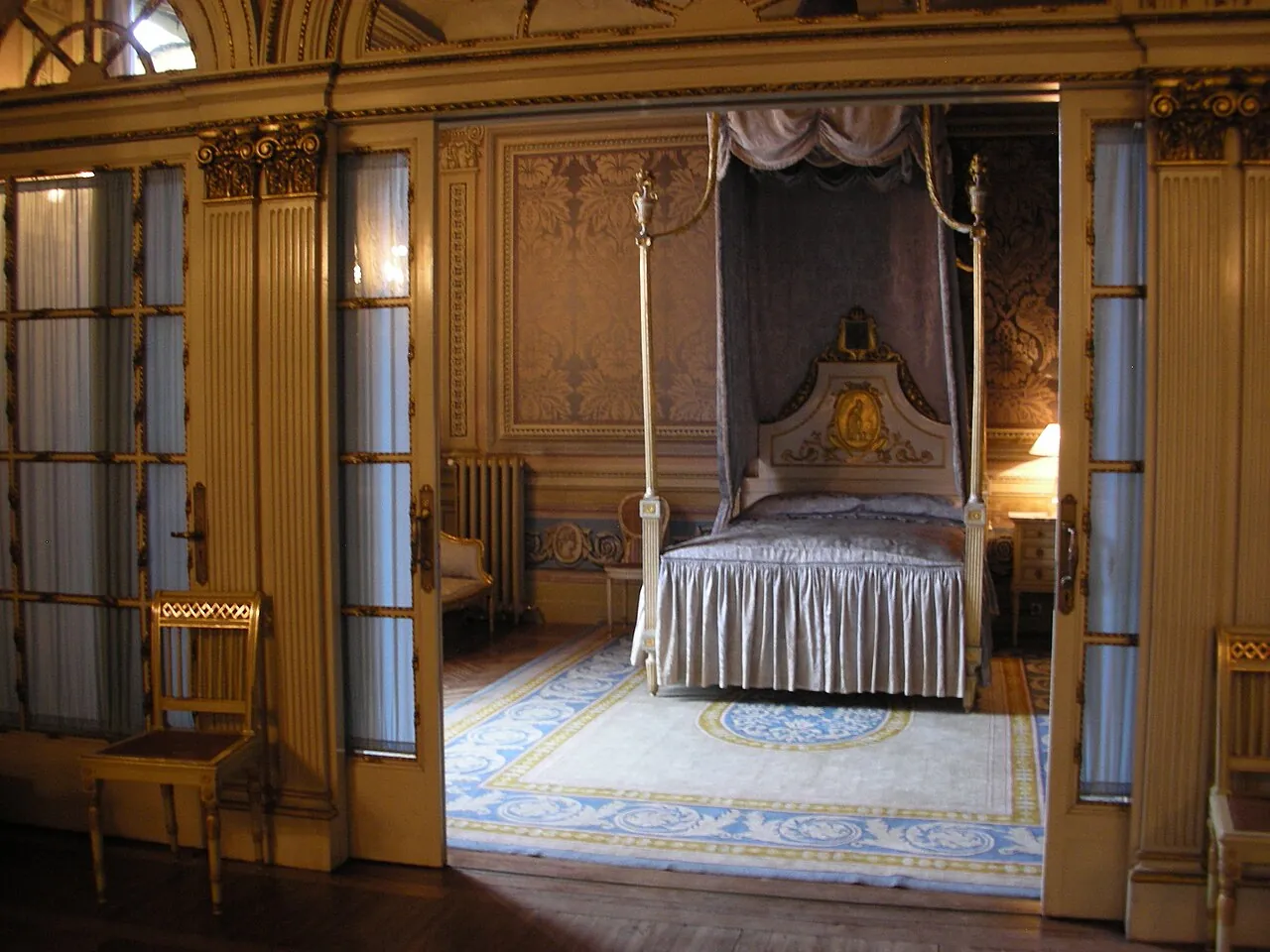
The Queen’s bedroom has two parts, an antechamber and an alcove, separated by a frame with two sliding glass doors. That is what the first photo shows: the chevron of the Antechamber runs up to that frame, and behind it the alcove’s carpet comes into view. On the walls hang paintings by Francesc Pla, “el Vigatà,” on the life of Tobias.
The King’s Bedroom
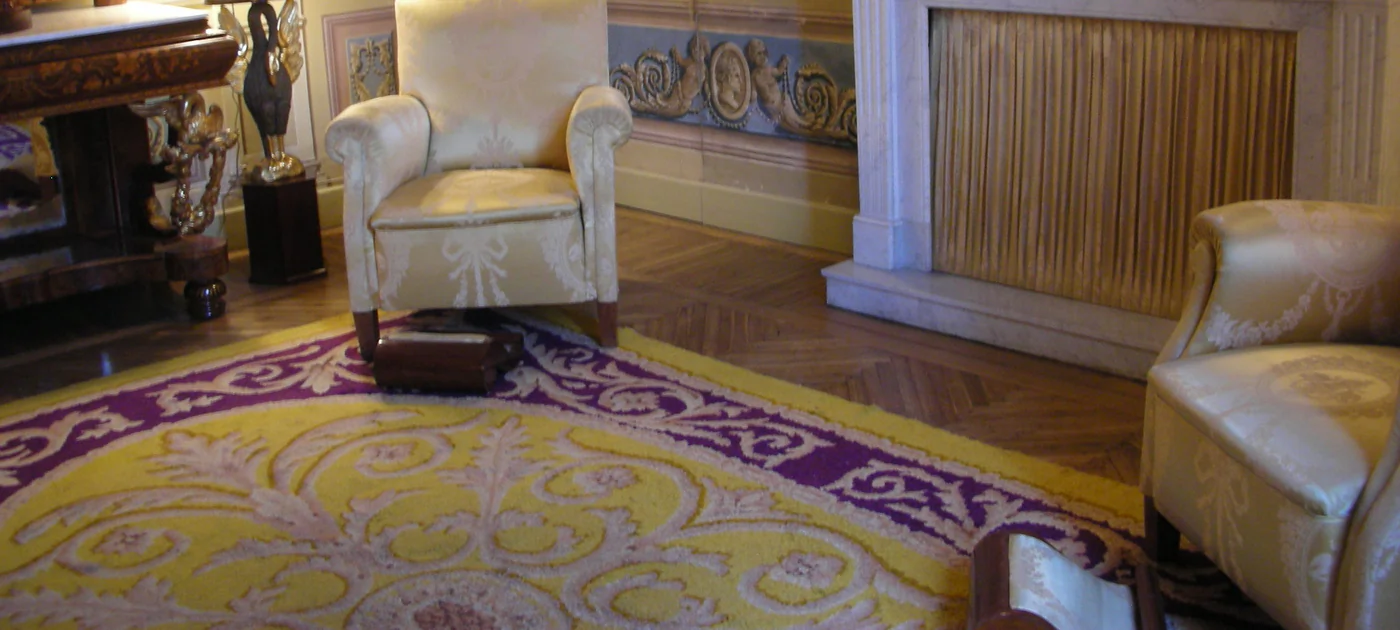
On the other side of the Antechamber is Alfonso XIII’s bedroom, a single room in Empire style with walls lined in blue damask. The Count of la Vall de Merlès and his siblings lent furniture from the second quarter of the 19th century. Among the pieces were a boat-shaped bed and a mahogany dressing table.
The bed there today is not that one. In the years the King and Queen used the palace it was swapped for another that imitates its style, of more modern make and, according to Capsir, probably more comfortable. Later the room had another occupant. Franco stayed at Pedralbes on his fourteen visits to Barcelona, between 1939 and 1972, and for decades used it as his and his wife’s bedroom. Only after 1975 was it shown again with its old look.
It closed to the public in 1986 and reopened on April 14, 2011, after documentation, preventive conservation and restoration work on the two bedrooms. A carpet covers the center of the room, and between it and the fireplace the parquet shows, with the same pattern as in the Antechamber.
The museum rooms
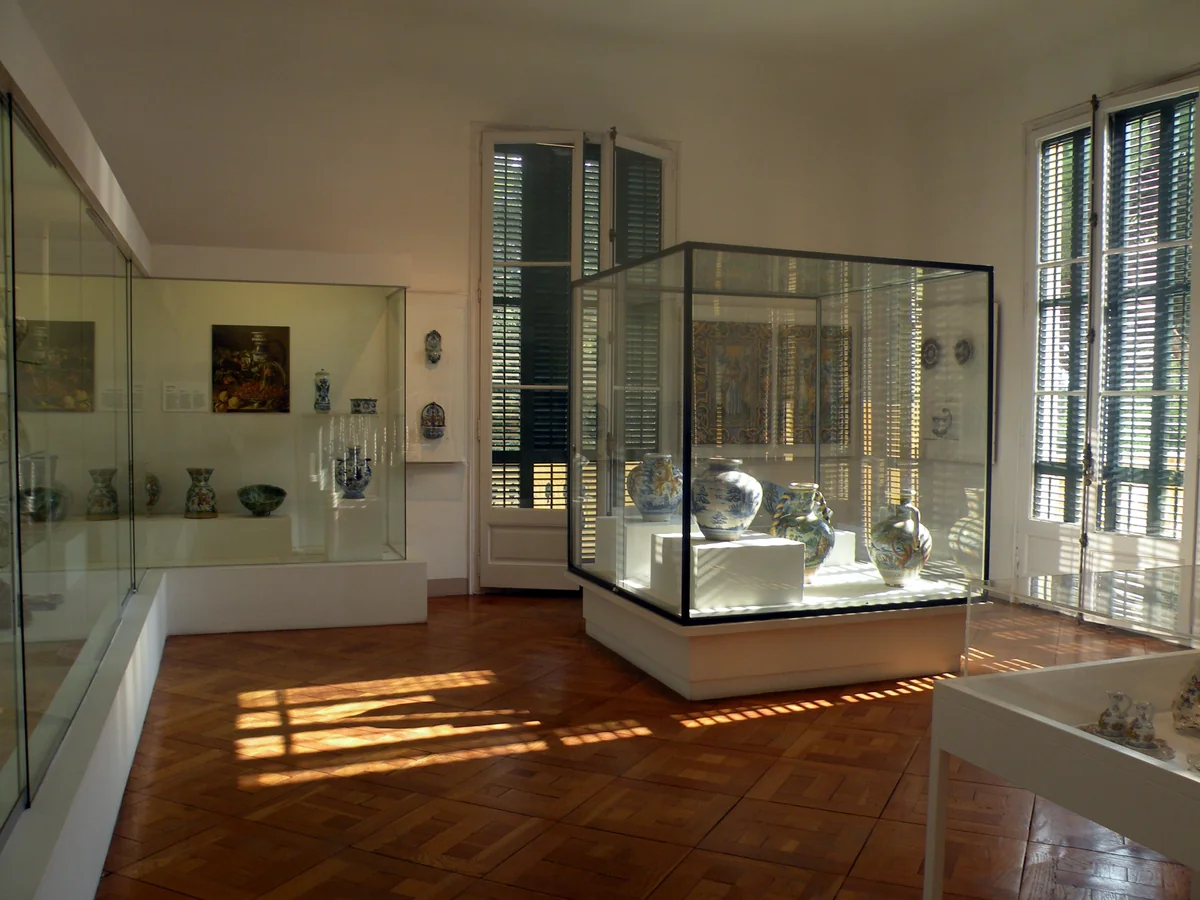
Under the Republic the palace became a museum. Between 1990 and 2014 the Museu de Ceràmica (Ceramics Museum) occupied the first floor, and in one of its rooms a third parquet pattern can be seen. It consists of squares of parallel slats that change direction from one to the next, like a checkerboard. Its wood and its date are unknown.
The planned rehabilitation
In November 2025 the Govern (Catalan government) announced the first full rehabilitation of the building, which suffers from damp because of a lack of waterproofing. Its press release foresees €28 million and phased works between summer 2028 and summer 2030, starting with the roofs and the basement.
The new border and the old rosette
At Pedralbes, Nadal did the two things that come up on a parquet floor with marquetry: replacing a piece with a replica and restoring the one that still holds. On a rosette this worn, the surface-only sanding Nadal gave it takes off much less wood than a full floor sanding. If the new border needs stain to come closer to the old wood, it is tested first on a piece of the replica. A similar case: Marquetry parquet restoration – Palacio de Zurbano.
The Palacio de Pedralbes in pictures
Restoring old parquet floors
A parquet floor with a border or rosette, like the one in the Pedralbes state room, can be restored area by area without changing the pattern. More on floors with a history in Old parquet floors.
Sources
- Enric-Eduard Giménez, Wikimedia Commons, CC BY-SA 4.0.
- Enric-Eduard Giménez, Wikimedia Commons, CC BY-SA 4.0.
- Tassilirosmar, Wikimedia Commons, CC BY-SA 3.0 es.
- Jorge Franganillo, Wikimedia Commons, CC BY 2.0.
- Aniol, Wikimedia Commons, CC0.
- Enric-Eduard Giménez, Wikimedia Commons, CC BY-SA 4.0.
- Enric, Wikimedia Commons, CC BY-SA 4.0.
- rofi, Wikimedia Commons, CC BY-SA 2.0.


