
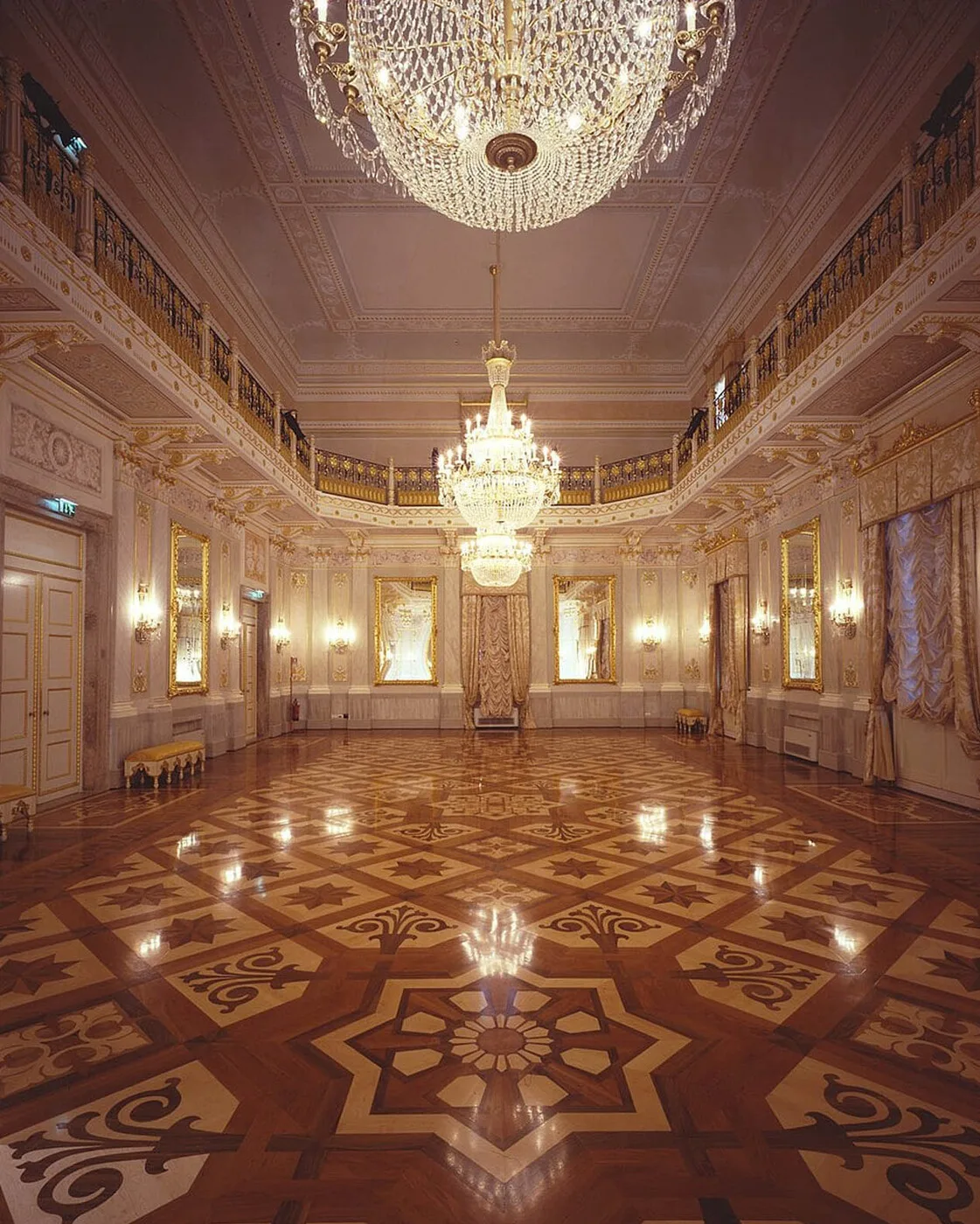
The arson fire of January 29, 1996 destroyed every parquet in the Apollonian rooms (Sale Apollinee), when the beams that carried them were charred. The parquets were rebuilt in 2002 and 2003 on new floor structures. It is one of the 16 cases in the best parquet floors in the world.
The night of January 29, 1996
The watchman Gilberto Paggiaro did his round that evening and was the last to see the theater intact. The fire started around 8:40 p.m. in the ceiling, and by 9:18 p.m. it had reached the whole building. The canals were dry because of works, and the fire boat had to moor almost 500 m away, at Santa Maria del Giglio. A forest-fire helicopter made 122 trips between the San Marco basin and the theater.
In the stalls the temperature passed 1,300 °C. The fire charred the beams of the first floor, and with them the ceilings and floors of the Apollonian rooms came down.
An arson fire and a trial
The company Viet, which was doing the electrical installation, was between two and four months behind schedule and facing a penalty of 250,000 lire a day. A guard had found a lit blowtorch three weeks earlier. The owner of Viet, Enrico Carella, was sentenced to seven years for arson, and an employee, Massimiliano Marchetti, to six. Carella fled to Mexico and Interpol caught him in 2007. Everyone charged with negligent fire, including the mayor Massimo Cacciari, was acquitted.
What was lost in the Apollonian rooms
The first floor had the most valuable finishes, among them those of the Sala Dante and the Sala Grande. Their floors were made of several wood species. The fire destroyed every parquet and part of the Venetian terrazzo, the seminato.
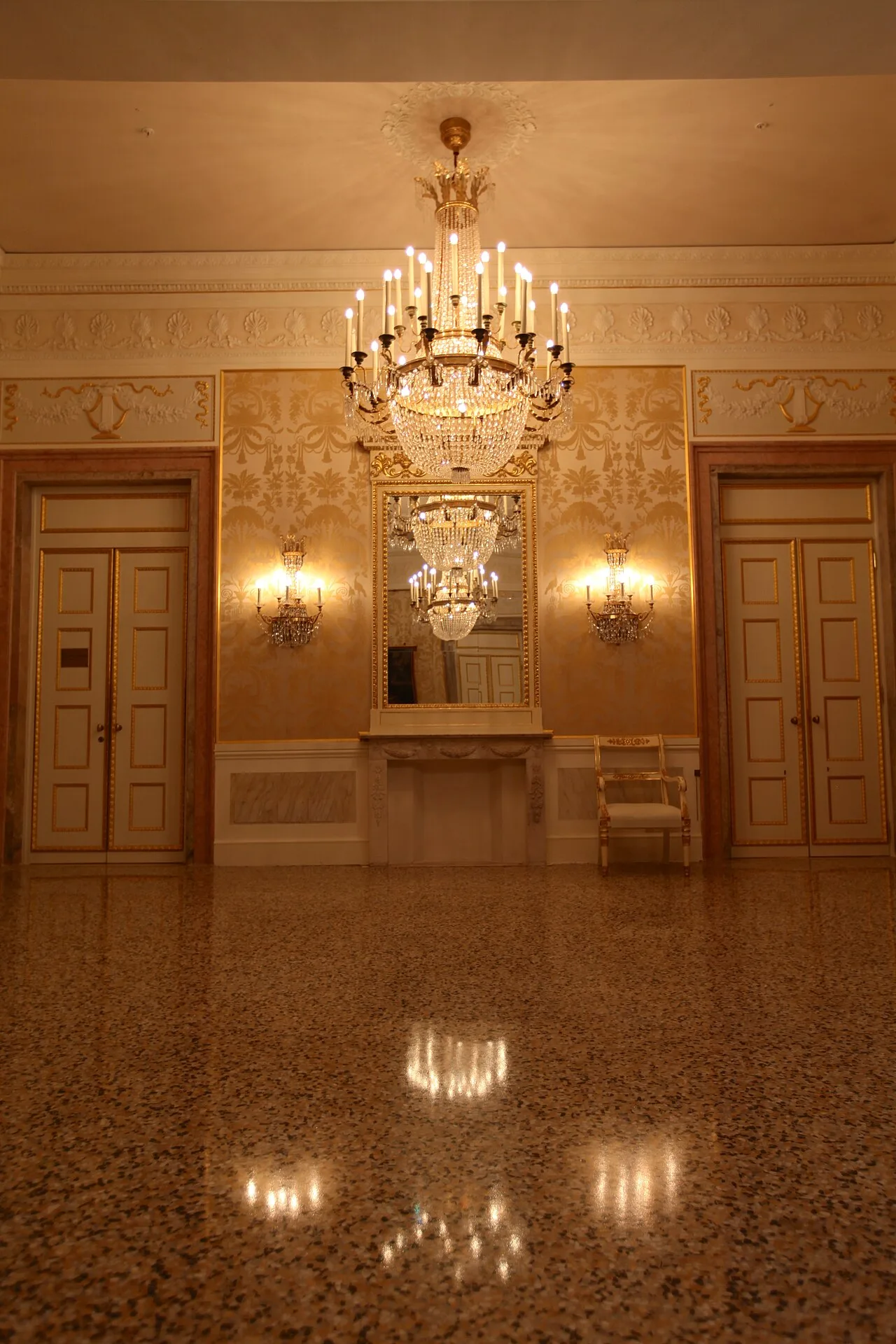
On the ground floor the foyer suffered little. Its floors were terrazzo and there were no combustible materials.
“As it was, where it was”: from Aulenti to Rossi
From the start, Mayor Cacciari proclaimed the principle “as it was, where it was.” The 1997 tender was won by the Impregilo consortium with a design by Gae Aulenti and Antonio Foscari, for 90 billion lire and 823 days. Aldo Rossi’s design, the other bid, was Holzmann’s and cost 99 billion. Work began on June 27, 1997 and was suspended on February 13, 1998, when the Council of State annulled the award.
The work was then given to Holzmann, with the design by Rossi, who had died in 1997. In 2001 Holzmann’s contract was terminated and the work passed to Sacaim, the builder that rebuilt the theater.
A new floor structure before the parquet
The floor structures of the Apollonian rooms were the first thing Sacaim built, at the end of 2001. They are solid larch beams of 17 × 25 cm at 50 cm centers, with a 2.5 cm board deck on top and an 8 cm layer of concrete. They are designed to carry at least 500 kg/m². Between the wood and the concrete there is a breathable, waterproof paper, so that the larch does not absorb water from the concrete.
Berti’s parquet, 2002 to 2003
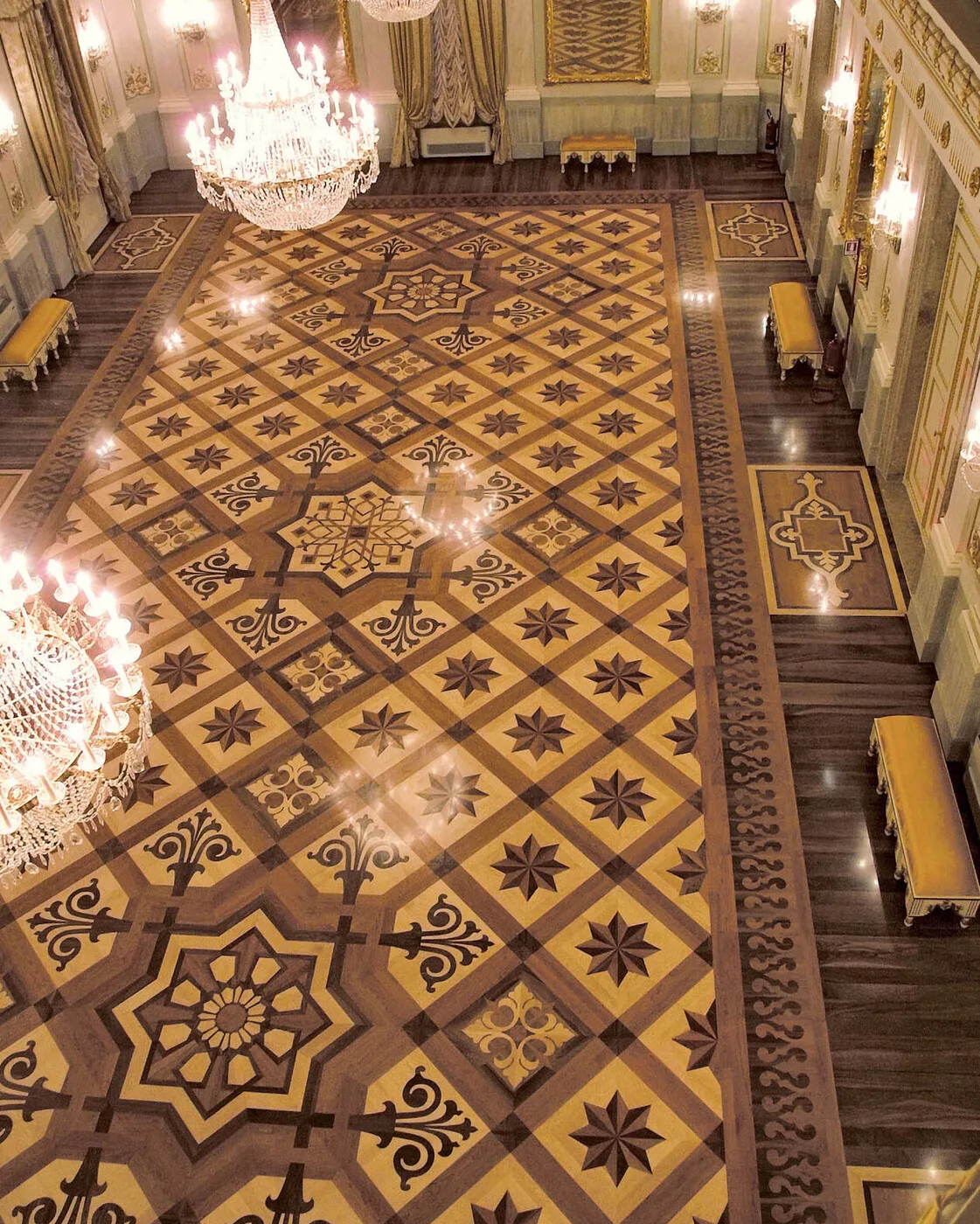
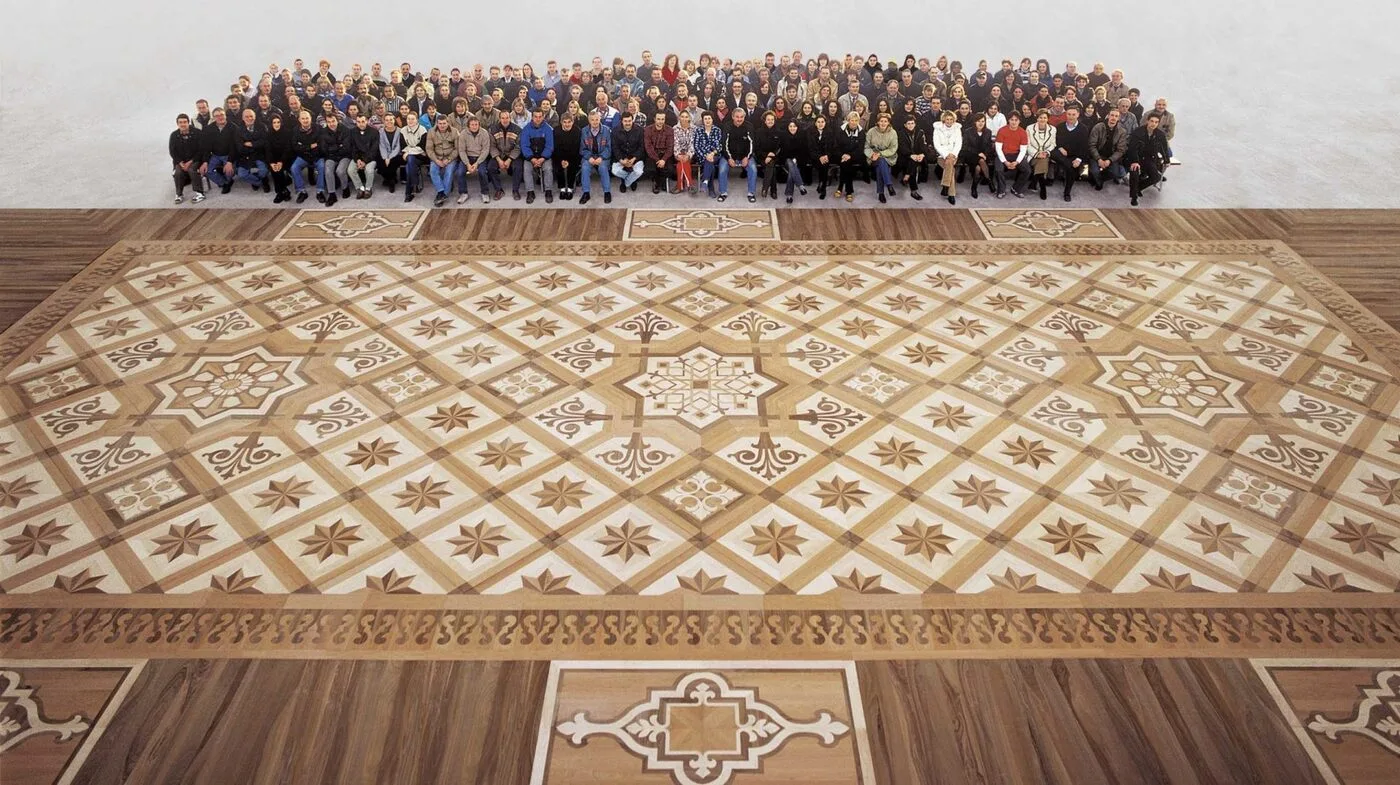
The company Berti says on its website that in 2002 it was commissioned to make the floors of the Apollonian rooms. It says they are an exact reproduction of the originals. It made them from historic decorative drawings, fine woods, photographs and period documents, and laser cutting, according to the company, gave a perfect result.
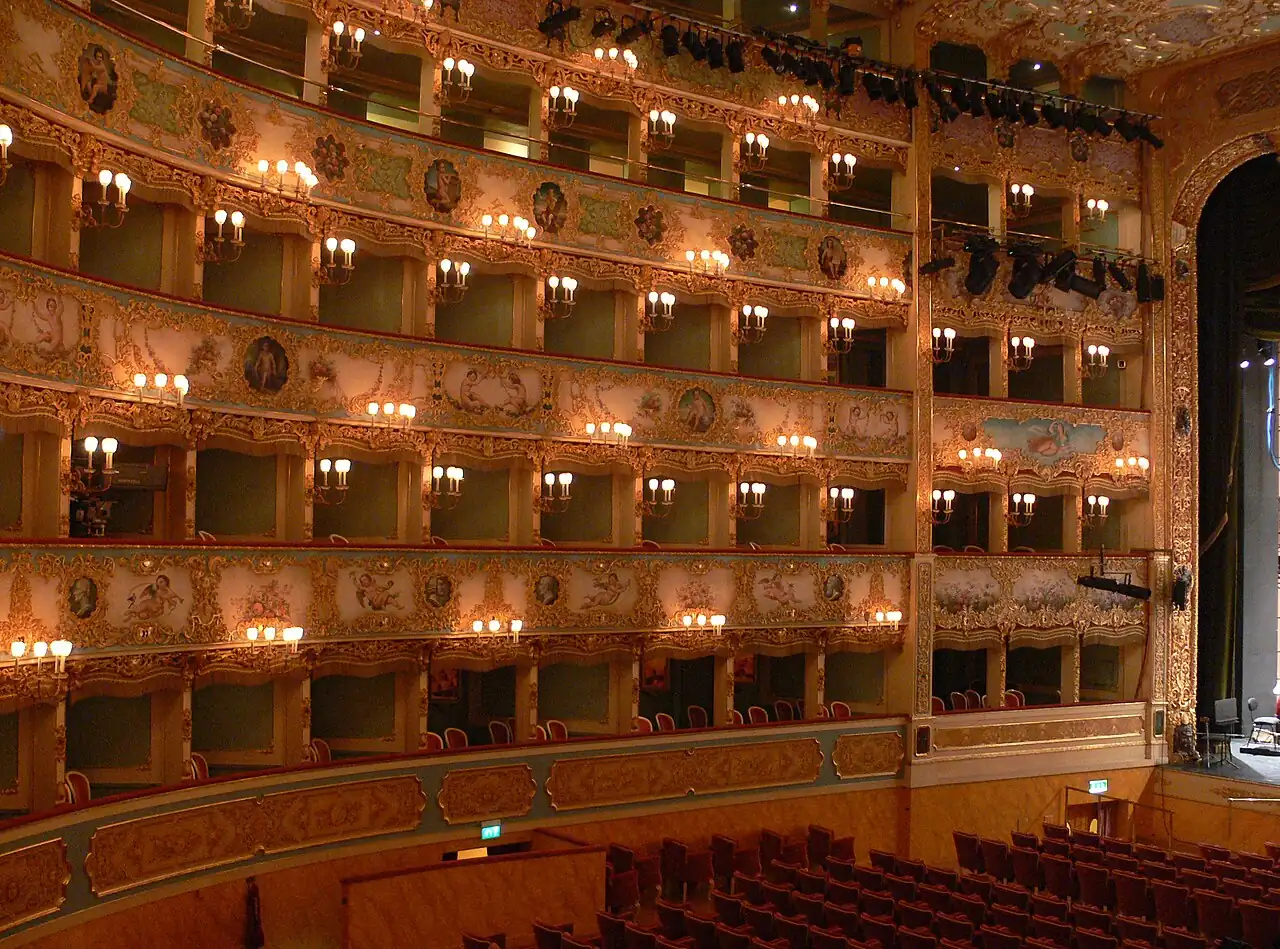
The theater was handed over on December 8, 2003 for the opening week. Berti says that on the 12th, at the evening held to thank the contractors, Giancarlo Berti and his team stood looking at the newly finished floor. Two days later the theater reopened with a concert by Riccardo Muti. Final handover was on May 8, 2004, and the definitive reopening in November 2004, with La traviata.
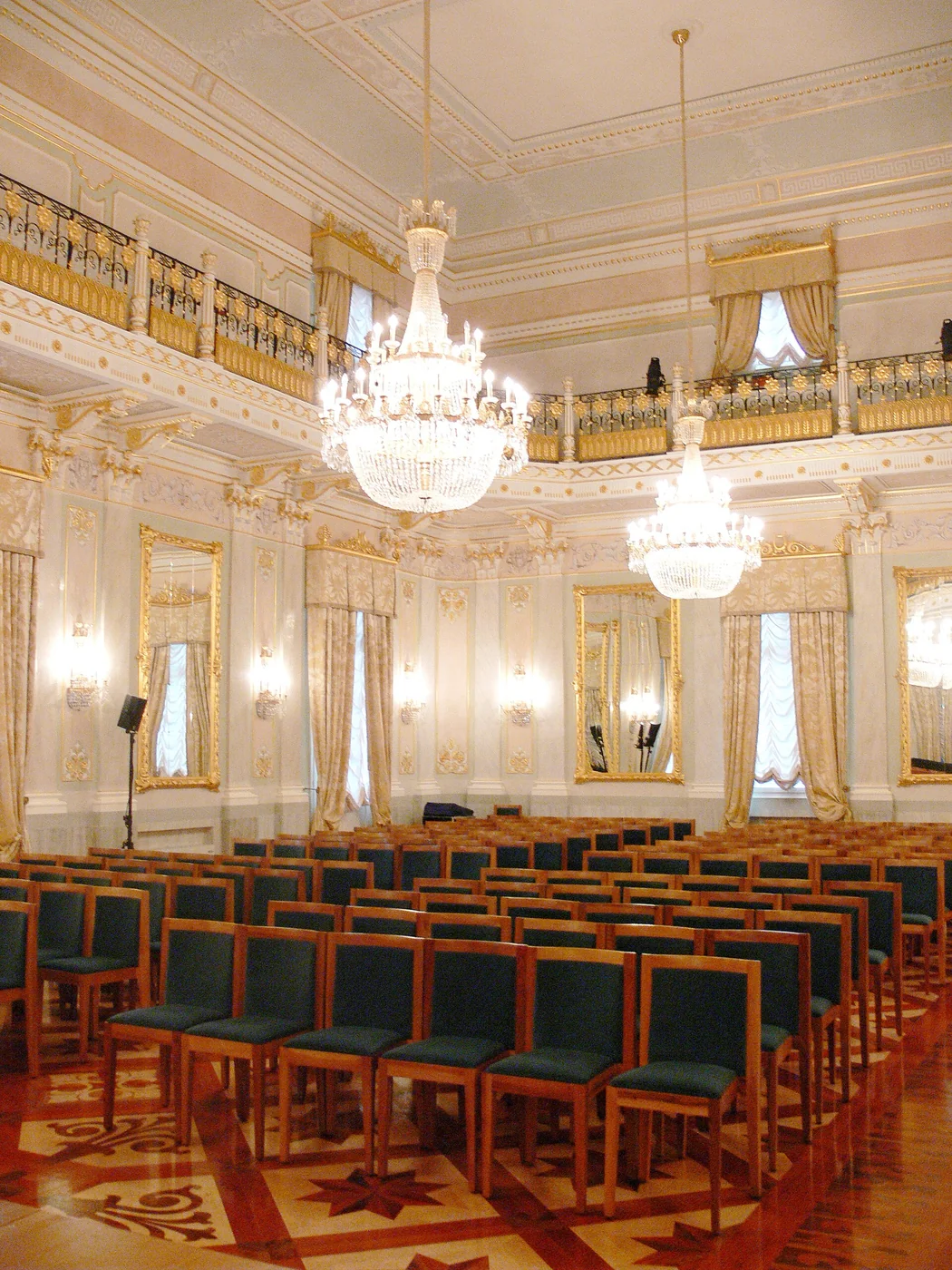
La Fenice in pictures
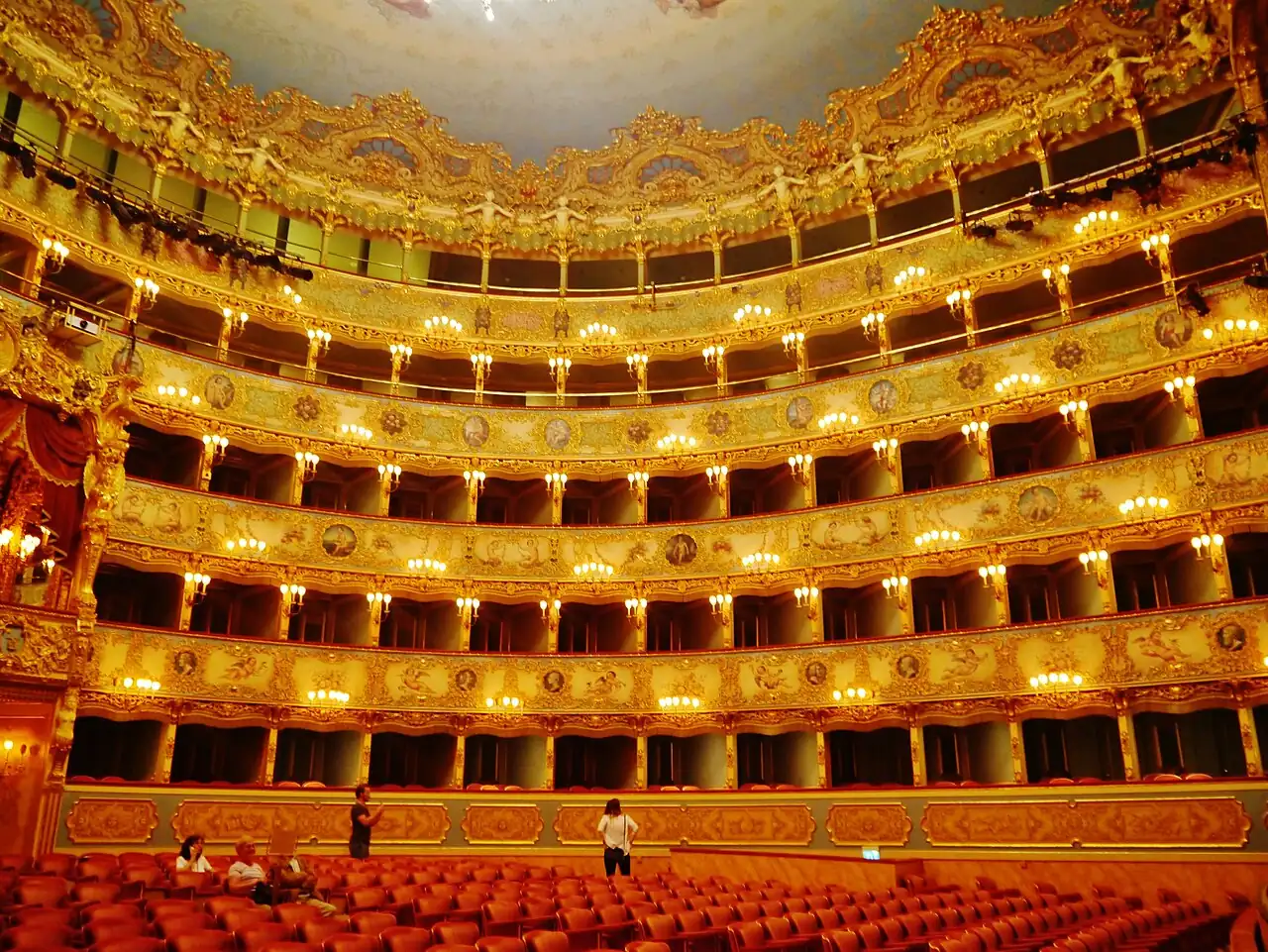
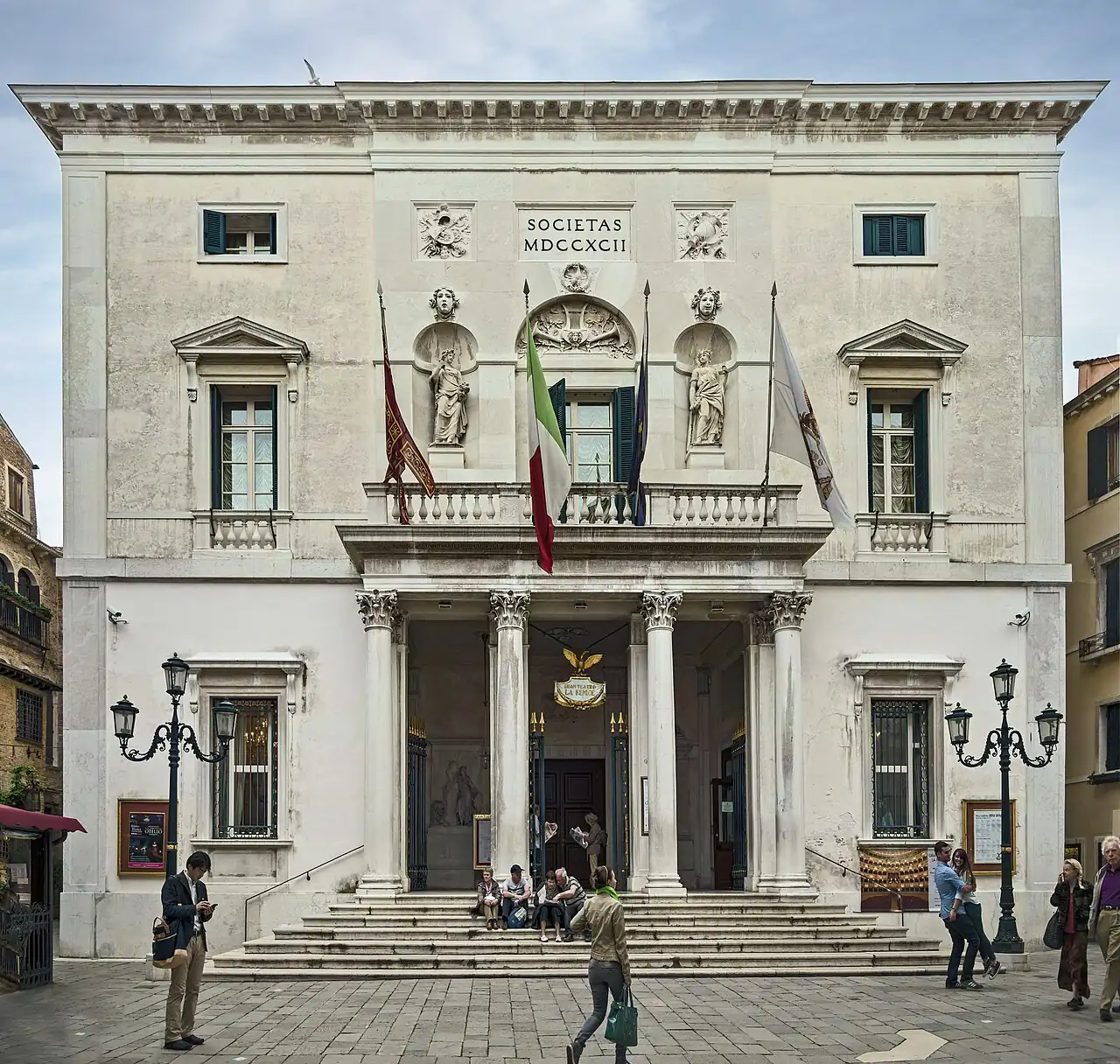
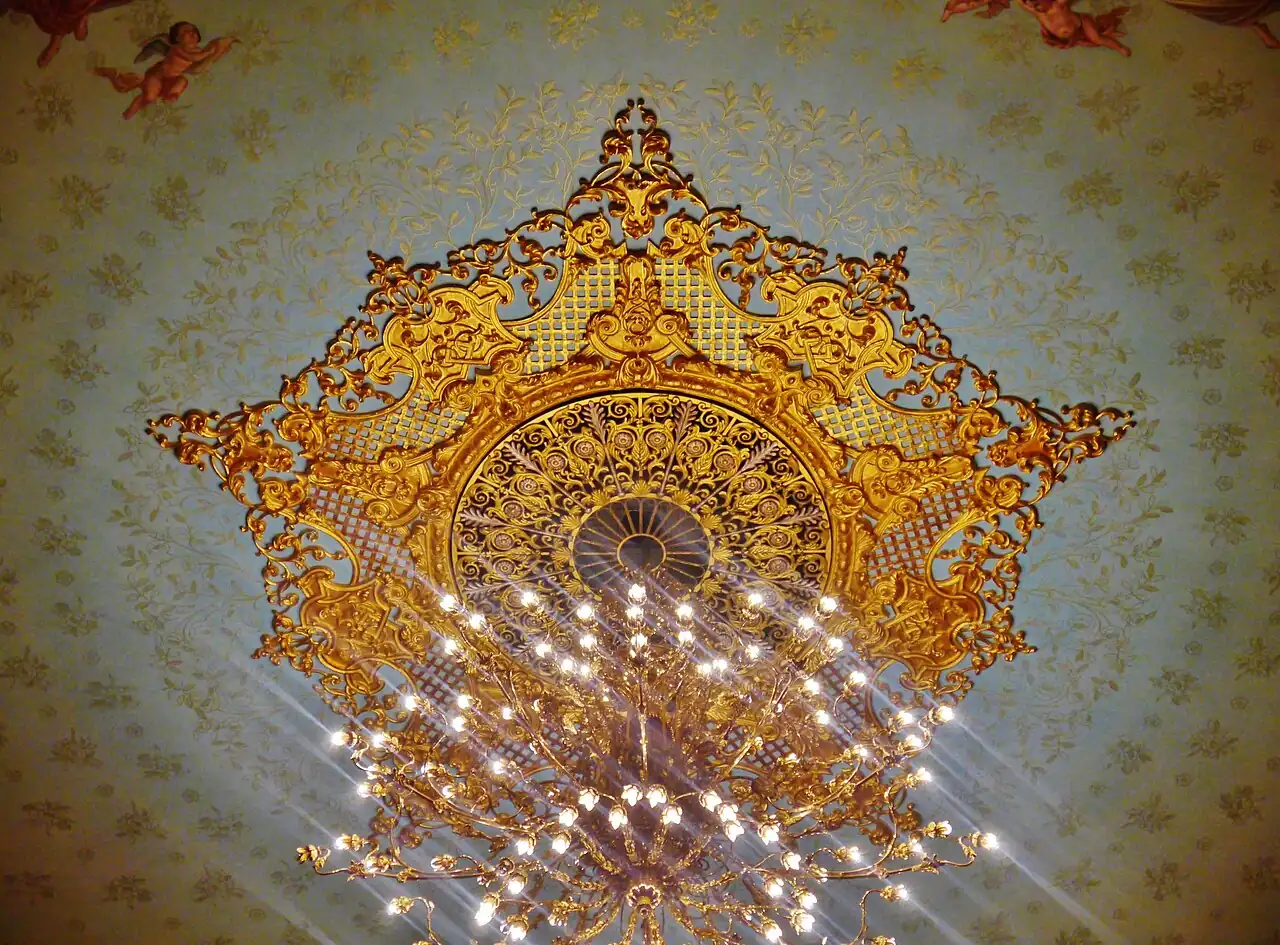
Restoration and reproduction of ornamental parquet
No parquet in the Apollonian rooms was saved: so says Nicola Berlucchi, engineer on the decoration project. Today’s is a reproduction made, according to the company, from photographs and documents of the original. More on historic floors in Historic parquet.
Sources
- Pietro Tessarin, Wikimedia Commons, CC BY-SA 4.0.
- Pietro Tessarin, Wikimedia Commons, CC BY-SA 4.0.
- Berti Pavimenti Legno, berti.net (license not recorded).
- Berti Pavimenti Legno, berti.net (license not recorded).
- Andreas Praefcke, Wikimedia Commons, CC BY 3.0.
- Zairon, Wikimedia Commons, CC BY-SA 4.0.
- Didier Descouens, Wikimedia Commons, CC BY-SA 4.0.
- Zairon, Wikimedia Commons, CC BY-SA 4.0.
- Remi Mathis, Wikimedia Commons, CC BY-SA 3.0.


