
The parquet in the Hall of Mirrors is not from the 17th century. In 2004, 700 m² of parquet from the 1950s were taken up, worn by the passage of some three million visitors a year. In its place a new one was made in new oak. It was patinated in the room itself, that is, its tone was aged, so that it would match the Grand Apartments, according to the VINCI press release; VINCI was the patron of the restoration.
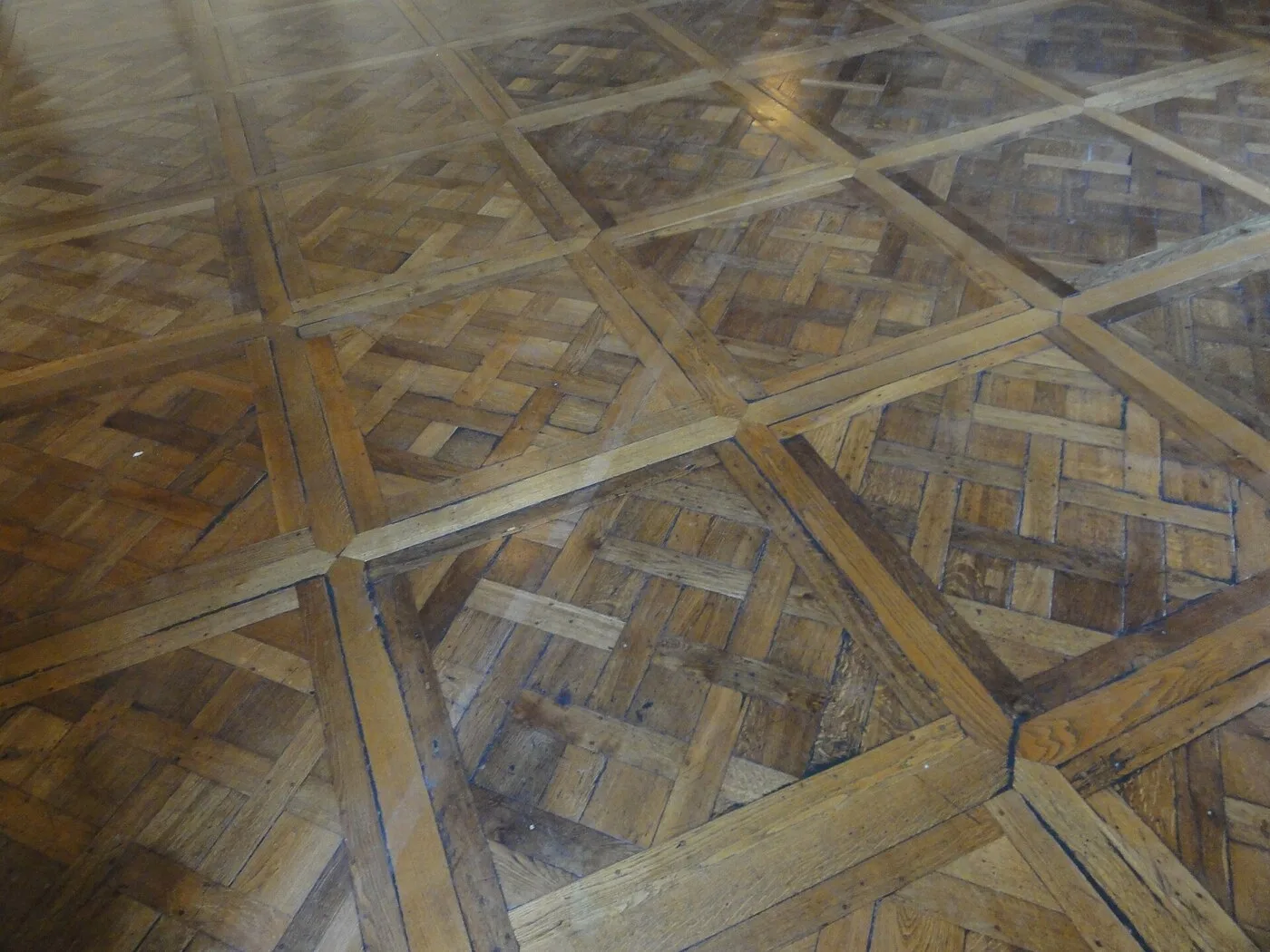
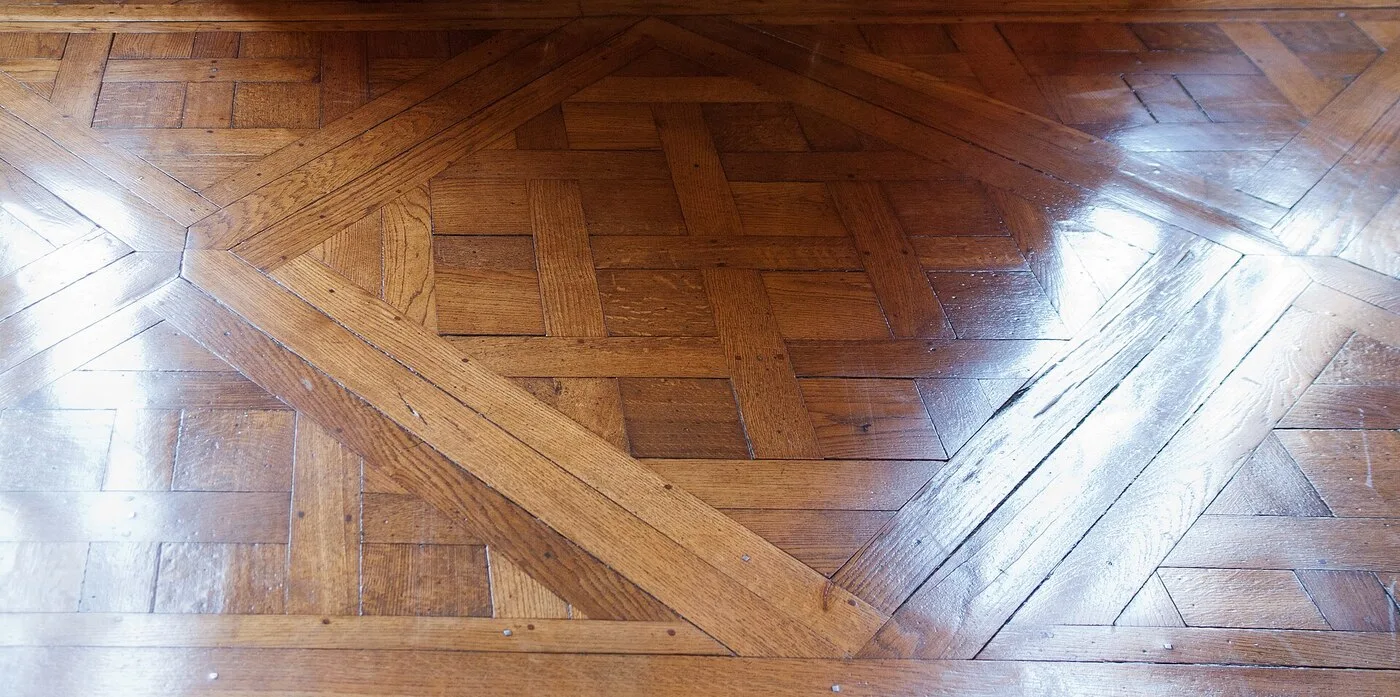
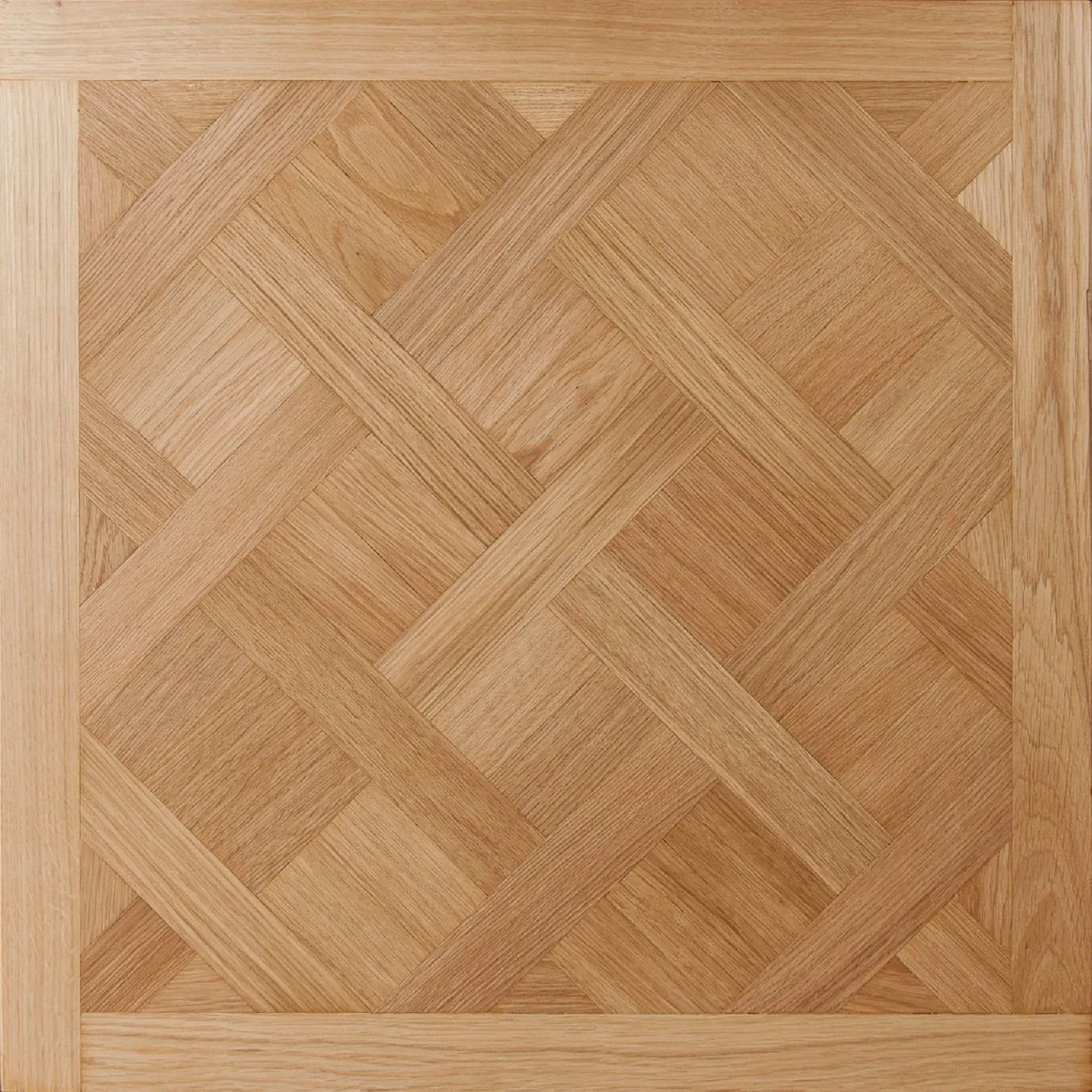
That floor is a “Versailles” parquet, the French name the trade keeps for the square oak panel with a frame and diagonals. On the palace parquets people danced at royal weddings, and a guard was killed during the Revolution. When Louis XV died, one was replaced out of fear of what it might hold. It is one of the 16 cases among the best parquets in the world.
Why marble gave way to parquet
Parquet came to the Grand Apartments because of a cleaning problem. The floors were marble laid in compartments, and water was poured on them to keep them clean. Pierre de Nolhac, who was curator of the palace, records why they were changed in 1684: the water seeped through the joints and rotted the timber of the floor structure. The rooms below were no longer safe, and Louis XIV ordered “parquet de menuiserie” to be laid. The historian Fiske Kimball reaches the same conclusion from the king’s building accounts.
Of the marble, only the door thresholds remained. They lasted until November 1752. The Duke of Luynes noted in his memoirs that they were removed “because they were too slippery,” and that parquet linked to that of the rooms was laid in their place.
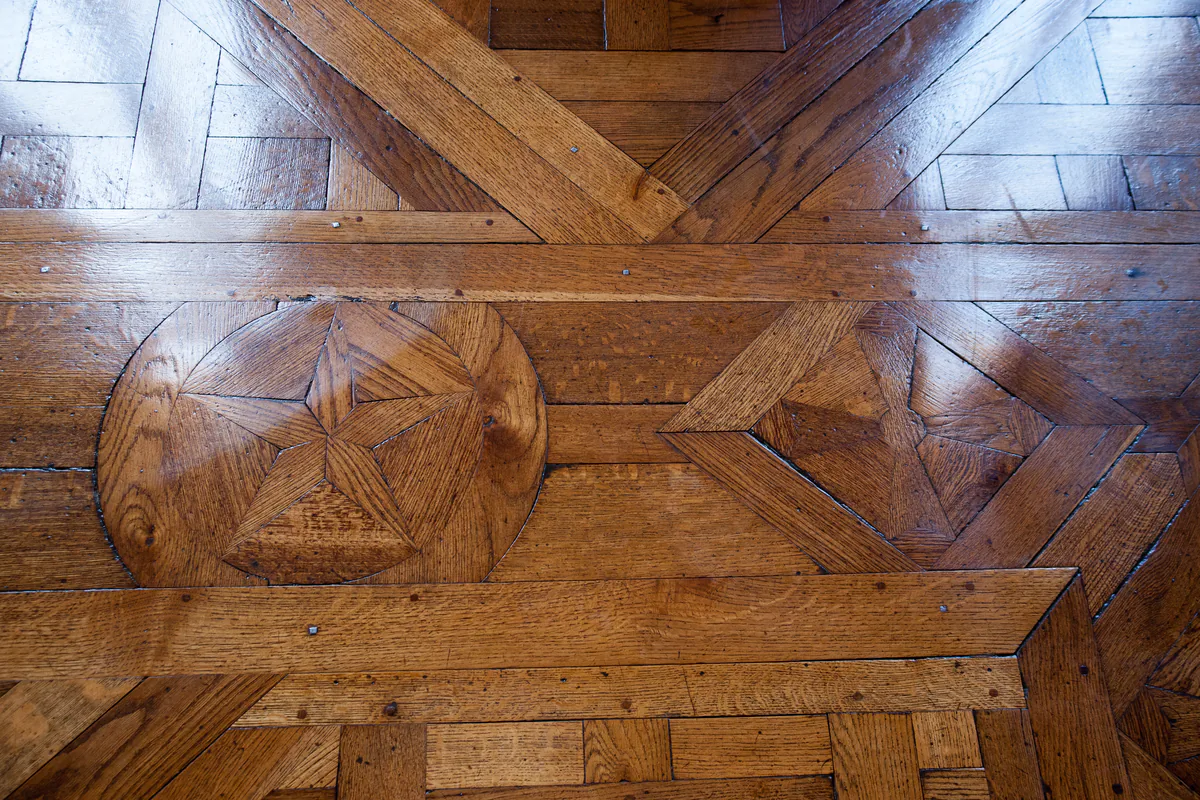
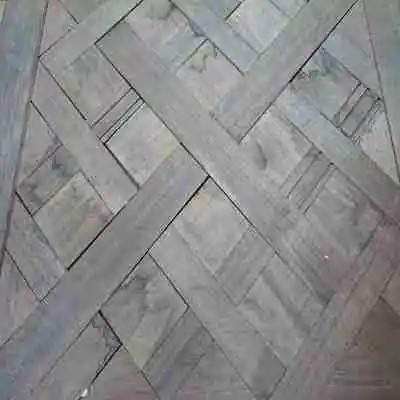
In the 17th and 18th centuries this parquet was called parquet à la française. Each panel is assembled with mortises, which are the holes, tenons, which are the projections that fit into them, and wooden pegs. The antiques dealer Marc Maison counts 42 of each per panel, put together by hand and without glue. The thickness is usually between 2 and 4 cm, and reaches about 5 cm on very damp ground floors.
Each panel measured 1 to 1.3 m per side, a size the same dealer attributes to André-Jacob Roubo in 1770. They were laid on the diagonal over battens and joists, and the finish was wax. They are still made today. Parqueterie Gagnieu describes its panel as solid oak, with pegged tenons and mortises at all four corners and a 45° design inside a frame. It ships it wrapped in polyethylene film so that it keeps its factory moisture content and the strips do not change size.
The Hall of Mirrors
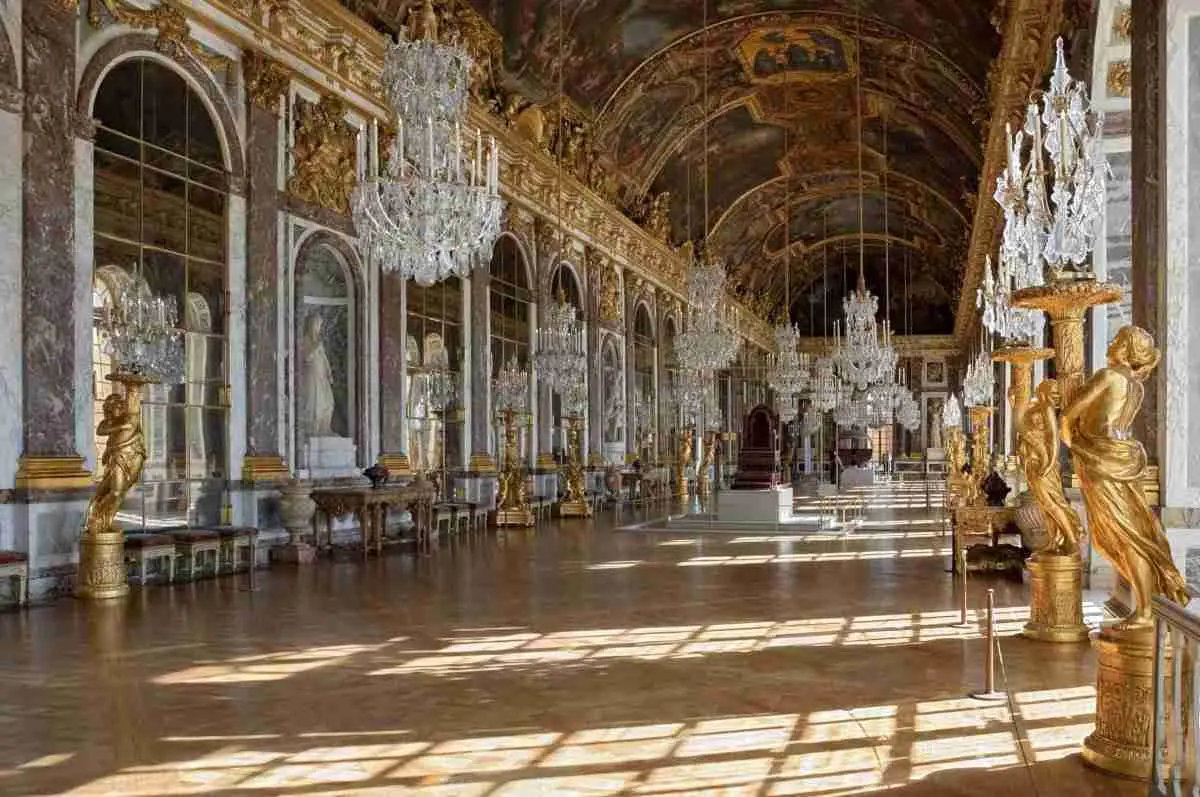
The gallery is 73 meters long and has 17 windows facing 17 arches with 357 mirrors. It was built between 1678 and 1684 in place of a large terrace. The 2004 parquet came more than three centuries after the gallery.
The VINCI press release, dated March 1, 2004, gives two reasons for replacing the 1950s floor. It was very worn, and the technique used to lay it did not respect the traditional joinery of this kind of parquet. The choice was to make an identical one, Versailles type, in new oak. It was made by the Ateliers Saint-Jacques, an art joinery workshop, together with the company Briatte, and the planned schedule ran from March to June.
Taking up the floor also made it possible to reorganize the gallery’s electrical networks, which were hidden under the new parquet. The gallery stayed open to the public throughout the work.
People danced in this gallery. On the night of February 25 to 26, 1745, the gallery hosted a masked ball for the Dauphin’s wedding. Eight guests appeared dressed as yew trees, and one of them approached Jeanne-Antoinette Poisson, the future Madame de Pompadour. The palace tells the scene as an anecdote and says that the yew was, “probably,” Louis XV.
Walking through these rooms had its own technique. The Marquise de La Tour du Pin recalled that, in the queen’s procession through the gallery, no one lifted their feet. They slid over the parquet, “always very shiny,” so as not to step on the train of the lady in front. Nolhac records it.
The room of the storming
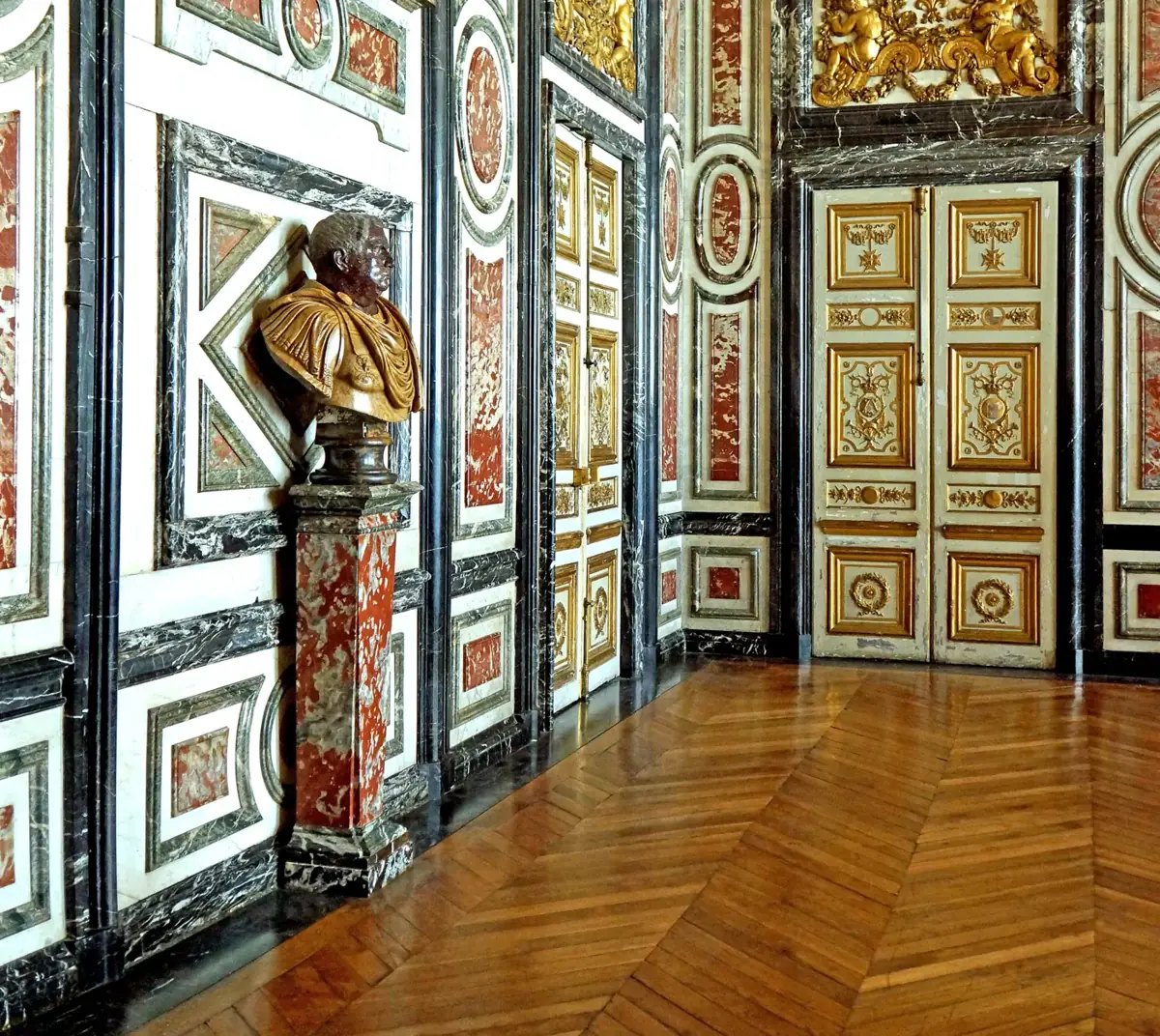
This room was a vestibule with marble walls and floor. In 1680 it became the Queen’s Guard Room and the paving was replaced with parquet. From then on it was full of screens hiding cots, tables and gun racks.
In the early hours of October 6, 1789, the crowd that had marched from Paris entered the queen’s apartment through this room. It killed one of the bodyguards who raised the alarm to save her, according to the palace’s page on the room. Two guards stood before the door of the antechamber and one shouted to the queen’s lady-in-waiting: “Madame, sauvez la reine. On vient pour l’assassiner” (“Madam, save the queen. They are coming to kill her”). Marie Antoinette escaped through a small door in her alcove toward her private cabinets.
The 1978 bomb
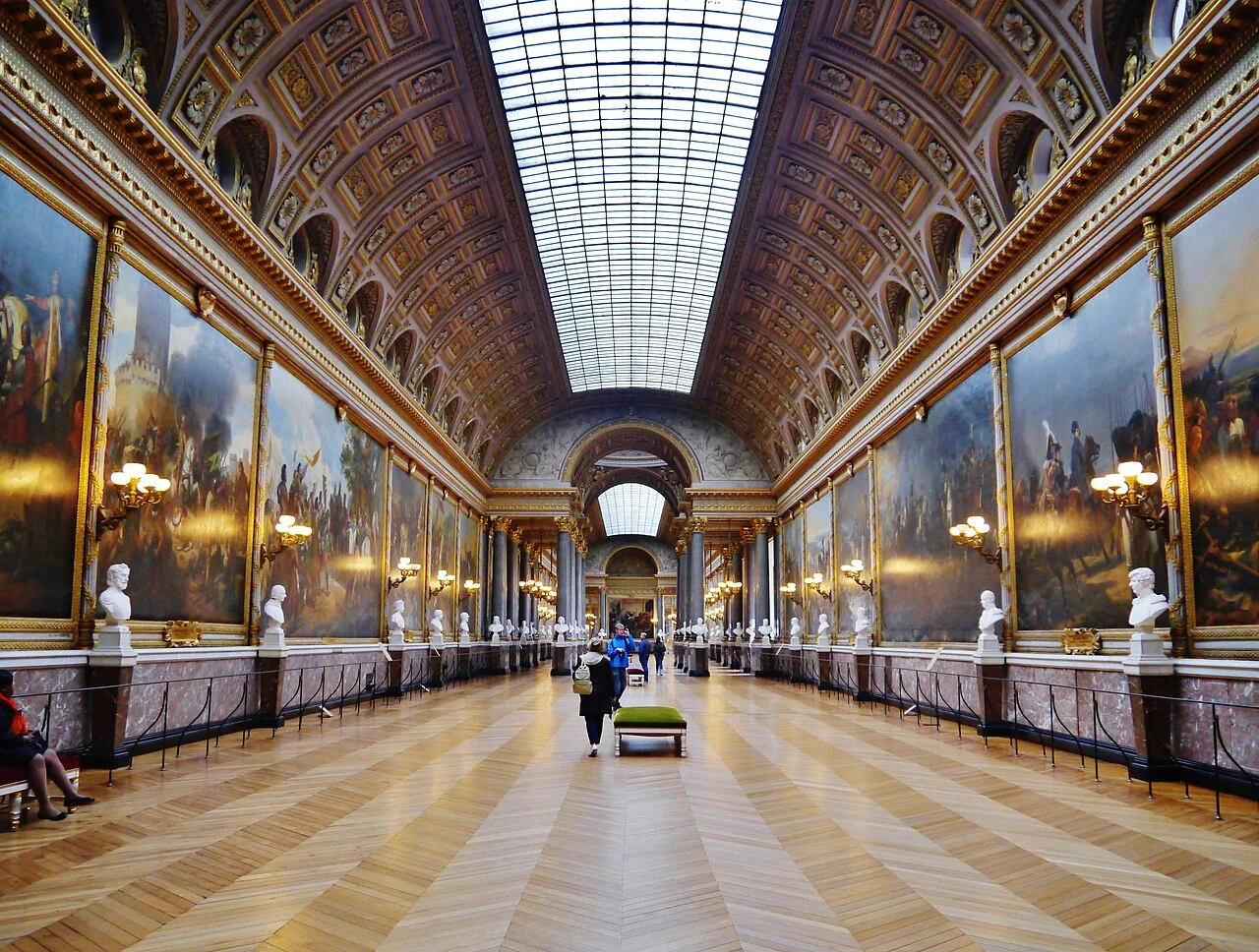
In 1978 the palace suffered violence again. On the night of June 25 to 26 a bomb planted by a Breton separatist group exploded and damaged about ten rooms. Part of the floor of the Gallery of Battles caved in, according to the French audiovisual archive INA.
A floor raised by winches
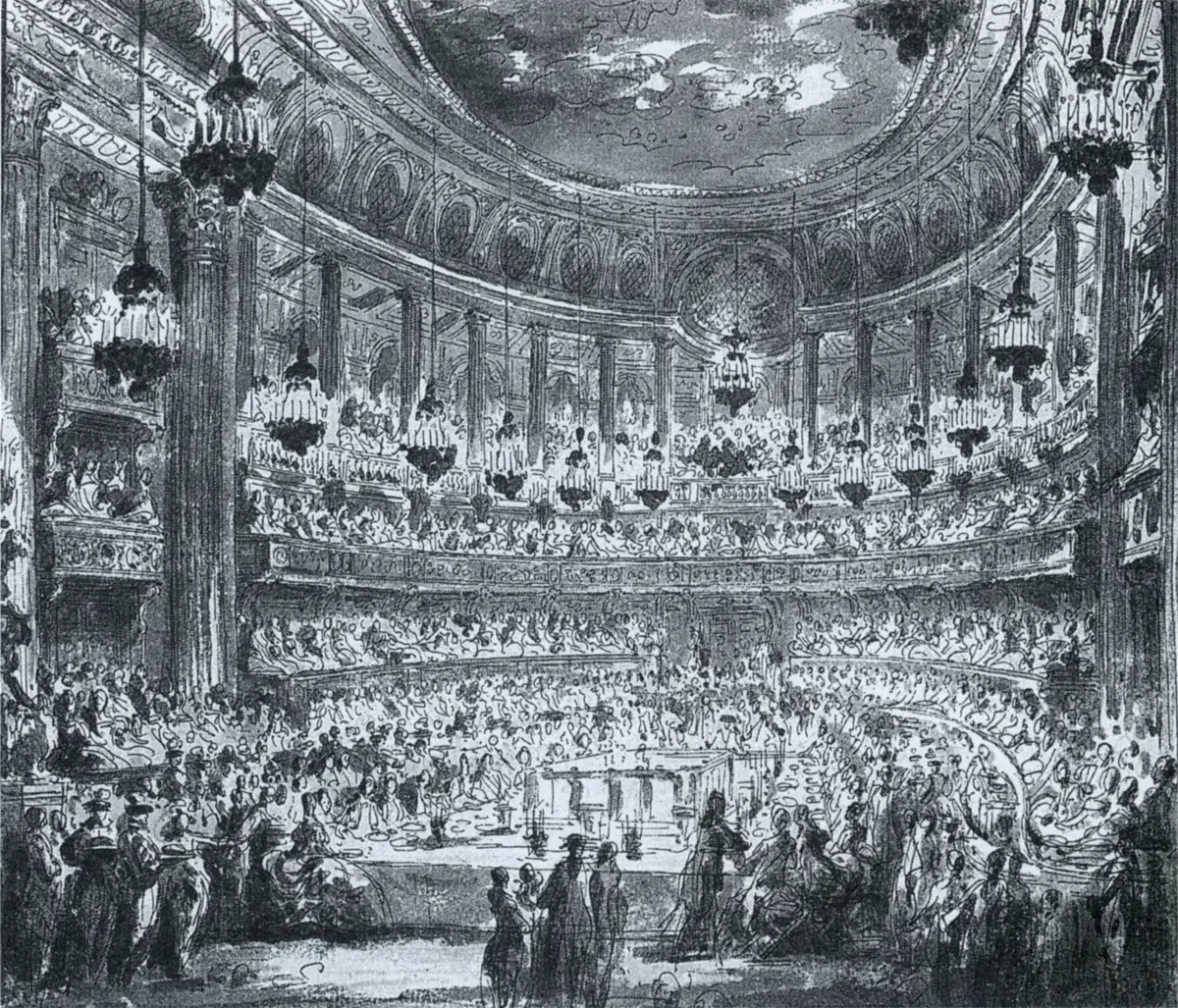
The Royal Opera opened on May 16, 1770 with the wedding banquet of the Dauphin and Marie Antoinette. To turn the theater into a ballroom, the stage machinist Blaise-Henri Arnoult designed movable floors driven by winches that raised the stalls to the level of the stage.
The result was a continuous floor more than 45 meters long, from the entrance to the back of the stage. Setting it up took almost two days of work, and the room was used only about forty times before the Revolution, according to the palace’s page. The same page calls the restoration finished in 1957 a “disaster for the stage.”
On October 1, 1789 this room hosted the banquet of the bodyguards, with 210 guests and wine in abundance. The gazettes painted it as an orgy and reported that the tricolor cockade had been trampled. The palace treats this as a rumor, but that rumor helped spark the march on Versailles.
A floor to walk on in slippers
The apartment of the Grand Dauphin, Louis XIV’s eldest son, ended in the Cabinet des Glaces. His contemporaries considered it the masterpiece of the cabinetmaker André-Charles Boulle. Walls and ceiling carried marquetry panels of tortoiseshell, brass and copper with inset mirrors.
The floor was a wood marquetry parquet, begun by the cabinetmaker Pierre Gole and finished by Boulle, decorated with the monograms of the Dauphin and Dauphine. It was so fragile that visitors had to wear slippers, according to the palace’s official leaflet on the Grand Dauphin.
Two thirds of the present second antechamber of the Dauphin were that cabinet. In 1747 the room was enlarged and its decoration was removed and replaced with plain wood paneling. The official page mentions the marquetry floor, but does not say what became of it.
The parquet that keeps an old floor plan
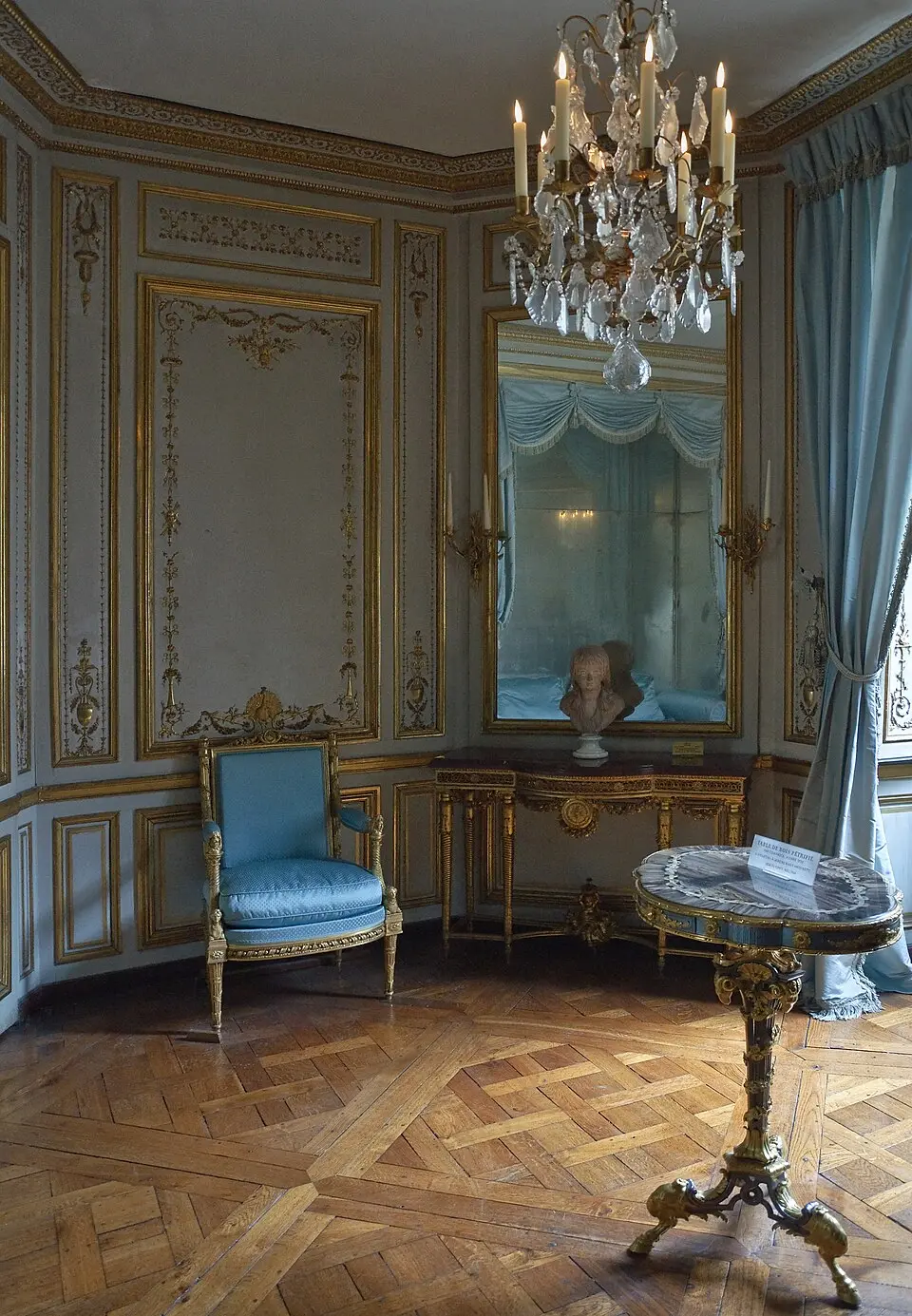
Marie Antoinette had been queen for five years when, in 1779, she asked for her library to be renovated. The one she had set up as Dauphine in 1772 had already been enlarged in a hurry. The parquet design still follows the outline of the earlier library, according to the palace’s press kit on the queen’s private cabinets. The decoration seen today dates from 1781.

The king’s floor polishers
So much parquet called for labor. In 1702, L’État de la France lists an “ordinary polisher of the king’s chamber and cabinets,” Simon Colasse, nicknamed la Branche. He was paid 540 livres a year from the king’s privy purse. Two master polishers shared, with other helpers, part of the money left by the gaming tables in the apartments.
The job consisted of coloring the parquet, waxing it and keeping it shiny. According to the definition by the Abbé Jaubert quoted by Alfred Franklin, it was done with a stiff brush strapped to the instep with a wide leather strap.
When Louis XV died of smallpox in May 1774, the architect Gabriel signed a works order to treat the rooms of the king’s apartment that “might have contracted poison.” Some were washed and whitewashed; in the small alcove, the order called for a new parquet to be laid, according to the document Nolhac publishes.
Today the palace still waxes. Its 2019 activity report describes an emulsion of natural waxes and resins that keeps the parquet from whitening, applied every one or two months in the visitor rooms.
The same panels, from the gallery to the cabinet
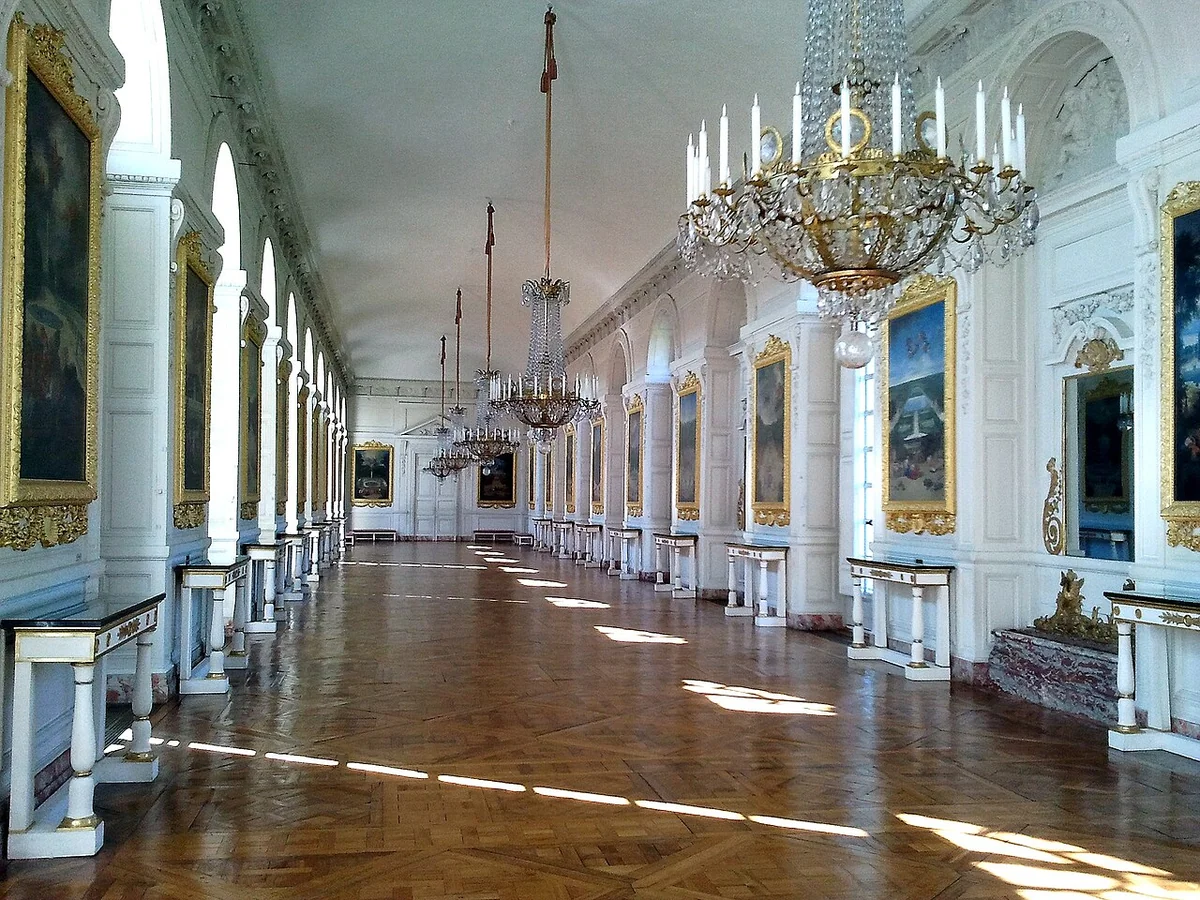
Panel parquet is repeated in the Grand Trianon, the Petit Trianon, the Grand Cabinet of the Dauphin and the Cabinet de la Méridienne. The scale of the room changes, not the design of the panel.

Restore or replace
A parquet maintained with wax, like those at Versailles, cannot be switched to varnish in patches: to change the finish the whole surface has to be sanded. In Marie Antoinette’s library, moreover, the design follows the outline of the pre-1779 room, and laying new panels would erase that trace. A similar case: Italian oak parquet tiles restored in Almagro.
Versailles in pictures
Historic parquet and panel floors
If you have a French-assembled panel parquet at home, we tell you on site what can be kept of it. More on this work in Historic parquet.
Sources
- Trizek, Wikimedia Commons, CC BY-SA 3.0.
- Fanny Schertzer, Wikimedia Commons, CC BY-SA 3.0.
- Myrabella, Wikimedia Commons, CC BY-SA 3.0.
- Dennis G. Jarvis, Wikimedia Commons, CC BY-SA 2.0 (crop).
- Zairon, Wikimedia Commons, CC BY-SA 4.0.
- Drawing by Jean-Michel Moreau (1770), public domain, Wikimedia Commons.
- Coyau, Wikimedia Commons, CC BY-SA 3.0 (crop of a 360° photo).
- Jmpoirier1, Wikimedia Commons, CC BY-SA 3.0.
- Fanny Schertzer, Wikimedia Commons, CC BY-SA 3.0.
- Fastily, Wikimedia Commons, CC BY-SA 3.0.
- Myrabella, Wikimedia Commons, CC BY-SA 3.0.
- ParkSinta archive.
- ParkSinta archive.
- Luis Miguel Bugallo Sánchez (Lmbuga), Wikimedia Commons, CC BY-SA 4.0.
- Jebulon, Wikimedia Commons, CC0.
- Moonik, Wikimedia Commons, CC BY-SA 3.0.
- Myrabella, Wikimedia Commons, CC BY-SA 3.0.


