
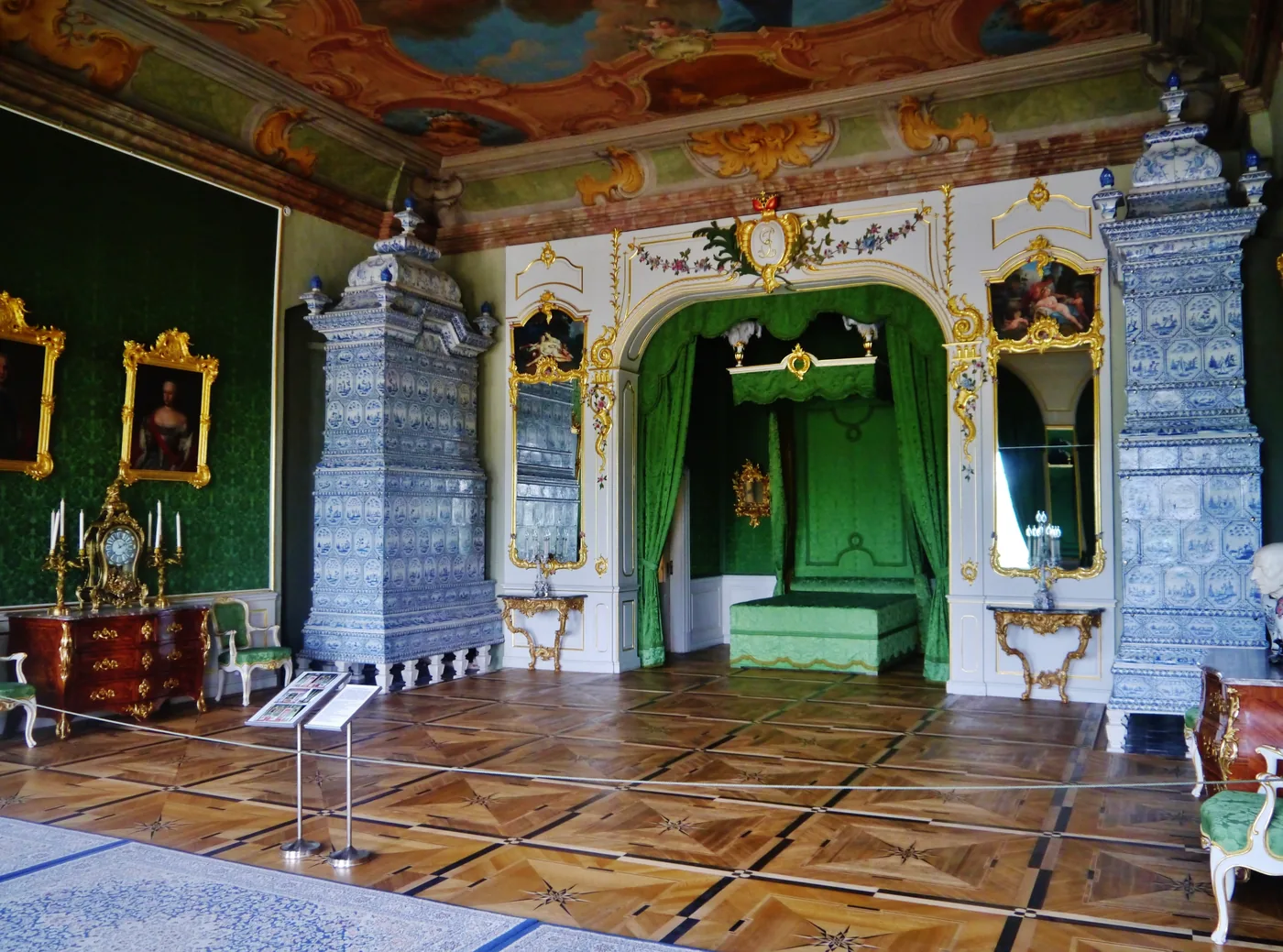
The parquet in the Duke’s State Bedroom at Rundāle (Latvia) was made in 1739 by the carpenter Johann Baptist Eger to a design by Rastrelli. The palace museum calls it the most complex in the house and the most important Baroque parquet in Latvia. It survived the duke’s fall in 1740 and the grain stored in the room in the 1940s. Its restoration was not finished until 2005. The rest of the palace has a bit of everything: parquet that came through intact, restored parquet, remade parquet and new parquet. It is one of the 16 cases in the best parquet floors in the world.
Thirteen oak parquets and a halted project
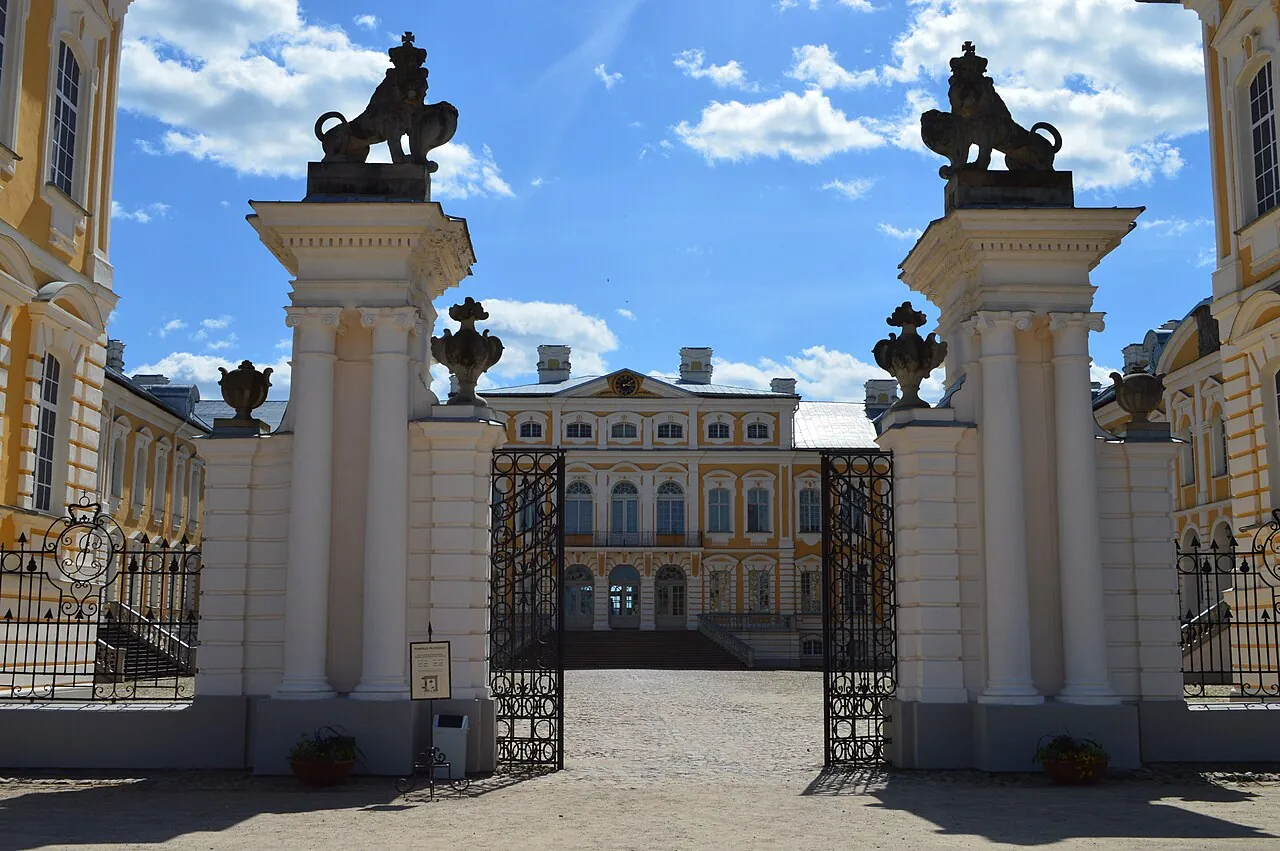
Ernst Johann Biron, favorite of Empress Anna Ivanovna, bought Rundāle in 1735 and commissioned the palace from Francesco Rastrelli. Work began in 1736, and the following year Biron was elected Duke of Courland.
By 1738 the master carpenter Eger had finished the oak paneling for 33 rooms and 13 oak parquets. The following year the duke had the pieces meant for Rundāle taken to Jelgava, his main residence: carved doors, paneling, parquets and stoves.
In November 1740, a month after the empress died, Biron was arrested and exiled for life. The materials that had been prepared were sent to St. Petersburg, and part of what was already installed at Rundāle, doors, paneling and parquets, was torn out.
Few floors remain from the first phase. In the state apartments two decorative parquets survive in part, along with oak paneling and doors. The room records date two to 1739: the one in the State Bedroom and the one in the Rose Room.
Biron regained the duchy in 1762, and work resumed in 1764 with Rastrelli in charge again. The stuccowork by Johann Michael Graff, done between 1765 and 1768, belongs to this second phase, as does most of what can be seen today.
The two 1739 parquets
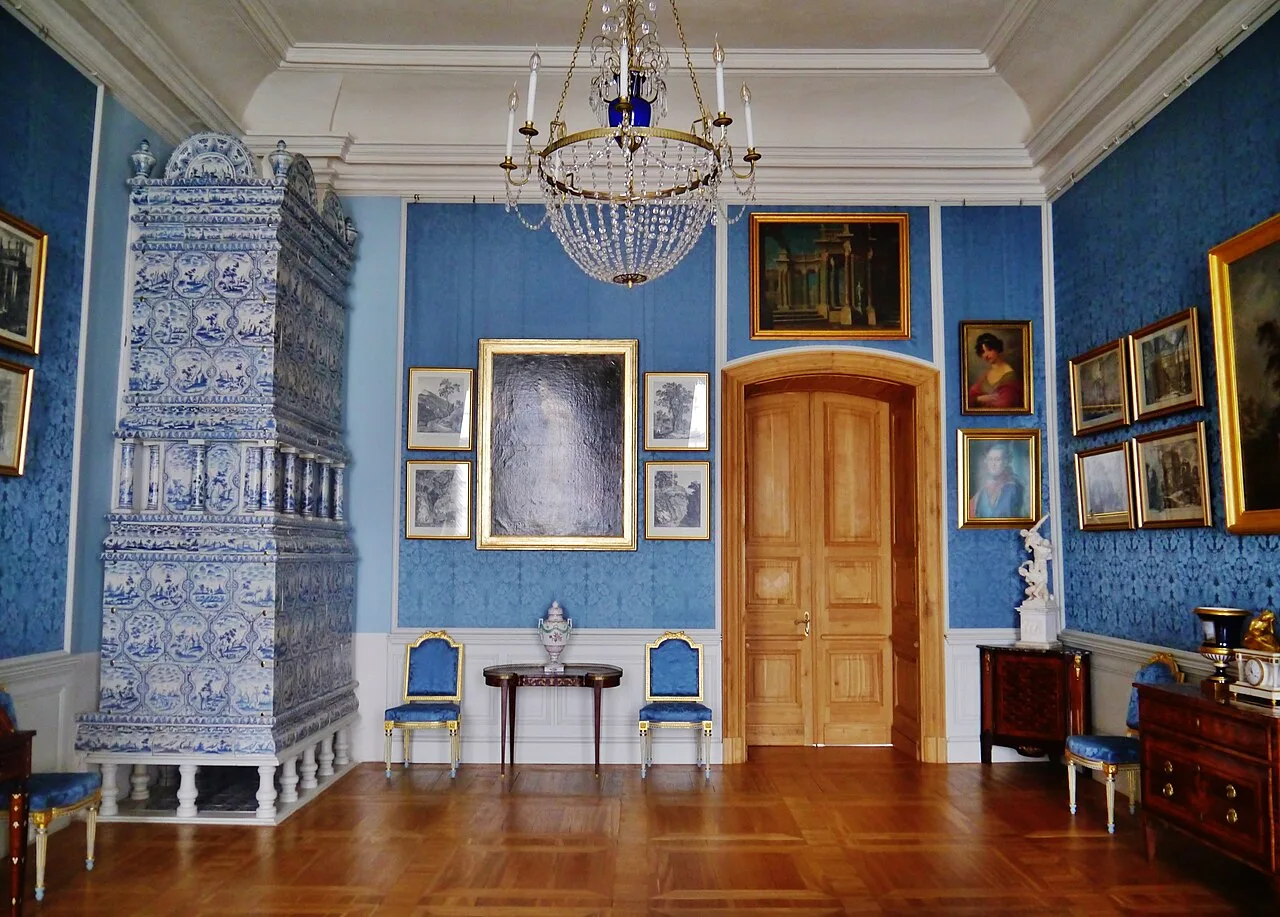
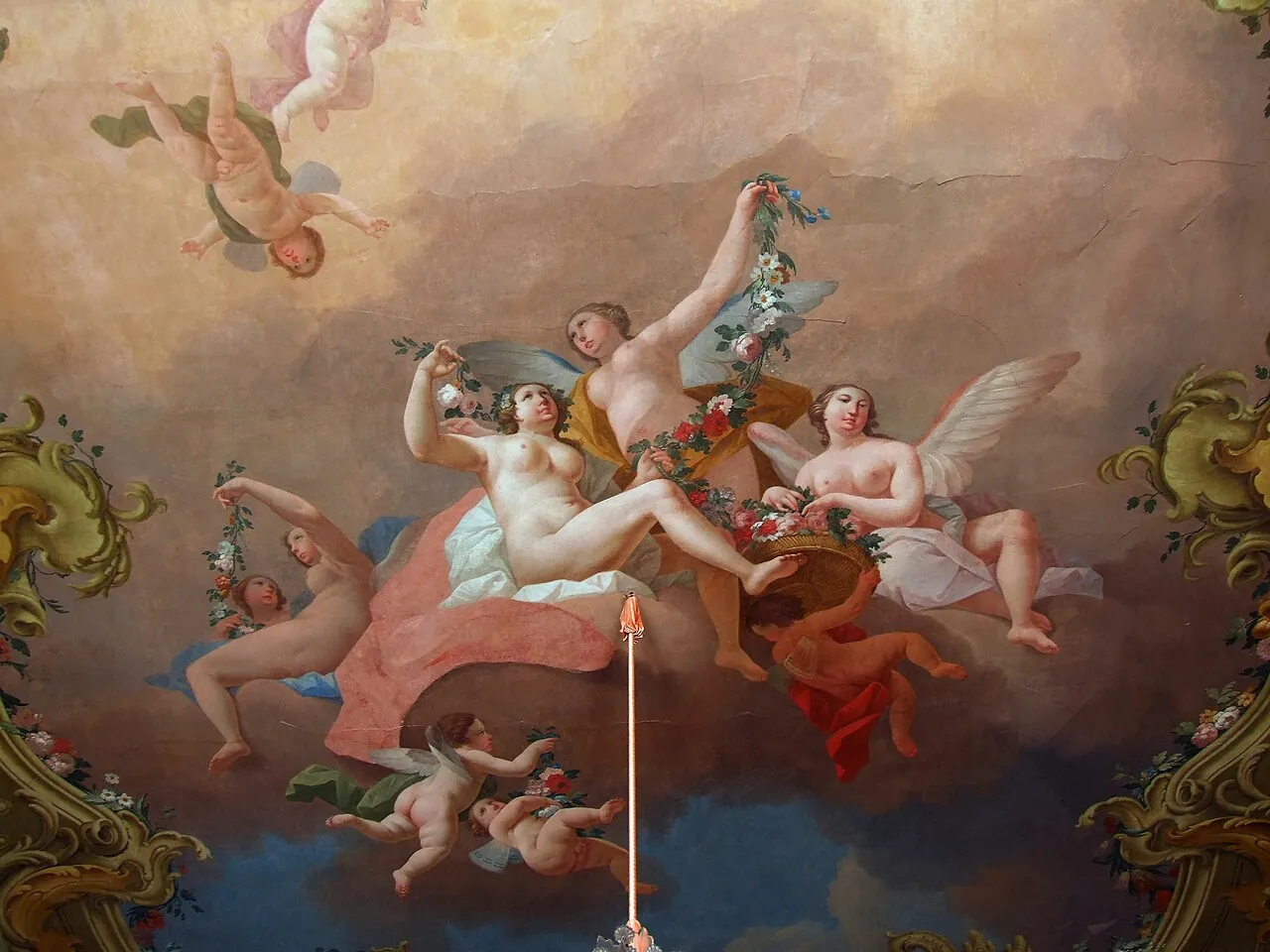
The Duke’s State Bedroom (Hercoga parādes guļamistaba) is the room where the two phases of the project collide. Before the duke’s fall, the parquet and the two stoves painted in cobalt blue, made in 1740 by the ceramicist Gottfried Kater of Danzig, were finished. The painted ceiling and the alcove with gilded carvings date from the 1760s.
The parquet was made in 1739 by Johann Baptist Eger, from a sketch by Rastrelli, in marquetry of several woods. It is a floor of large squares framed by dark bands, with a pointed star in the center of each one. The grain changes direction in each quarter of the square, and each quarter reflects the light in a different tone.
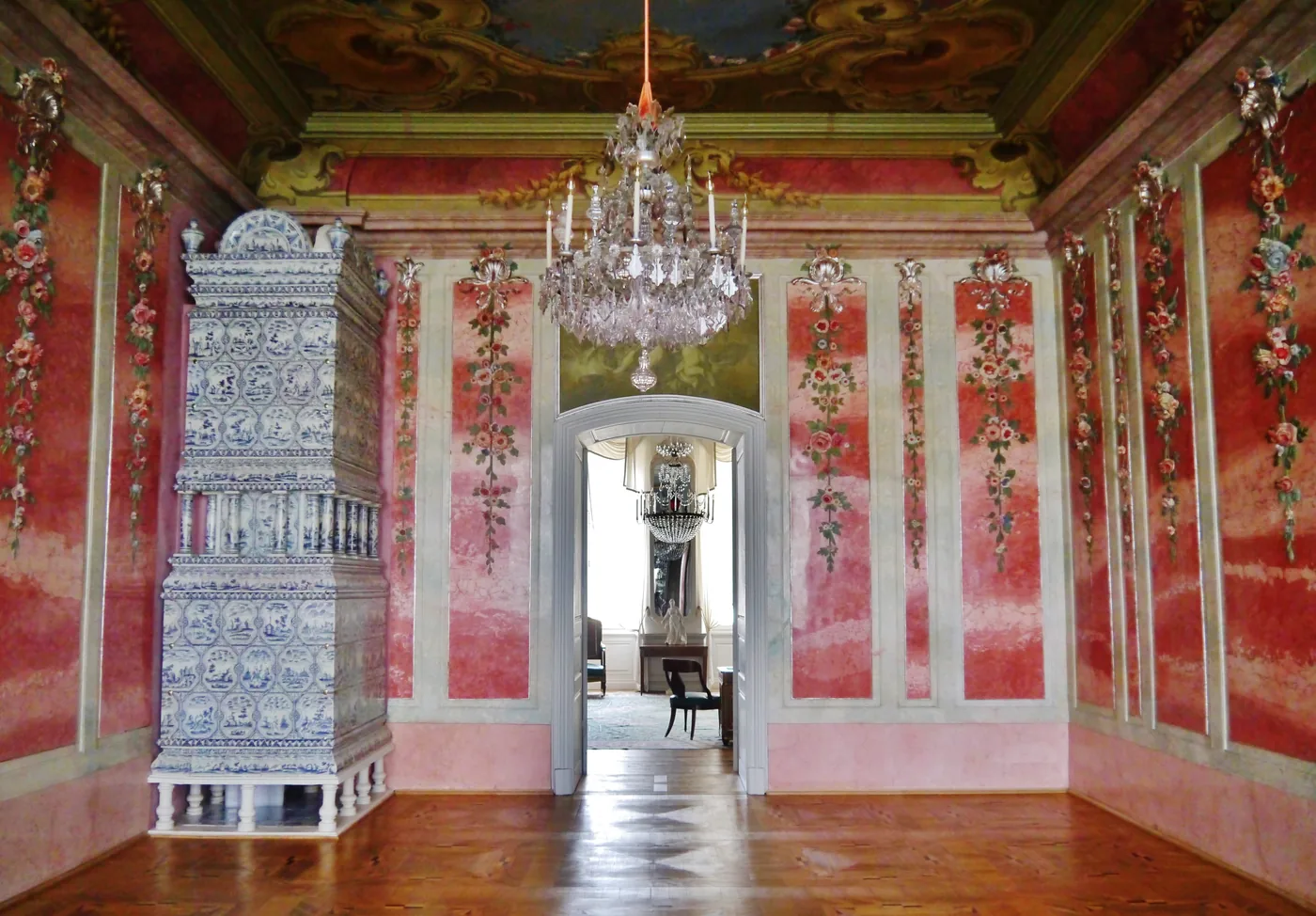
The Rose Room (Rožu istaba), next door, also keeps its 1739 parquet from the first phase. It takes its name from the stucco garlands of roses on the walls. In the photo the parquet looks reddish, with small dark pieces scattered across the surface.
The grain store and the 2005 restoration
The two 1739 floors reached the restoration badly damaged. The museum gives three causes: the materials and the marquetry in different woods, and the grain as well. Both rooms were used as grain stores in the 1940s. Each wood shrinks and swells at its own rate, and in a marquetry parquet that opens joints and lifts pieces when the humidity changes.
The bedroom also lost almost all of the alcove in 1919, when Bermondt-Avalov’s army wrecked the palace. The panels with gilded carvings were remade from a 1912 photograph. The restoration of the parquet was not finished until 2005, paid for by Prince Ernst Johann Biron von Curland, who bears the duke’s name. The Rose Room had been finished earlier, in 1986.
Billiard room and dining room: the school gym
From 1923 the palace housed the parish school, which stayed there until 1978. Of the twenty rooms that still had parquet, none was in good condition. The worst were the duke’s dining room and the Billiard Room (Biljarda zāle), where the pupils had their gym class.
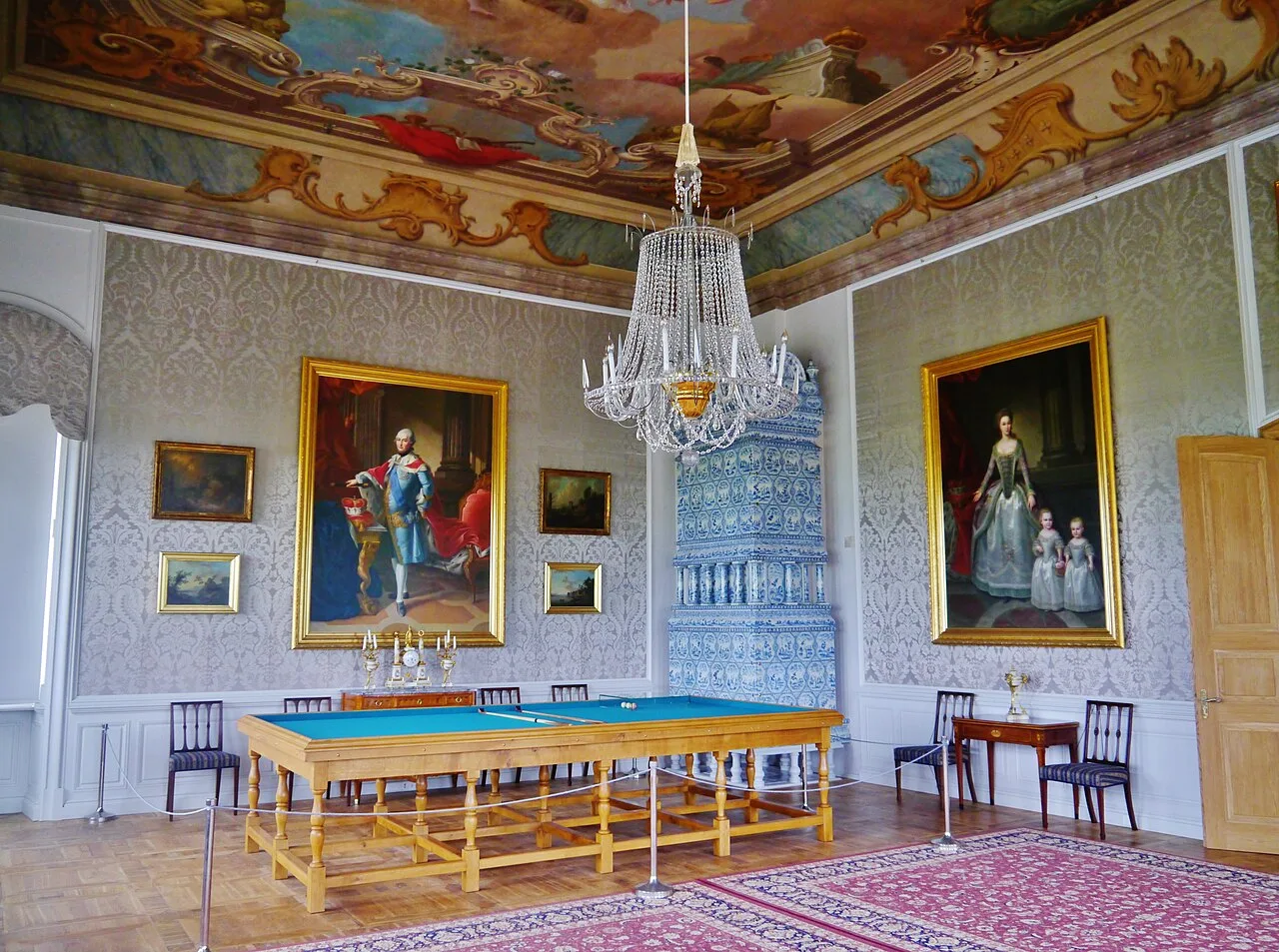
The Billiard Room parquet dates from the 1760s, from the second phase. It is made of small squares of parallel strips, with the grain alternating from one square to the next, and it surrounds the carpet under the table. The room’s restoration was finished in 2011, with money from the Boris and Ināra Teterev foundation.
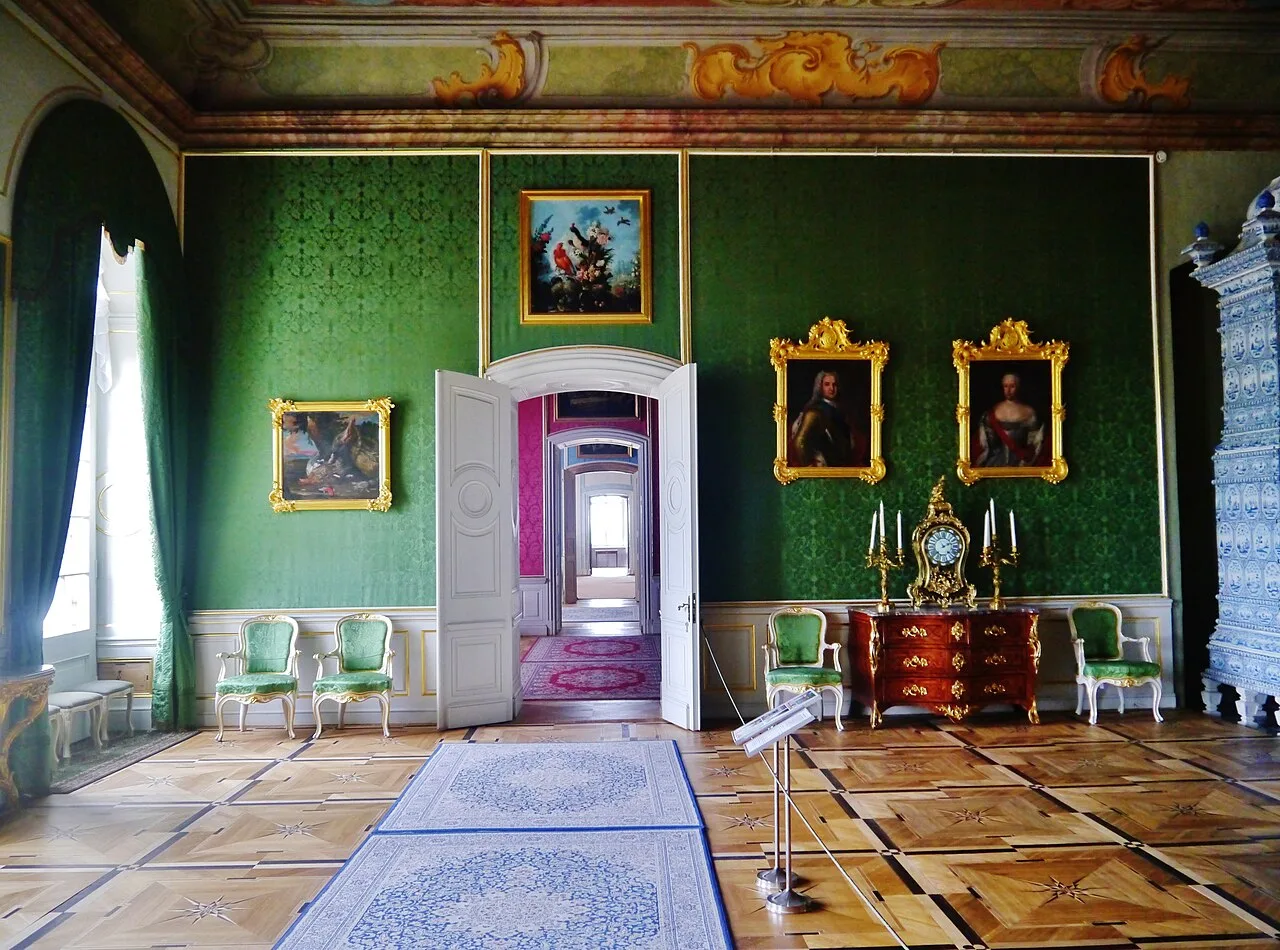
The duke’s dining room is the Marble Hall (Marmora zāle), with artificial marble walls finished in 1767. The museum closed it to visitors in February 2014 to restore its parquet, and the work was declared finished that same year. Between the runner carpets you can see a parquet of squares with crossed pieces.
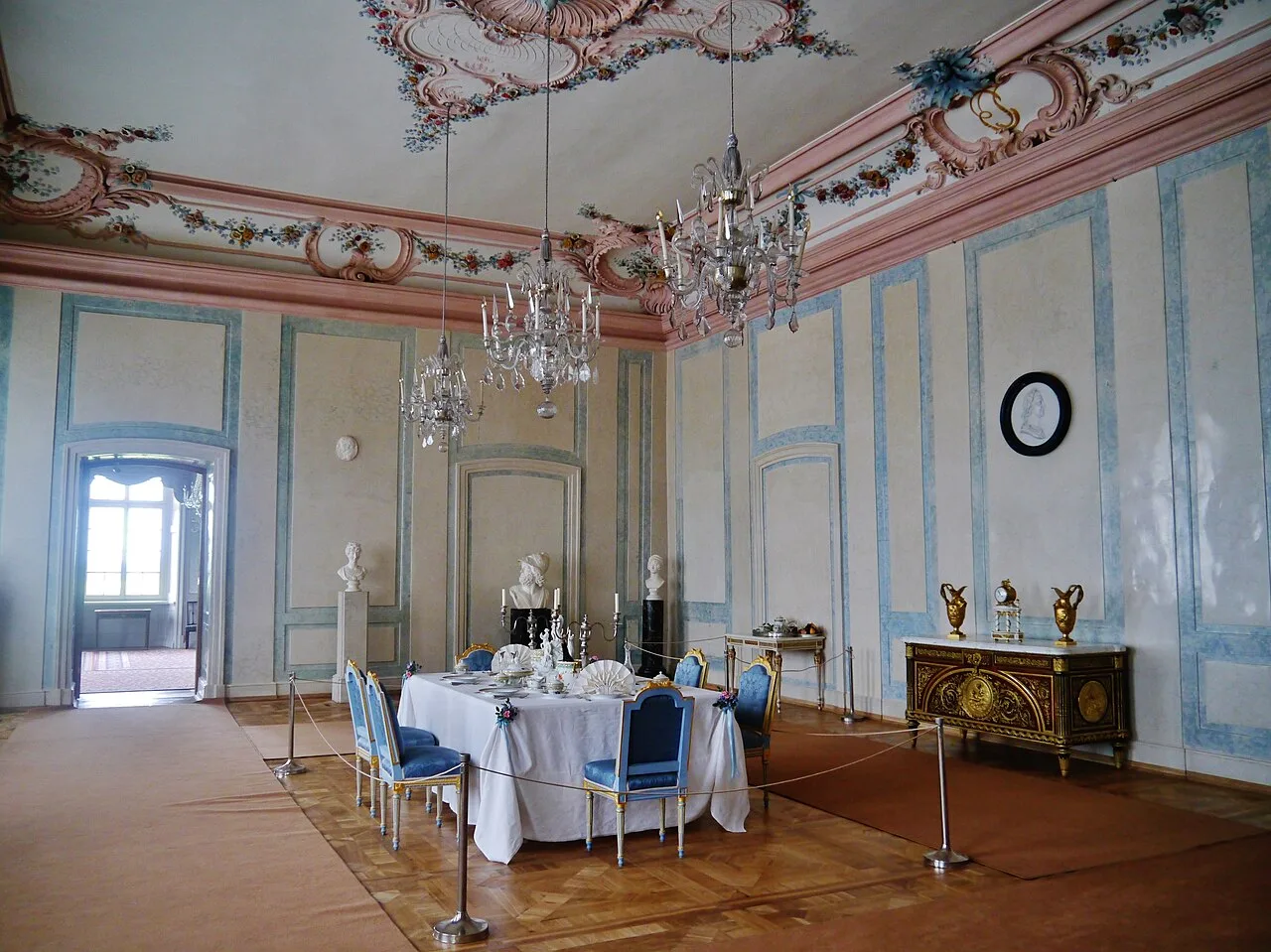
The Gold Hall: the parquet intact
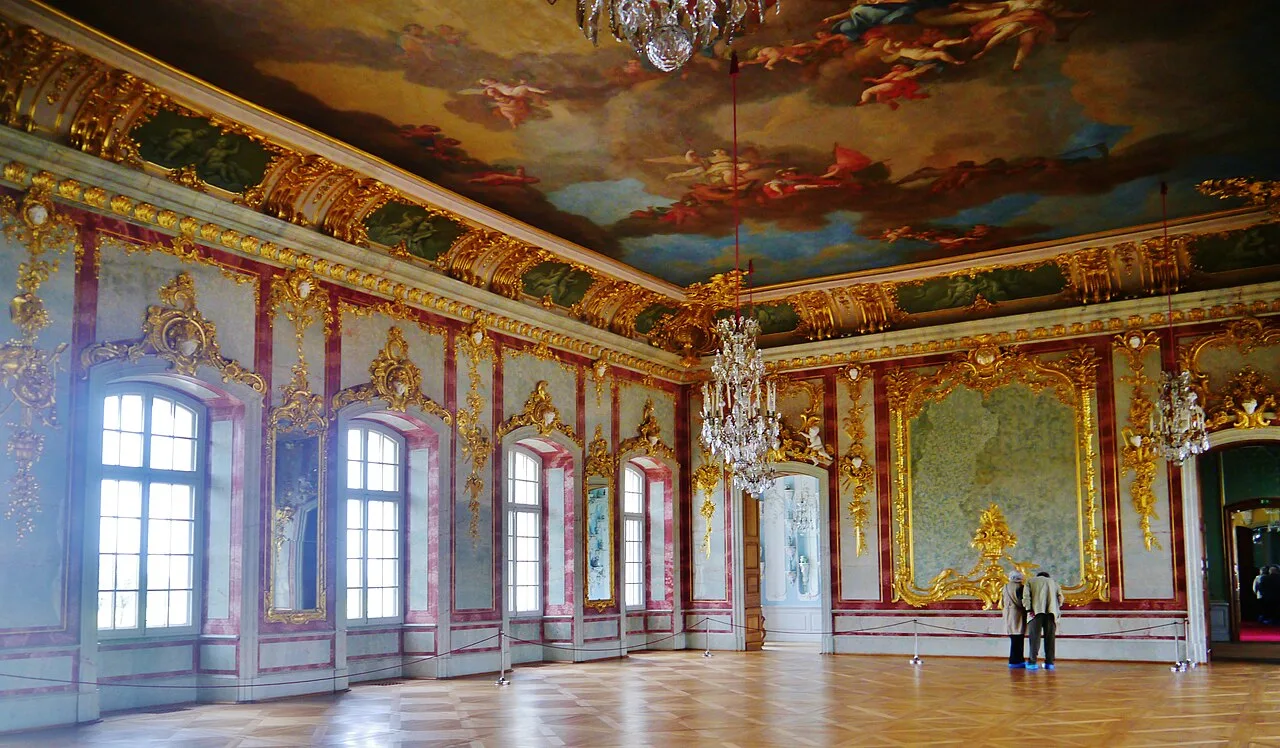
The Gold Hall (Zelta zāle) was the throne room. It has Graff’s gilded stucco and artificial marble, and a ceiling painted by Francesco Martini and Carlo Zucchi with the apotheosis of the duke. According to the museum’s record, its parquet has survived intact since the 1760s.
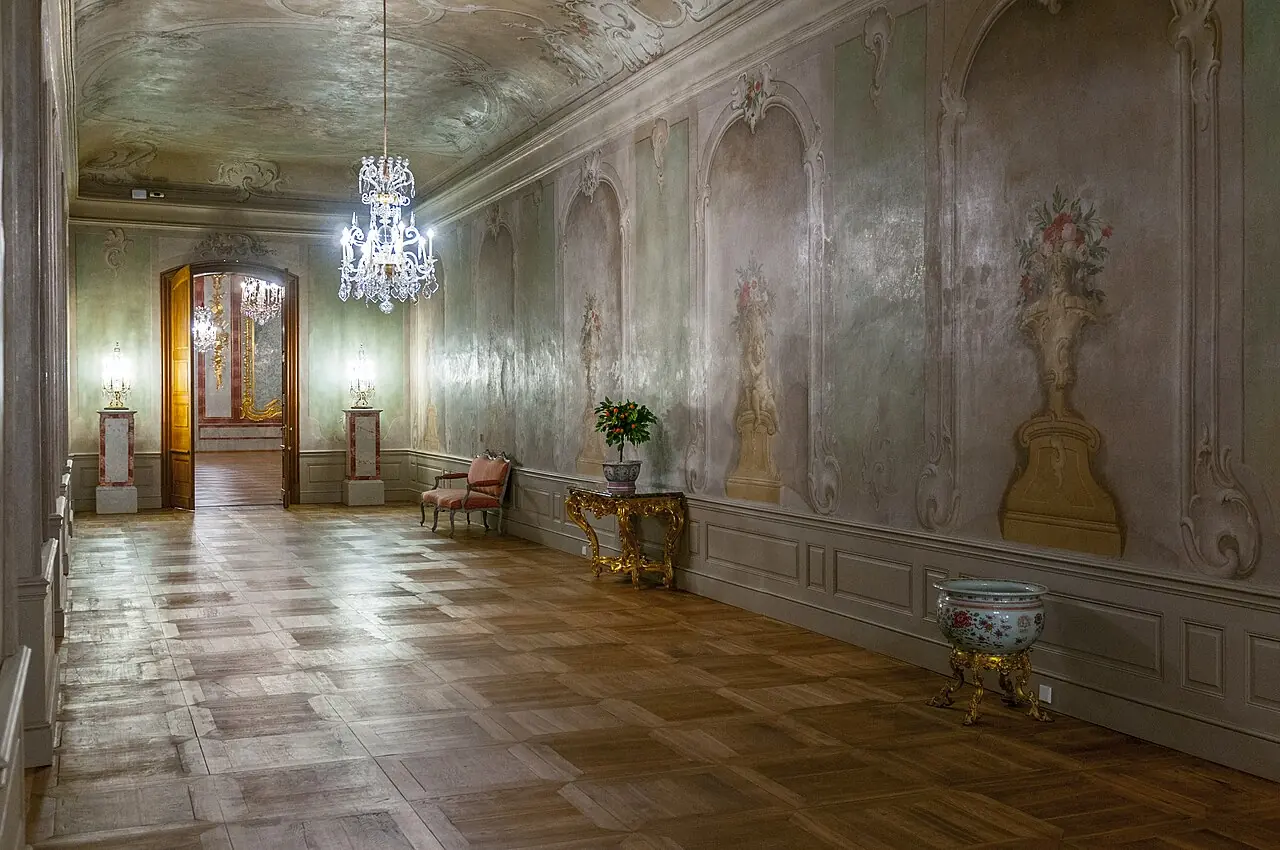
It is made up of large squares laid on the diagonal, from one end of the room to the other. The museum’s lists record the room as restored in 1986.
The White Hall: an 1892 floor
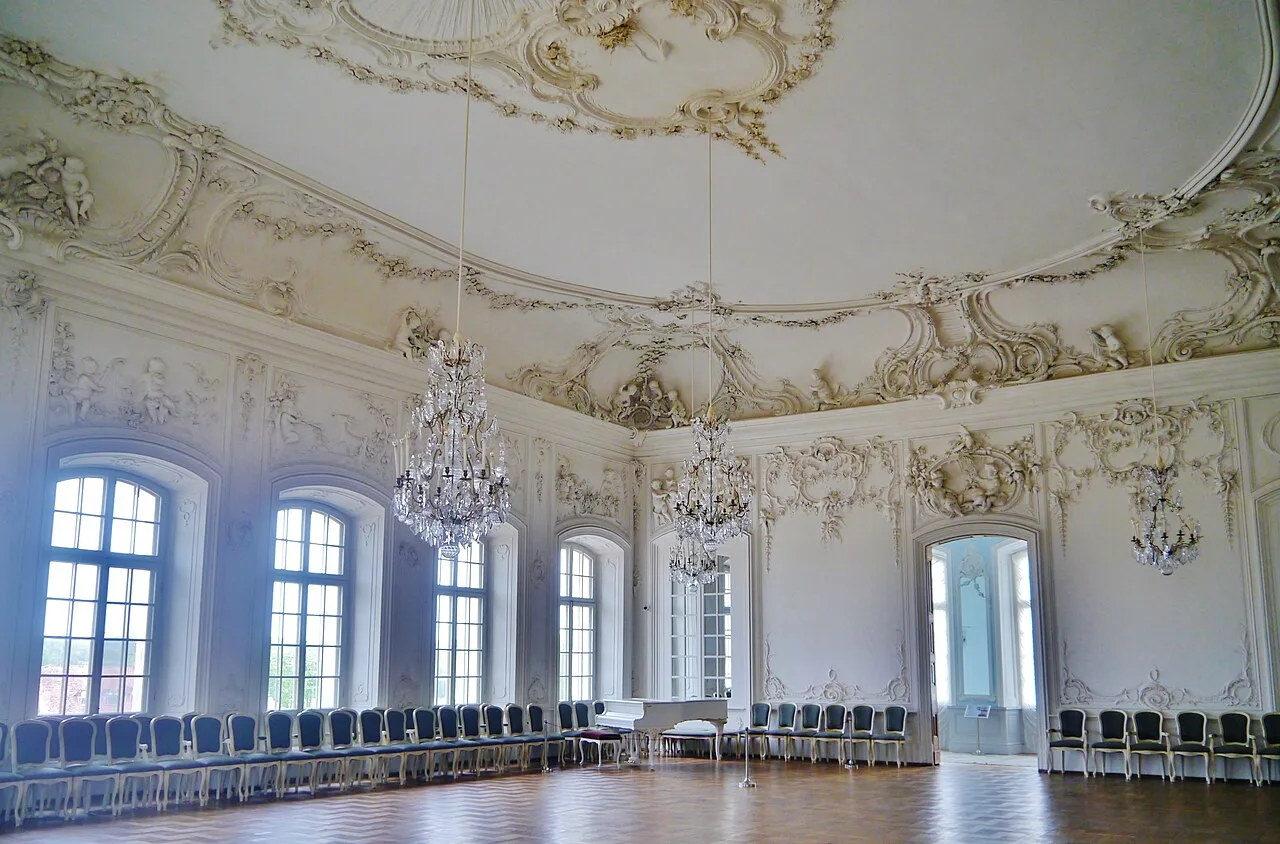
The White Hall (Baltā zāle) is the ballroom, and its parquet is the only surviving one from a later period. After Russia annexed Courland, Catherine II gave the palace to Count Valerian Zubov. On his death in 1804 it passed to his brother Platon, the empress’s last favorite, who died suddenly in the palace in 1822.
In 1824 Andrei Shuvalov married Tekla, Platon Zubov’s widow, and Rundāle passed to the Shuvalovs. In 1887 the door panels and the parquet were repaired. In 1892 their grandson, Count Andrei Shuvalov, had to put a new floor in the White Hall, which is the one there today.
The museum draws the conclusion: there was a lot of dancing here. It is a herringbone parquet of short strips. In 1980 almost the entire museum staff worked for four months in this room, and the palace opened its first rooms to the public in 1981.
Softwood boards in the private apartments
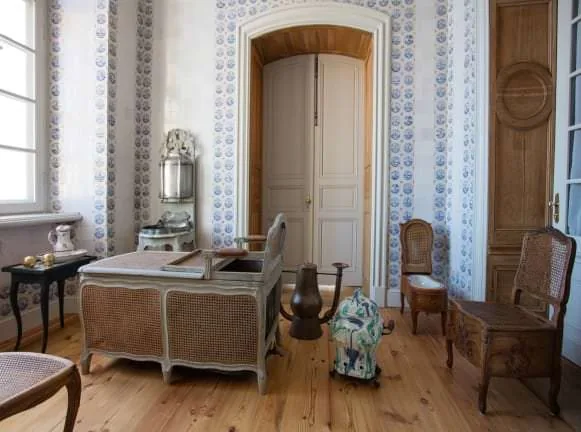
The duke had no parquet in his private apartments: the museum says these rooms had plain plank floors from the start. The duchess’s apartments and the Small Gallery (Mazā galerija) also had plank floors, and there, as on the stairs, the boards are softwood.
Over time the boards wore down, warped, cracked and ended up covered in oil paint. The restorers took them up, sanded them and made up what was missing with old wood. Some were in such bad shape that they had to be turned over to expose the underside, which had never been walked on or painted.
In the museum’s photo, the duke’s bathroom keeps its floor of light boards with small knots. It is the same kind of floor the rest of the private apartments had from the start.
Forty-two years of restoration
The museum was founded on January 1, 1972, and the restoration of the whole complex went on until 2014. Until 1992 it was paid for by the Ministry of Culture; after that, by foundations, companies and private individuals.
Two rooms had already lost their parquet in the 1930s: the duchess’s boudoir and the Dutch paintings room. It was made again on the model of the old one. The museum also keeps loose parquet squares and dismantled pieces of border in its collection.
Other floors are entirely new. The one in the Italian Salon (Itāļu salons) was made between 1998 and 2000, together with the paneling and doors, paid for by the company Robert Bosch. It has large squares, each with a frame of lighter strips.
The library, one of the last rooms
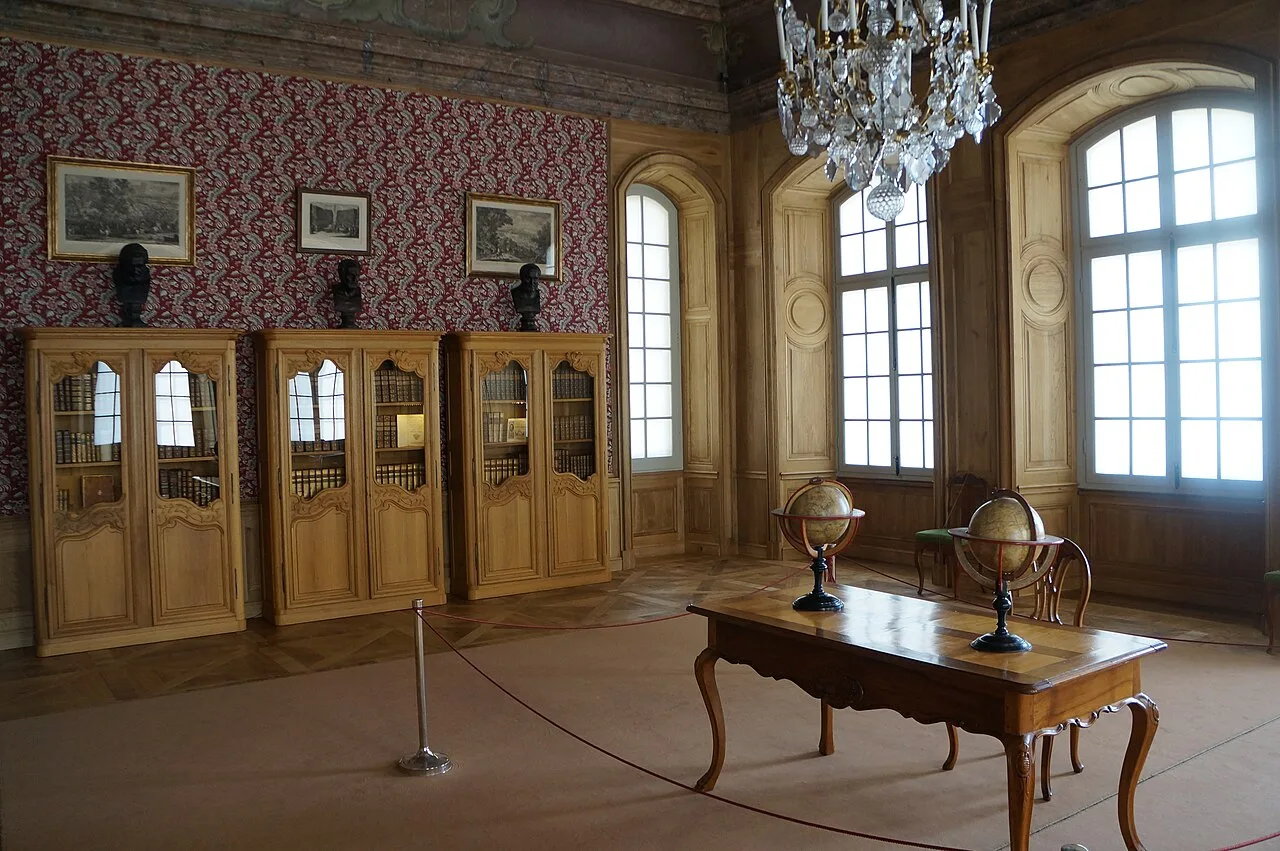
The duke’s library was one of the last rooms to be restored. In September 2012 its 18th-century parquet was laid back in place after restoration, and then the oak wall paneling was made. Among those panels were two, on the window wall, that had been destroyed in the 20th century.
The room was finished in 2014, the year the museum declared the palace restoration complete. It is a parquet of diagonal squares, visible between the bookcases and the carpet.
Five kinds of floor in one palace
What you see at Rundāle today is, room by room, one of five things. There is 1739 parquet that survived the removal and the grain, in the State Bedroom and the Rose Room. There is 1760s parquet that came through intact, as in the Gold Hall, or that had to be restored after the gym classes, as in the Billiard Room.
There is the 1892 floor in the White Hall, which replaced one worn out by the dancing. There is parquet remade on the model of the lost one, in the duchess’s boudoir, and new parquet, in the Italian Salon. In the private apartments the original boards remain, sanded, made up with old wood and, the worst of them, turned upside down.
Rundāle in pictures
Restoring historic wood floors
Madrid also still has plank floors and historic parquet that can be restored instead of replaced. More on them and how they are restored in Historic parquet.
Sources
- Zairon, Wikimedia Commons, CC BY-SA 4.0.
- Zairon, Wikimedia Commons, CC BY-SA 4.0.
- Zairon, Wikimedia Commons, CC BY-SA 4.0.
- Zairon, Wikimedia Commons, CC BY-SA 4.0.
- Zairon, Wikimedia Commons, CC BY-SA 4.0.
- Zairon, Wikimedia Commons, CC BY-SA 4.0.
- Zairon, Wikimedia Commons, CC BY-SA 4.0.
- Rundāle Palace Museum, The Duke’s private apartments.
- Zairon, Wikimedia Commons, CC BY-SA 4.0.
- PIERRE ANDRE LECLERCQ, Wikimedia Commons, CC BY-SA 4.0.
- Jelena Maksimova, Wikimedia Commons, CC BY-SA 4.0.
- Ralf Roletschek, Wikimedia Commons, CC BY-SA 3.0 at.
- Scotch Mist, Wikimedia Commons, CC BY-SA 4.0.
- Pudelek (Marcin Szala), Wikimedia Commons, CC BY-SA 3.0.


