
Until the early 2000s, visitors to Nymphenburg walked through the palace on carpets laid to protect the floor. They did the opposite. Dust worked its way into the wax, formed a paste that sanded the wood, and the carpets left hollows of up to 3 mm in the parquet.
The palace floors are largely original: some date from the 1720s and were completed or renewed up to the 1950s. Some 1,200 m² are oak, in the apartments and galleries reached through the Salettl, on either side of the Stone Hall. What follows comes from a Munich Travel interview with Heinrich Piening, head of wood restoration at the Bavarian palace administration since 1995. It is one of the 16 cases in the best parquet floors in the world.
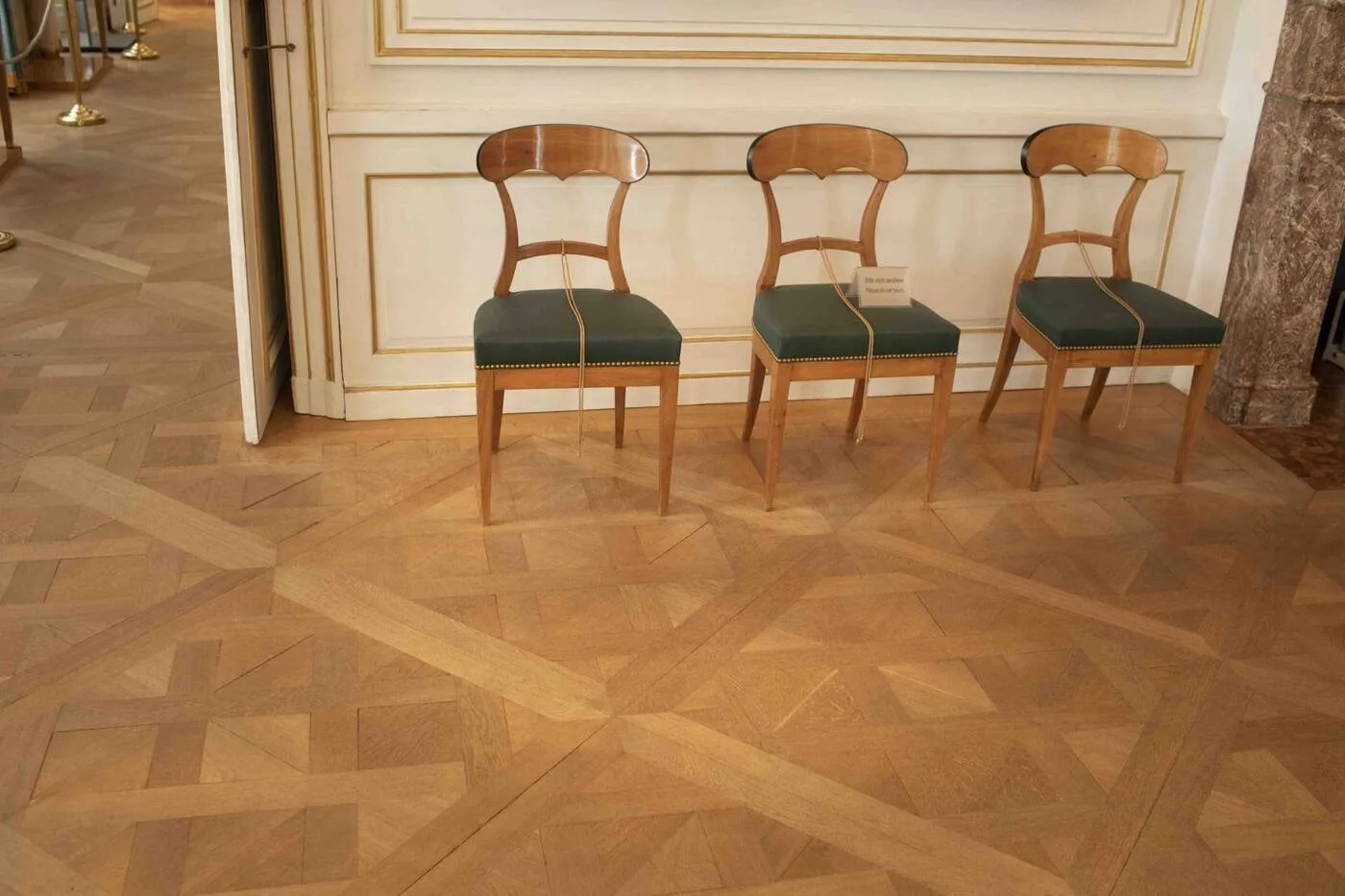
Versailles panels, without glue
Versailles-type panels were born at Versailles out of necessity. There the stone floors were mopped with so much water that the joists underneath rotted. The floor had to be renewed quickly with prefabricated pieces that fit together like a construction set. The article on the Versailles parquet tells that story.
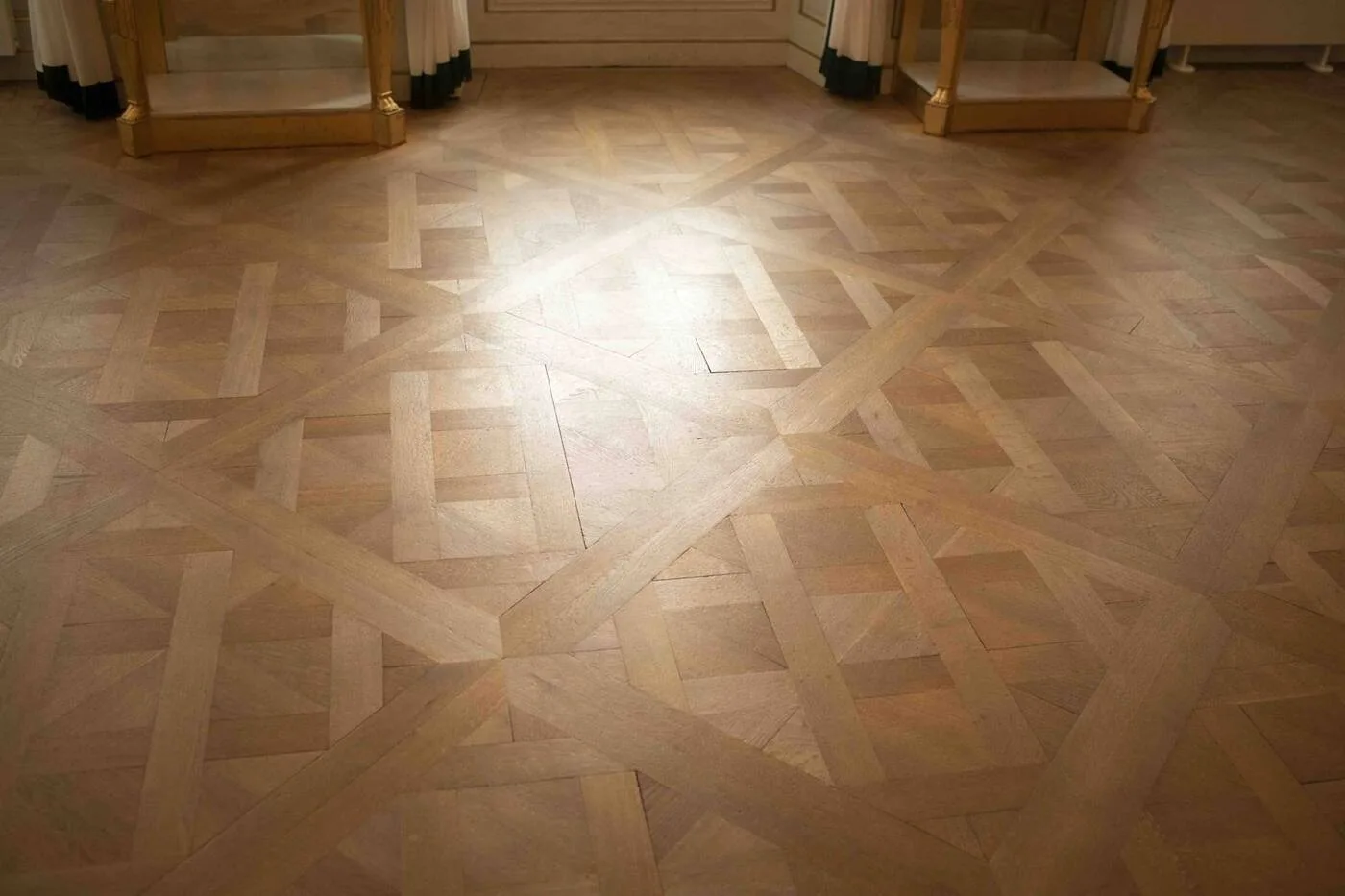
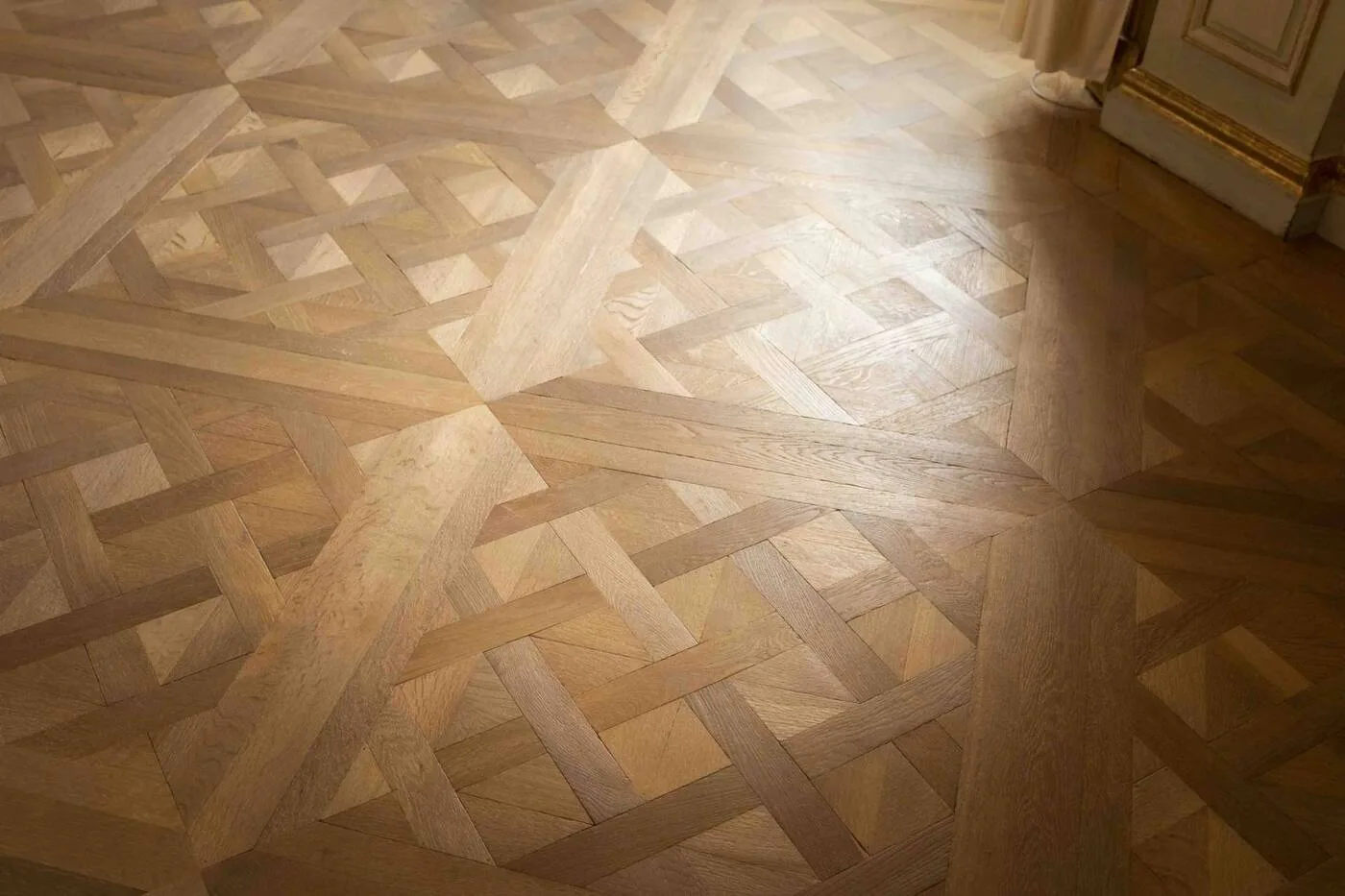
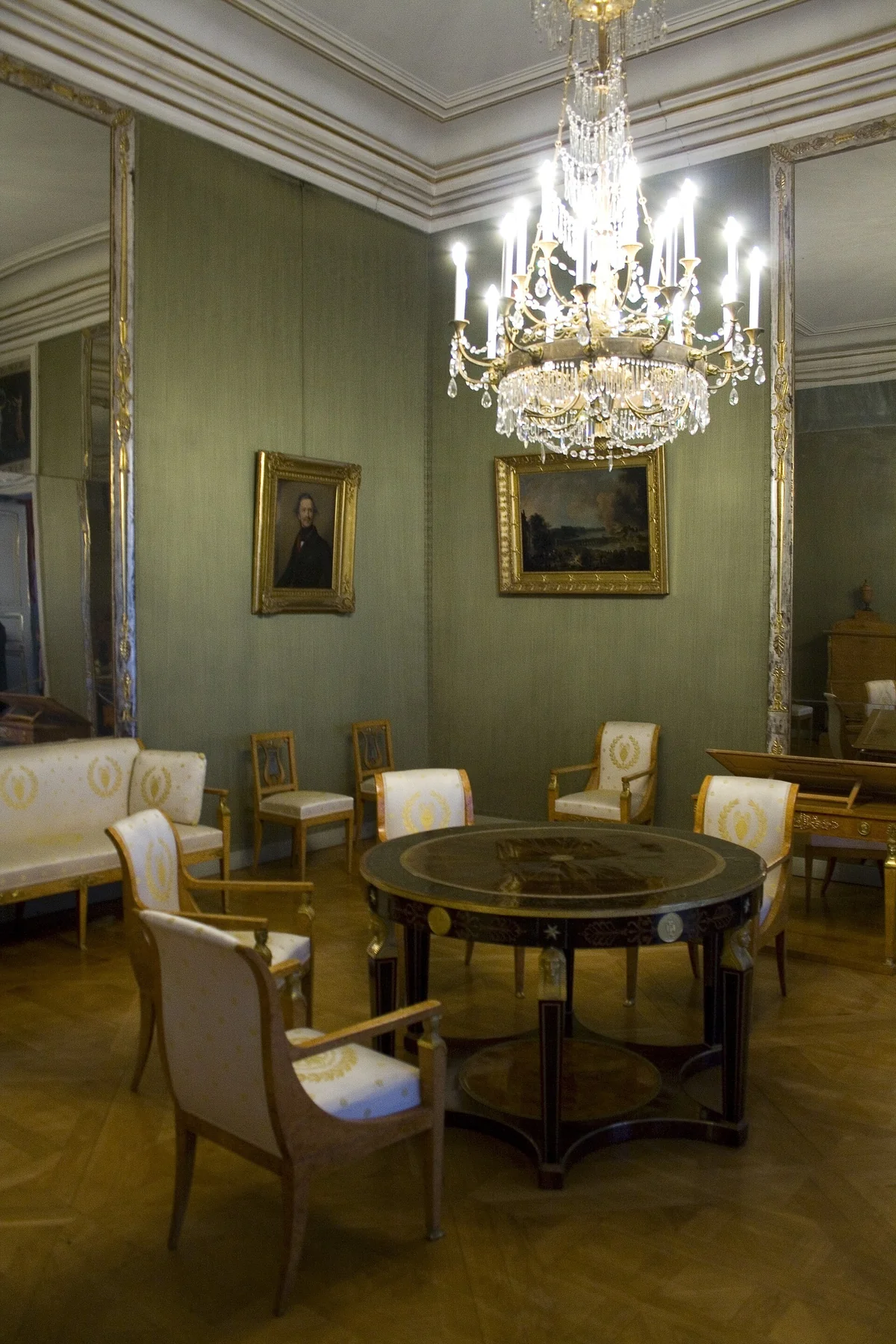
Nymphenburg adopted the system. In the apartments and galleries that open off the Salettl, each panel measures about 0.75 m², comes ready-made from the workshop and is laid without glue. That is why the floor gives a little underfoot, like a dance floor, and creaks.
The carpets that wore down the floor
Piening lifts a corner of a carpet and the difference in color is plain to see. The carpets are still down in the rooms that have not been restored. The rubber backing of some of them gave off plasticizers, which discolored the oak or left it sticky.
Once it realized this, the administration tested different waxes on sample boards and researched which materials had been used before. Since 2000 it has applied that approach whenever it restores an entire room.
Wax yes, oil no
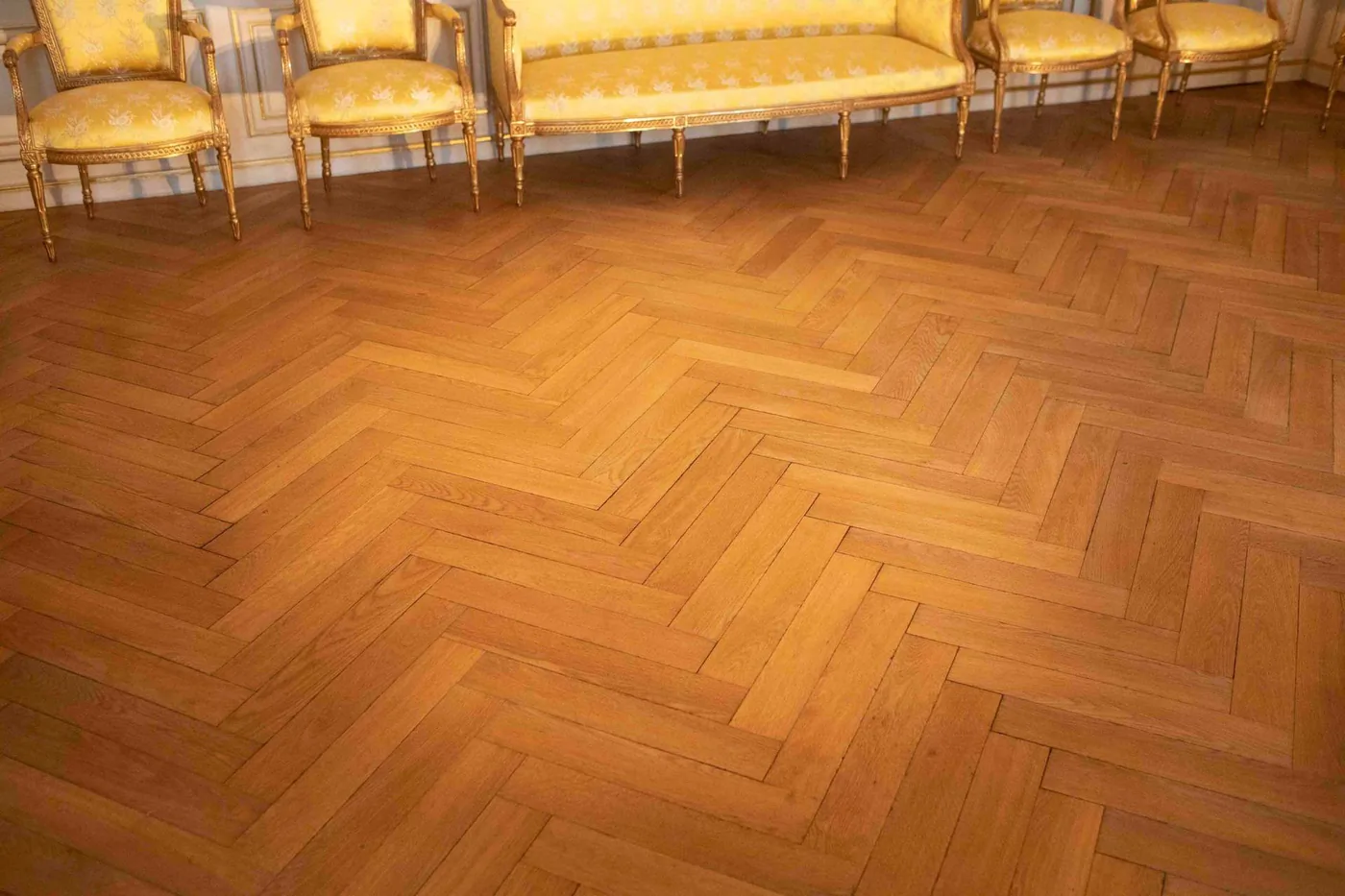
At Nymphenburg there are no oiled or varnished floors. Oil penetrates up to 2 mm into the fiber and bonds with it chemically. After that it will not take any other treatment without chemicals or sanding, and on a historic floor that is ruled out. When they examined the floors they found no trace of oil: they had always been treated with waxes.
Today’s paste contains hard paraffin, microcrystalline wax, beeswax and a portion of carnauba wax. In the days of the kings there were polishers on the payroll to bring up the shine every day, with beeswax either hot or dissolved in turpentine. Everything done now has to be reversible, and the current treatment is designed to last 30 years.
Maintenance and restoration
Every day, before opening, the floor is vacuumed, which usually takes an hour. On the ground floor visitors also cross a cleaning zone with carpets and, when it rains, mats: that cleans 90% of shoes. Twice a year, at the end of the summer and winter seasons, comes a thorough maintenance. First a damp mop is passed over, never wet, almost dry. Then it is left to dry so the fibers lie flat again, and two to three thin coats of wax are applied.
In the Gallery of Beauties, Ludwig I gathered 38 portraits of the women he found most beautiful. One of the best known is of Lola Montez, an Irishwoman who passed herself off as a Spanish dancer. The king, sixty years old, became infatuated with her and made her a countess. The court painter was reluctant to paint her for fear of the public, who loathed her, and the king had to ask him several times. In 1848, under the pressure of the revolution, she fled Bavaria and Ludwig I abdicated in March. Her portrait is still there, above a floor that creaks at every step.
In the restoration of that gallery, in 2019 and 2020, just thinning the wax with a cleaning pad took an hour per m². If the floor is very dirty, a dry-ice machine is used. Then come a treatment with fruit acid, three to four coats of wax and a buffing.
A floor kept plain on purpose
Piening puts the plainness down to rank: Nymphenburg was a summer palace and did not have the importance of the Munich Residenz. At the Ansbach Residence, by contrast, there are scenes drawn in the parquet itself. At Nymphenburg you can see every fiber and every grain line, and the floors are neither sanded nor covered with a thick layer of wax.
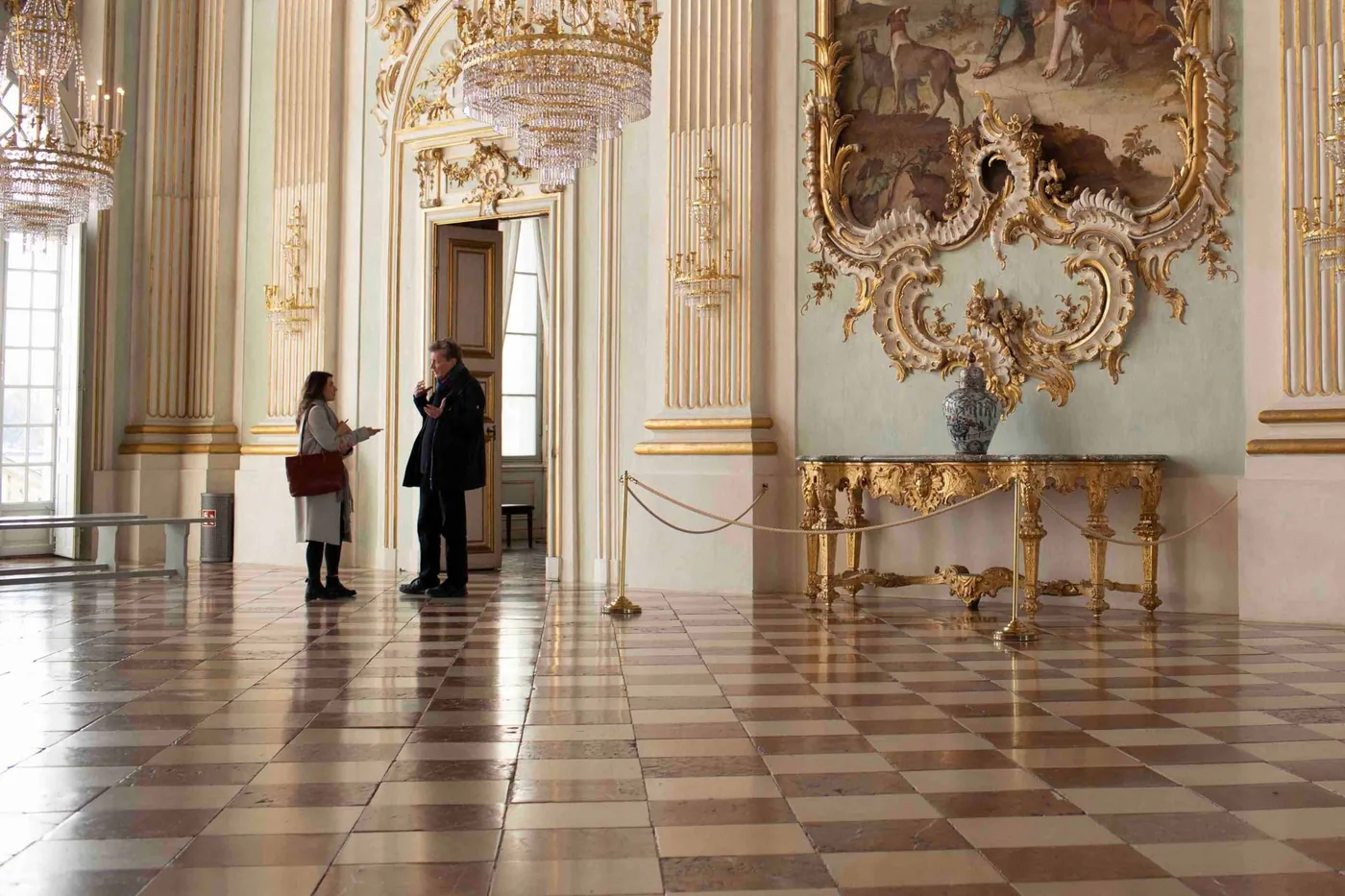
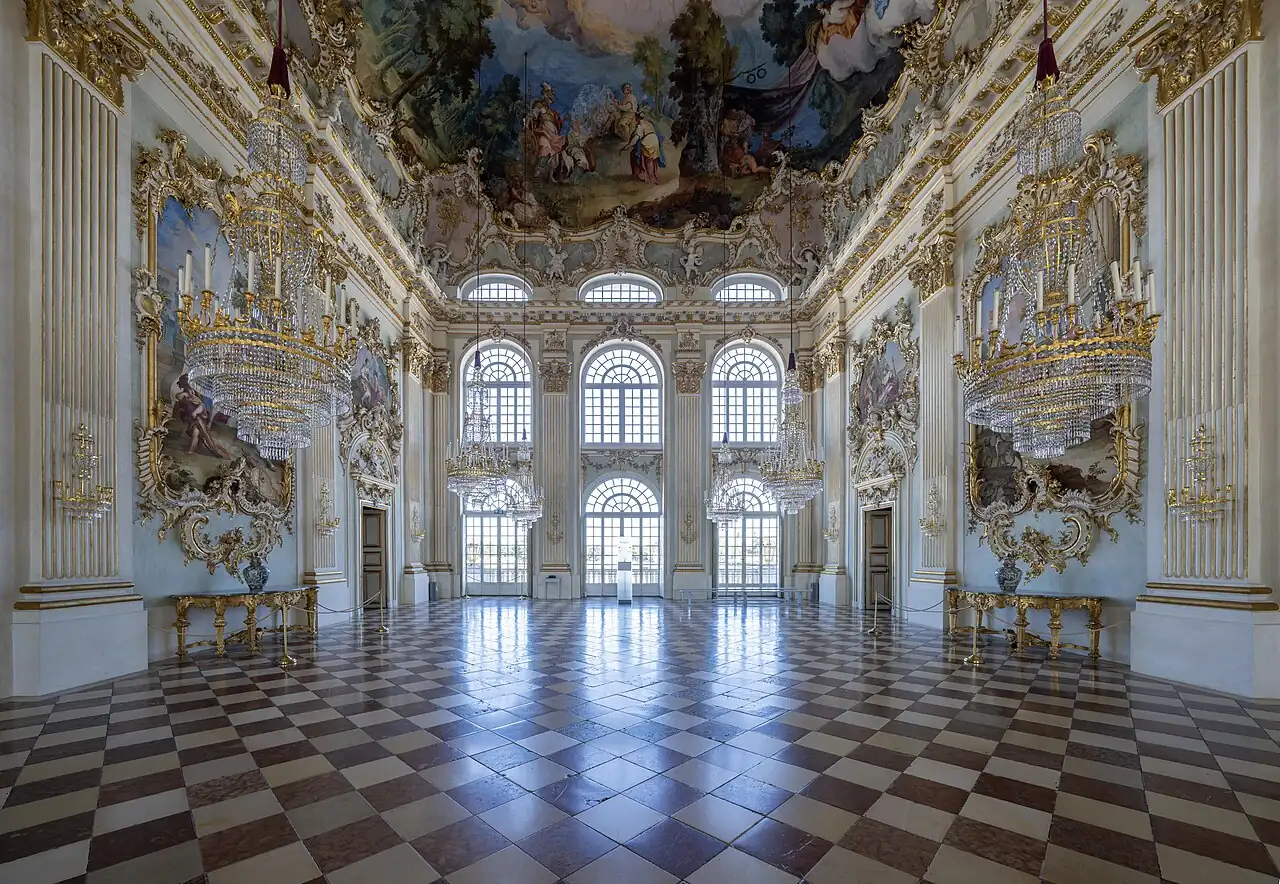
The Stone Hall
The Stone Hall has no wood floor. It alternates, in a checkerboard, light Steinhof limestone and red Ruhpolding nodular limestone, two Bavarian stones. Furniture tabletops also came from the same quarries.
The joints open from time to time because the sand underneath shifts and the slabs move against each other. Every few years a couple of slabs have to be lifted and relaid. The new ones can be spotted because their edges are too perfect: they are sawn, not split.
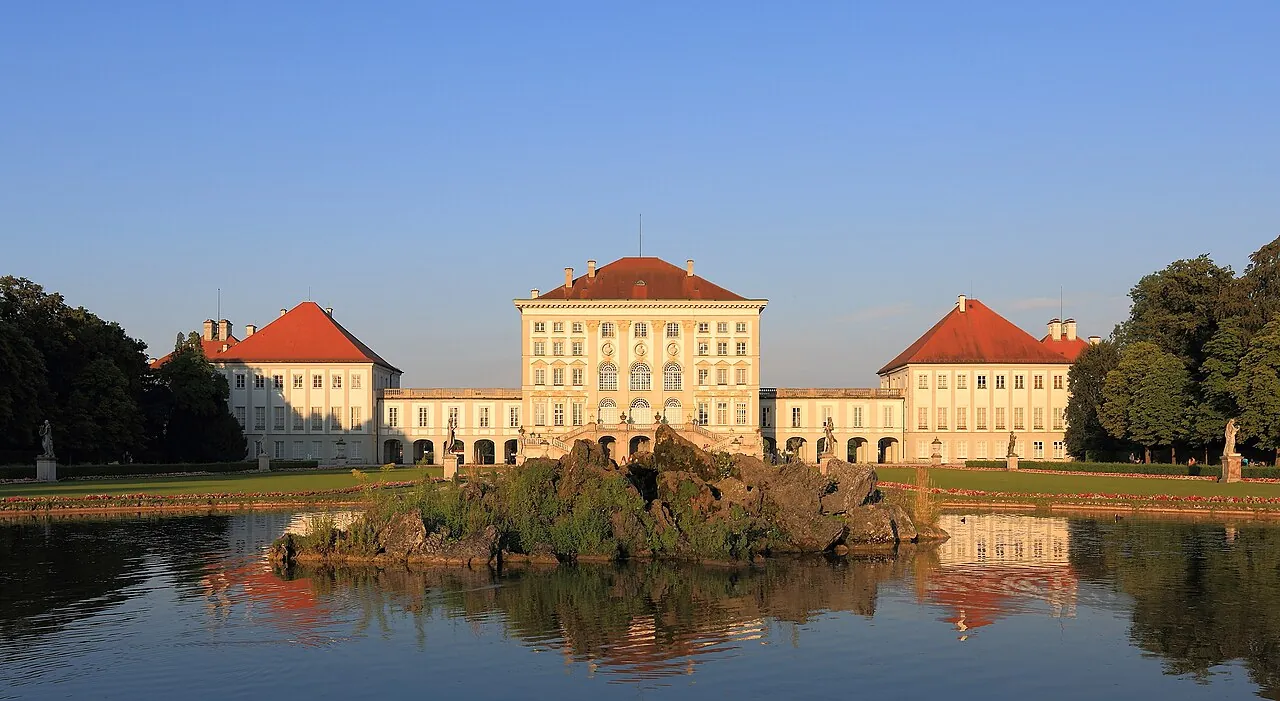
Nymphenburg in pictures
Historic parquet and panel floors
More on how to decide what to keep of an old floor in Historic parquet. Piening sums up Nymphenburg’s approach: everything done to the floor has to be reversible.
Sources
- Frank Stolle, © Munich Travel (munich.travel).
- Frank Stolle, © Munich Travel (munich.travel).
- Frank Stolle, © Munich Travel (munich.travel).
- Frank Stolle, © Munich Travel (munich.travel).
- Diego Delso, Wikimedia Commons, CC BY-SA 3.0.
- Frank Stolle, © Munich Travel (munich.travel).
- AuHaidhausen, Wikimedia Commons, CC BY 4.0.
- Martin Falbisoner, Wikimedia Commons, CC BY-SA 3.0.
- Peulle, Wikimedia Commons, CC BY-SA 4.0.
- AuHaidhausen, Wikimedia Commons, CC BY 4.0.
- Flocci Nivis, Wikimedia Commons, CC BY 4.0.


