
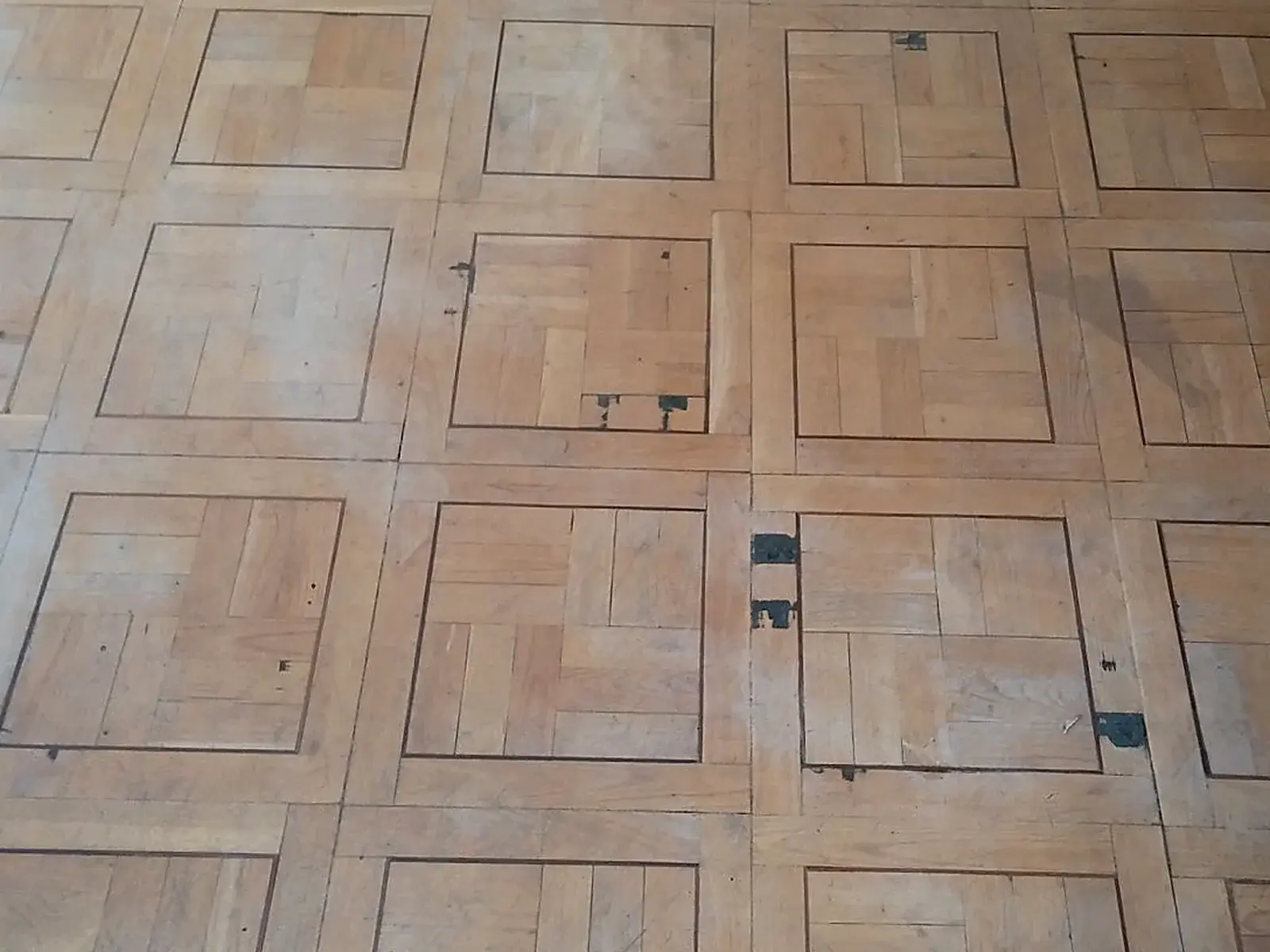
Day-to-day care of a hardwood floor does not call for expensive products or complicated cleaning routines. At the ParkSinta workshop we explain to owners that the life of the floor depends on simple habits kept up consistently. Avoiding too much water and removing the grit carried in on shoes prevents premature wear of the protective film.
Madrid’s climate puts wood through strong changes in humidity over the year. And a wood floor does not usually fail all at once: before it needs restoring, it gives warnings. A worn finish, a one-off leak and a poorly supported piece each call for a different repair.
Daily cleaning: dry microfiber mop and vacuuming without hard brushes
Daily maintenance of a varnished wood floor should be done mainly dry. To remove dust and loose particles we recommend a microfiber mop or a vacuum cleaner with rubber wheels and soft bristles. The grit carried under shoe soles acts like constant sandpaper that wears down the surface layer over the weeks.
Wet cleaning should be kept only for stuck-on stains or dirt built up through use. On those occasions a microfiber cloth dampened with warm water and neutral soap and wrung out well is enough. Flooding the wood with a dripping mop drives water into the joints, causing the boards to warp and damaging the finish beyond repair.

Recommended products and substances to avoid on hardwood floors
To keep the finish elastic and clear, you need specific pH-neutral cleaners designed for wood. Aggressive all-purpose cleaners, bleach, ammonia and homemade recipes with vinegar are completely inadvisable. Acidic compounds break down the polyurethane resin and dull the natural tone of oak, leaving milky marks that are hard to correct.
We also advise against using shine waxes or commercial silicones on varnished floors. These products form a greasy film that traps dirt and blocks the adhesion of future maintenance coats. If the surface is contaminated with silicones, any later attempt to apply a new protective coat will make the finish reject it.
Nor should you use a product without knowing whether the floor is varnished, oiled or stained. A product that does not suit the finish can change the sheen, leave a haze, soften old layers or complicate a future restoration.
Indoor climate control: heating and relative humidity in Madrid
Madrid’s continental climate makes specific demands on keeping wood in good condition inside homes. In winter, heating left on continuously lowers the relative humidity of the air to 20–30%. In that dryness the boards lose moisture and shrink, and small gaps open between the pieces.
To keep the wood from shrinking so much, it is worth raising the humidity of the air with humidifiers when the heating dries it out. Setting thermostats to moderate temperatures also helps. The gaps that open in winter usually close again in spring, when the humidity rises.
Warning signs and areas to keep an eye on
Before it needs a full restoration, a wood floor gives warnings. These are the signs not to overlook:
- Loss of sheen in the walkways.
- Joints opening more than usual and small gaps.
- Creaks that were not there before.
- Stains that do not come out with normal cleaning.
- Changes in tone near windows, radiators, bathrooms and kitchens.
These signs do not always call for work: sometimes a deep clean, a spot check or protecting an area is enough. The areas where they show up first, and where it is worth looking for wear, drag marks or movement underfoot, are the same in almost every home:
- The entrance to the home.
- Hallways and turning areas.
- Under tables and chairs.
- In front of sofas and beds.
- Next to balconies, windows, bathrooms, kitchens and radiators.
- Under heavy rugs or furniture that blocks airflow.
What to do and what damages the wood
The table puts the guidelines in this guide next to the habits that do most damage to the floor. The last column says what happens to the wood in each case.
| Cleaning task | ParkSinta recommendation | Common mistake | Effect on the wood |
|---|---|---|---|
| Daily dust removal | Dry microfiber mop or vacuum with rubber wheels | Sweeping with hard plastic-bristle brooms | Constant micro-scratches and gradual loss of sheen |
| Cleaning stains | Damp cloth wrung out well with neutral soap | Soaked mop with plenty of warm water | Water seeping into joints, darkened edges and lips |
| Cleaning product | Specific neutral detergent without silicones or waxes | Homemade vinegar, ammonia or floor cleaner with bleach | Chemical attack on the finish resin and hazing |
| Winter conditions | Humidifier when the heating dries the air | Heating turned up without watching the humidity | Marked shrinkage and open joints between boards |
| Furniture legs | Dense wool felt pads checked regularly | Bare metal or plastic glides on the floor | Marks and dents when furniture is moved |
Protecting against furniture and dealing with spills
A large part of the wear does not come from walking, but from dragging chairs, tables or heavy furniture. Dense wool felt pads on the legs reduce friction and prevent scratches in the finish. They need checking and replacing when they pick up grit or wear out, because then they stop protecting and scrape. In homes with children, pets or heavy use, prevention has to be more frequent.
If water, wine, coffee or cooking oil is spilled, dry it at once with paper towels or a dry cloth, pressing without rubbing. A spill that is dried quickly is not usually serious. The problem starts when the water gets into the joints, stays under a rug or reaches the base.
- Put doormats at the entrances: they catch the grit and moisture from the street before anyone steps on the wood.
- Clean dry as a habit: a clean microfiber mop and a vacuum with a parquet brush.
- Wring the cloth out as much as possible: mop only when needed, with the cloth barely damp and neutral soap.
- Keep felt pads on the furniture: they protect the floor from the constant rubbing of chair and table legs.
If water gets into the wood floor
First remove the liquid with absorbent material. Then ventilate without direct heat, because heat can warp the wood and open the joints. Also check whether the water has got in through the joints or under the furniture.
If raised pieces, a damp smell, dark stains or changes in level appear afterwards, it is no longer a matter of home maintenance. The base, the adhesion and the condition of the wood need checking; we explain it in parquet and moisture.
Rugs, doormats and plastic covers
Rugs protect, but they can also hide moisture, changes in color or built-up dirt, so it is worth lifting them now and then to look at the wood. The doormat at the entrance has to hold the dirt, not become a permanently damp spot.
Nor is it a good idea to cover the wood for long with plastic, waterproof bases or rugs that do not breathe. An area cut off from the air in the home can change tone or behave differently from the rest of the floor.
When more than maintenance is needed
Not all wear calls for a full sanding. Often you can go in stages: a deep clean, abrading and applying another coat of finish, repairing an area or replacing loose pieces. The choice depends on the usable wood left, the condition of the finish and how firm the base is; if there are loose pieces, moisture or warping, the cause has to be solved first.
You also have to tell dirt apart from wear. Waxes, hazes and badly applied products make a sound floor look old. And the other way round: a floor that looks merely dirty can have a broken finish and bare wood exposed. With low-angle light you can see which of the two it is.
Full restoration is kept for when the finish is worn out, there is deep wear, stains that will not come out or differences in level. Before that it is worth knowing how much wood is left, as we explain in how many times a parquet or solid wood floor can be sanded. It is worth asking for an inspection if any of these signs appear:
- Joints opening wider and wider.
- Creaks that were not there before.
- Pieces that move underfoot.
- Dark stains or stains that will not come out.
- Raised or bulging areas.
- Changes in level between pieces.
- Wear down to bare wood.
- Loss of adhesion in a glued parquet floor.
- A damp smell under rugs or furniture.
In these cases, more cleaning product or a coat of finish on top hides the problem for a while, but does not solve it. The inspection has to say whether the fault is in the finish, the wood, the adhesive, the battens or the base.
Frequently asked questions about wood floor maintenance
How often should a varnished wood floor be mopped?
Only when there are stains or stuck-on dirt, and with the cloth wrung out well. Day to day, dry cleaning with a microfiber mop or a soft-bristle vacuum is enough, so as not to add unnecessary moisture to the boards.
What happens if a wood floor is cleaned with vinegar or ammonia?
Vinegar is acetic acid, which eats into the protective film of the finish, dulling the sheen and opening the pores. Ammonia, for its part, is a strong alkali that can darken species such as oak and make the finish peel.
Can surface scratches be repaired without sanding the whole home?
If the scuffs have only affected the finish and have not reached the wood, you can abrade it and apply another coat of finish. If the scratch has broken the fiber or lifted the wood, the room needs sanding.
Why do small gaps appear between the boards during winter?
It is a normal reaction of the wood to the dry air left by heating in Madrid. When relative humidity drops to 20–30%, the boards shrink a little, and the joints close again when spring arrives.
Advice on floor care and restoration in Madrid
The assessment is done on site. We inspect each floor according to its installation system, its wood, its finish and its condition, to keep as much of the original material as possible and do no more work than needed. A similar case: the restoration of the pitch pine floor on Calle Galileo.