
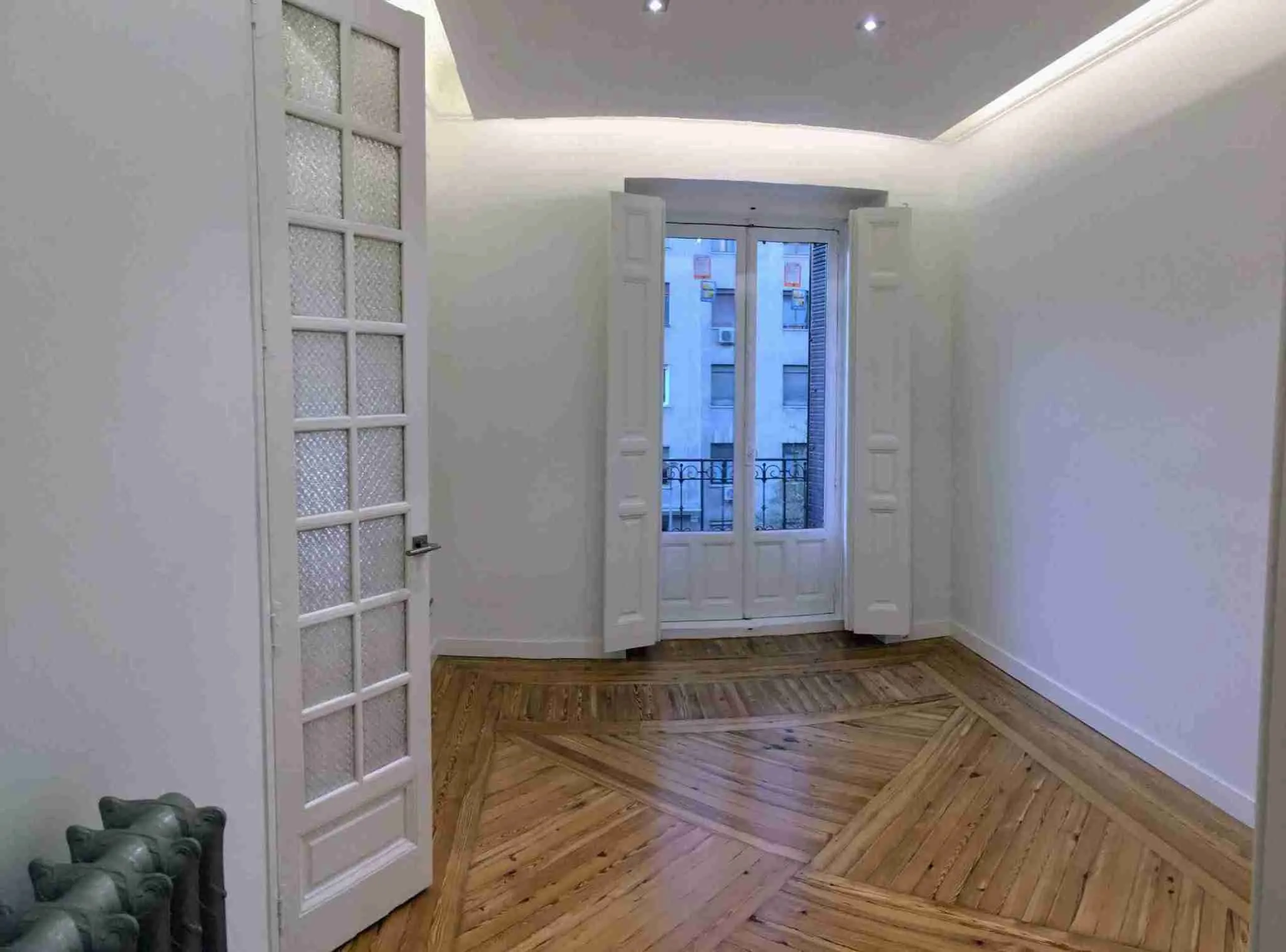
The safest order is this: building work and base coats of paint; then sanding, repair and finishing of the parquet; and last, the fine paint touch-ups. This lowers the risk of staining a new finish and also of scuffing freshly finished walls during sanding.
The details change with each home: whether there is a new baseboard, whether the doors are being replaced, whether ceilings and walls are being painted and whether the parquet needs a lot of repair. In every case the trades have to be coordinated, the floor well protected and the real drying times respected.
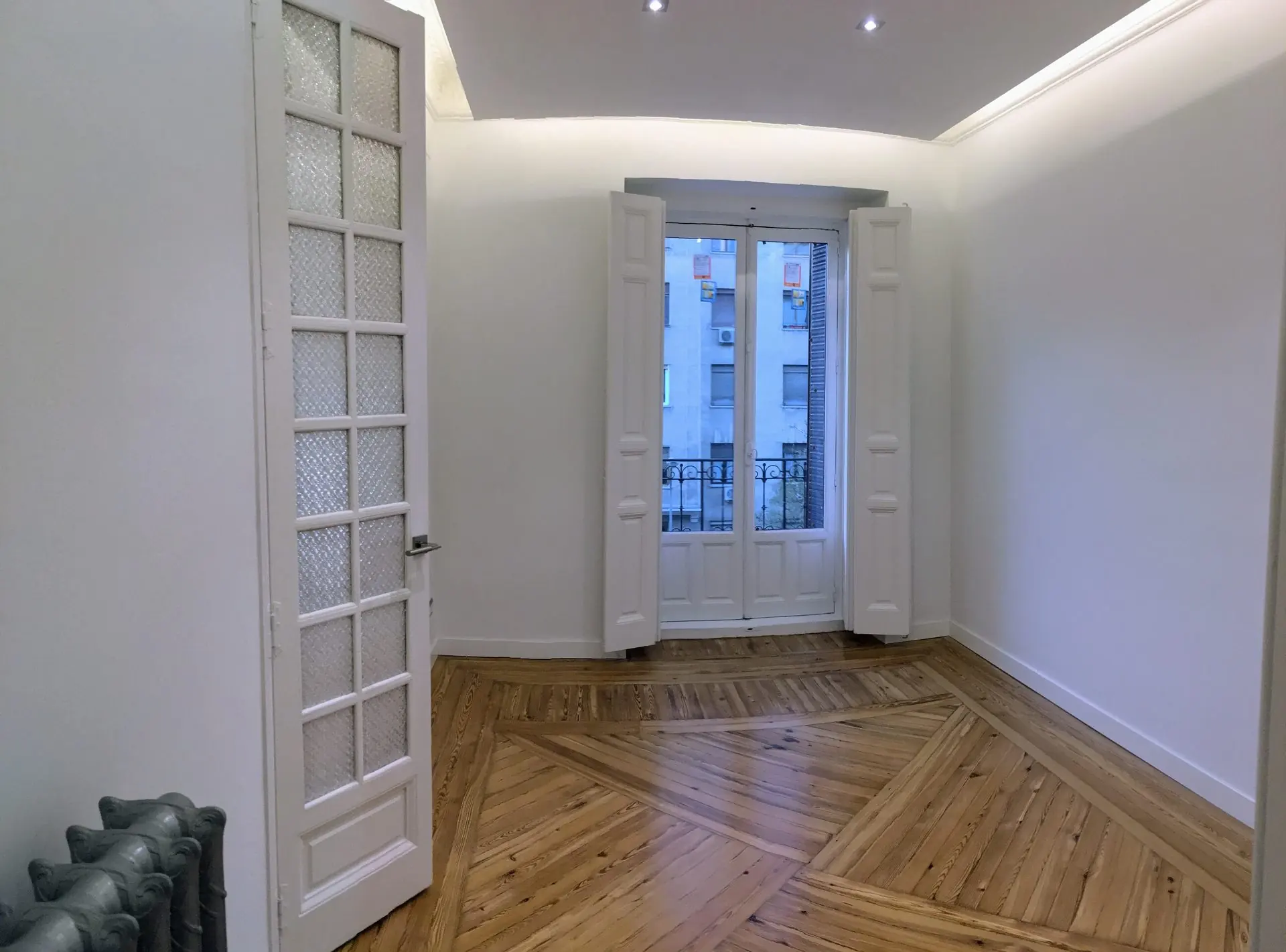
Recommended order
Painting is done in two stages: the base coats, before the parquet work starts, and the fine touch-ups, once the finish can take work on top of it. With the floor in between, the order comes to four stages:
| Stage | Practical criterion |
|---|---|
| 1. Building work and base coats of paint | Chases, skim coats, ceilings, walls, carpentry and first coats of paint before the parquet, as long as the surfaces can dry properly. |
| 2. Sanding and repair | Sanding, joint repair, replacing pieces, filling and preparing for the finish. It is the stage with the most dust, machinery and movement, and the base coats of paint must already be dry. |
| 3. Finishing | Three or more coats of finish, with drying time between each. The room has to be empty, and nobody walks on it until 24 hours after the last coat; ladders, buckets and solvents stay out too. |
| 4. Final touch-ups | Fitting the new baseboard, paint touch-ups, small scuffs and finishing details. These are done with the floor already covered and with no point loads, once the finish can take the protection. |
If you paint first
Painting first can be right if it is understood as base painting. It is usual to have walls and ceilings well advanced before the parquet work starts, because sanding can leave scuffs on baseboards, door jambs or corners.
The paint has to be dry before sanding. With modern machines and good extraction, dust is far better controlled than it used to be, but it is still site work: closets, openings, doors and delicate areas have to be protected.
Extraction collects almost all the sawdust, but a fine dust stays in the air. If the latex paint on the walls is still soft, that dust sticks to the surface and dulls the color.

If you sand first
Sanding and finishing before painting can work if only very light jobs remain afterward, but it calls for strict floor protection. Besides the paint, the risk lies in ladders, buckets, tools, knocks, marks from things set down, solvents and stains on a finish that is still curing.
On a fresh finish, the manufacturer’s times must be respected before covering the floor, putting weight on it or working on top of it. Protection laid too soon can also mark the finish.
Those times are given in the data sheets for Bona Traffic HD and Deva Transit Plus, two of the waterborne finishes we work with. Bona Traffic HD calls for at least 3 days before covering the floor, and during that time no heavy objects and no wet mop. If there is a stain or Bona Craft Oil 2K underneath, one week. Deva Transit Plus calls for one week before laying rugs or protectors, and gives 8 to 10 days to full hardness.
The times on both data sheets are measured at about 20 °C: in cold weather or high humidity the finish takes longer to dry. To cover it, use cardboard or another breathable material, laid flat with no wrinkles that would mark the floor; plastic only as an extra layer if there is a risk of spills. The sheets are taped to each other, never to the finish, because pulling the tape off sharply can damage it.

Baseboards, doors and finishing details
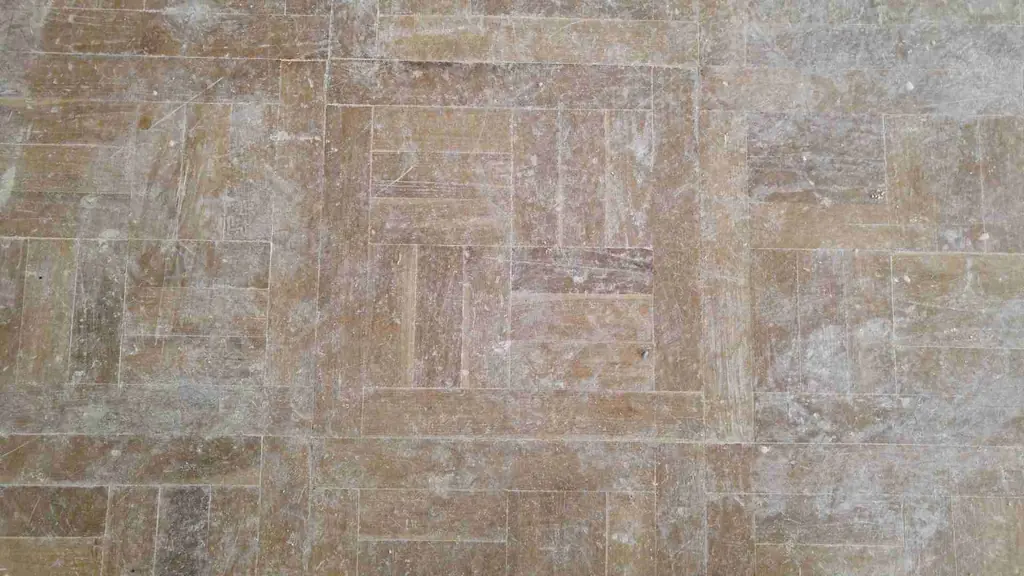
If the baseboard is being replaced, the usual thing is to coordinate it with the parquet. The old one comes off before sanding, so the edger can reach the edge of the floor without leaving an unsanded strip. The new one goes on after the finish, and its meeting with the wall is finished off with paint at the end.
If the old baseboards stay, expect some small scuffs during sanding and a paint touch-up. It is worth keeping some paint of the same color for those final touch-ups.
Something similar happens with doors and frames. If the floor height changes, if there is new flooring or if the parquet is taken down a lot, those junctions are sorted out before the painting is signed off.
And what if you want to paint the parquet?
If what you want to paint is the parquet itself, the answer changes. Painting a wood floor is not the same as finishing it. It can make sense in a specific decorative case, but paint hides the grain, wear shows more and you need a product made for foot traffic.
In most homes, if the parquet can be saved, it usually makes more sense to sand and refinish it, with a matte or satin finish. If the old finish is sound, recoating is an option.
Practical recommendation
For a full renovation, the safe sequence is base painting, parquet, finish and final touch-ups. If that order has to change, it must be clear who does the protection, how long the finish is left to cure and which jobs remain.
In a 40 to 90 m² apartment, sanding and finishing takes 2 to 5 days, depending on how much needs restoring and the state of the floor. On top of those days comes the wait before the finish can be covered, and the painters’ arrival is scheduled around it.
In a home that is lived in or still furnished, the planning changes. In that case it is also worth reading our guide to sanding parquet with furniture in place and, if you want a clean job, the one on dustless parquet sanding.
Parquet planning and restoration in Madrid
ParkSinta takes care of the floor within the renovation: sanding, repair and finishing, with the dates fitted into the schedule of the painters and the other trades. To have your floor assessed or to sort out questions about the work, call us at +34 91 543 90 62. A similar case: pitch pine flooring restored after a renovation of the building services on Calle Galileo (Chamberí).