

Dustless parquet sanding means working with machinery set up to capture the dust where it is produced, cleaning between stages and not turning the job into a cloud of sawdust. It does not mean that not a single speck will appear anywhere in the home.
With machines that do not extract well, the dust spreads over doors, baseboards, wardrobes and walls. With built-in extraction, proper filters and an orderly sequence, the residue drops sharply: what remains is fine dust for the final clean, not sawdust all over the house.

Where dust is well controlled and where it is harder
In an occupied home, an office or a business that stays open, extraction works very well on the open areas of the floor. It is harder along the perimeter, in corners, under radiators, where the floor meets the baseboard, on loose strips, open joints and very uneven floors. That is why it pays to know before starting where the dust is produced, which machine works each area and what cleaning is done before finishing.
Which machinery makes the difference
Each area of the floor calls for its own machine, and the sanders we use have built-in extraction that collects the sawdust at the same point where they sand. A powerful sander does not solve the dust on its own: it has to be designed to work with extraction.
- Main machine: removes most of the material in the open areas.
- Edger: works along walls and in corners, where more fine dust usually escapes.
- Multi-disc or single-disc machine: refines the surface and prepares the wood before the finish.
- Cyclonic vacuum: picks up what is left on the floor, in the joints and on the baseboards between one pass and the next.
- Cleaning between coats: keeps dust from being trapped under the finish.
We go over the floor with the cyclonic vacuum every time we change grit. The grit shed by the coarse abrasive, if it stays on the floor, scratches the wood during the fine passes.
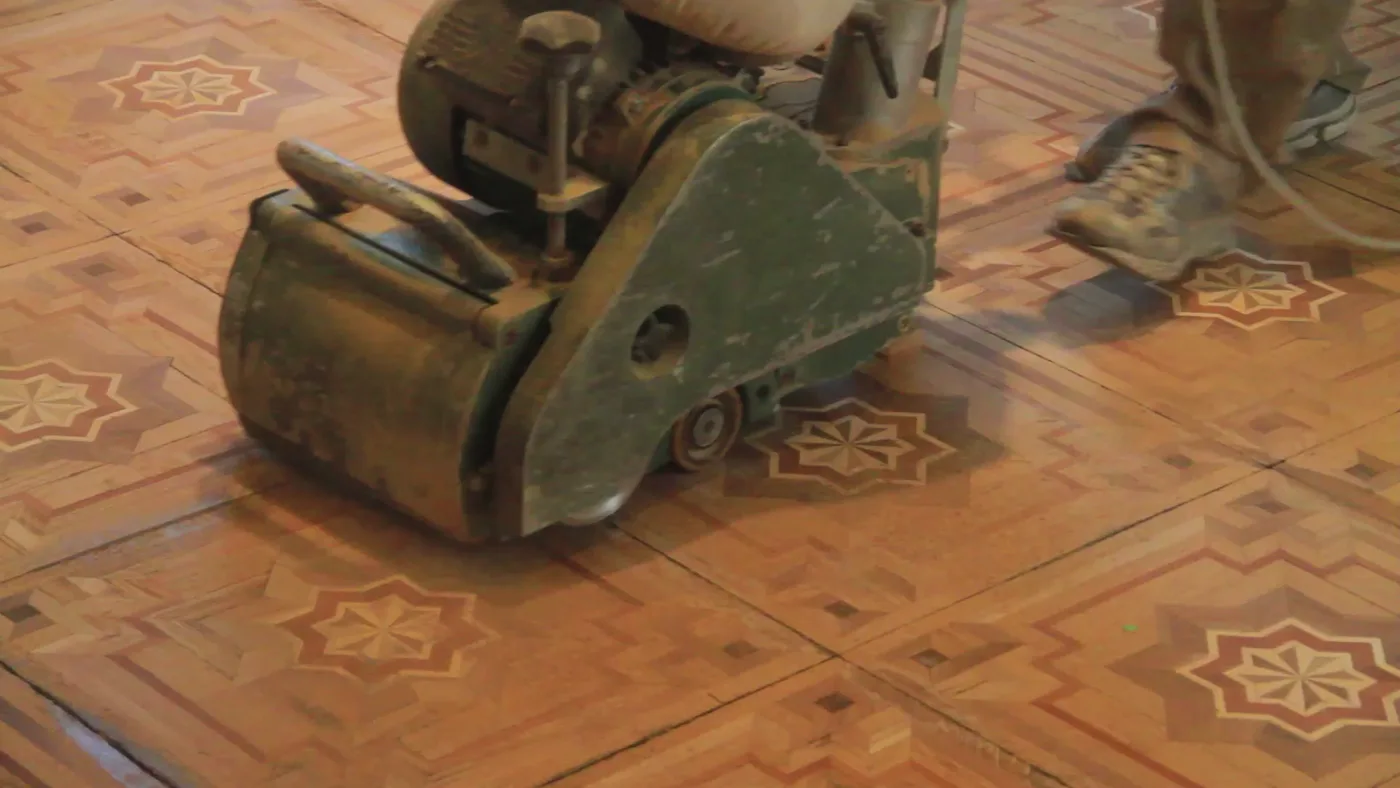
Why dust can remain even when the machine extracts
Wood is not sanded on a perfect table. A real parquet floor has joints, uneven spots, strips that vibrate, baseboards, doors, frames, radiators and areas where the machine does not always sit evenly. If the floor is wavy or has wide gaps, some of the dust settles into hollows before it can be vacuumed.
The abrasives also play a part. Coarse grit throws off sawdust, and fine grit a lighter dust that gets into the pores and the joints. That is why dust control does not depend on a single machine: it is a sequence.

How we prepare a home or office
We do not sand with the furniture in place: the room being sanded is emptied completely. In an occupied home, the preparation counts almost as much as the sanding. It is best to remove textiles, clear surfaces, close the doors that are not part of the job and protect the walkways.
In offices, shops or hotels we plan the work by zones so as not to dirty the areas still in use. If the house cannot be emptied all at once, in sanding parquet with the furniture in the house we explain how to organize it in stages. And if the renovation also includes painting, the order of the two jobs is in sanding and painting.
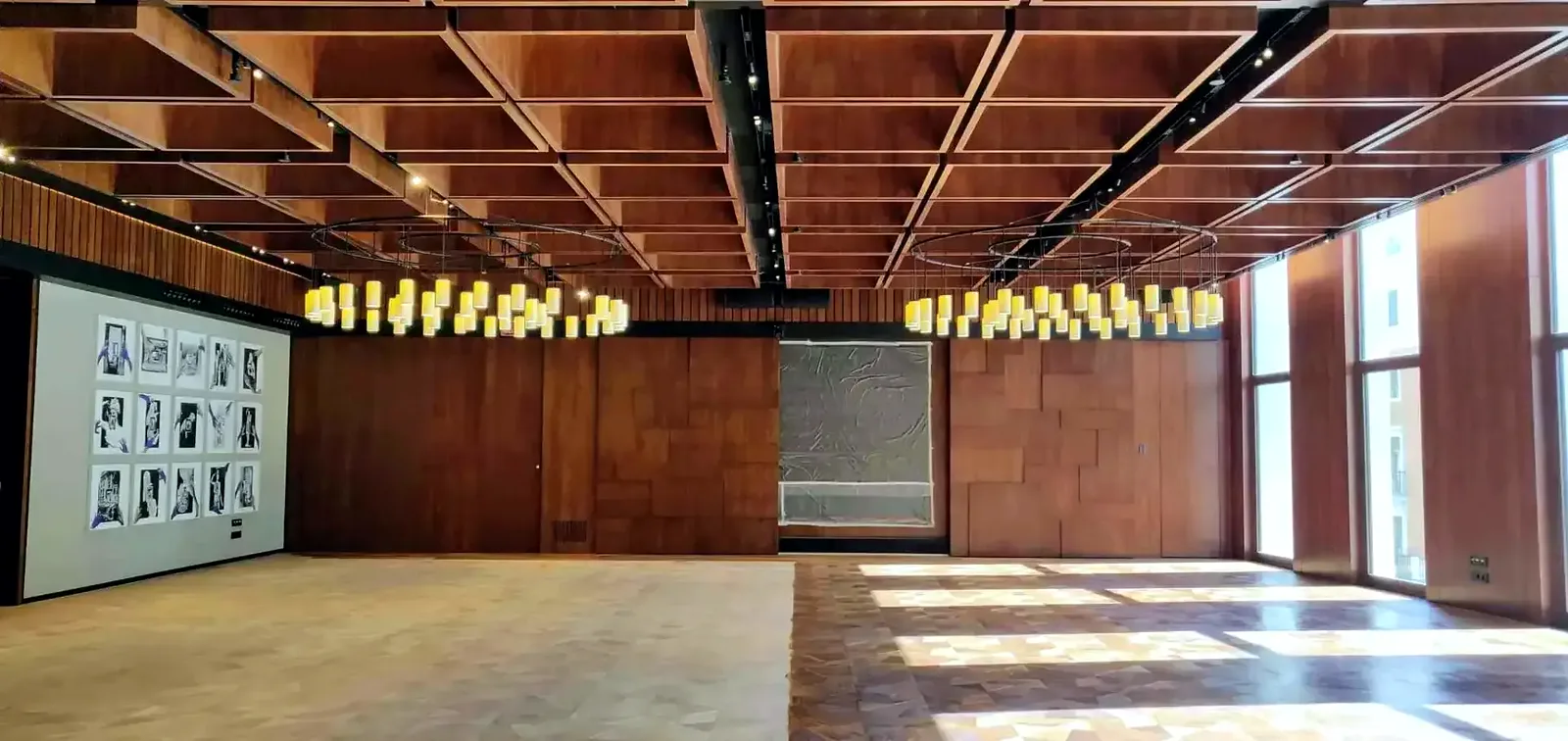
Before finishing or oiling, the floor is vacuumed carefully. The fine dust left in the pores, the joints or the corners, even when the floor looks clean, causes a grainy finish, trapped specks or poor adhesion between coats.
With the room empty and vacuuming between passes, no sawdust cloud forms, but some fine dust settles on shelves and frames. Once 24 hours have passed after finishing, we recommend wiping it off with a damp cloth.
What to ask before hiring
If cleanliness matters to you, ask to have it explained how the “dustless” result is achieved before accepting a quote. It is worth asking:
- Which machines will be used in the open area, along the edges and for the finish.
- Whether the sanders have built-in extraction and what is vacuumed between one pass and the next.
- How the rooms that are not being sanded are protected.
- What cleaning is done before applying the sealer, the finish or the oil.
- Whether the finish will be waterborne or solvent-based.
- How many days the floor should be left without furniture, rugs or heavy traffic.
Where dust control is most noticeable
Dust control always matters, but it is most noticeable in apartments with old woodwork, libraries, offices, clinics, shops and residential buildings. It also matters if someone in the house has allergies or if the finish is waterborne, because the surface must be very clean when the finish goes on.
Frequently asked questions about dustless parquet sanding
How many days does it take to sand and finish an apartment of 40 to 90 m²?
From 2 to 5 days, depending on the level of restoration and the condition of the floor.
When can the floor be walked on, and how much does the finish smell?
The last coat of finish takes 12 to 24 hours to dry enough to walk on, depending on the product and the conditions in the room. The odor is low, although it cannot be called “odor-free.”
Clean sanding and wood floor restoration in Madrid
If you need parquet sanding in Madrid and cleanliness matters to you, we assess the condition of the floor, the access, the furniture, the baseboards and the finish before promising a result. A similar case: the 1920 apartment on Calle Velázquez, with marquetry tiles and pitch pine boards, which was sanded with dustless extraction.