

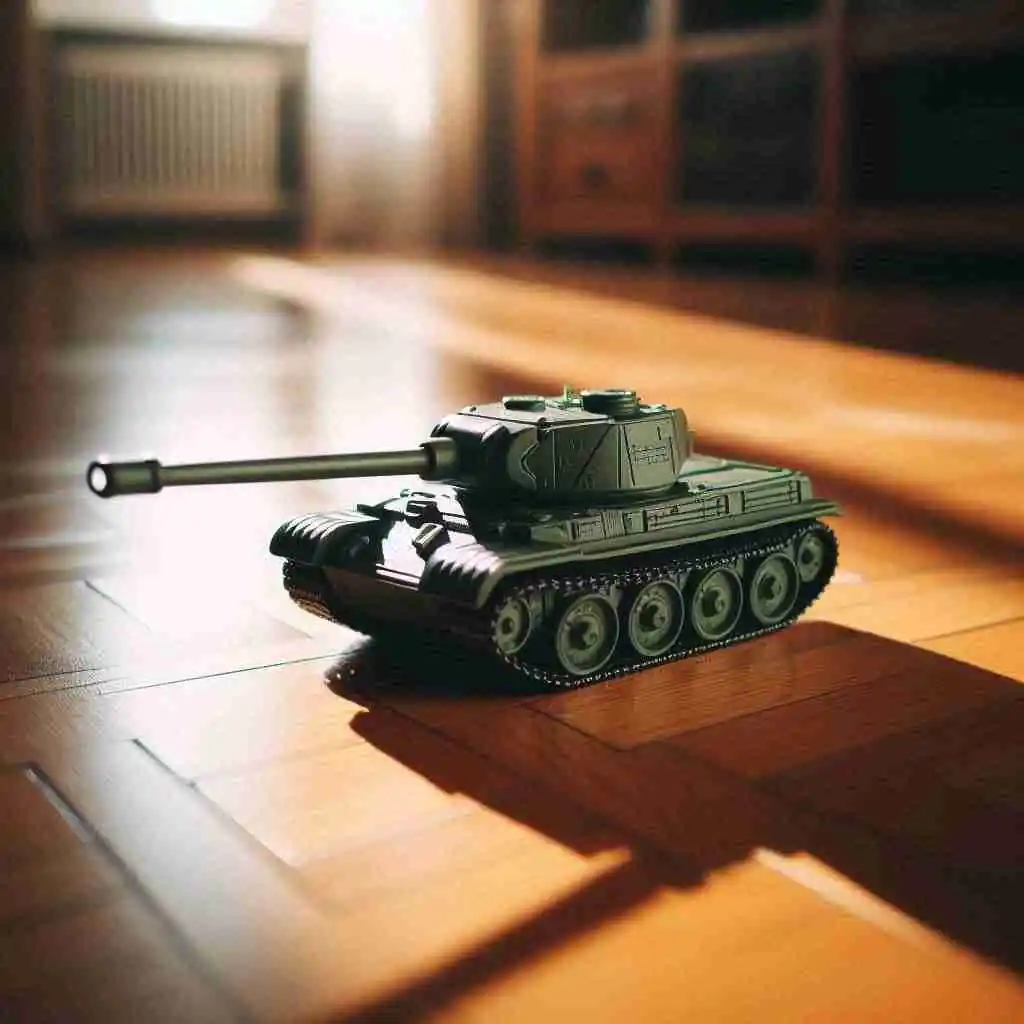
When people ask us what precautions to take with parquet, we usually name two: water and high heels. And although it sounds like a joke, a stiletto heel presses on the wood much harder than a battle tank, because the pressure it exerts per square centimeter is far higher.
The key is not the kilos but the surface they rest on. No wood floor resists a thin heel, whatever the wood or the finish. We often see the marks in homes, hotels, embassies and nightclubs.
The physics of point loads: why a thin heel marks more than an armored vehicle
Pressure is force divided by contact area. If a 60 kg person puts all their weight on a 1 cm² stiletto heel, the pressure reaches 60 kg/cm². With a 2 cm² heel, it drops to 30 kg/cm². With a 3 or 4 cm² heel tip, the same person stays at 15–20 kg/cm². Between a 1–2 cm² heel and a 3–4 cm² one the difference is large.
A 40-ton battle tank spreads its mass over tracks that add up to about 4 m² of contact. The pressure it transmits to the ground is around 1 kg/cm². The track spreads the load, while the thin heel concentrates all the weight on a very small point, able to dent the wood.

The finish does not make the wood harder
Many people believe that a harder finish or more coats of finish will stop heels from marking the floor. Polyurethane finishes protect against wear and moisture, but they do not make the wood underneath any harder. When the wood gives way under the heel, the finish breaks because it loses the support that held it.
The wood does matter. In pine, which is softer, a heel with a worn tip crushes the fibers and leaves a dent the finish cannot fix. In harder woods such as oak the mark is less deep, but a thin heel marks them too. The hardness of each species is in the Brinell scale of wood hardness.
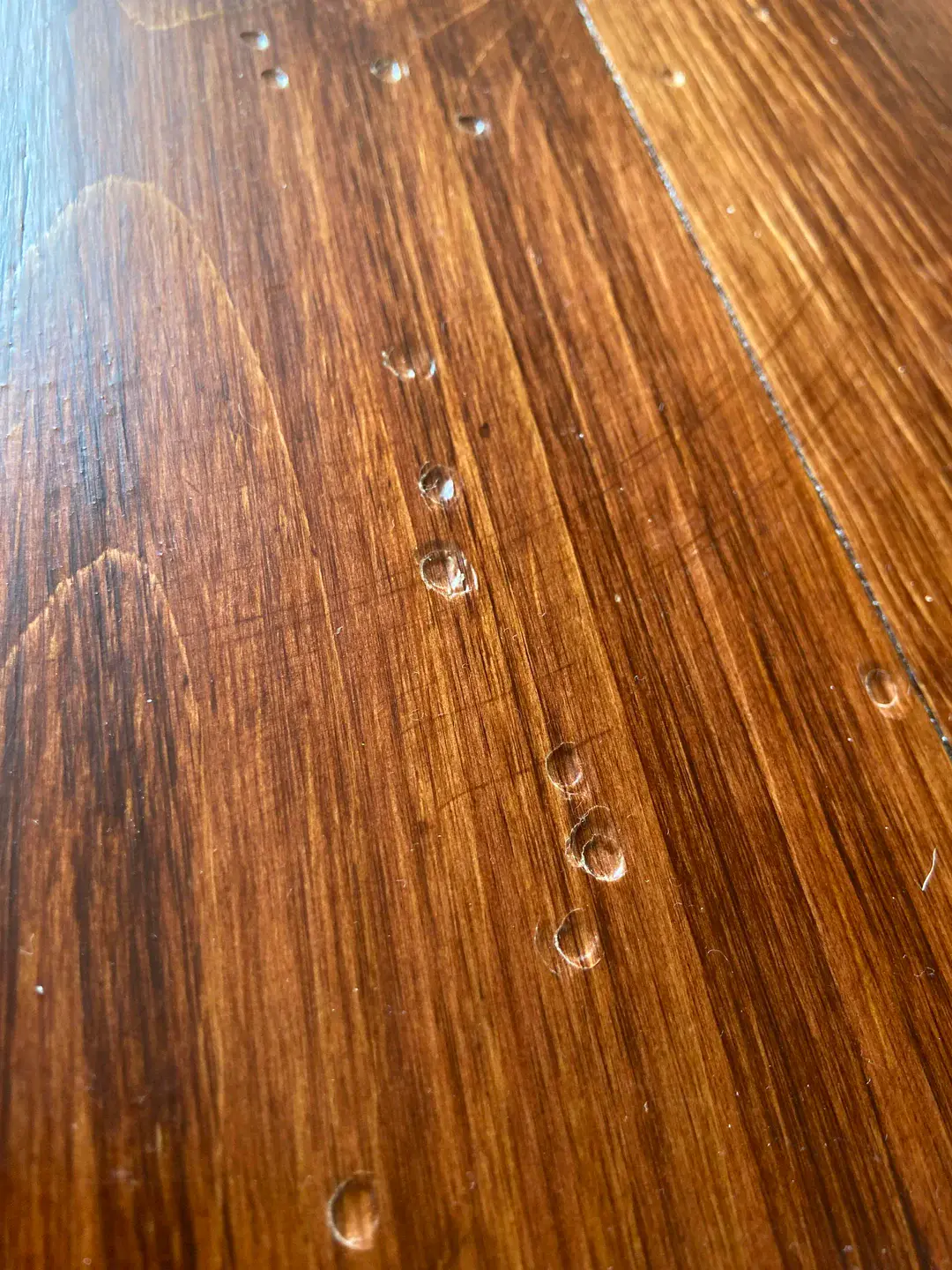
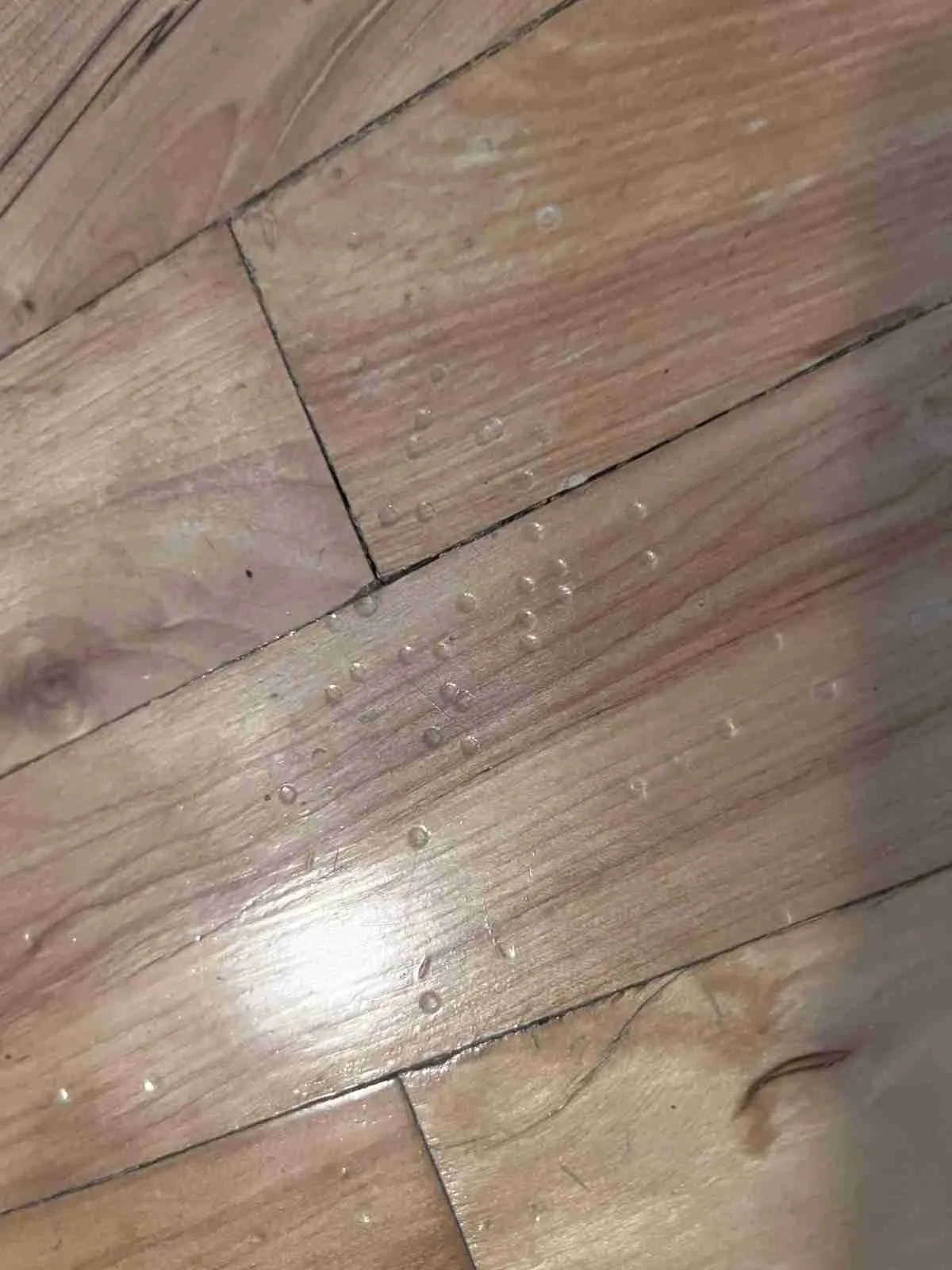
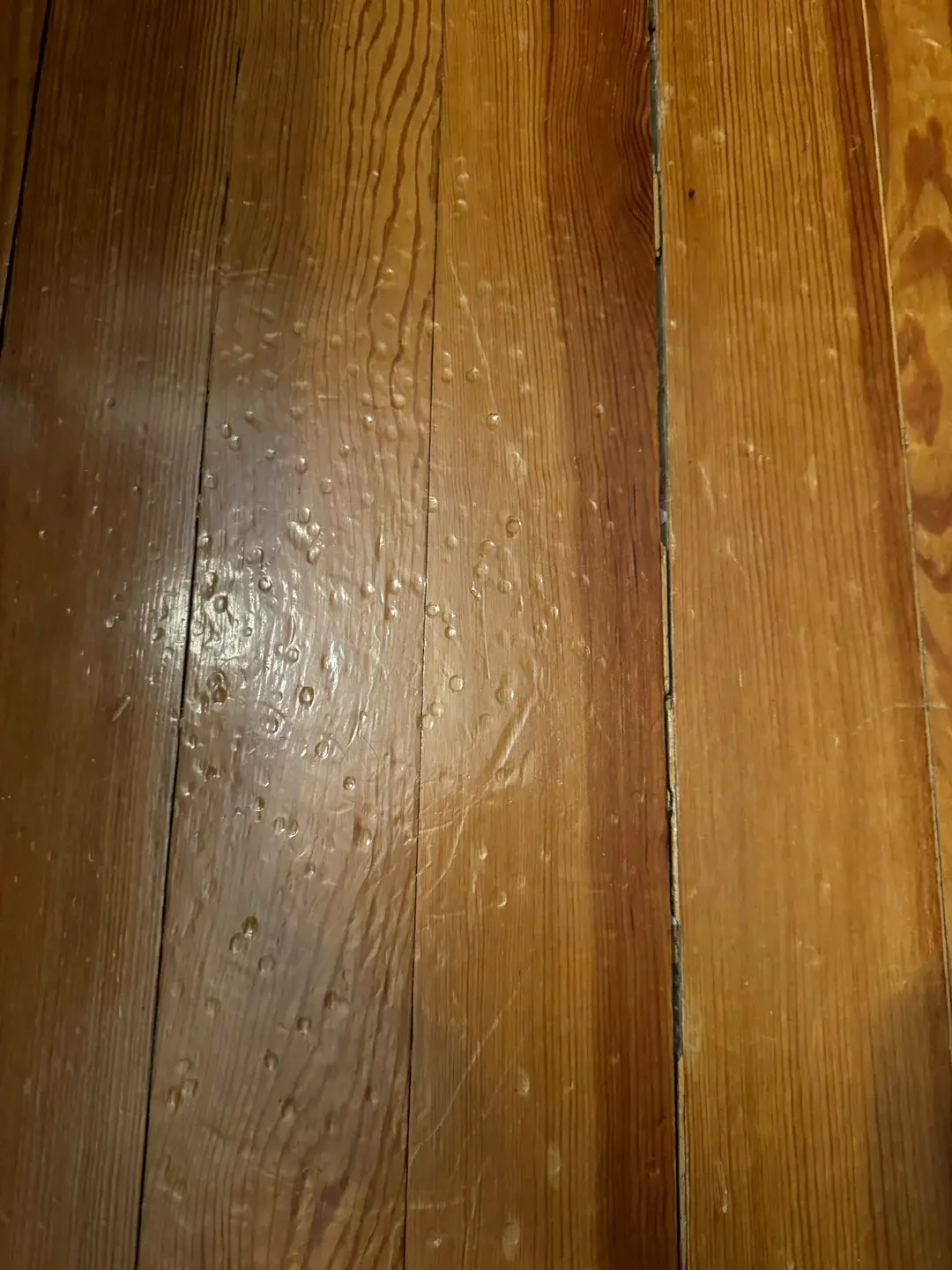
The marks are round and can dent the wood several millimeters, in some cases up to 3. You can see them and feel them. In the middle of a board they are not usually a big problem; at the joints, where the boards meet, it is more complicated, because they can end up breaking them.
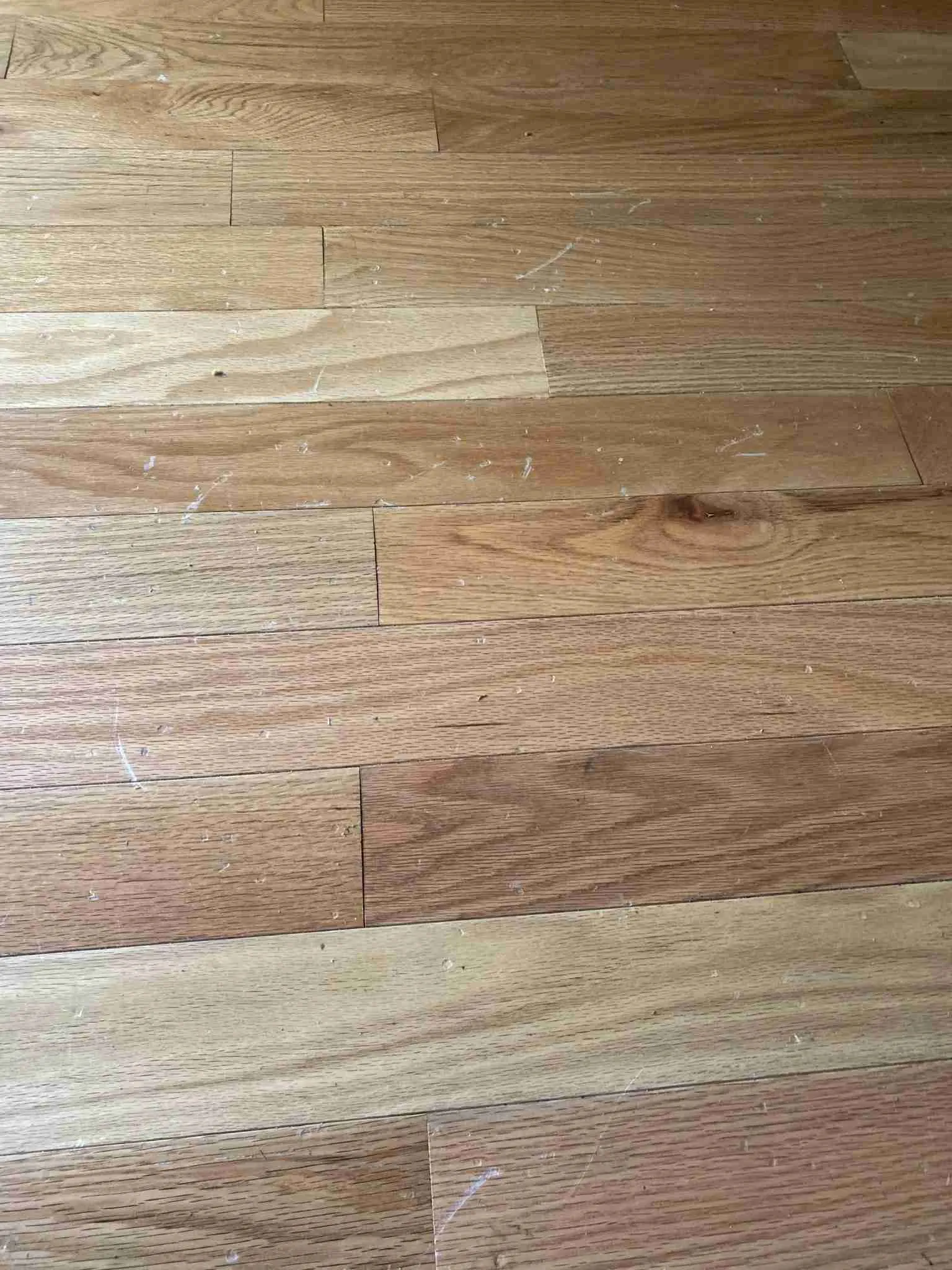
Besides the shape of the heel, some things make the mark worse. A worn finish protects less, and with open joints, loose pieces or moisture the mark appears sooner. Major damage usually comes from stepping again and again on the same walkways.
How hard each contact presses
The calculation is always the same: weight divided by contact area. The figures are approximate and serve to compare one contact with another.
| Contact | Load | Contact area | Approximate pressure | What happens to the wood |
|---|---|---|---|---|
| Stiletto heel (60 kg person, all the weight on one foot) | 60 kg | 1–2 cm² | 30–60 kg/cm² | Leaves a mark on any wood |
| Heel with a wide tip (60 kg person) | 60 kg | 3–4 cm² | 15–20 kg/cm² | Marks a good deal less than a stiletto |
| Flat shoe (75 kg person) | 75 kg | 150 cm² of sole | 0.5 kg/cm² | Spreads the weight |
| Battle tank (40 t) | 40,000 kg | About 4 m² of tracks (40,000 cm²) | 1 kg/cm² | Spreads the weight |
How to prevent marks and what to do if they are already there
As parquet fitters we do not know much about footwear, but we recommend heels that are less pointed and have a wider tip. It is best to leave thin heels at the entrance and check the rubber heel tips, because when they wear out the steel nail is exposed and scratches the wood.
On sofas, tables and chairs it is worth fitting dense wool felt pads, preferably screwed on rather than adhesive, which come off when the legs are moved. Office chairs need special casters for wood floors. An unprotected piece of furniture concentrates its weight on a small point, just like a heel.
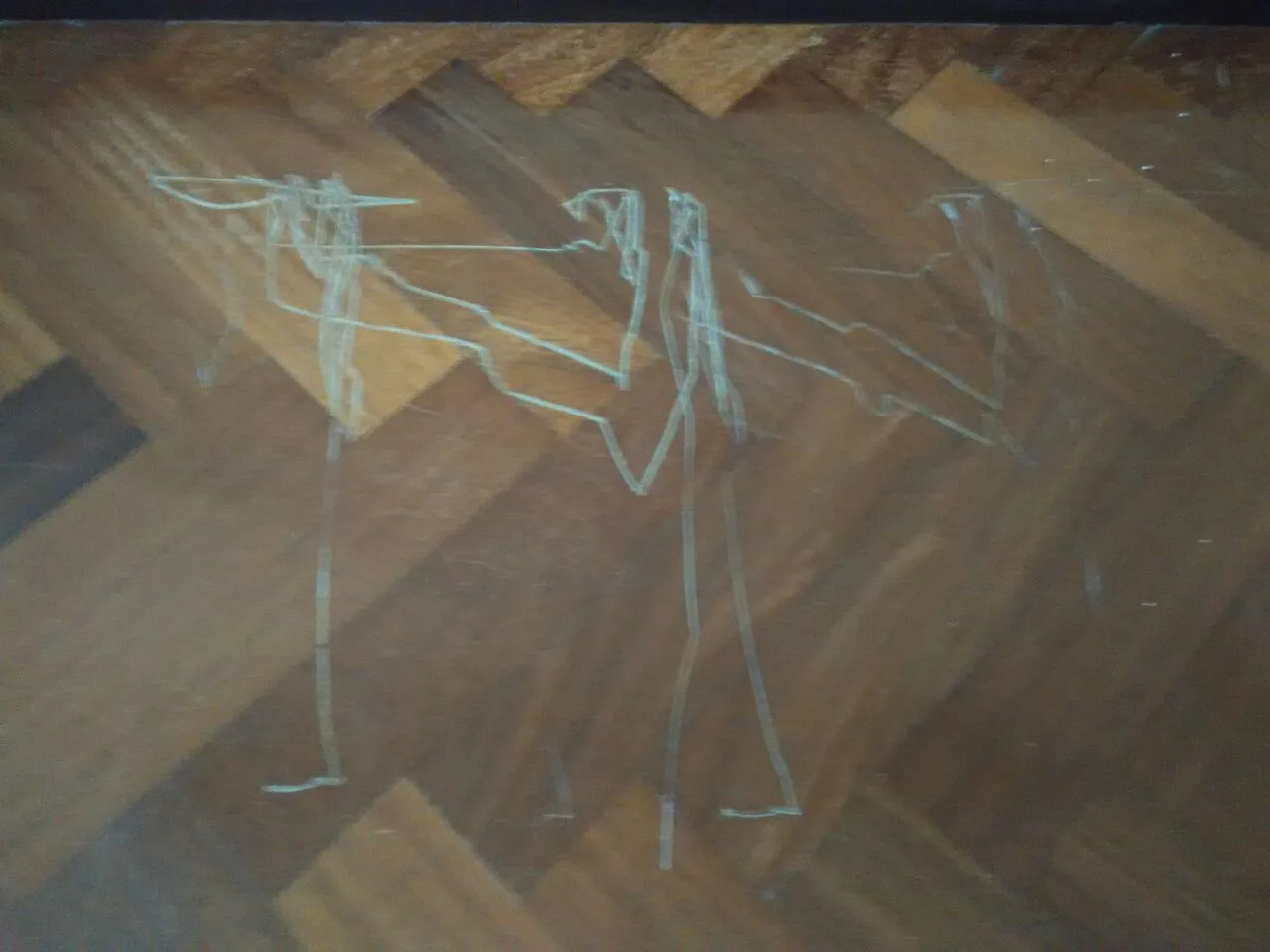
When there is a mark, it is not a good idea to cover it with wax or quick treatments. First we check whether it affects the finish, the board or the joint between pieces: often it is enough to repair the area or replace a piece. If the wood has broken or the finish has flaked over a large area, the floor is sanded and refinished to even it out.
Very thin heels are not kind to other floors either. They also mark carpet, marble, granite and stone, above all at the joints.
Frequently asked questions about heel marks on parquet
Can heel marks be removed without sanding the whole floor?
Sometimes. If the mark affects only a few boards, the area can be repaired or those pieces replaced. If the wood has broken or the finish has flaked over a large area, the floor has to be sanded and refinished to even it out.
Does a solvent-based finish resist heels better than a waterborne finish?
No. The mark depends on the wood, not on the finish: no finish makes the wood underneath any harder.
Which woods are the hardest and most resistant to heels?
The hardest ones, such as ipe or jatoba, dent less than oak, and oak less than pitch pine. But no wood takes a thin heel without marking. The values for each species are in the Brinell scale of wood hardness.
Technical restoration and floor advice in Madrid
On site we check whether the mark is in the finish, in the board or at a joint. With that we decide whether repairing the area is enough or the floor has to be sanded. We also advise you on how to protect the floor from daily use.