
Uguisubari: the Japanese plank floor that squeaked underfoot
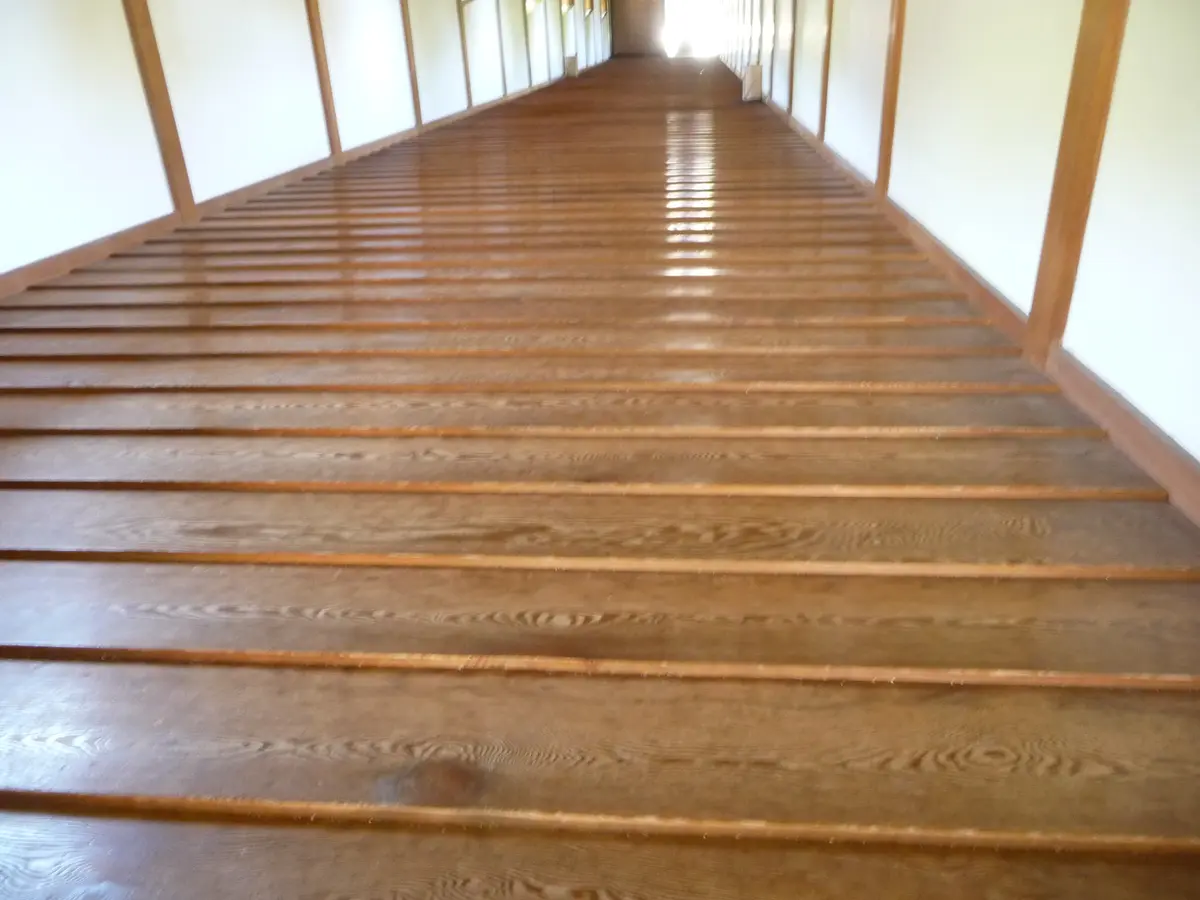
In Japan there is a plank floor that squeaks when you step on it: the uguisubari (鶯張り), called a nightingale floor in English. The name comes from the high-pitched sound, like a nightingale’s, that the wood gives off underfoot.
The best-known example is in the Ninomaru Palace at Nijō Castle, in Kyoto. It was a residence of the Tokugawa shogunate during the Edo period and is a National Treasure. Its corridors have this wood floor that sounds as you walk.
What it sounds like
This audio was recorded walking on a nightingale floor at Daikaku-ji temple, also in Kyoto. The squeak is high-pitched and repeats with every step.
How it works
Wood
The castle’s official website does not say what wood the corridor boards are. It does name hinoki (Chamaecyparis obtusa), Japanese cypress, for the openwork transoms between the rooms of the Ohiroma, carved on both faces from boards 35 cm thick. It is a stable, durable, light-toned wood that darkens with time. In Japan it is used for temples, shrines and fine buildings because it carves well and resists moisture.
How the floor is laid
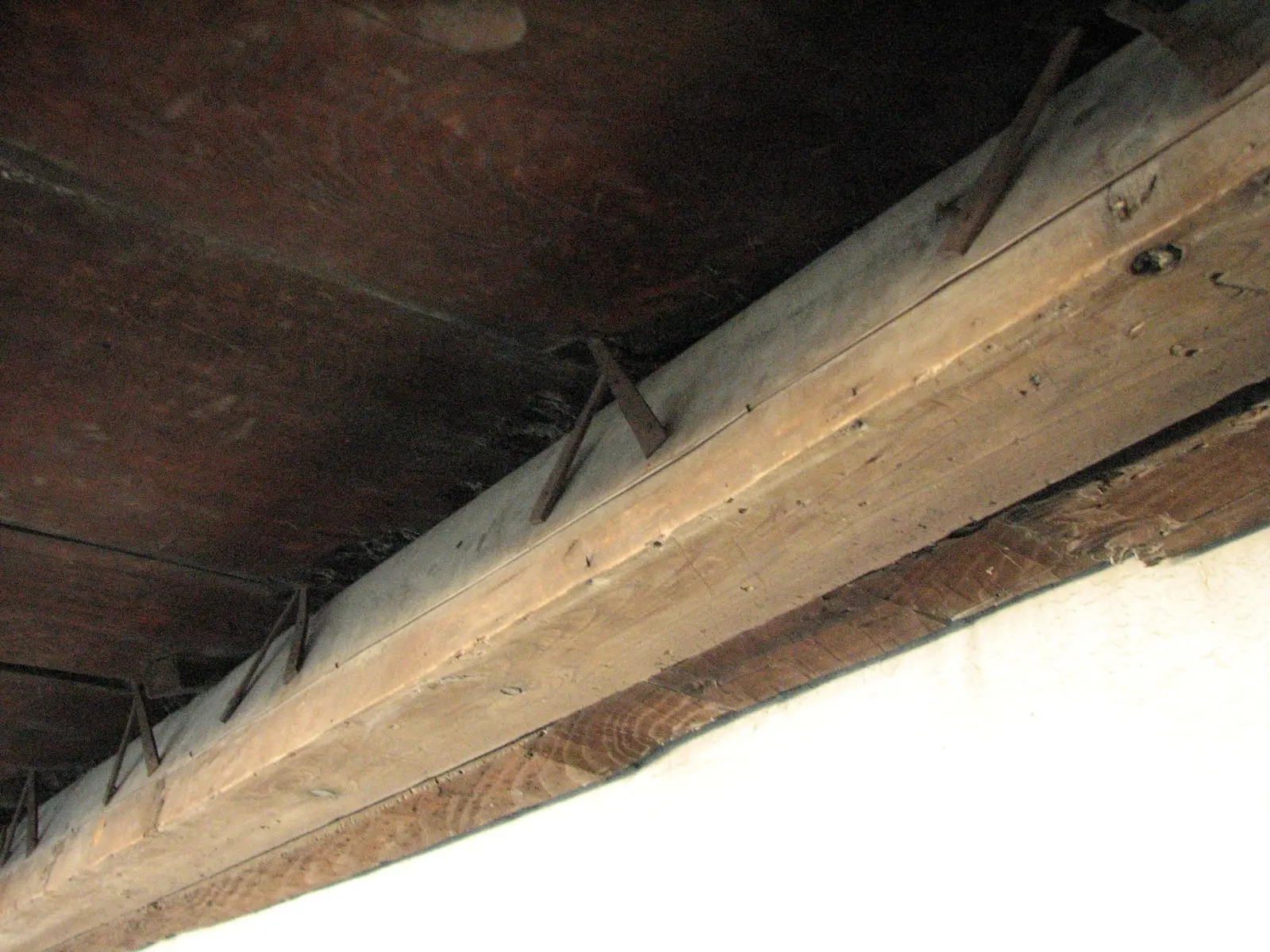
The installation is a floor of thick boards laid crosswise over parallel joists. Unlike a modern floor nailed down tight, the uguisubari boards keep a controlled play: they can move a fraction of a centimeter when weight comes onto them.
A metal clamp is fixed to the underside of each board. The upper part fits into a mortise in the edge of the board and the lower part is nailed to the joist. As you walk, the board rocks slightly and the clamp rubs against the nail, which is what produces the squeak. The carpenter Len Brackett, trained in Kyoto, told JLC magazine in 2012 that at Nijō the underside of the boards is planed slightly convex to encourage that rocking.
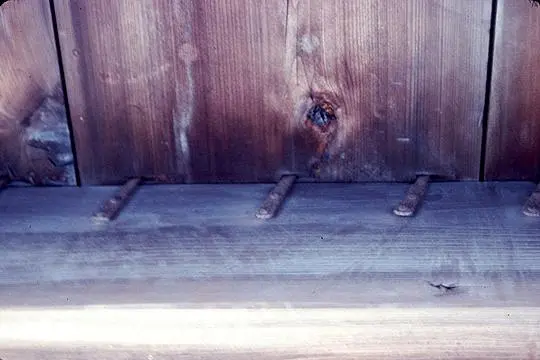
The official Nijō Castle website describes the corridor along those lines: the boards sound like a nightingale when walked on, and the sound comes from clamps moving against nails set in the floor joists.
This is not a loose or damaged plank floor. The sound is the result of a calculated relationship between the board, the support, the play and the metal fixing.
Parallels with a modern plank floor
In a modern solid wood floor on battens we find the same ingredients: natural wood boards, a separate support, fixings and some capacity for movement. The difference is that today we look for stability and silence, while the uguisubari uses the movement as an acoustic signal.
A modern plank floor can squeak because of play, lack of support, tired nails, movement in the battens, moisture-related distortion or a poorly worked-out installation. In the uguisubari, that sound is part of the historical reading of the system.
The setting: Ninomaru Palace
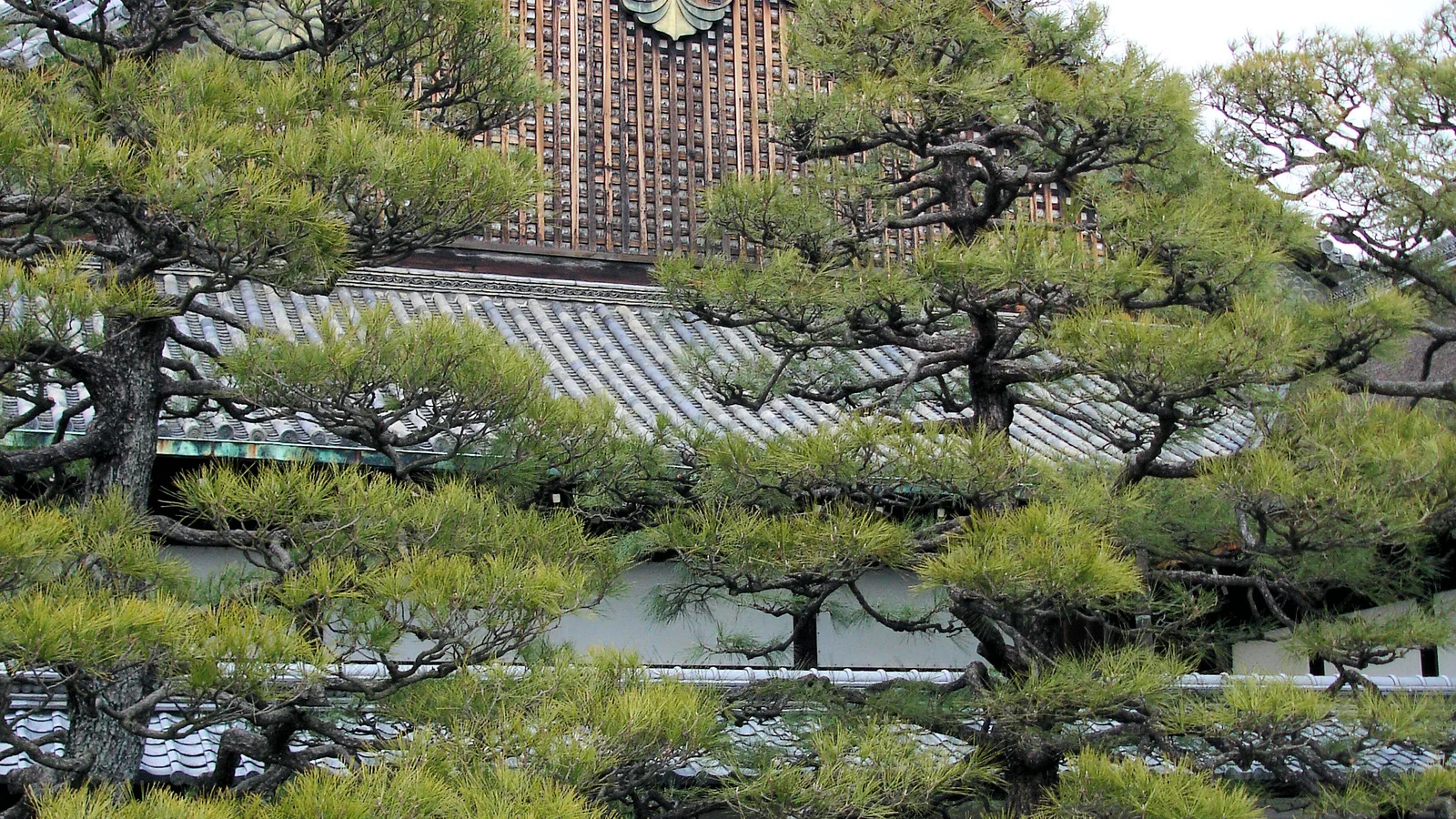
The Ninomaru Palace is a group of six connected buildings, representative of the shoin-zukuri style. It combines architecture, political display and fine woodwork: corridors, ceremonial rooms, paintings, carvings, metal fittings and carefully ordered routes through the building.
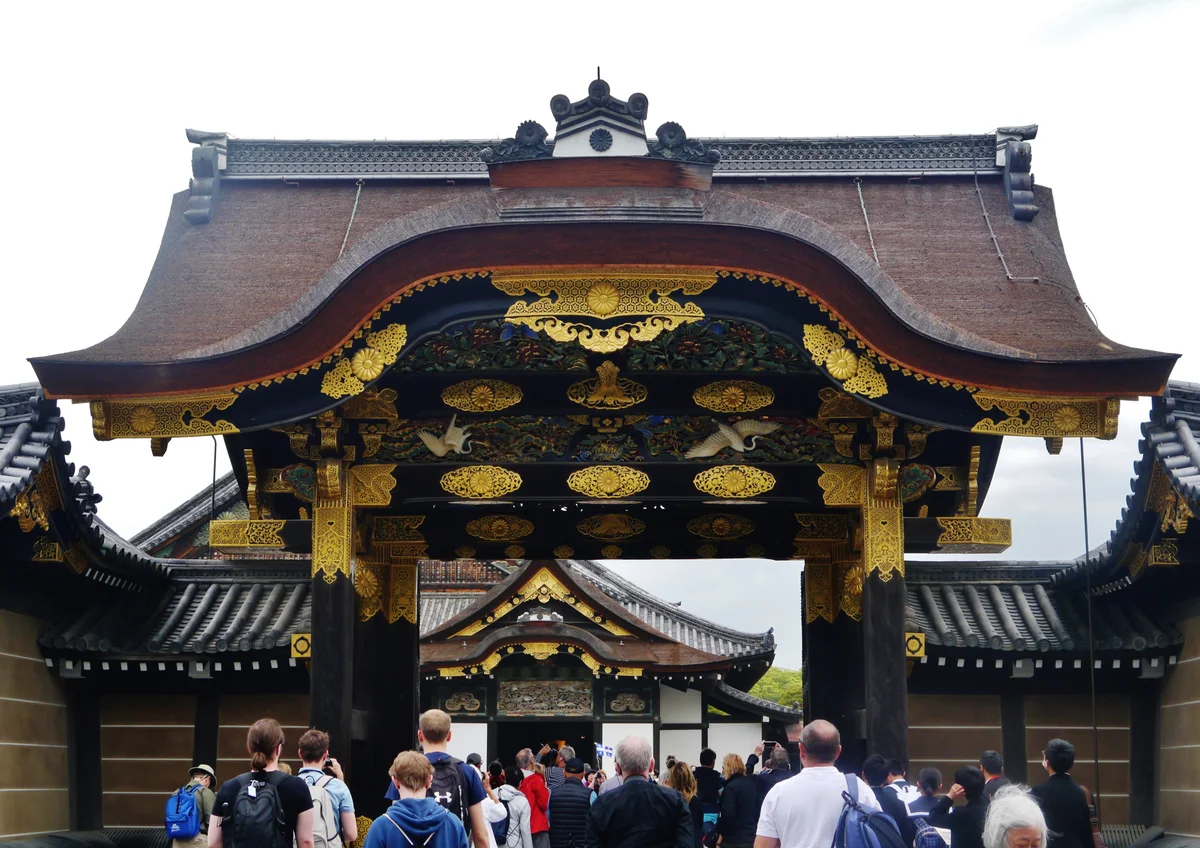
The castle prohibits photography and filming inside the Ninomaru Palace and the Honmaru Palace. That is why this article uses exterior images with a clear license, technical photos of comparable mechanisms and an image of another corridor with the same kind of plank floor.
Was it a security system?
Many tourist guides say the uguisubari was used to detect intruders. The official Nijō Castle website says that idea is a mistake. What is certain is that the floor gives an audible warning of every step.
Historical and cultural references
The uguisubari’s fame is not limited to Nijō Castle. At Chion-in, also in Kyoto, the uguisubari-no-rōka —nightingale corridor— is one of the so-called seven wonders of the temple: a wooden corridor that sounds when walked on and that tradition presents as a warning against unwanted footsteps. According to the temple, it runs 550 meters between several of its halls and sounds louder the harder you try to walk quietly.
The device also made its way into Western popular culture. Ian Fleming used it in You Only Live Twice, where James Bond comes across a nightingale floor described as an old Japanese way of warning of intruders. You can watch the official trailer for You Only Live Twice (1967).


Noise, defect and material memory
When restoring old floors, a noise should never be judged automatically. Sometimes it is a structural defect that has to be corrected. Other times it is part of how an old floor behaves and has to be interpreted before any work is done.
A plank floor can squeak because of wood shrinkage, changes in moisture, movement in the battens, loose nails, uneven support or accumulated wear. The answer should not always be to cover, glue or replace. First you have to identify what is moving, why it is moving and what value there is in what is being kept.
The uguisubari is an extreme case because the sound has become part of its identity. But the idea applies to any old wood floor: the floor carries information. It speaks of a technique, a use, earlier repairs and the relationship between the building and its materials.
What it teaches us about solid wood flooring
A solid wood floor does not behave like a laminate or a synthetic floor. It has real thickness, it can be repaired, it ages by its own logic and it can be kept going for decades if the installation and maintenance are right.
The uguisubari is a reminder that a plank floor is not just a surface: it has mass, elasticity, supports, fixings and acoustic behavior. Restoring is not erasing every sign of time. Nor is it letting a defect get worse. It means sorting out, piece by piece, what should be kept, what should be corrected and what can go back to work for many years.
In a home with a plank floor on battens, the sound reveals the condition of the support. It also shows how tired the fixings are and how the wood responds to humidity.
Solid wood flooring in Madrid
On a plank floor laid on battens, the noise is reduced with expanding polyurethane injections or, if the battens are in bad shape, by replacing them. We do this as part of a full restoration, not as one-off visits to stop squeaks. To install solid wood flooring or restore an existing floor, we see clients by appointment at Donoso Cortés 24 (Chamberí).
Sources
- Chris Gladis, Wikimedia Commons, CC BY 2.0.
- Fg2, Wikimedia Commons, public domain.
- sodai gomi, Wikimedia Commons, CC BY 2.0.
- Immanuel Giel, Wikimedia Commons, CC0.
- Jim Gateley, Wikimedia Commons, CC BY 3.0; cropped.
- Zairon, Wikimedia Commons, CC BY-SA 4.0.
- Film logo, Wikimedia Commons, public domain (text logo; registered trademark).
- FR, Wikimedia Commons, CC BY-SA 4.0.


