
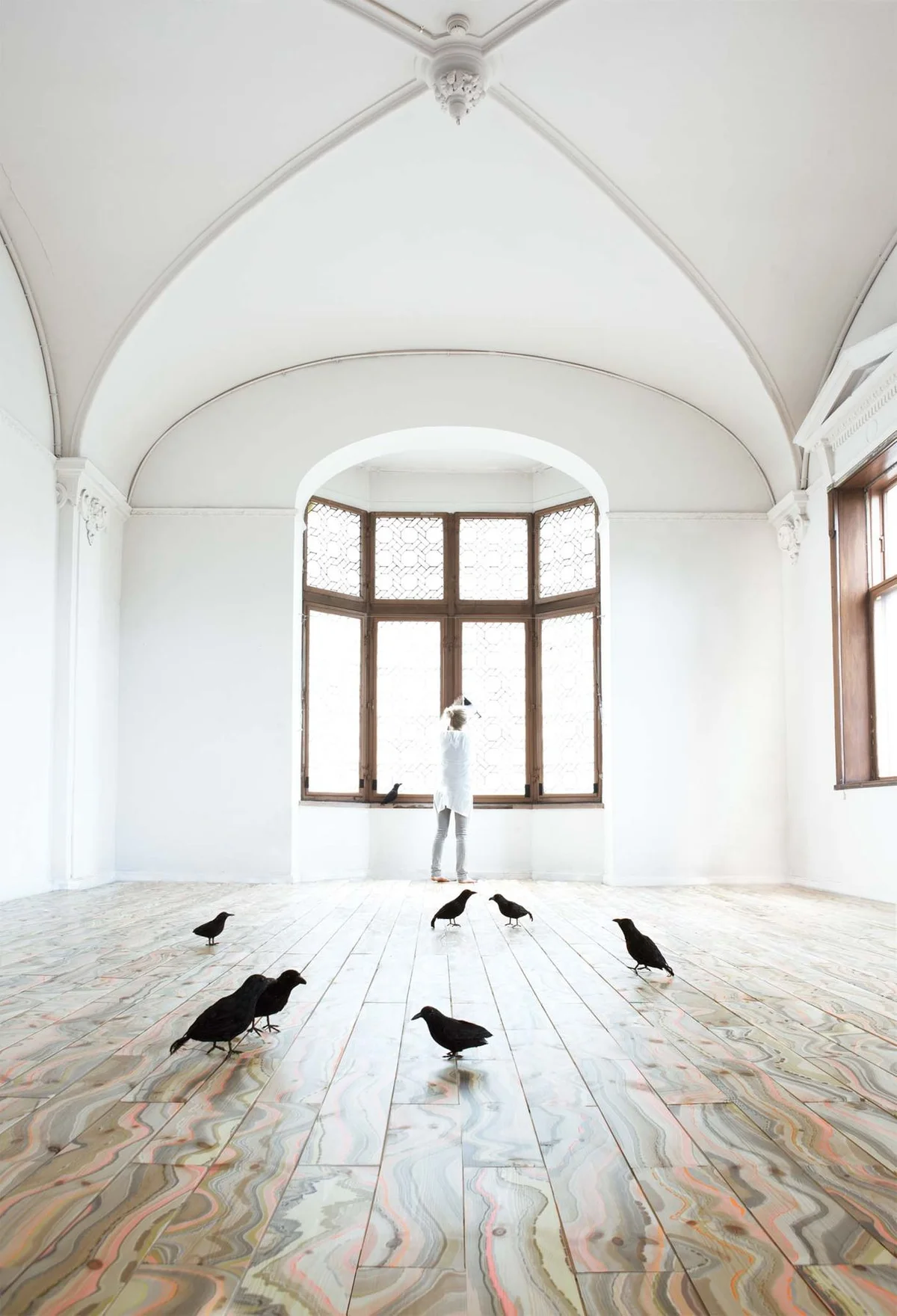
Parquet is usually linked to historic geometries, hardwood herringbone or continuous solid wood boards. Yet where contemporary art meets experimental cabinetmaking, some proposals turn the floor surface into an organic canvas. One of the best known internationally is that of Danish designer Pernille Snedker Hansen, founder of Snedker Studio in Copenhagen, who won the Wallpaper* Design Award for her project Marbelous Wood.
1. The Suminagashi technique applied to the wood board
The core of the technique is suminagashi (墨流し), a traditional Japanese method documented since the 12th century for marbling paper with inks floating on water. Snedker takes this craft principle to an architectural scale never seen before in wood floors.
The process is carried out by hand in the workshop, board by board:
- Preparing the water bath: A tray sized to the floor boards is filled with water whose surface tension has been calibrated.
- Dropping pigments one by one: Water-based inks with different densities and viscosities are laid on the water. The drops spread into concentric rings on the liquid surface.
- Transfer by direct contact: The dry, planed wood board is lowered slowly onto the floating film of ink. The porous cellulose takes up the pigment instantly by capillary action, with no mechanical pressure needed.
2. The dialogue with the grain: why each board is a one-off piece
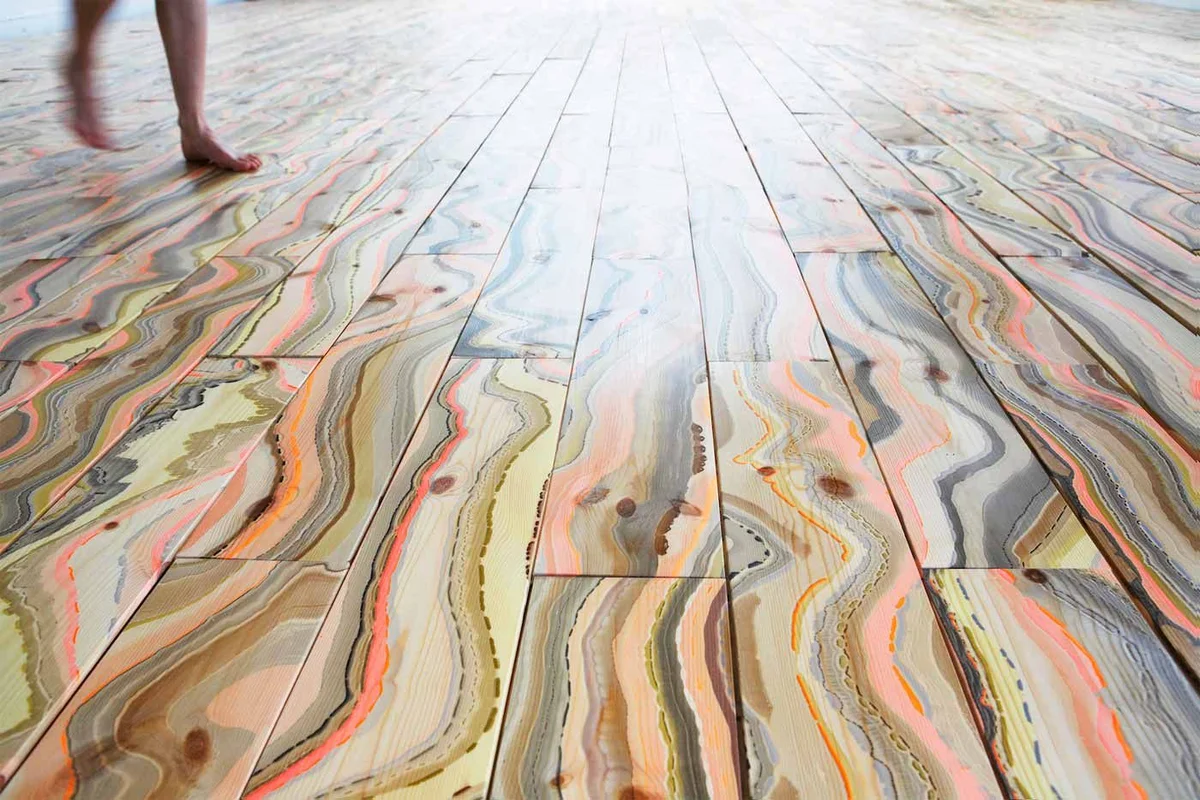
What is striking about marbling on wood is that it does not cover the material with opaque paint but magnifies the tree’s own growth rings. The natural rhythm of the liquid waves interacts with the density of the earlywood and latewood in the board, which takes up more ink in the more porous areas.
As a result, the natural grain of the tree takes on a psychedelic, three-dimensional look. Two boards dipped in the same bath never receive the same pattern: the speed of the hand lowering them, the micro-currents in the water and the inner anatomy of each piece of wood produce a composition that cannot be repeated.
3. Botanical criteria: which woods accept hand dyeing by flotation
From the standpoint of wood physics, not every species is suitable for taking water-based inks by surface immersion. For the color to penetrate cleanly and keep its purity, the species must meet three essential botanical requirements:
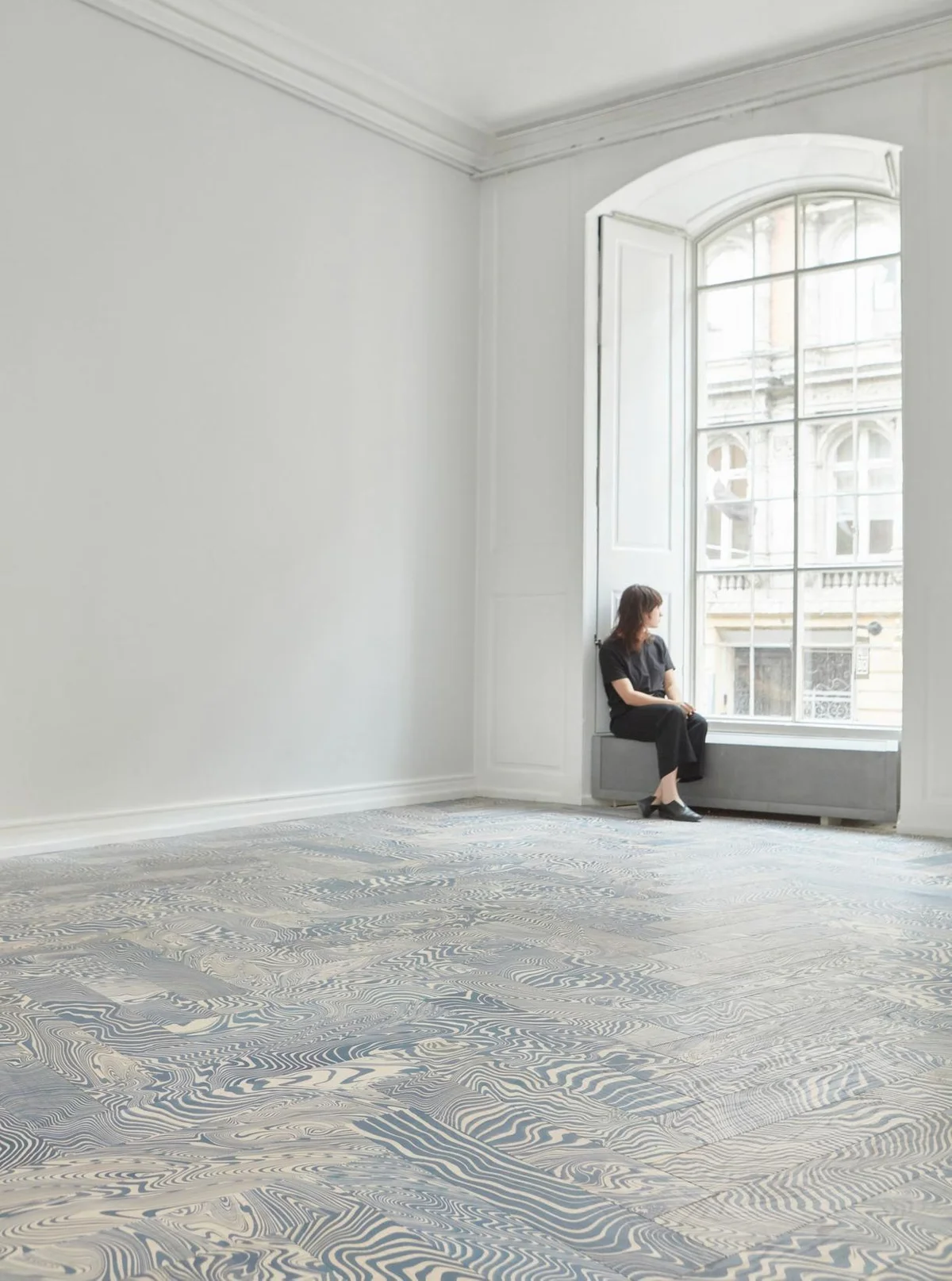
- Light tone and an even background: Species such as Scots pine (Pinus sylvestris), white ash or maple provide a light background that holds pastel tones and color gradients.
- Low tannic acid content: Woods such as oak or chestnut contain high levels of natural tannins which, on contact with water and pigments, cause unwanted chemical reactions and dark or grayish stains.
- Even capillary porosity: The wood must be kiln-dried to an equilibrium moisture content of 8–10% so that it takes up the ink without dimensional distortion during the process.
4. From experimental design to on-site customization: how we stain parquet in Madrid
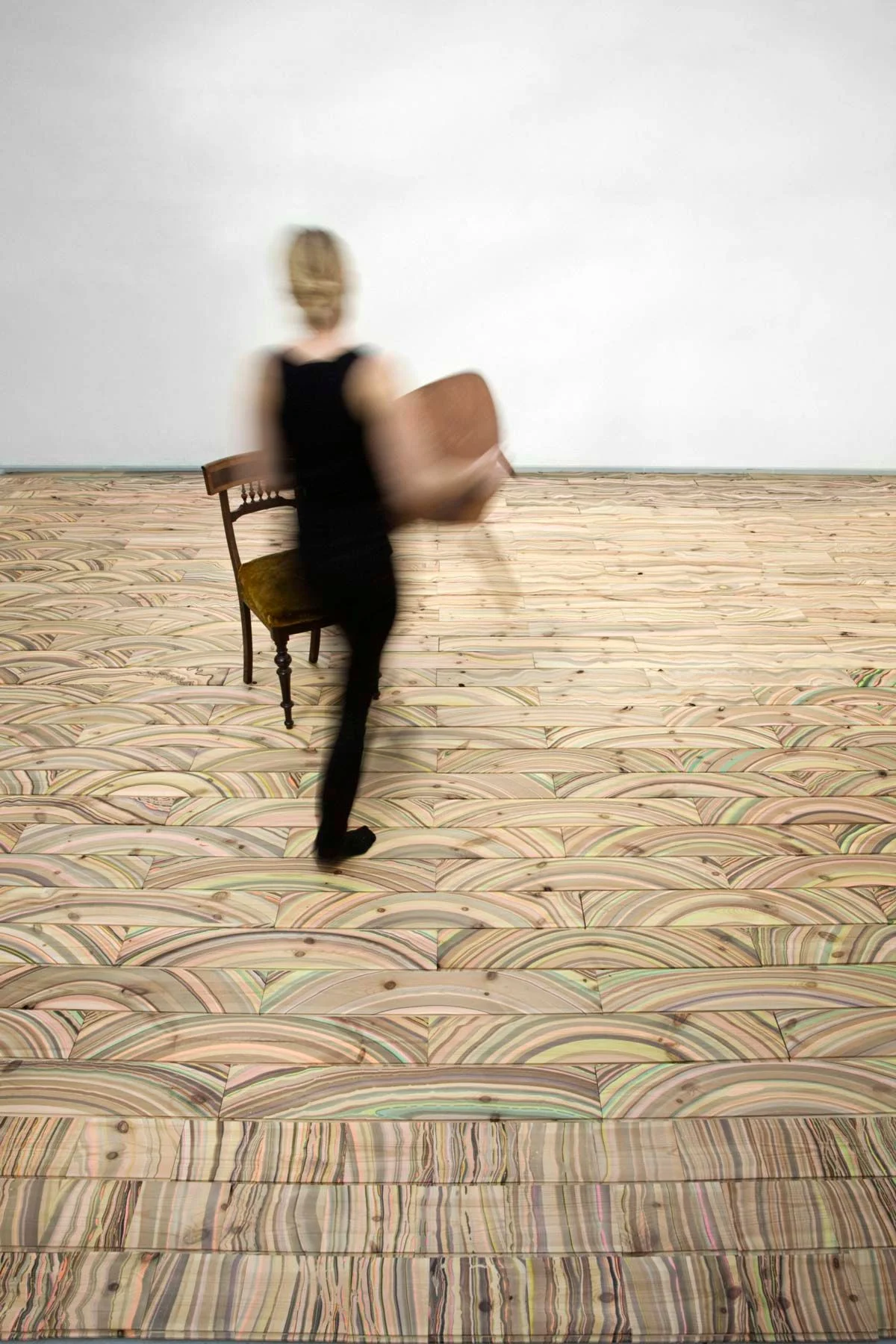
Although flotation suminagashi is a process reserved for art production in the workshop, at ParkSinta we bring the same interest in color and customization to real floors in homes and singular spaces in Madrid through advanced on-site staining techniques.
Staining a parquet floor already installed on a screed or battens takes full technical command to get an even tone without hiding the character of the grain:
Bona Craft Oil stain
This is the stain we use to change the tone of the whole floor, toward walnut, tobacco, honey or warm grays. It penetrates the pores and keeps the natural pattern of the grain.
Lightening and the Nordic look
To lighten a floor we use stains or waterborne finishes in a lighter tone, not chemical bleaches. That gives the “raw wood look” with a silky, natural feel.
Stains for spot repairs
We keep alcohol-based or water-based stains for matching a replaced piece or a finishing detail to the tone of the surrounding floor.
5. The ParkSinta protocol: on-site color tests and sealing with UV filter
Any change of color on a wood floor calls for two basic guarantees that we apply strictly on every project:
- Tone tests on the client’s own wood: The tone is first chosen from a color range. Then, after the first rough sanding, we test it in discreet areas of the home, because each species reacts differently to stain, and the client or the decorator judges it in the natural light of their rooms at different times of day.
- Sealing with two-component (2K) waterborne finishes with UV blockers: To protect the stain against wear and foot traffic without yellowing the wood over the years, we only apply 2K waterborne polyurethane finishes in ultra-matte or invisible satin, meeting the highest durability standards under UNE 56810.
Want to change the tone of your wood floor in Madrid?
At ParkSinta we have more than 50 years of experience in parquet sanding and restoration and in applying custom finishes and stains. We advise homeowners and architecture and interior design studios on turning old floors into contemporary floors with real distinction.
Image credits and licenses
- Workshop photographs and the Wave, Sumi and Arch collections: Images and design archive of Snedker Studio / Pernille Snedker Hansen (Copenhagen, Denmark).
The images are reproduced solely for educational, teaching and technical and design analysis purposes on wood floors (Art. 32 LPI, Spanish Intellectual Property Law). For any question about rights or attribution: info@parksinta.com.