
Preventing & Repairing Wood Floor Gaps in Madrid’s Extreme Dry Climate
Madrid’s harsh continental climate drops winter indoor relative humidity to 20–25%. Here is the physical science behind wood shrinkage, the critical mistake of rigid putty, and master restoration techniques.
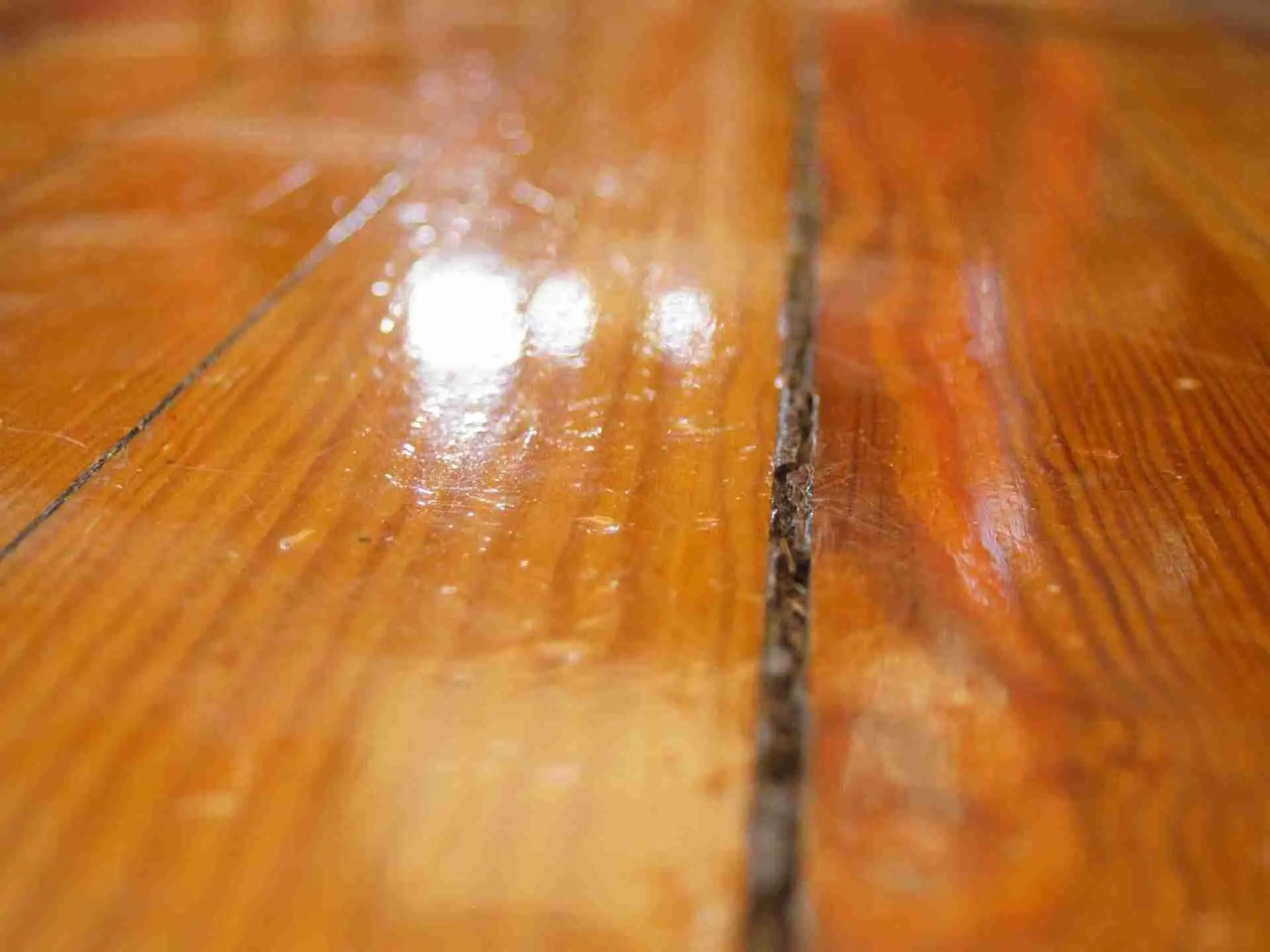
1. The Madrid Hygrothermal Reality: 650 Meters Altitude & Continental Heating
Madrid sits on a high central plateau (average altitude 650 m) with dry continental weather. During the winter months from November to March, outdoor relative humidity may hover around 50–60%, but once that cold outdoor air is drawn indoors and heated to 21°C–22°C by central radiator or underfloor heating systems, indoor relative humidity collapses to between 20% and 28%.
Wood is an anisotropic, hygroscopic biological material. In equilibrium with Madrid’s dry indoor winter air, its internal equilibrium moisture content (EMC) drops from an installation standard of 9–11% down to a severe 5–6%. As bound water departs wood cell walls, the timber inevitably contracts tangentially.
2. The Critical Error: Rigid Putty & Inelastic Fillers
When homeowners or inexperienced painters see winter floor gaps appear, the most common destructive mistake is filling those seams with rigid polyester putty, gypsum-based filler, or hard solvent mastic.
This creates a destructive cycle:
- In winter, the rigid filler cures in the widened seam.
- When spring and summer arrive, heating is turned off and outdoor humidity rises; indoor RH climbs to 45–55%.
- The timber naturally reabsorbs atmospheric moisture and expands. However, the rigid cured filler now blocks the joint gap.
- The expanding timber has nowhere to go; extreme lateral compression forces cause edge-crushing, splintering, or upward buckling (tenting) of the boards.
3. Preventive Craft Rules for Madrid Installations
Preventing severe shrinkage begins long before sanding or finishing:
- Mandatory on-site acclimatisation: Unpacked wood flooring must rest inside the heated, climate-stabilized rooms for 10 to 14 days before installation.
- Plank width-to-thickness ratio: For solid timber in Madrid, plank widths exceeding 140 mm should use radial-cut (quarter-sawn) grain or engineered multi-ply construction. Wide tangential-sawn planks experience double the dimensional movement.
- Generous perimeter expansion gaps: A continuous perimeter margin of 12 to 15 mm must be maintained against all walls, doorframes, and heating conduits, concealed by properly sized skirting boards.
- Environmental humidity regulation: Operating cold-mist ultrasonic humidifiers during winter to maintain indoor RH between 40% and 50% protects both wood floors and resident respiratory health.
4. Master Restoration Protocols for Existing Gaps
In historic Madrid residences (such as 19th-century apartments in Chamberí, Salamanca, or Jerónimos) with existing seasonal gaps, our restoration protocol follows conservative craftsmanship:
- Fine gaps (< 1.5 mm): Sealed during dustless sanding using a flexible elastic resin binder mixed directly with fine sanding flour extracted from the identical wood species, followed by elastic 2K waterborne polyurethane coats.
- Wide structural gaps (> 2.5 mm): Cleaned out and fitted with custom-milled wooden splines (lengüetas) carved from reclaimed, matching seasoned timber, grain-aligned and adhered with structural elastic adhesives.
- Loose or creaking planks: Re-anchored to subfloor joists using micro-injection of low-expansion silane resins rather than surface-driven face nails that damage historic timber.
Heritage Parquet Diagnostics
Experiencing seasonal gaps, cupping, or movement in your Madrid hardwood flooring? Consult with our historic parquet restoration team or request a diagnostic visit.