
November 4, 1934: an oak floor as material evidence
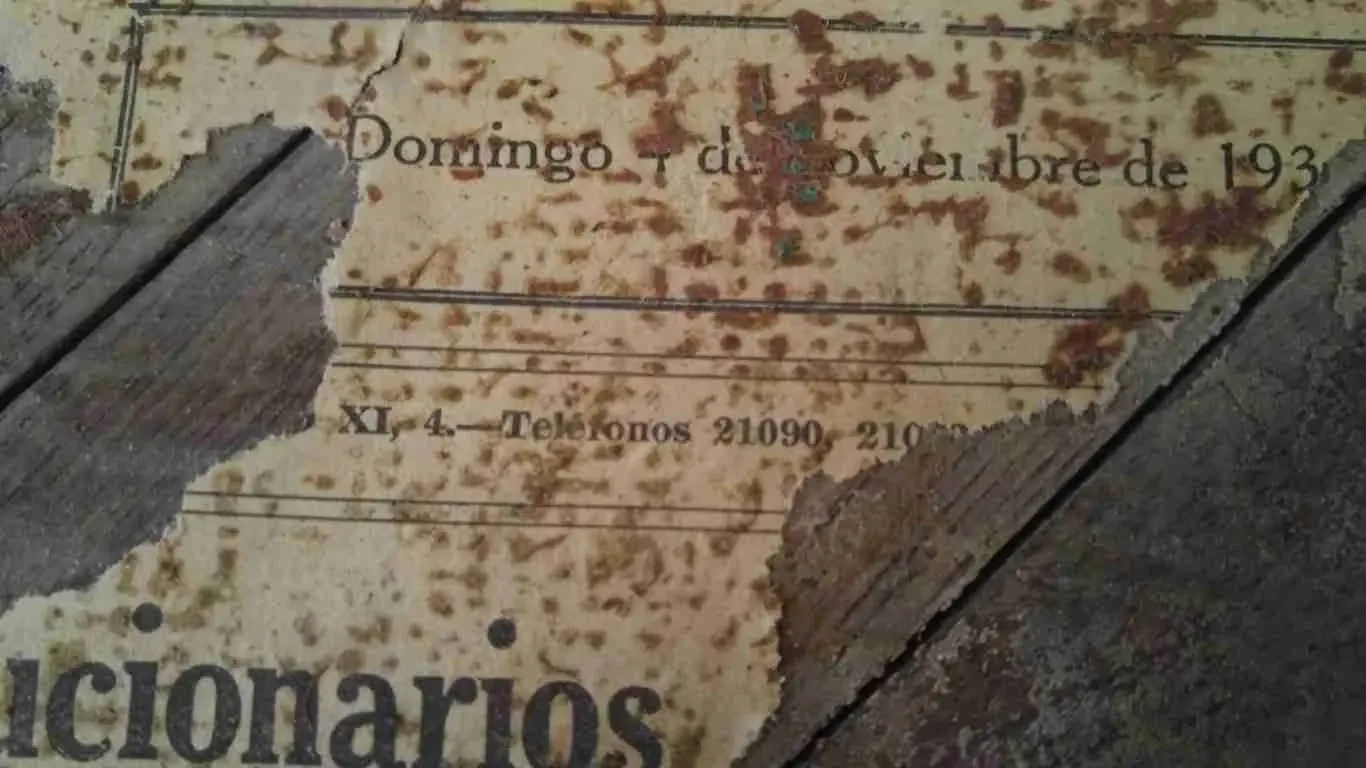
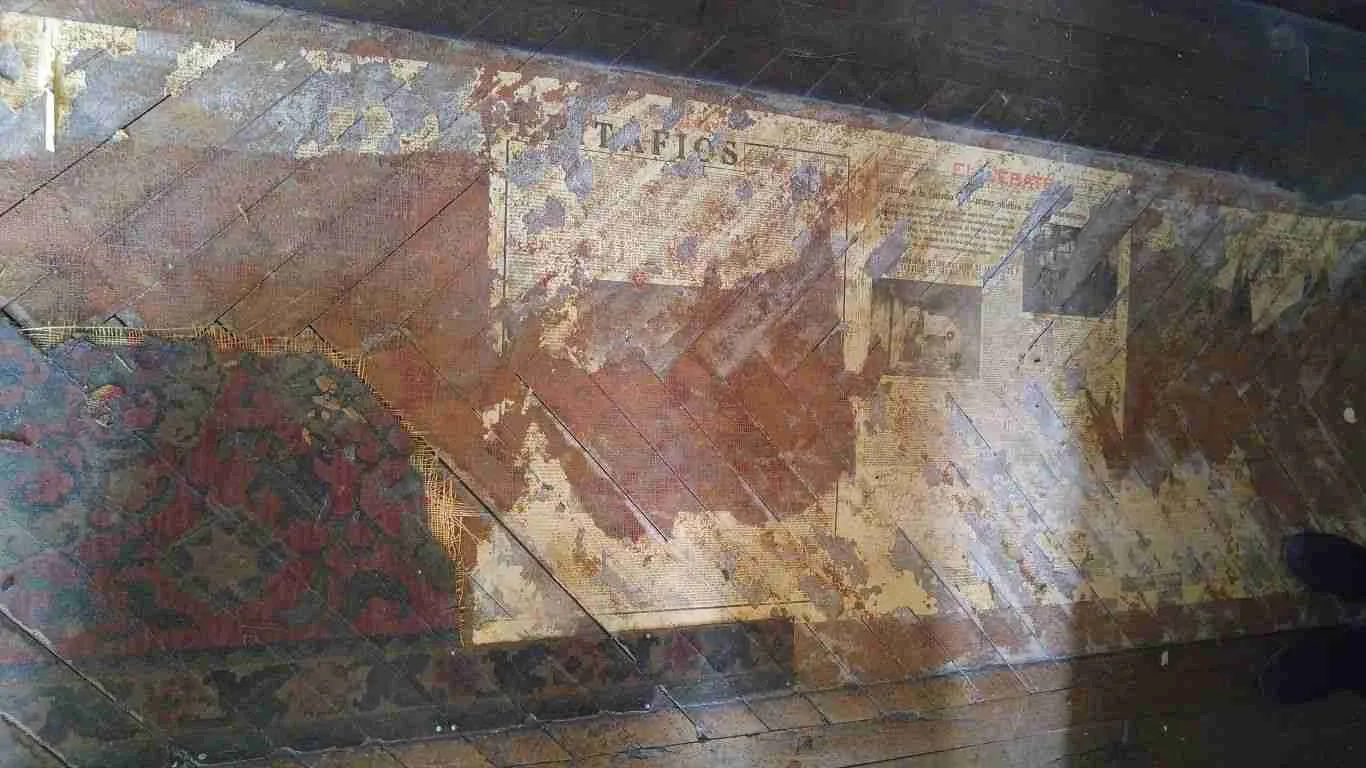
A date under the linoleum
It turned up when an old linoleum was removed from the hallway of an apartment on Calle General Pardiñas, in Madrid’s Salamanca district. Underneath there was no modern topping screed and no worthless base: there was solid oak flooring laid on battens and, between the linoleum and the wood, the remains of a newspaper.
It was El Debate, a Madrid daily. On one scrap you can read its red masthead and on another, “Sunday, November 4, 193…,” with the last digit torn off. We checked it against newspaper archives and it is the edition of Sunday, November 4, 1934.
We do not know for certain what the newspaper was doing between the linoleum and the wood. We think it may have served as a bonding layer for the adhesives used to glue down the linoleum, but that is a hypothesis.
The newspaper does not date the whole floor
It pays to be precise. The newspaper documents one specific layer in the life of the floor: the laying or repair of the linoleum, or at least some work close to that date. On its own it does not prove when the oak boards were installed.
In restoration you do not date “the floor” all at once. You read layers: boards, battens, paper, adhesive, linoleum, repairs and wear. The craft begins when you separate those readings without inventing a more convenient story.
Technical reading of the floor
The hard construction fact is the solid oak flooring on battens. That changes the decision on the job. A synthetic floor is removed; solid wood flooring is diagnosed.
Before sanding you have to check usable thickness, board stability, the condition of the battens, moisture content, nails, split pieces, open joints and possible voids under the wood. You also have to look at how it behaves zone by zone: hallways, main rooms, door thresholds and perimeters.
We quoted for restoring the whole area, about 150 m². The wood was in genuinely good condition, with good thickness, and the battens were reasonably level: with those facts, restoring was viable.
Restoring without erasing the record
An old board floor is not kept because it is old. It is kept if it has thickness, support, stability and a reason to stay. In oak, when the material is sound, the room for recovery can be large.
The plan we quoted was to replace some of the boards and battens, fill voids solid, inject expanding polyurethane foam, fill gaps with wood slivers (enchuletar), sand and varnish. The sander does not diagnose; it only removes material.
A floor like this does not have to end up new. It has to end up stable, clean, usable and recognizable. The newspaper’s date adds interest; the decision to restore is made by the wood.
What is usual, though, is to find a different kind of paper on top of a floor. It is usually cardboard covering a damaged parquet, and sometimes, as in this photo, it comes “decorated.”
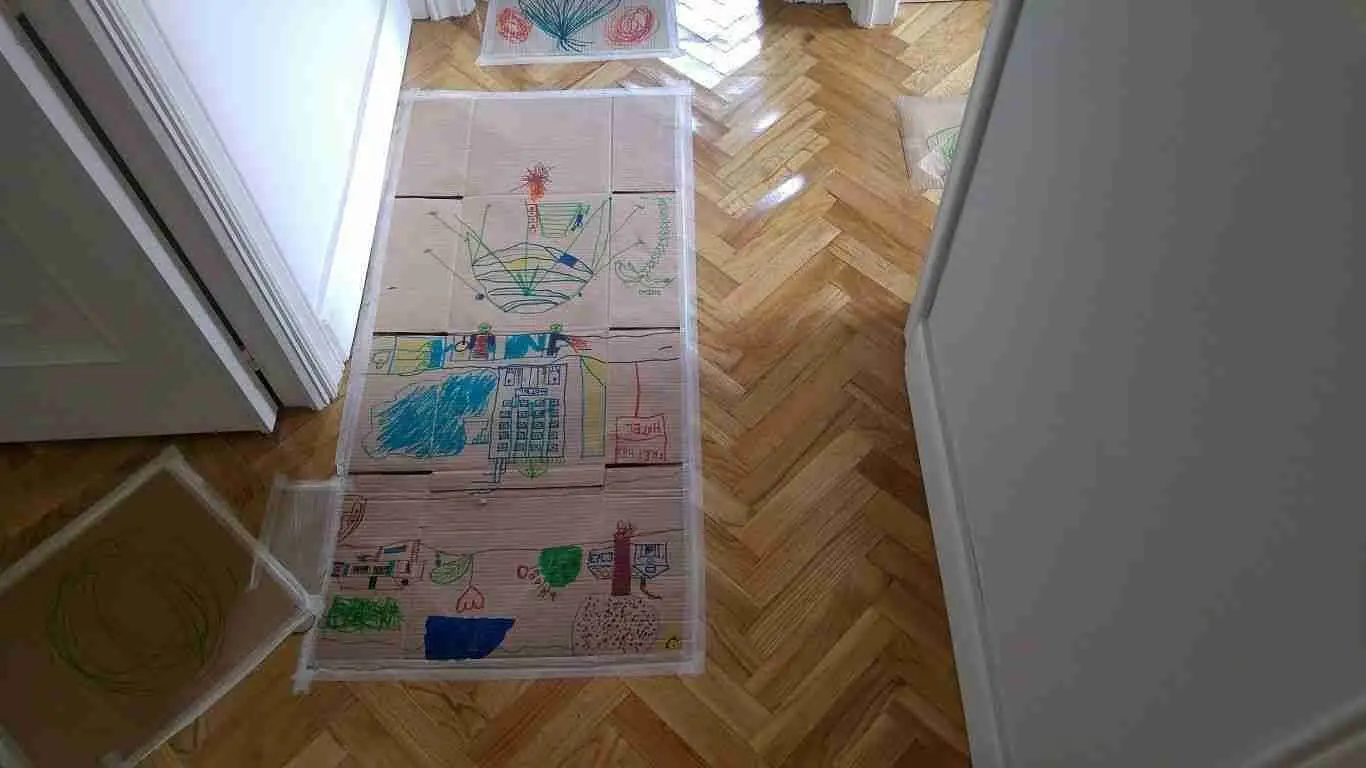
If an old board floor turns up when you remove a floor covering, it is worth assessing it before covering it. At ParkSinta we look at parquet and wood floor restoration in Madrid.
Recovery and Restoration of Historic Wood Floors in Madrid
At ParkSinta we restore old oak board floors on battens, respecting their board dimensions and texture. We sand them dustless and finish them with a two-component (2K) waterborne finish, oil, or one-component varnish, depending on use.